
Complete Guide · Aircraft Management
The Aircraft Management Guide: costs, availability and compliance
How to cut costs, maximize availability and stay compliant with ANAC, Brazil's civil aviation authority, through professional aircraft management for your jet, turboprop or helicopter.
By Régis Hahns, CEO of Embarque Oficial · LinkedIn
- 2011flying since
- 47 minread
- 20sources cited
What is aircraft management?
Aircraft management is the professional administration of a private aircraft on the owner's behalf: hiring and training the crew, maintenance and technical records, hangar, fuel, flight planning, insurance, documentation and financial reporting. In Brazil, the management company keeps the aircraft safe and compliant with ANAC (Agência Nacional de Aviação Civil), Brazil's civil aviation authority, under RBAC 91 (Brazil's general operating and flight rules) for private operations, and can place it with an air taxi company certified under RBAC 135 to generate revenue when the aircraft would otherwise sit idle. The goal is to lower the cost per flight hour without sacrificing safety or availability. Learn about Embarque Oficial's aircraft management.
In this guide
- What is aircraft management?
- What does a full aircraft management scope include?
- How does crew management work: hiring, training and duty limits?
- Maintenance and technical records: how do you keep the aircraft airworthy?
- Hangar, fuel, flight planning and dispatch
- Insurance, documentation and compliance: what must an aircraft keep current?
- Private operation (RBAC 91) or air taxi fleet (RBAC 135): which should you choose?
- Private jet operating costs: how much does it cost to keep an aircraft?
- Which KPIs measure good aircraft management?
- How can you reduce aircraft costs without compromising safety?
- Safety management systems (SMS): culture, risk and audits
- How do you choose an aircraft management company, and what belongs in the contract?
- Transparency and reporting: what should the owner receive every month?
- Which business aircraft are commonly placed under aircraft management?
- Glossary
- Frequently asked questions
What is aircraft management?
Aircraft management, known in Brazil as gestão aeronáutica or gestão de aeronaves, is the full set of technical, operational, administrative and financial services a private aircraft needs to fly safely, legally and at a controlled cost. In practice, aircraft management turns a complex asset, one that involves pilots, mechanics, maintenance shops, insurers, airports, authorities and fuel suppliers, into a simple service for the owner: the owner decides when and where to fly, and the management company takes care of everything else.
Aircraft management in Brazil has grown in importance alongside the expansion of business aviation. According to ANAC data compiled by ABAG (Associação Brasileira de Aviação Geral, the Brazilian General Aviation Association), the operational business aviation fleet reached 11,362 aircraft in May 2026, up from 10,893 a year earlier, and the number of business jets rose from 1,060 to 1,193 over the same period, an increase of 12.5%. Every new aircraft brings with it a structure of crew, maintenance, documentation and insurance that has to be managed every single day.
What an aircraft manager does
The aircraft manager is the professional or company that takes over, under contract, the administration of the aircraft on the owner's behalf. The most common responsibilities are:
- Crew: recruiting, hiring, scheduling and keeping pilots trained and rated on the type, in compliance with Brazil's Aeronaut Law (Lei do Aeronauta, Law 13,475/2017).
- Airworthiness: tracking inspection due dates, life-limited components, airworthiness directives and the CVA (Certificado de Verificação de Aeronavegabilidade, Brazil's Airworthiness Review Certificate).
- Operations: planning every mission, filing flight plans with DECEA (Departamento de Controle do Espaço Aéreo, Brazil's airspace control department), and arranging handling, fuel, hangar space and landing permits.
- Compliance: keeping the registration with the RAB (Registro Aeronáutico Brasileiro, the Brazilian Aeronautical Registry), mandatory insurance, licenses and onboard documents up to date.
- Finance: building the annual budget, negotiating with suppliers, paying bills and reporting to the owner with monthly statements.
Aircraft management is not the same as air taxi
Aircraft management administers an aircraft that belongs to an individual or a company. Air taxi (táxi aéreo), regulated in Brazil by RBAC 135 (Regulamento Brasileiro da Aviação Civil 135, the Brazilian rule for commuter and on-demand operations), is a non-scheduled public transport service provided by an ANAC-certified company that sells flights to third parties. The two activities can be combined: the owner can keep the aircraft in private operation under RBAC 91 and, on days it is not flying, make it available to an air taxi company, generating revenue. This model is explained in detail further on and in the complete guide to executive air taxi.
Who professional aircraft management is for
Professional aircraft management is suited to those who already own an aircraft, to those about to buy one (and who want to reach closing with a realistic budget) and to companies that run their own flight department and want to outsource part of the workload. Anyone still evaluating a purchase should first read the aircraft purchase guide, because the choice of model determines much of the management cost for years to come.
Embarque Oficial offers business aircraft management with monthly reporting, 24-hour support and absolute owner priority on the schedule, connecting the aircraft to ANAC-certified air taxi operators when the owner decides to generate charter revenue.

- Aircraft management = crew, maintenance, operations, compliance and finance
- The owner decides the mission; the management company handles everything else
- Business aviation fleet in Brazil: 11,362 aircraft (ABAG/ANAC, May 2026)
- Private operations follow RBAC 91; air taxi follows RBAC 135
- The choice of model sets the management cost for years
- Monthly reporting and 24/7 support are the market standard
What does a full aircraft management scope include?
The scope of aircraft management varies by contract, but full management covers six interconnected areas. A lapse in any one of them, such as a pilot's expired training, an unscheduled inspection or an insurance policy that was not renewed, can ground the aircraft. That is why professional aircraft management works with an integrated calendar and daily tracking of due dates.
| Area | What the management company does | Regulation or reference |
|---|---|---|
| Crew | Selection, hiring, scheduling, recurrent training, duty-time tracking and medical exam control | Law 13,475/2017, RBAC 61, RBAC 67, RBAC 117 |
| Maintenance and technical records | Maintenance program, hours and cycles tracking, airworthiness directives, certified repair stations, AOG | RBAC 43, RBAC 145, RBAC 39, RBAC 91 |
| Hangar and home base | Hangar contract, asset security, cleaning and minor ground services | Airport operator rules |
| Fuel | Contracts with fuel distributors, fuel cards, price-based fueling plans | Management company purchasing policy |
| Planning and dispatch | Routes, weather, performance, flight plans, slots, handling, international permits | DECEA, AIP Brasil, foreign authorities |
| Insurance, documentation and compliance | RETA, hull, liability, RAB, CVA, licenses, onboard documents | Brazilian Aeronautical Code (Código Brasileiro de Aeronáutica), CNSP, ANAC |
Full, partial or advisory management
There are three common formats for an aircraft management contract:
- Full management: the company takes on every area, employs or contracts the crew, manages suppliers and reports monthly. This is the most common format for jets and twin-engine helicopters.
- Partial management: the owner keeps, for example, trusted pilots and outsources only maintenance and technical records, or only the financial side.
- Advisory management: the company audits the existing operation, reviews costs and contracts, organizes documentation and recommends improvements, without operating the aircraft day to day.
What usually falls outside the scope
Some items are normally billed separately or remain with the owner: major maintenance events (engine overhauls, long-interval structural inspections, paint and interior), modifications and avionics upgrades, and crew travel expenses. A good aircraft management contract makes this boundary explicit and specifies how each item will be approved before it is contracted.
Aircraft management starts before the purchase
Many decisions that weigh on management costs are made at the time of acquisition: the condition of the maintenance records, whether or not the engines are enrolled in hourly programs, the hours remaining until the next major inspection and the damage history. That is why the ideal management company takes part in the technical evaluation together with the aircraft sales and acquisition team and in structuring the aircraft financing, so that the operating budget is already part of the purchase decision.
- Integrated calendar of crew, aircraft and document due dates
- Clear line between the management fee and pass-through costs
- Owner pre-approval for spending above a set threshold
- Major maintenance events budgeted in advance
- Management company present at the pre-purchase inspection
- Choice of format: full, partial or advisory
How does crew management work: hiring, training and duty limits?
The crew is the core of safety and the largest fixed cost of a business aircraft. In aircraft management, taking care of the crew means hiring pilots whose profile and experience fit the type, keeping them rated and trained, building schedules that respect legal limits and retaining good professionals in a competitive market.
Hiring and pilot profile
In Brazil, business aviation pilots need an appropriate license (commercial or airline transport pilot), a type rating for the model when required, an instrument rating and a valid Aeronautical Medical Certificate (Certificado Médico Aeronáutico, CMA), in accordance with RBAC 61 (licenses and ratings) and RBAC 67 (medical certification). Beyond the minimum requirements, the management company assesses hours on type, experience with the airports and routes the owner uses, English for international flights, safety record and conduct with passengers. The final choice is usually made by the management company with the owner's approval.
Recurrent simulator training
An airplane or helicopter type rating is valid for 12 months, counted from the base date or the date of the practical test, according to ANAC's official revalidation service. To revalidate, the pilot must pass a proficiency check in the aircraft or in a flight simulation training device (FSTD) qualified or validated by ANAC, and must have completed ground and flight training on the type in the six months before the check, at a training center approved or validated under RBAC 142. The validity of the rating also depends on a current Aeronautical Medical Certificate, under RBAC 67.
In practice, serious management companies send their pilots to the simulator at least once a year at centers such as those run by manufacturers and international training providers, and many add training in crew resource management (CRM), loss-of-control prevention and emergency procedures. Simulator training is expensive, but it allows crews to practice failures that could never be trained safely in the real aircraft.
Duty-time and flight-hour limits
Law 13,475/2017, known as the Aeronaut Law, also applies to private air service, defined in Article 5 as service performed on a non-profit basis on behalf of the aircraft operator. For air taxi, specialized air services and private air service, the law sets:

| Limit (Law 13,475/2017) | Single crew | Augmented crew | Double crew |
|---|---|---|---|
| Maximum duty period (Art. 37) | 11 hours | 14 hours | 18 hours |
| Flight hours per duty period (Art. 32) | 9 h 30 min | 12 hours | 16 hours |
For helicopters, the limit is 8 flight hours per duty period. The monthly and annual limits in Article 33 are 80 and 800 hours on jet airplanes, 85 and 850 hours on turboprops, 100 and 960 hours on piston airplanes and 90 and 930 hours on helicopters. Article 52 guarantees at least 8 days off per month in these services, including at least two that form a consecutive Saturday and Sunday. These limits came into force 30 months after the law was published, in 2020. RBAC 117 complements the law with fatigue risk management rules.
How many pilots are needed
A business jet certified for two pilots requires, at a minimum, a captain and a first officer. To guarantee availability during vacations, days off, training and long trips, many operations flying more than 300 hours a year work with a third rated pilot or with freelance pilots qualified on the type. The calculation should take into account legal days off, training and the owner's real schedule, not just total hours flown. For helicopters and single-pilot jets, the decision to fly with one or two pilots is a technical and safety matter and should be assessed case by case.
- Type rating valid for 12 months (ANAC/RBAC 61)
- Proficiency check in the aircraft or an ANAC-qualified simulator
- Type training within 6 months before the check (RBAC 142)
- Valid Aeronautical Medical Certificate (RBAC 67)
- Maximum 11-hour duty period for a single crew (Art. 37)
- Limit of 80 hours per month and 800 per year on jets (Art. 33)
- At least 8 days off per month (Art. 52)
- Coverage plan for vacations, days off and training
Maintenance and technical records: how do you keep the aircraft airworthy?
Maintenance is the area of aircraft management with the greatest impact on safety, availability and resale value. The basic rule is that the aircraft operator is primarily responsible for keeping it in airworthy condition, complying with the manufacturer's maintenance program, airworthiness directives and the records required by RBAC 91.
Maintenance program and technical records
Every business aircraft has a maintenance program defined by the manufacturer, with inspections based on flight hours, cycles (takeoffs and landings) and calendar time. Maintenance tracking, known in Brazil as CTM (controle técnico de manutenção), is the system that follows these due dates, life-limited components, engine and APU overhauls, logbooks and the history of every job. Many management companies use electronic maintenance tracking platforms that issue alerts before each due date and keep records organized for audits and for an eventual sale.
Airworthiness directives (RBAC 39)
An airworthiness directive (AD) is a mandatory requirement issued or adopted by ANAC when an unsafe condition exists in an aeronautical product. Under RBAC 39, anyone who operates a product that does not comply with an applicable AD is subject to penalties, and the violation recurs every time the aircraft flies. For imported products, ANAC treats an AD issued by the authority of the State of design, such as the FAA or EASA, as if it were its own. The management company must continuously monitor ADs and manufacturer service bulletins for every airframe, engine, propeller and appliance.
Certified repair stations (RBAC 43 and RBAC 145)
RBAC 43 defines who may perform maintenance, preventive maintenance and alterations, and how each job must be recorded. RBAC 145 certifies maintenance organizations. For business aircraft, the standard is to use repair stations certified by ANAC under RBAC 145 and, whenever possible, manufacturer-authorized service centers, which have the tooling, up-to-date technical documentation and mechanics trained on the type.
Airworthiness Review Certificate (CVA)
According to ANAC's Supplementary Instruction IS 91.403-001, RBAC 91 prohibits operating an aircraft unless an Airworthiness Review Certificate (CVA) has been submitted to ANAC. For most business aircraft, the CVA is annual. The same instruction clarifies that the annual inspection in Appendix D of RBAC 43 does not replace submission of the CVA. An expired CVA leaves the aircraft legally barred from flying, even if it is technically perfect.
AOG: when the aircraft is grounded
AOG (aircraft on ground) is the situation in which a technical fault prevents flight. Good aircraft management has an AOG plan: 24-hour manufacturer technical support contacts, access to mobile repair teams, a stock or pool of critical parts, and an alternative for the passenger, such as a chartered aircraft from a certified air taxi operator so the commitment is not missed. Hourly engine and airframe maintenance programs usually include AOG support, which reduces downtime.
Planning major inspections
Heavy inspections can keep the aircraft in the shop for weeks. The management company should schedule them for periods when the owner flies less, request quotes from more than one service center, negotiate the scope before induction and oversee the work with its own inspector. This planning is one of the main drivers of annual availability.

- Electronic maintenance tracking with alerts by hours, cycles and calendar
- Continuous monitoring of airworthiness directives (RBAC 39)
- Work performed only at repair stations certified under RBAC 145
- CVA submitted to ANAC on time (IS 91.403-001)
- AOG plan with 24-hour manufacturer support
- Major inspections scheduled outside peak-use periods
Hangar, fuel, flight planning and dispatch
Beyond crew and maintenance, aircraft management handles the logistics that allow every flight to leave on time: where the aircraft is based, how it is fueled, how the route is planned and who looks after passengers on the ground.
Hangar and home base
A hangar protects the aircraft from sun, rain, salt air and hail, reduces corrosion and interior wear and improves asset security. Choosing a home base takes into account proximity to the owner, airport infrastructure (runway, fuel, maintenance shops, customs), monthly cost and available space. In major hubs such as São Paulo, hangar space at airports like Congonhas (SBSP), Campo de Marte (SBMT) and Jundiaí (SBJD) is in high demand; in other cities, the choice may involve regional airports. Trade press estimated in 2026 that hangar fees for light jets in Brazil range from R$ 10,000 to R$ 30,000 per month, depending on location and infrastructure, but the real figure depends on the size of the aircraft and the contract.
Fuel
Fuel is the largest variable cost of a jet or turboprop and a major component of private jet operating costs. Jets and turboprops burn aviation kerosene (QAV-1 in Brazil, equivalent to Jet A-1), and piston aircraft use aviation gasoline (AVGAS). The price per liter varies by airport, by distributor and by state taxation. The management company cuts this cost through contracts with distributors, fuel card programs, price comparisons between airports and fueling decisions along the route, always respecting maximum landing weight and runway performance.
Flight planning and dispatch
Every mission requires a dispatch process with steps that repeat on every flight:
- Confirm the schedule, passengers, baggage and special requirements.
- Check crew availability and duty time, and the aircraft's technical status.
- Review weather, NOTAMs, airport operating hours and restrictions.
- Calculate weight and balance, takeoff and landing performance and required fuel, including the alternate.
- File the flight plan with DECEA units and request slots where the airport requires them.
- Arrange handling, overflight and landing permits for international flights, ground transportation and catering.
- Follow the flight (flight following) and record hours, cycles and fuel at the end.
Navigation and airport charges
In addition to airport landing and parking fees, flights pay air navigation charges. DECEA's ICA 12-35/2023 defines the en-route navigation charge, known as TAN (Tarifa de Uso das Comunicações e dos Auxílios à Navegação Aérea em Rota), as a fee charged to aircraft owners or operators per operation; for general aviation, it is billed as a single price per maximum takeoff weight band. The management company reconciles these invoices and includes the amounts in the owner's report.
International flights
On trips abroad, the budget includes overflight permits, customs clearance, insurance with international coverage, equipment requirements for specific airspace and handling at airports such as Miami-Opa Locka (KOPF), Fort Lauderdale (KFLL), Le Bourget (LFPB) or Teterboro (KTEB). The management company's experience with these routes prevents delays and fines. For those who need occasional support on these trips, Embarque Oficial's aviation concierge helps with hotels, transfers and reservations at the destination.

- Home base chosen for infrastructure, cost and proximity to the owner
- Fuel contracts and price comparison by airport
- Standardized dispatch with a checklist for every mission
- Flight plan filed with DECEA and slots confirmed
- Charge invoices checked before payment
- International handling providers vetted in advance
Insurance, documentation and compliance: what must an aircraft keep current?
In aircraft management, compliance means keeping the aircraft, the crew and the owner in line with Brazilian law and with the rules of every country where the aircraft flies. A single expired document can cancel a trip, lead to an ANAC citation or jeopardize insurance coverage in the event of a claim.
Aviation insurance
- RETA: the Seguro de Responsabilidade Civil do Explorador ou Transportador Aéreo (aircraft operator or carrier liability insurance) is mandatory. The Brazilian Aeronautical Code requires the operator to take out this insurance, and CNSP (Conselho Nacional de Seguros Privados, Brazil's National Council of Private Insurance) Resolution No. 442/2022 regulates the mandatory basic coverages.
- Hull: covers loss of or damage to the aircraft itself in flight, while taxiing and on the ground, according to the policy. It is not required by law, but banks and lessors usually demand it in aircraft financing transactions.
- Voluntary liability (RCF, responsabilidade civil facultativa): raises RETA limits for damage to passengers and third parties. In September 2026, CNseg, the Brazilian insurance industry confederation, noted that RETA and RCF are distinct coverages and that one does not automatically replace the other.
At renewal, the management company should review limits of indemnity, deductibles, exclusions, geographic area, named pilots and clauses for air taxi operation, if any. The premium depends on the aircraft's value, the type of operation, pilot experience, claims history and region of operation. Trade press estimated in 2026 a range of 1% to 3% of the aircraft's value per year, but actual quotes may fall outside that range.
Aircraft documentation
- RAB registration: an up-to-date certificate of registration with the correct owner and operator. Since January 1, 2026, the digital RAB shows the aircraft's status in ten fields, including whether it is authorized to provide service under RBAC 135.
- Certificate of airworthiness valid for the aircraft's category.
- CVA submitted to ANAC on time.
- RETA policy in force and available on board.
- Flight manual, checklists and maintenance records up to date.
- Radio station license and the documents required for international flights.
Crew documentation
The management company tracks licenses, type and instrument ratings, Aeronautical Medical Certificates, English language proficiency for international flights, passports and visas. In operations under RBAC 135, this also includes the training and checking records required by the company's approved program.
Tax and corporate compliance
How the aircraft is held, whether by an individual, an operating company, an asset holding company or through a lease, affects taxation, liability and costs. This structure should be designed with lawyers and accountants who specialize in aviation law, and the management company must run the operation in line with the chosen structure, including invoicing and the allocation of costs among companies in the same group.

- Current RETA: insurance mandatory under the Brazilian Aeronautical Code
- Hull policy with limits and deductibles reviewed at every renewal
- RAB registration with the correct owner and operator
- Valid CVA and certificate of airworthiness
- Crew licenses, ratings and medical certificates current
- Corporate structure defined with legal and accounting advice
Private operation (RBAC 91) or air taxi fleet (RBAC 135): which should you choose?
One of the most important decisions in aircraft management is the operating regime. The owner can keep the aircraft in private operation under RBAC 91, flying only for themselves, their family and their company, with no charge for seats; or can place the aircraft in the fleet of an air taxi company certified under RBAC 135, which then sells flights to third parties during the periods released by the owner and passes on part of the revenue.
What changed in aircraft registration
ANAC Resolution No. 739/2024 eliminated the fixed classification of aircraft into predefined registration categories, such as TPP (private) and TPX (air taxi), as of April 1, 2025. According to an analysis by the law firm Machado Meyer, the change makes it easier to register more than one operator, allowing, for example, a private aircraft to have an air taxi company as a secondary operator. Since January 1, 2026, the digital RAB displays specific fields, such as one indicating whether the aircraft is authorized to provide 135 service. For passengers and owners, the practical rule remains the same: only an ANAC-certified company with the aircraft authorized in its operations specifications may sell flights to third parties.
| Criterion | RBAC 91 (private) | RBAC 135 (air taxi) |
|---|---|---|
| Who has operational control | Owner or private operator | Certified air taxi company |
| Can sell flights to third parties | No | Yes, during released periods |
| Crew requirements | RBAC 61 and Law 13,475 | Approved training program, periodic checks and fatigue rules |
| Maintenance | Manufacturer program and RBAC 91 | RBAC 135 requirements and company control |
| Safety management | Adopting an SMS is recommended | SGSO (SMS) accepted by ANAC |
| Financial effect | The owner bears all costs | Charter revenue helps pay fixed costs |
Pros of placing the aircraft in air taxi service
- Revenue to offset fixed costs: hours sold to third parties help pay for crew, hangar, insurance and the management fee. In international references, such as a 2021 AvBuyer article, owners typically receive between 75% and 85% of charter flight revenue.
- Stricter operating standards: the training, checks and audits required of a certified company raise the level of the operation.
- Purchasing scale: companies with a fleet negotiate better prices for fuel, insurance and parts.
Cons and risks
- More wear and maintenance: additional hours accelerate inspections and overhauls and reduce resale value because of higher total time.
- Less availability: the aircraft may be on another mission when the owner decides to travel at short notice, unless the contract guarantees priority.
- Requirements and conformity costs: RBAC 135 equipment, manuals and procedures may require investment.
- Thin margins: the revenue share alone does not guarantee results; the hourly rate, the direct cost per hour and the volume of flights sold all matter.
Practical requirements
- Choose an ANAC-certified air taxi company with experience on the type.
- Formalize a lease or operating agreement setting out revenue sharing, costs and responsibilities.
- Register the company as operator with the RAB and add the aircraft to its operations specifications.
- Bring the aircraft, maintenance and crew into line with RBAC 135 requirements.
- Adjust the insurance for commercial operation.
Embarque Oficial structures this model by connecting the client's aircraft to certified operators while keeping the owner's priority on the schedule. Repositioning flights can also be offered as empty legs, generating revenue on legs that would otherwise fly empty.
- Decide whether the goal is minimum cost or maximum availability
- Verify the air taxi company's certification with ANAC
- Check the 135 service field in the digital RAB
- Guarantee owner priority by contract
- Model net revenue per hour, not just the revenue share
- Adjust the insurance policy for commercial operation
Private jet operating costs: how much does it cost to keep an aircraft?
The cost of a business aircraft falls into two groups. Fixed costs exist even if the aircraft never flies: crew, hangar, insurance, management fee, training, navigation subscriptions and calendar-based maintenance. Variable costs grow with every hour flown: fuel, maintenance by hours and cycles, engine reserves, airport and navigation charges, handling and crew travel expenses.
Reference table (estimates)
The figures below are market estimates of private jet operating costs in Brazil for a light jet in the class of the Embraer Phenom 300E or the Citation CJ3, based on a Canaltech report published in April 2026. Dollar amounts are approximate conversions. The figures indicate orders of magnitude and do not replace a specific budget.

| Item | Type | Market estimate | What drives the figure |
|---|---|---|---|
| Crew (captain and first officer, including payroll charges) | Fixed | Over R$ 500,000 per year | Number of pilots, experience, region, benefits |
| Hangar | Fixed | R$ 10,000 to R$ 30,000 per month | Airport, aircraft size, services included |
| Insurance (hull and liability) | Fixed | 1% to 3% of the aircraft's value per year | Value, history, pilots, area of operation, limits |
| Scheduled annual maintenance | Fixed and variable | R$ 1.2 million to R$ 2 million per year, excluding unscheduled events | Hours flown, age, hourly programs, repair station |
| Fuel | Variable | The model's hourly fuel burn multiplied by the price of jet fuel (QAV) | Route, altitude, weight, airport and contract |
| Charges, handling and travel expenses | Variable | Calculated per flight | Airports, overnights, international flights |
The same report estimated that keeping a jet in Brazil can exceed R$ 3 million per year, even for entry-level models. On larger aircraft, such as the Challenger 3500 or long-range jets, every item grows: a bigger crew, more expensive engines, a larger hangar and higher fuel burn.
Why the cost per hour falls as hours flown rise
Because fixed costs recur every year, the total cost per hour falls as utilization increases. A simplified, purely illustrative example: if fixed costs add up to R$ 2.4 million per year and the variable cost is R$ 9,000 per hour, at 100 hours a year the total cost per hour is R$ 33,000; at 300 hours, it drops to R$ 17,000. That is why annual utilization is one of the most closely tracked indicators in aircraft management.
Comparing with alternatives
For low utilization, whole ownership is rarely the most economical option. A 2012 reference study by NBAA (the U.S. National Business Aviation Association) indicated that whole ownership becomes economically viable above roughly 175 hours a year, and that charter tends to be the best option below 50 hours a year. The figures are North American and dated, but the logic holds in Brazil: below a certain volume, it makes sense to compare with a Jet Card or the Clube Infinity membership, which provide access to aircraft without the fixed costs of ownership.
Depreciation and cost of capital
Beyond operating cash, a complete analysis includes depreciation of market value, the opportunity cost of the capital invested and, where there is financing, interest. These items do not appear on monthly invoices, but they weigh on the decision to keep, replace or sell the aircraft.
- Always separate fixed costs from variable costs
- Use estimates only as orders of magnitude
- Annual budget by line item, approved by the owner
- Compare cost per hour at different utilization levels
- Include depreciation and cost of capital in the analysis
- Compare with Jet Cards and access programs when usage is low
Which KPIs measure good aircraft management?
Professional aircraft management is management by numbers. Without metrics, the owner cannot tell whether the aircraft is too expensive, whether the crew is properly sized or whether maintenance is being well planned. The indicators below should appear in the monthly report and in the year-end close.
| Indicator | How to calculate it | What it reveals |
|---|---|---|
| Availability | Days in flyable condition divided by the days in the period | Quality of maintenance planning and of the response to faults |
| Dispatch reliability | Flights operated on time without a technical fault divided by scheduled flights | Technical health of the aircraft and effectiveness of maintenance tracking |
| Annual utilization | Flight hours and cycles in the year | Whether ownership is justified and how fixed costs are diluted |
| Direct cost per hour | Variable costs divided by hours flown | Efficiency in fuel, variable maintenance and charges |
| Total cost per hour | Fixed plus variable costs divided by hours flown | The real cost of each hour to the owner |
| Budget vs. actual | Difference by line item between budget and spending | The management company's financial discipline |
Availability and reliability
Availability is the percentage of time the aircraft is ready to fly. It drops with long inspections, faults, missing parts, unavailable crew and expired documents. The target should be set in the contract and measured month by month, with an explanation for every day lost. Dispatch reliability shows how many flights departed as planned. A decline in this indicator often signals larger maintenance problems ahead.
Cost per hour: direct and total
Direct cost per hour considers only what varies with flying: fuel, hourly maintenance reserves, charges and travel expenses. Total cost per hour also adds the fixed costs. Both numbers are useful: the direct cost shows operational efficiency; the total cost shows the true cost of ownership. When comparing management companies, always ask for the same calculation method, because proposals often look cheap simply by leaving items out of the math.
Annual utilization
Annual utilization measures hours and cycles. Jets flying short legs accumulate many cycles per hour, which accelerates landing-based inspections. Business helicopters, like those described in the guide to executive helicopters, typically log many cycles and short flights, with a maintenance profile of their own. Tracking both numbers helps plan maintenance and assess whether generating charter revenue is worthwhile.
Safety and crew indicators
Beyond the financial metrics, mature management tracks safety indicators: voluntary hazard reports, procedural deviations, recurring maintenance issues, training currency and crew duty-time usage relative to the limits of Law 13,475. These data feed the safety management system and reveal trends before they turn into incidents.
Benchmarks and comparison
Indicators gain value when compared with the aircraft's own history, with similar aircraft under the same management company and with manufacturer data. Ask the management company what average availability its managed fleet achieves and how it handles deviations from budget.
- Availability measured monthly with the cause of each day down
- Dispatch reliability tracked on every flight
- Annual utilization in hours and in cycles
- Direct and total cost per hour using the same method
- Budget vs. actual by expense line
- Safety indicators in the same report as the financials
How can you reduce aircraft costs without compromising safety?
Cutting costs in aviation must never mean cutting training, postponing mandatory maintenance or hiring uncertified suppliers. Sustainable savings come from better purchasing, planning, predictability and greater utilization of fixed costs. These are the most effective levers in aircraft management for lowering private jet operating costs.
1. Fuel purchasing
- Negotiate contracts with distributors and use discounted fuel cards.
- Compare prices between airports along the route and fuel up where the liter is cheapest, always within weight and performance limits.
- Plan efficient altitudes and flight profiles, supported by flight planning tools.
- Check every invoice against the volume recorded by the crew.
2. Hourly engine maintenance programs
Hourly programs turn unpredictable engine expenses into a fixed amount per flight hour. Examples include Pratt & Whitney Canada's ESP and Rolls-Royce's CorporateCare. According to Pratt & Whitney Canada, ESP is billed per flight hour, covers scheduled and unscheduled engine maintenance, has no annual minimum of hours and transfers with the aircraft when it is sold. Rolls-Royce reported in 2025 nearly 1,600 CorporateCare Enhanced contracts and more than 2,500 business jets covered by its programs, with about 75% of new deliveries powered by its engines signing up for the Enhanced version. These programs also usually offer AOG support and spare engines, and covered aircraft tend to be easier to sell. Whether to enroll depends on the entry cost, expected utilization and how long the owner plans to keep the aircraft.
3. Maintenance planning
- Group tasks with close due dates into a single downtime.
- Schedule heavy inspections for periods of low owner demand.
- Request quotes from more than one service center and negotiate the scope before induction.
- Have the management company's inspector oversee the work to avoid unnecessary items.
- Use repaired or exchange parts when approved and cost-effective.
4. Putting fixed costs to work
Since crew, hangar and insurance are fixed, flying more useful hours dilutes the cost per hour. The most common approaches are: making the aircraft available to an air taxi company during idle periods, offering repositioning legs as empty-leg flights, sharing the aircraft among companies in the same group under a proper agreement, or, when utilization is structurally low, switching to a smaller model or moving to access programs.
5. Insurance, hangar and service contracts
Reviewing the policy at every renewal, getting quotes from more than one insurer through a specialized broker, negotiating longer hangar terms and reviewing subscriptions for charts, databases and connectivity are simple measures that add up to significant amounts over the year.
6. Choosing the right aircraft
Often the biggest cost is flying an aircraft larger than the mission requires. If 80% of trips are legs of up to 1,500 km (about 810 nm) with four passengers, a light jet such as the Phenom 300E or a turboprop can do the job at a much lower cost than a super-midsize jet. The private jet guide helps compare categories and ranges.
What must never be cut
Recurrent simulator training, compliance with airworthiness directives, certified repair stations, crew rest and adequate insurance are not areas for savings. Cuts in these items increase risk and, in the event of an incident, multiply the cost.
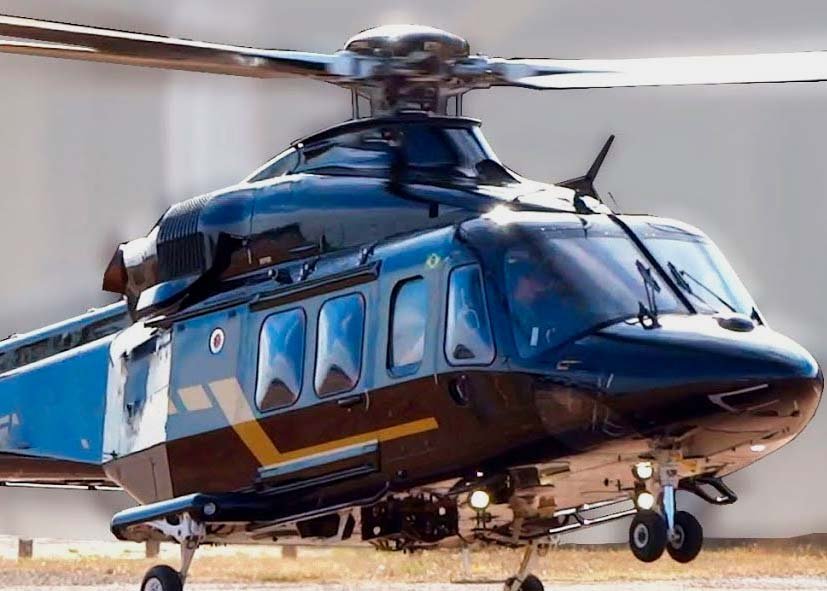
- Fuel contracts and verification of every invoice
- Assessment of hourly engine programs (ESP, CorporateCare)
- Maintenance grouped and scheduled outside peak use
- More useful hours through charter or empty legs
- Annual insurance quote and subscription review
- Training, ADs and crew rest are never cut
Safety management systems (SMS): culture, risk and audits
A safety management system, known internationally as SMS and in Brazil as SGSO (Sistema de Gerenciamento da Segurança Operacional), is the organized set of tools and methods used to identify hazards, assess risks and make decisions before an incident occurs. For air taxi companies it is a regulatory requirement; for private operations, it is one of the strongest signs that the aircraft management provider takes safety seriously.
SGSO according to ANAC
ANAC's Supplementary Instruction IS 119-002 guides operators certified under RBAC 119, which includes companies operating under RBAC 121 and RBAC 135, in implementing an SGSO and having the system accepted by the agency. The instruction organizes SGSO into four components:
- Safety policy and objectives: senior management commitment, responsibilities, key personnel, emergency response plan and documentation.
- Safety risk management: hazard identification, risk assessment and mitigation.
- Safety assurance: performance monitoring, management of change and continuous improvement.
- Safety promotion: training and communication.
The instruction also defines the Accountable Manager, a single, identifiable person responsible for compliance with the requirements, and the safety manager, who has direct access to that person. In private operations under RBAC 91, an owner who hires aircraft management should require an equivalent structure, scaled to the size of the operation.
IS-BAO: the international business aviation standard
IS-BAO (International Standard for Business Aircraft Operations) is a code of best practices created by IBAC (International Business Aviation Council) and its member associations, based on ICAO standards and recommended practices. According to NBAA, more than a thousand operators have achieved registration at Stage 1, 2 or 3 since 2002, and the standard is recognized by the FAA and by the Canadian authority as meeting ICAO standards. There is even a streamlined path for operators with one aircraft and one base. Ask the management company whether it holds IS-BAO registration or follows the standard.
Safety culture
No manual works without culture. In practice, safety culture means:
- Pilots with real authority to refuse or delay a flight because of weather, fatigue or a fault, without pressure from the owner or the management company.
- A voluntary, non-punitive channel for reporting hazards and errors.
- Analysis of every occurrence to correct causes, not just to find someone to blame.
- Standardized briefings, use of checklists and standard operating procedures (SOPs).
- Fatigue management based on the limits of Law 13,475 and the practices of RBAC 117.
Audits
Periodic internal audits verify that manuals, training, maintenance records and dispatch procedures are being followed. External audits, performed by independent consultants, by the insurer or by programs such as IS-BAO, bring an outside perspective. The owner should have a contractual right to audit the aircraft management provider, including through an independent auditor of the owner's choosing.
Safety for passengers, too
The passenger safety briefing, the control of baggage and dangerous goods, and the seat belt policy in turbulence are all part of the SMS. When the flight is operated by an air taxi company, passengers can verify that the company and the aircraft are properly certified, as explained in the air taxi guide.

- SGSO with the four components of IS 119-002
- Accountable Manager and safety manager designated
- Voluntary, non-punitive reporting channel
- Captain's authority to refuse unsafe flights
- Periodic internal and external audits
- IS-BAO registration or adherence to the standard
How do you choose an aircraft management company, and what belongs in the contract?
Choosing the management company means deciding who will look after an asset worth millions and, above all, the safety of everyone on board. The decision should combine technical analysis, references and a clear contract.
Selection criteria
- Experience on the type: ask how many identical or similar aircraft the company manages and for how long.
- Technical structure: in-house maintenance tracking, inspectors, relationships with authorized service centers and an AOG plan.
- Safety: an implemented SMS, audits, occurrence history and a policy on captain's authority.
- Certified partners: if there is charter, which ANAC-certified air taxi companies operate the aircraft.
- Financial transparency: report format and policy on cost pass-through and markups on fuel and parts.
- References: talk to other owners the company serves.
- Service: 24-hour support, a dedicated manager and the ability to handle international trips.

Essential clauses in the aircraft management agreement
| Clause | What it should specify |
|---|---|
| Scope | Detailed list of included and excluded services |
| Management fee | Amount, adjustments and what it covers |
| Cost pass-through | Costs passed through at invoice value with no hidden markup, or a declared markup |
| Approval thresholds | Amount above which the management company needs the owner's prior approval |
| Owner priority | Scheduling rules, notice periods and conflicts with charter |
| Charter revenue | Revenue share, deductible costs and payment terms |
| Insurance | Coverages, limits, who is insured and who is the beneficiary |
| Crew | Who the employer is, selection and replacement criteria |
| Records and data ownership | Maintenance records and documents belong to the aircraft and the owner |
| Audit and exit | Audit rights, notice period, transition and return of documents |
Red flags
- A management fee far below market, offset by markups on fuel, hangar or parts. A client alert from the law firm Holland & Knight had already pointed out this risk in U.S. contracts.
- Promises of charter revenue without a realistic simulation of hours sold.
- Reluctance to show original invoices or to allow audits.
- Pressure to fly in conditions the captain considers unsafe.
- Offers of paid flights to third parties on an aircraft that is not with a certified company.
Changing management companies
When switching management companies, take an inventory of documents, logbooks, electronic records, parts and tools, check every due date and make sure hangar, insurance and engine program contracts transfer without gaps. With Embarque Oficial's aircraft management, the owner has a dedicated manager and monthly reporting from the transition onward. To speak with the team, use the contact page.
- Proven experience on the same type
- Contract with scope, exclusions and approval thresholds
- Costs passed through with original invoices or a declared markup
- Owner priority guaranteed in writing
- Audit rights and clear exit rules
- Aircraft records belong to the owner
Transparency and reporting: what should the owner receive every month?
Transparency is what separates professional aircraft management from a relationship based on trust alone. At any moment, the owner should be able to answer how much the aircraft cost, how much it flew, what its technical status is and whether everything is compliant.
Monthly report: minimum content
- Executive summary: hours flown, cycles, number of flights, availability and the key events of the month.
- Financials: expenses by category, with invoices attached; budget vs. actual; direct and total cost per hour; year-end projection.
- Revenue: where there is charter, flights sold, gross revenue, deductions and the amount paid out.
- Technical status: faults during the month, deferred items, upcoming inspection and component due dates, applicable airworthiness directives and CVA status.
- Crew: hours and duty periods relative to legal limits, training completed and scheduled, rating and medical due dates.
- Compliance: validity of insurance, aircraft documents and licenses.
- Safety: reports received, occurrences and corrective actions.
Annual budget and quarterly review
The annual budget should be approved by the owner at the start of the year, with explicit assumptions: planned hours, average fuel price, salary adjustments, scheduled maintenance events and insurance. Each quarter, the management company revises the projection and explains significant variances. Large events, such as a heavy inspection or an unscheduled engine overhaul, should be communicated as soon as they are identified, with alternatives and quotes.
Access to documents and data
Good practice is to give the owner access to a portal or shared folder with invoices, policies, contracts, scanned logbooks and maintenance reports. Maintenance records belong to the aircraft: they are decisive for resale value and for safety, and must be complete and organized when the owner decides to sell, as explained in the aircraft purchase guide.
Review meetings
Beyond the report, regular meetings with the dedicated manager allow discussion of the coming months' schedule, charter opportunities, base changes, cabin and avionics upgrades and the right time to replace the aircraft. This strategic follow-up connects aircraft management with larger wealth and asset decisions.
Service quality indicators
Ask the management company for metrics on its own service: response time to requests, percentage of flights operated as planned, delivery time of the monthly report and number of nonconformities found in audits. Those who measure their own service tend to improve it.
Embarque Oficial sends a monthly report on costs, hours flown, maintenance and document status to every owner served by its aircraft management service, with a dedicated manager and 24-hour support.
- Monthly report with invoices attached
- Budget vs. actual and full-year projection
- Charter revenue detailed flight by flight
- Upcoming technical due dates and CVA status
- Portal with access to documents and logbooks
- Regular meetings with the dedicated manager
Which business aircraft are commonly placed under aircraft management?
Any aircraft can be professionally managed, but the profile of aircraft management changes with the category. Below are six models that represent the most common situations in Brazil, from light jets to twin-engine helicopters.
Light jets
The Embraer Phenom 300E and the Cessna Citation CJ3 are light jets widely used by business owners and families for regional travel. They are certified for single-pilot operation under certain conditions, but most professional operators fly them with two pilots. Management focuses on cost per hour, availability and a good network of authorized service centers in the country.
Midsize and super-midsize
The Embraer Praetor 500 and the Bombardier Challenger 3500 allow longer flights, with a stand-up cabin and greater range. They require more experienced crews, hourly engine programs are almost always recommended, and international flight planning comes into play. This is the segment where air taxi charter typically enjoys good demand.
Helicopters
The Bell 407 and the Airbus H145 represent the single-engine and the twin-engine executive helicopter. Helicopter management involves many short cycles, the use of helipads, helicopter-specific duty limits (8 flight hours per duty period under Law 13,475) and extra attention to cycle-based inspections. Twins such as the H145 offer engine redundancy that is valued on urban flights and flights over water.
How the category affects management
- Crew: larger models require pilots with more hours and more expensive simulator training.
- Maintenance: larger engines and more complex systems increase the weight of hourly programs.
- Infrastructure: large jets need bigger hangars and longer runways; helicopters depend on certified helipads.
- Revenue potential: charter demand varies by category and by region.
What to ask the management company in each category
For light jets, ask about the network of authorized service centers and the policy on flying with one or two pilots. For midsize and super-midsize jets, ask for the company's track record with hourly engine programs and international flights. For helicopters, confirm experience with helipads, urban operations and tracking of cycle-based inspections. In every case, request a complete annual budget for the model, with explicit assumptions for hours, fuel and maintenance.
To compare technical specifications, see the aircraft technical data sheets and the business aviation guide, which gives an overview of the sector. If you are considering changing models, the aircraft sales and acquisition team can model the management cost of each option before you decide.
Aircraft commonly under management
 Jato · LightEmbraer Phenom 300ESpecifications, cabin, performance and charter options.Read more
 Jato · LightCessna Citation CJ3Specifications, cabin, performance and charter options.Read more
 Jato · MidsizeEmbraer Praetor 500Specifications, cabin, performance and charter options.Read more
 Jato · Super-midsizeBombardier Challenger 3500Specifications, cabin, performance and charter options.Read more
 Helicóptero · MonomotorBell 407Specifications, cabin, performance and charter options.Read more
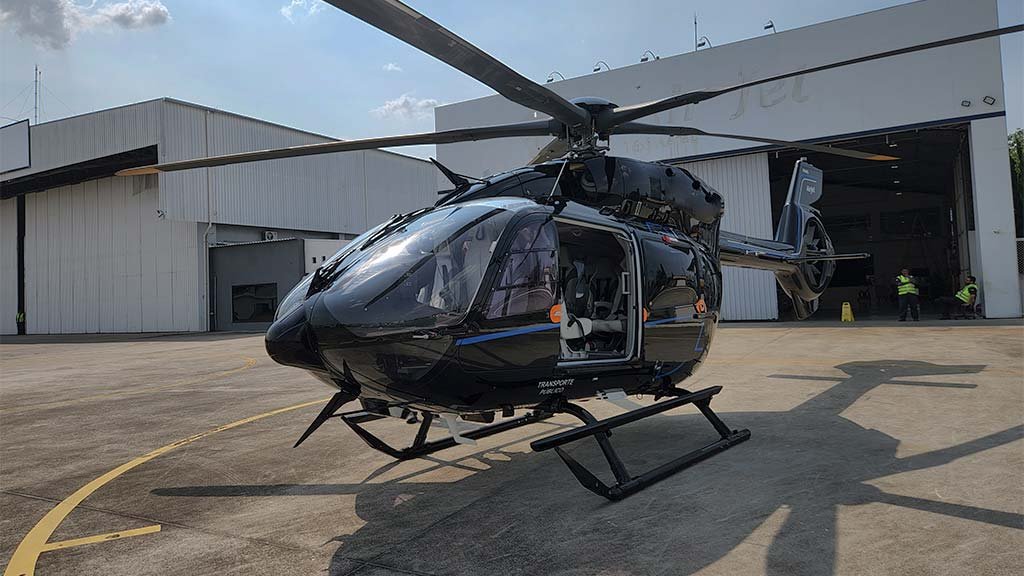 Helicóptero · BimotorAirbus H145Specifications, cabin, performance and charter options.Read more
Glossary: key aircraft management terms
- Aircraft management
- Professional administration of an aircraft on the owner's behalf, covering crew, maintenance, operations, insurance, documentation and finance.
- RBAC 91
- ANAC regulation setting out the general operating rules for civil aircraft in Brazil, applicable to private aviation.
- RBAC 135
- ANAC regulation setting out the operating requirements for commuter and on-demand operations in Brazil, such as air taxi.
- RBAC 145
- ANAC regulation that certifies aircraft maintenance organizations in Brazil.
- Airworthiness directive (AD)
- Mandatory requirement issued or adopted by ANAC under RBAC 39 to correct an unsafe condition in an aircraft, engine, propeller or appliance.
- CVA
- Certificado de Verificação de Aeronavegabilidade (Airworthiness Review Certificate), which must be submitted to ANAC, as a rule annually, for the aircraft to operate.
- CTM
- Controle técnico de manutenção (maintenance tracking): the system that follows inspection and component due dates and the aircraft's records.
- AOG
- Aircraft on ground: a situation in which a fault or a missing part prevents the aircraft from flying.
- RETA
- Mandatory aircraft operator or carrier liability insurance (Seguro de Responsabilidade Civil do Explorador ou Transportador Aéreo), required by the Brazilian Aeronautical Code.
- SGSO (SMS)
- Safety management system, comprising safety policy, risk management, safety assurance and safety promotion.
- IS-BAO
- International standard of best practices for business aircraft operations, created by IBAC.
- Type rating
- A pilot's rating for a specific aircraft model, valid for 12 months in Brazil.
- FSTD
- Flight simulation training device, such as a full flight simulator, qualified or validated by ANAC.
- Hourly engine program
- Contract with the manufacturer or a provider under which the owner pays a fee per flight hour and receives engine maintenance coverage.
- Availability
- Percentage of time the aircraft is ready to fly, excluding days lost to maintenance, faults or lack of crew.
- Total cost per hour
- Sum of fixed and variable costs for a period divided by the hours flown in the same period.
Frequently asked questions about aircraft management
What is aircraft management?
Aircraft management is the professional administration of a private aircraft on the owner's behalf. The management company hires and trains the crew, oversees maintenance, handles hangar, fuel, flight planning, insurance and documentation, and reports with monthly statements. In Brazil, the goal of aircraft management is to keep the aircraft safe, available and compliant with ANAC, the civil aviation authority, at the lowest possible cost per flight hour.
What does an aircraft management company do?
An aircraft management company takes over, under contract, the tasks of operating and maintaining the client's aircraft: pilot selection, scheduling, training, maintenance tracking, negotiation with repair stations and suppliers, flight dispatch, insurance, ANAC compliance and financial reporting. The owner decides when and where to fly, and the aircraft management company handles everything else.
How much does it cost to keep a business jet in Brazil?
Estimates published in 2026 indicate that private jet operating costs for a light jet in Brazil can exceed R$ 3 million per year, including crew above R$ 500,000 a year, hangar fees of R$ 10,000 to R$ 30,000 a month, insurance, and scheduled maintenance of R$ 1.2 million to R$ 2 million a year. The real figure depends on the model, hours flown, home base and contracts.
What is the difference between RBAC 91 and RBAC 135?
RBAC 91 sets out Brazil's general operating rules and applies to private aviation, in which the owner flies for their own purposes without selling seats. RBAC 135 regulates commuter and on-demand operations, such as air taxi, in which an ANAC-certified company sells flights to third parties. RBAC 135 requires approved training programs, an SGSO (safety management system) and the company's operational control.
Can I put my aircraft into air taxi service in Brazil?
Yes. The owner can make the aircraft available to an ANAC-certified air taxi company, which adds it to its operations specifications and sells flights during the periods released by the owner. This requires a contract with the company, its registration as operator with the RAB (Brazilian Aeronautical Registry), bringing the aircraft, maintenance and crew into line with RBAC 135 requirements, and adjusting the insurance.
How much does the owner receive when the aircraft flies as an air taxi?
No percentage is set by regulation. In international references, such as a 2021 AvBuyer article, owners typically receive between 75% and 85% of charter revenue, depending on the contract. The result also depends on the hourly rate, the direct costs per hour and the volume of flights sold, so it is important to model net revenue before placing the aircraft in air taxi service.
What changed with the end of the TPP and TPX categories?
ANAC Resolution No. 739/2024 eliminated, as of April 1, 2025, the fixed classification of aircraft in Brazil into registration categories such as TPP (private) and TPX (air taxi). The change makes it easier to register more than one operator, such as an air taxi company, for the same aircraft. Since January 2026, the digital RAB shows whether the aircraft is authorized to provide service under RBAC 135.
What is an aircraft's CVA?
The CVA is the Certificado de Verificação de Aeronavegabilidade, Brazil's Airworthiness Review Certificate. According to ANAC's IS 91.403-001, RBAC 91 prohibits operating an aircraft unless the CVA has been submitted to the agency, and for most aircraft it is annual. The annual inspection in Appendix D of RBAC 43 does not replace the CVA, and an expired certificate legally grounds the aircraft.
What are the duty limits for business aviation pilots in Brazil?
Under Law 13,475/2017, in air taxi and private air service the maximum duty period is 11 hours for a single crew, 14 hours for an augmented crew and 18 hours for a double crew. The flight-hour limit per duty period is 9 hours 30 minutes for a single crew and 8 hours on helicopters. On jets, the limit is 80 flight hours per month and 800 per year.
How often do pilots need simulator training?
A type rating is valid for 12 months in Brazil. To revalidate it, the pilot must pass a proficiency check in the aircraft or in an ANAC-qualified simulator, after ground and flight training on the type within the previous six months at a training center approved under RBAC 142. Serious aircraft management companies send their pilots to the simulator at least once a year.
What are airworthiness directives?
Airworthiness directives are mandatory requirements issued or adopted by ANAC under RBAC 39 to correct unsafe conditions in aircraft, engines, propellers and appliances. For imported products, ANAC adopts the directives of the authority of the State of design, such as the FAA or EASA. Operating without complying with an applicable airworthiness directive exposes the operator to penalties on every flight.
What insurance is mandatory for a private aircraft in Brazil?
The mandatory insurance is RETA, the aircraft operator or carrier liability insurance (Seguro de Responsabilidade Civil do Explorador ou Transportador Aéreo), required by the Brazilian Aeronautical Code and regulated by CNSP Resolution No. 442/2022. Hull insurance, which covers damage to the aircraft itself, and voluntary liability coverage, which raises the limits, are not required by law, but they are recommended and often demanded by lenders.
What is SMS or SGSO in business aviation?
SMS, called SGSO in Brazil, is the safety management system. According to ANAC's IS 119-002, it has four components: safety policy and objectives, risk management, safety assurance and safety promotion. It is required of air taxi companies and recommended for private operations, which can follow standards such as IS-BAO, created by IBAC.
How can you reduce an aircraft's cost per hour?
The main levers for lowering private jet operating costs are fuel contracts and price comparison by airport, enrollment in hourly engine maintenance programs, inspection planning to group tasks, greater utilization of fixed costs through charter or empty legs, and an annual review of insurance and contracts. Training, airworthiness directives and crew rest should never be cut.
Is an hourly engine program worth it?
Programs such as Pratt & Whitney Canada's ESP and Rolls-Royce's CorporateCare turn unpredictable engine costs into a fixed amount per hour, include AOG support and transfer with the aircraft when it is sold, which tends to make resale easier. An hourly engine program is most valuable for owners who fly regularly and plan to keep the aircraft for several years. The decision should compare the program's cost with self-funded reserves.
How many hours a year justify owning an aircraft?
There is no single number. A 2012 NBAA reference study indicated that whole ownership becomes viable above roughly 175 hours a year and that charter is advantageous below 50 hours. In Brazil, the math depends on the model, the fixed costs and the possibility of generating air taxi revenue. Below a certain level of use, Jet Cards and access programs are usually more economical than owning an aircraft.
Which indicators should an aircraft management company report?
The essential aircraft management indicators are aircraft availability, dispatch reliability, annual utilization in hours and cycles, direct cost per hour, total cost per hour and budget versus actual by expense line. Safety indicators, such as voluntary reports and occurrences, and crew indicators, such as duty-time usage relative to the limits of Law 13,475, should also appear.
What should an aircraft management agreement include?
An aircraft management agreement should detail the scope and exclusions, the management fee and its adjustment, how costs are passed through with original invoices, prior-approval thresholds, owner priority on the schedule, charter revenue rules, insurance, who employs the crew, ownership of the records, audit rights, and exit and transition rules.
How can I tell whether an aircraft management company is trustworthy?
Check the aircraft management company's experience on the same type, its maintenance tracking structure, its implemented SMS, its certified air taxi partners, its financial reporting format and references from other owners. Be wary of fees far below market offset by hidden markups, of resistance to audits and of any offer of paid flights outside an ANAC-certified company.
Does Embarque Oficial offer aircraft management?
Yes. Embarque Oficial offers business aircraft management with a dedicated manager, 24-hour support, a monthly report on costs, hours, maintenance and documentation, and owner priority on the schedule. When the owner wants to generate revenue, the company connects the aircraft to ANAC-certified air taxi operators. For a proposal, visit the contact page.
Sources and references
- ANAC — IS 91.403-001 Revisão C: Certificado de Verificação de Aeronavegabilidade
- ANAC — RBAC 39: Diretrizes de Aeronavegabilidade
- ANAC — IS 119-002 Revisão C: Sistema de Gerenciamento da Segurança Operacional
- Gov.br/ANAC — Revalidar habilitação de tipo de avião ou helicóptero
- Lei 13.475/2017 (Lei do Aeronauta) — texto integral
- SNA — Entenda o RBAC 117
- Machado Meyer — O fim das categorias de registro de aeronaves (Resolução ANAC 739/2024)
- Legismap — Mudanças nos campos de categorias de aeronaves no RAB digital (2026)
- DECEA — ICA 12-35/2023: tarifas de navegação aérea
- Resolução CNSP nº 442/2022 — Seguro RETA
- CNseg — Seguro aeronáutico: proteção da aeronave e de terceiros (set. 2026)
- Forbes Brasil — Brasil chega a 11 mil aeronaves executivas (ABAG, 2026)
- Aeroin — Frota de táxi aéreo no Brasil cresce 5,6% (ABAG, 2026)
- NBAA — Rules of Thumb: Business Aircraft Ownership and Operating Options
- NBAA — IS-BAO
- Pratt & Whitney Canada — ESP Maintenance Program
- AIN — Rolls-Royce expands CorporateCare engine cover (2025)
- AvBuyer — Is it worth chartering out your jet?
- Holland & Knight — Placing your aircraft with an aircraft charter/management company
- Canaltech — Quanto custa ter (e manter) um jato executivo no Brasil (2026)
Guide written by Régis Hahns, CEO of Embarque Oficial, with the company's editorial team, based on the sources above. Rules, prices and lead times change: always confirm with ANAC, the manufacturer or a specialist before deciding. Embarque Oficial serves clients worldwide, from Monaco, Dubai, Capri and Rome to every region of Brazil, and arranges each flight with operators certified by ANAC, Brazil's civil aviation authority, in Brazil and by the local aviation authority abroad.
Keep exploring the Knowledge Hub
Complete guideExecutive Air Taxi GuideHow charter works in Brazil, what it costs, ANAC rules and how to book safely.Read more Complete guidePrivate Jets GuideCategories, range, cabin, costs and how to choose the right jet for each mission.Read more
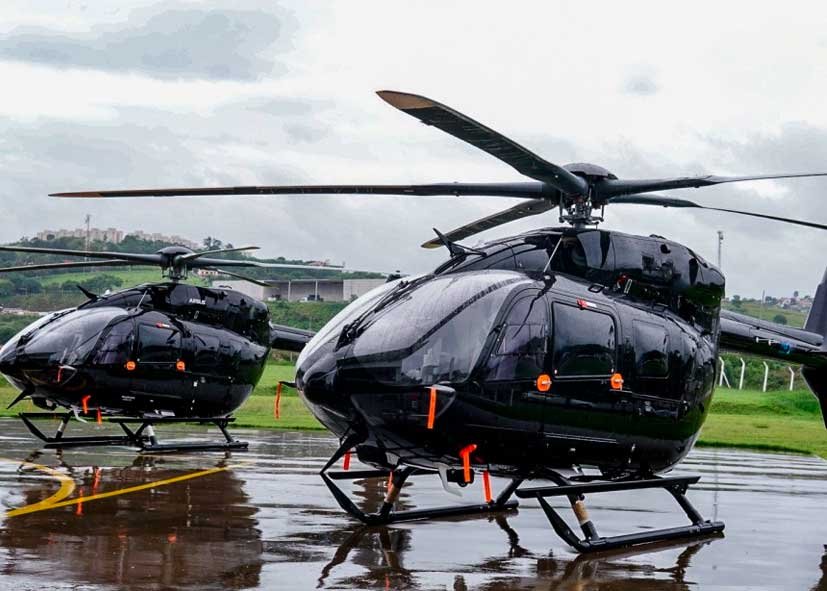 Complete guideExecutive Helicopters GuideModels, single vs. twin engine, helipads and urban mobility by helicopter.Read more
 Complete guideAircraft Acquisition GuideEvaluation, pre-purchase inspection, contracts, ANAC registration and pitfalls.Read more
 Complete guideBusiness Aviation GuideThe sector in Brazil and worldwide: market, rules, technology and trends.Read more
 Embarque Oficial serviceAircraft ManagementCrew, maintenance, compliance and monthly reporting for your business aircraft.Read more
Ready to fly
Tell us where, we take care of the rest
Confidential quotes and 24/7 support, every day of the year.
WhatsApp +55 48 98877-0541 · sales@embarqueoficial.com