
Complete Guide · Business Aviation
Business aviation: the complete guide to the industry in Brazil and worldwide
Market, fleet, regulation, infrastructure and technology in business aviation explained with 2025 and 2026 data, and what it all means for anyone who flies, invests or works in the industry.
By Régis Hahns, CEO of Embarque Oficial · LinkedIn
- 2011flying since
- 44 minread
- 20sources cited
What is business aviation?
Business aviation (in Portuguese, aviação executiva) is the use of general aviation airplanes and helicopters to move companies and people on a schedule, route and airport chosen by the passenger, rather than by a network of scheduled airline flights. Business aviation in Brazil brings together air taxi services regulated under RBAC 135, private operations governed by RBAC 91 and shared ownership programs. According to ABAG, Brazil's fleet stood at 11,362 aircraft in May 2026, the second largest in the world, behind only the United States.
In this guide
- What is business aviation and how does it differ from commercial aviation and general aviation?
- What are the ways to access business aviation?
- How big is the Brazil private aviation market?
- What does the global business aviation market look like according to GAMA?
- What role does Embraer play in global business aviation?
- Who regulates business aviation in Brazil: ANAC, DECEA, RBAC 91 and RBAC 135
- Which airports concentrate business aviation in Brazil and what are the restrictions?
- How does helicopter mobility work in São Paulo and Rio de Janeiro?
- What are the business aviation trends and technologies in 2026?
- What are the main business aviation events in Brazil and worldwide?
- What are the opportunities and challenges for business aviation in Brazil?
- What careers are there in business aviation?
- Which aircraft represent the business aviation spectrum?
- How to get started in business aviation safely and at the best cost?
- Glossary
- Frequently asked questions
What is business aviation and how does it differ from commercial aviation and general aviation?
Business aviation, also called executive aviation, private aviation or corporate aviation, is the use of general aviation airplanes and helicopters to carry people and high-value cargo on a schedule, route and airport defined by whoever is flying. Business aviation does not sell seats on a fixed network: it puts an entire aircraft at the disposal of a company, a family or a group, at the moment the trip needs to happen.
To understand where business aviation fits, it helps to split Brazilian civil aviation into two large blocks. On one side is scheduled commercial aviation, made up of the airlines that sell tickets on flights with published timetables and operate under RBAC 121 (the Brazilian equivalent of the airline rules). On the other side is general aviation, which covers everything that is not a scheduled airline: private flying, air taxi, flight training, agricultural aviation, sport aviation, specialized aerial services and many other uses. Business aviation is the slice of general aviation dedicated to high-value corporate and personal travel.
Business aviation vs commercial aviation
The most visible difference between business aviation and commercial aviation is control of the schedule. In commercial aviation, passengers adapt to the airline's timetable, to the connecting hub and to boarding lines. In business aviation, passengers choose the departure time and the airport closest to their final destination and often board through a private terminal or an FBO (fixed base operator) in a few minutes. According to ABAG data published by Forbes Brasil in July 2026, commercial aviation serves just over 147 locations in Brazil, while business aviation helps connect more than 5,500 municipalities.
Business aviation vs general aviation
All business aviation is general aviation, but not all general aviation is business aviation. A crop duster spraying fields, a flying-club single-engine trainer on an instruction flight and a sightseeing hot-air balloon also belong to general aviation. What defines business aviation is the purpose of the flight: taking people (or urgent cargo) to meet a business, medical, family or leisure agenda with flexibility and privacy.

| Criterion | Scheduled commercial aviation | Business aviation | Other general aviation uses |
|---|---|---|---|
| Who decides schedule and route | The airline | The client or the company | The operator, according to the mission |
| Main rule in Brazil | RBAC 121 | RBAC 91 (private) and RBAC 135 (air taxi) | RBAC 91, RBAC 137 (agricultural) and others |
| What is sold | Individual seat | Whole aircraft, share or flight hours | Specific service |
| Airports | Hubs with scheduled flights | Thousands of runways, helipads and business airports | Rural strips, flying clubs, landing areas |
| Typical aircraft | High-capacity jets and turboprops | Business jets, turboprops, helicopters and piston aircraft | Agricultural aircraft, trainers, experimentals |
Who uses business aviation in Brazil
The profile of those who use business aviation in Brazil is broader than the “luxury private jet” stereotype. Farmers in the Center-West region use turboprops to visit properties hundreds of kilometers from the nearest commercial airport. Manufacturers take technical teams to three plants in a single day. Hospitals and families use aircraft for patient transfers and medical treatment. Investors run roadshows through several state capitals in a single week. In every case, the value of business aviation lies in the time saved and in the destinations scheduled airlines do not reach.
Anyone looking to book a one-off flight will find the step-by-step process in the executive air taxi guide, and anyone who wants to compare models can browse the available aircraft fleet before requesting a quote.
- Destination with no scheduled airline service or with long connections
- Agenda covering several cities on the same day
- Group of four or more people traveling together
- Need for privacy and confidentiality
- Special baggage, equipment or pets
- Departure time that may change at short notice
What are the ways to access business aviation?
There are at least six ways to access business aviation in Brazil, and each one strikes a different balance between fixed cost, flexibility and long-term commitment. Choosing the right model depends mainly on how many hours a year the person or company flies, which routes repeat and how much capital they are willing to tie up.
1. Air taxi (charter)
Air taxi is the charter of an entire aircraft, per leg or per period, from a company certified by ANAC (Agência Nacional de Aviação Civil), Brazil's civil aviation authority, for paid transportation. Air taxi operates under RBAC 135, with crew, maintenance and safety management system overseen by the agency. It is the entry-level model of business aviation: there is no fixed cost, and you pay only for the flight. Embarque Oficial arranges air taxi charters with certified operators in jets, turboprops and helicopters.
2. Whole aircraft ownership
In whole ownership, an individual or a company buys the aircraft and operates it privately under RBAC 91, without charging for transportation. The owner controls 100% of the schedule but also bears the cost of the hangar, crew, insurance, maintenance, avionics upgrades and depreciation. The numbers usually work for those who fly many hours a year. Valuation, pre-purchase inspection, registration and pitfalls are covered in detail in the Aircraft Purchase Guide.
3. Shared (fractional) ownership
Shared aircraft ownership is regulated in Brazil by Subpart K of RBAC 91, whose current wording was approved by ANAC Resolution No. 606 of February 11, 2021. Under the Subpart K rules:
- the minimum share is 1/16 of an airplane or 1/32 of a helicopter;
- a program manager, holding administrative specifications issued by ANAC, retains operational control of the aircraft and runs an SGSO (Sistema de Gerenciamento de Segurança Operacional, a safety management system);
- each shareholder signs a management agreement lasting at least one year, which is reported to ANAC and kept confidential;
- paid transportation of people or goods on program flights is prohibited;
- the hours flown by each shareholder may not exceed the hours corresponding to their shares.
Shared ownership reduces the capital invested and splits fixed costs, but it requires a multi-year commitment and scheduling rules defined by contract.
4. Jet Card
A Jet Card is a program of prepaid flight hours or credits that guarantees rates and availability under agreed conditions, with no aircraft purchase and no share. Jet Card flights are performed by certified air taxi operators. The model suits people who fly regularly but not enough to justify owning an aircraft. Discover the Embarque Oficial Jet Card.
5. Shared flights
On shared flights, a charter is split among passengers who do not know each other, on high-demand routes and dates, such as state capitals and beach destinations on public holidays. Before buying a seat, passengers should confirm which air taxi company operates the flight and whether the aircraft is registered for that service.
6. Empty legs
Empty legs are repositioning legs: the aircraft has to return to base or fly on to pick up another client and would otherwise fly empty. These legs are offered at a significant discount in exchange for little flexibility on date and time. It is worth following the empty leg offers and joining the Clube Infinity to receive opportunities first.
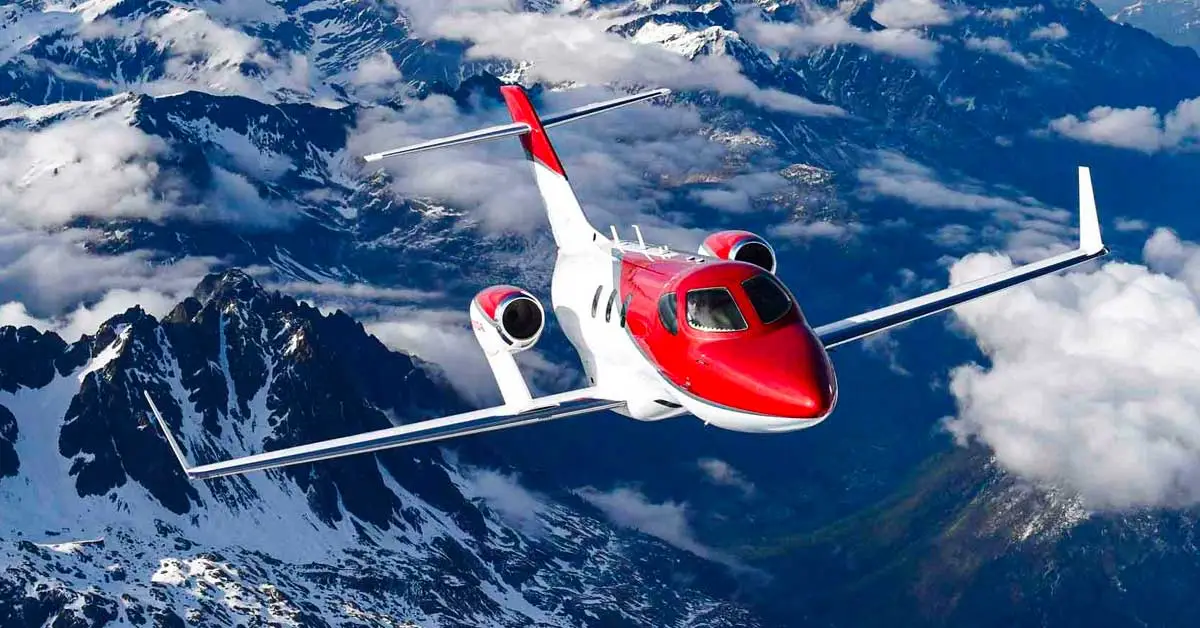
| Model | Fixed cost | Commitment | Flexibility | Best for |
|---|---|---|---|---|
| Air taxi | None | Per flight | High | Occasional use or varied routes |
| Jet Card | Upfront deposit | Months | High | Moderate regular use |
| Shared ownership | Share + monthly fee | Years | Medium to high | Frequent use without in-house management |
| Whole ownership | Full | Long term | Maximum | Intensive use and own schedule |
| Shared flight | None | Per seat | Low | High-demand routes |
| Empty leg | None | Per leg | Very low | Travelers with open dates |
- How many flight hours do you expect per year?
- Do your routes repeat or change every month?
- How many passengers travel per leg on average?
- What is the typical distance: regional, domestic or international?
- How much capital are you willing to tie up in an aircraft?
- Do you want to delegate management or control everything?
How big is the Brazil private aviation market?
Brazil has the second largest business aviation fleet in the world, behind only the United States. According to ANAC data compiled by ABAG (Associação Brasileira de Aviação Geral, the Brazilian General Aviation Association) and published by Forbes Brasil, the Brazilian business aviation fleet totaled 11,362 aircraft in May 2026, up from 10,893 in May 2025. Based on the breakdown released by ABAG in 2025 (table below), this base includes jets, turboprops, helicopters and piston airplanes in operation.
How the Brazilian fleet is made up
Most of the Brazilian business aviation fleet is still made up of piston airplanes, but jets are the fastest-growing segment. In June 2025, according to an ABAG survey based on the RAB (Registro Aeronáutico Brasileiro, the Brazilian Aeronautical Registry) published by Bloomberg Línea, the breakdown was as follows:
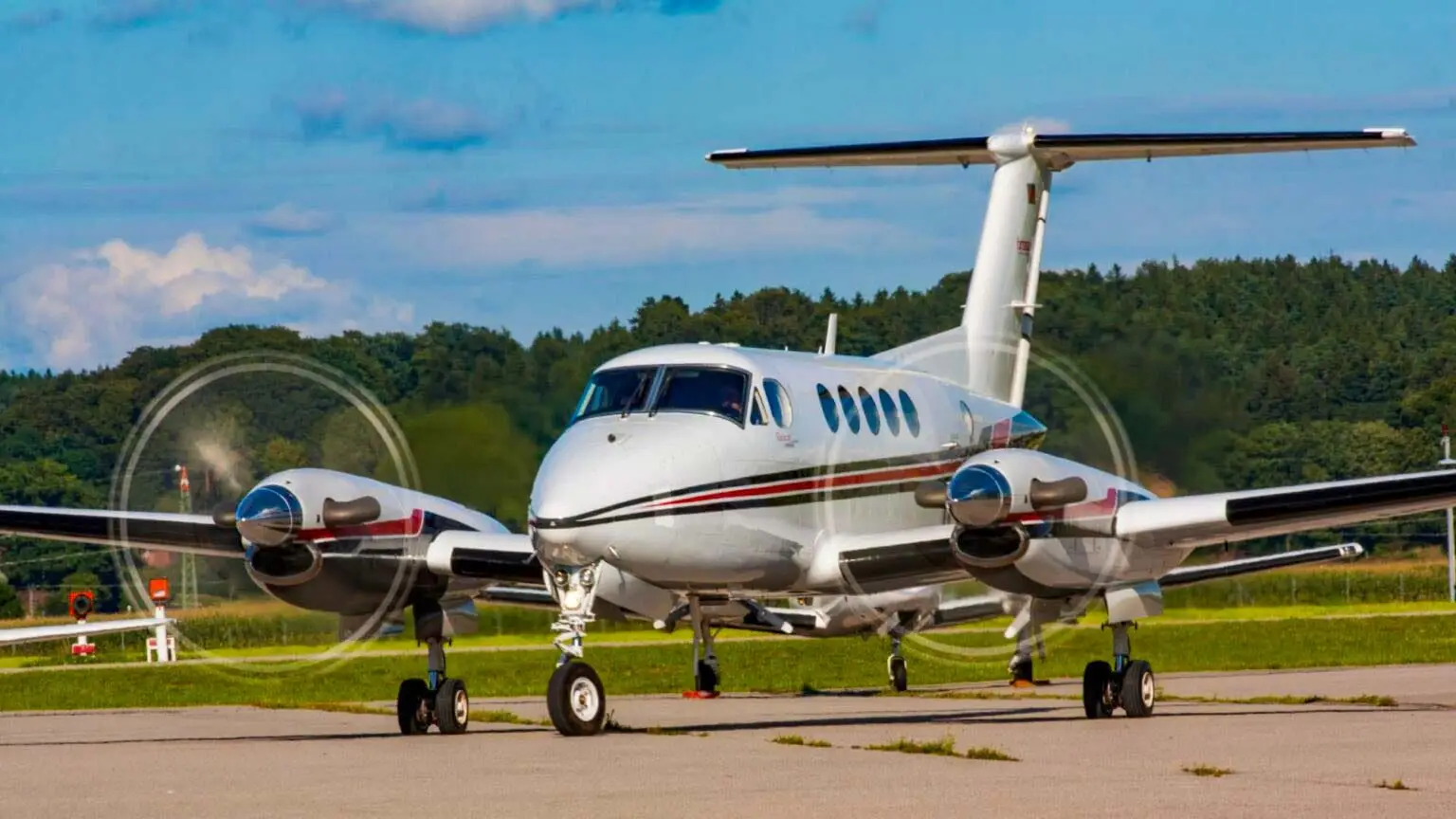
| Category | Aircraft (Jun 2025) | Share |
|---|---|---|
| Piston airplanes | 6,084 | 56% |
| Turboprops | 2,178 | 20% |
| Turbine helicopters | 1,363 | 12% |
| Jets | 1,075 | 10% |
| Piston helicopters | 240 | 2% |
| Total | 10,940 | 100% |
Jets are driving growth
Brazil's business jet fleet grew from 1,013 units in December 2024 to 1,075 in June 2025, according to ABAG. By May 2026, there were already 1,193 jets, up 12.5% in twelve months, the strongest growth of any category; over the same period, turboprops grew 7.6% and turbine helicopters 7.1%, according to Forbes Brasil. For comparison, Mexico, the second largest market in Latin America, had around 950 jets at the end of 2024, according to ABAG.
In August 2025, Bloomberg Línea reported Citi's assessment that larger aircraft are gaining share in the Brazilian fleet, driven by the internationalization of Brazilian companies and by agribusiness. In practice, this means more midsize and large-cabin jets capable of linking Brazil to the United States and Europe, alongside the light jets that dominate domestic routes in the Brazil private aviation market.
Activity, deliveries and lead times
- Business aviation in Brazil exceeded 1 million flight hours in 2025 at the main airports, according to ABAG as cited by Forbes Brasil, compared with roughly 920,000 to 930,000 hours a year before the current growth cycle.
- Brazil has added an average of around 650 new business aircraft per year over the past three and a half years, according to the organizers of LABACE 2026.
- Delivery lead times for new aircraft usually exceed nine months and reach around two years in the most sought-after segments, according to industry sources interviewed by Forbes Brasil in 2026.
- New turboprops and larger aircraft start at US$ 5 million to US$ 7 million, according to the same report; the figure is a market reference and varies with model, configuration, exchange rate and year of manufacture.
Helicopters and major cities
Helicopters are a chapter of their own in the Brazilian market. São Paulo has around 243 helicopters based in its metropolitan area, according to an estimate by the Flapper platform cited by Bloomberg Línea in July 2026, and Rio de Janeiro has fewer than 200. Helicopter traffic dynamics in the two cities are covered in detail further down, in the section on urban mobility.
For travelers flying within the country, this market translates into more available aircraft and more routes served. Embarque Oficial arranges business flights within Brazil in every aircraft category.
What does the global business aviation market look like according to GAMA?
GAMA (General Aviation Manufacturers Association) is the association that consolidates deliveries and billings from general aviation manufacturers, and its reports are the main public benchmark for measuring the global business aviation market. GAMA's 2025 annual report, released in February 2026, recorded the highest billings in the industry's history.
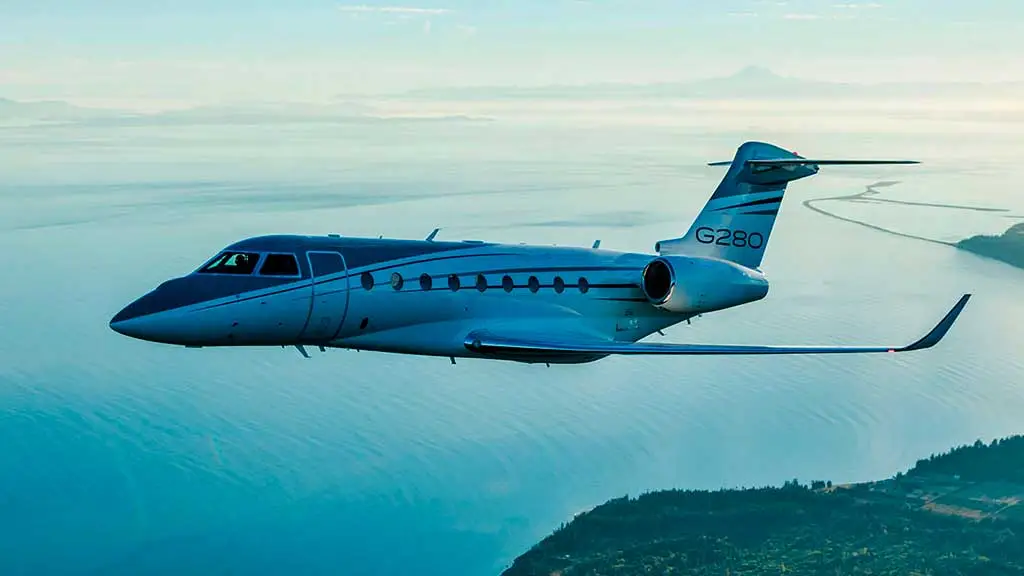
2025 figures
| Segment | 2025 deliveries | Change vs 2024 |
|---|---|---|
| Business jets | 854 | +11.8% |
| Turboprops | 594 | -5.1% |
| Piston airplanes | 1,782 | +0.6% |
| Total airplanes | 3,230 | +2.2% |
| Helicopters (piston and turbine) | 938 | -1.9% |
In value terms, airplane billings reached US$ 31.0 billion in 2025, up 16.1%, and helicopter billings US$ 4.7 billion, up 5.5%. Combined, airplanes and helicopters reached US$ 35.7 billion, up 14.6% and an all-time record, according to GAMA. The helicopter comparison comes with a caveat: Leonardo's fourth-quarter data were not available at the time of publication and were excluded from the 2024 baseline.
First half of 2026
Figures for the first half of 2026 confirm the trend. According to GAMA, airplane deliveries totaled 1,458 units (+1.7%) and billings reached US$ 14.3 billion (+15.5%). Business jet deliveries came to 383 (+8.2%), led by Gulfstream (79 deliveries), followed by Embraer (74) and Bombardier (56). Turboprops grew 7.8% (289 units), piston airplanes fell 3.1% (786) and civil helicopters rose 4% (419 units).
Outlook for the next decade
The Honeywell Aerospace forecast released in October 2026 projects around 9,950 business jet deliveries between 2026 and 2035, plus around 4,200 turboprops. According to Honeywell, Latin America accounts for around 14% of deliveries and 15% of the global fleet, has the second largest business aviation fleet on the planet, led by Brazil and Mexico, and shows some of the strongest fleet expansion intentions in the survey. Every forecast is an estimate: interest rates, exchange rates, fuel prices and economic growth can change these numbers.
Leading manufacturers
| Manufacturer | Country | Key families |
|---|---|---|
| Gulfstream | USA | G280, G500, G600, G700, G800 |
| Bombardier | Canada | Challenger 3500 and 650, Global 5500, 6500 and 7500 |
| Embraer | Brazil | Phenom 100 and 300, Praetor 500 and 600 |
| Textron Aviation | USA | Cessna Citation and Beechcraft King Air |
| Dassault Aviation | France | Falcon 2000, 6X and 8X |
| Pilatus and Honda Aircraft | Switzerland and USA | PC-12, PC-24 and HondaJet |
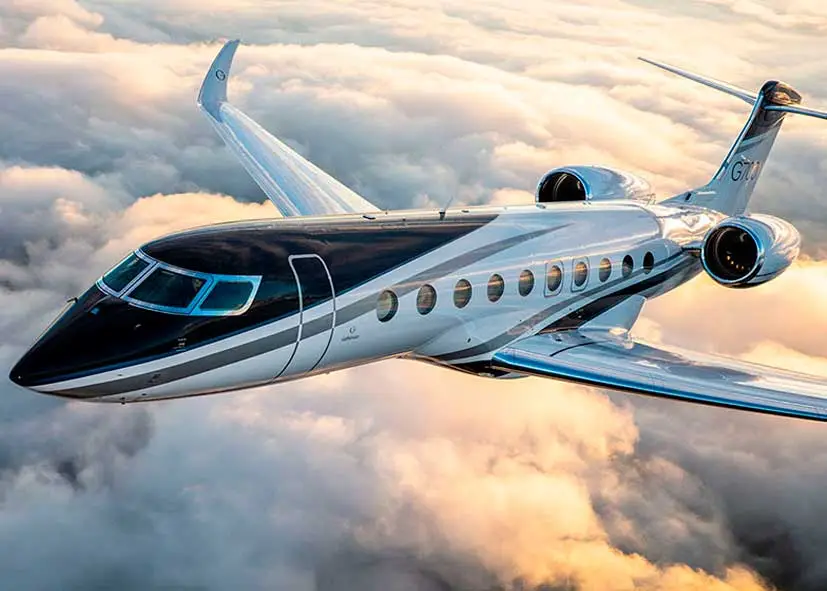
In the rotary-wing segment, Airbus Helicopters (represented in Brazil by Helibras), Bell, Leonardo and Robinson account for most of the business helicopter fleet. To compare jet categories, range and cabins, see the Private Jets Guide; the top of the market is occupied by ultra-long-range aircraft such as the Gulfstream G700.
What role does Embraer play in global business aviation?
Embraer is Brazil's leading business jet manufacturer and one of the three largest in the world by units delivered. In 2025, Embraer delivered 155 business jets, a company record, beating the previous mark of 145 aircraft set in 2010, according to GAMA data cited by Air Data News. In the first half of 2026, Embraer was the second largest manufacturer by business jet deliveries, with 74 units, behind only Gulfstream.
The Phenom and Praetor families
Embraer's business jet portfolio is split into two families. The Phenom family covers very light and light jets, and the Praetor family covers midsize and super-midsize jets. In 2025, deliveries were distributed as follows:
- Phenom 300: 72 units, the company's most delivered model;
- Phenom 100: 14 units;
- Praetor 500 and Praetor 600: 69 units combined, according to GAMA.
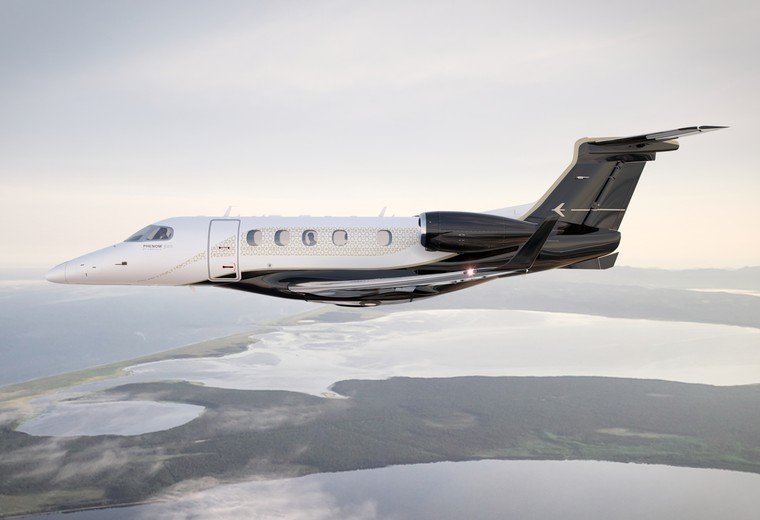
The Phenom 300E is a constant presence in Brazilian air taxi fleets because it combines a comfortable cabin for two- to three-hour trips, short-runway performance and competitive operating costs for its category. The Praetor 500 takes passengers over continental distances nonstop, and the Legacy 650, derived from a commercial airliner platform, remains very present in the pre-owned market for those who need a large cabin.
Why Embraer matters for the Brazilian market
Having a global manufacturer in the country brings concrete advantages to business aviation in Brazil:
- Local technical support: parts, engineering and authorized service centers with support in Portuguese.
- Supply chain: maintenance, interiors, avionics and training companies grow around the manufacturer.
- Workforce development: engineers, mechanics and technicians trained by the industry also supply operators and maintenance shops.
- Resale value: models with a large installed base in Brazil tend to have a more liquid secondary market.
Eve: Embraer's bet on urban air mobility
Embraer is also the controlling shareholder of Eve Air Mobility, which is developing an eVTOL (electric vertical takeoff and landing aircraft) for urban air mobility. The status of Eve's program in 2026, with its revised certification timeline, is covered in the trends and technology section of this guide.
What this means for travelers
For passengers, Embraer's strength translates into availability: Phenom and Praetor jets are among the most widely offered aircraft in the Brazilian charter market, which makes it easier to find an aircraft close to the flight's origin and reduces positioning legs. For buyers, it means a large base of pre-owned aircraft to compare and a mature maintenance market.
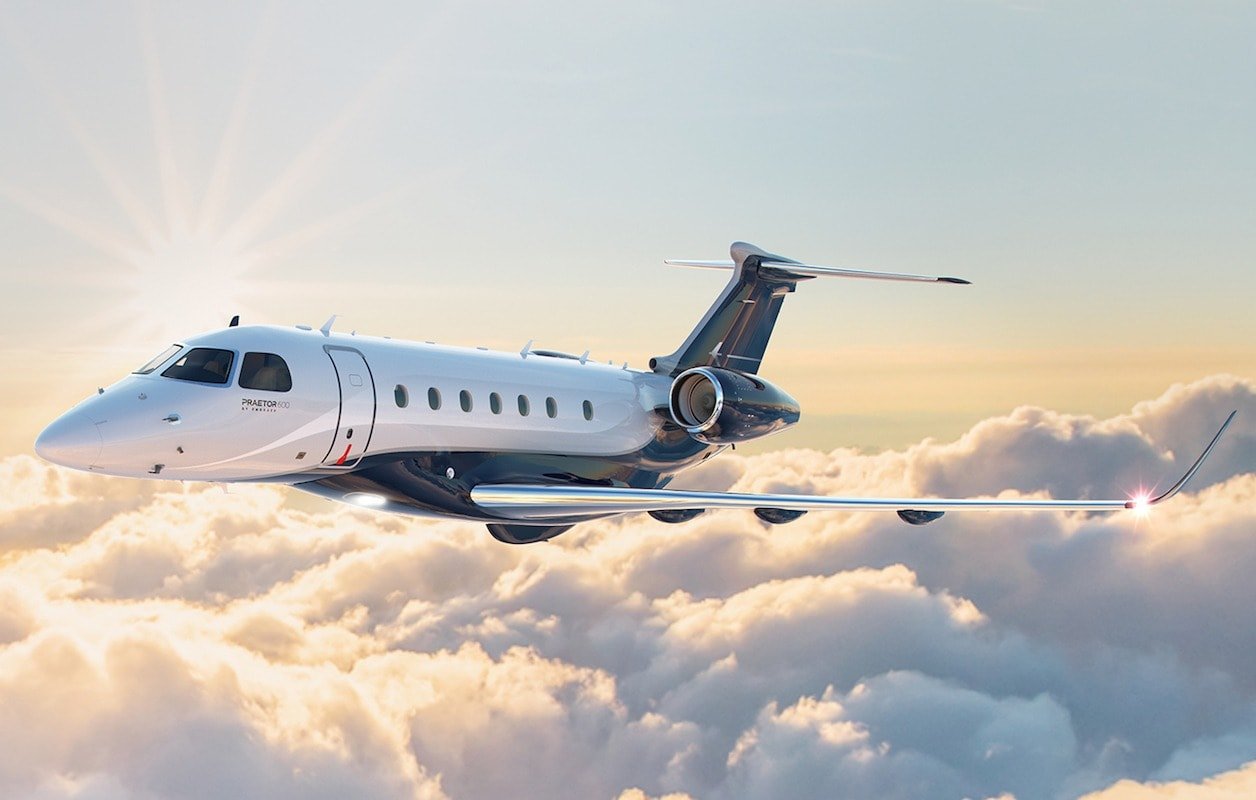
Who regulates business aviation in Brazil: ANAC, DECEA, RBAC 91 and RBAC 135
Business aviation in Brazil is regulated by two main bodies. ANAC (Agência Nacional de Aviação Civil), Brazil's civil aviation authority, regulates and oversees civil aviation safety: it certifies air taxi companies, registers aircraft in the RAB (Registro Aeronáutico Brasileiro, the Brazilian Aeronautical Registry), issues pilot and mechanic licenses and publishes the RBACs (Regulamentos Brasileiros da Aviação Civil, the Brazilian Civil Aviation Regulations). DECEA (Departamento de Controle do Espaço Aéreo), Brazil's airspace control department under the Air Force Command, controls the airspace, flight plans, approach procedures and air traffic. The legal basis for all of this is the Código Brasileiro de Aeronáutica, the Brazilian Aeronautical Code (Law No. 7,565/1986).
The regulations every user should know
| Regulation | What it covers | Practical example |
|---|---|---|
| RBAC 91 | General operating rules for civil aircraft; includes private flying and Subpart K (shared ownership) | A business owner who flies their own jet without charging for transportation |
| RBAC 119 | Certification of air operators and issuance of operations specifications | A company applying to ANAC for authorization to operate air taxi services |
| RBAC 135 | Operating requirements for commuter and on-demand operations (air taxi) | A charter flight from São Paulo to Trancoso on a light jet |
| RBAC 61 | Pilot licenses, ratings and certificates | A commercial pilot with a type rating on a jet |
RBAC 91 vs RBAC 135: the difference that protects passengers
The difference between RBAC 91 and RBAC 135 is the difference between flying for free and flying for pay. An aircraft operated under RBAC 91 may only carry its owner, their guests and employees, with no fare charged. When there is payment for transportation, the flight must be operated by a company certified under RBAC 135, which meets stricter requirements for crew training, duty time limits, maintenance, insurance and safety management.
Illegal air taxi (TACA)
Illegal air taxi, known in the Brazilian industry as TACA (táxi aéreo clandestino), is paid transportation provided by someone without ANAC certification to do so, usually with an aircraft registered as private. TACA looks cheaper because it skips safety steps and, in the event of an accident, may leave the passenger without adequate insurance coverage. In 2020, ANAC approved amendments to Resolution No. 472/2018 that multiplied fines for illegal air taxi and illegal maintenance by up to ten times; in the case of illegal air taxi, the fine can reach R$ 200,000, according to Agência Infra.
How to check whether a flight is legal
- Ask for the name and CNPJ (Brazilian company tax ID) of the company that will operate the flight, not just of the company selling it.
- Look up the company and the aircraft in ANAC's Voe Seguro (Fly Safe) app, available for Android, iOS and web, which lets you check whether the operator and aircraft meet the agency's requirements.
- Check in the digital RAB that the aircraft is listed with an operator authorized to provide 135 services (a field that, since 2026, has replaced the old categories such as TPX) and with a valid certificate of airworthiness.
- Require a contract and written confirmation identifying the crew, aircraft and insurance.
For aircraft owners, regulatory compliance is part of day-to-day management; the Aircraft Management Guide explains how to keep crew, maintenance and documentation up to date.
- Operating company certified by ANAC for air taxi services
- Aircraft looked up in the Voe Seguro app
- Aircraft authorized for 135 services in the digital RAB
- Pilots with valid licenses and ratings for the model
- Contract identifying aircraft, crew and insurance
- Prices far below market treated as a red flag
Which airports concentrate business aviation in Brazil and what are the restrictions?
The infrastructure for business aviation in Brazil combines congested city-center airports, airports dedicated to general aviation and private airports built for the segment. Each one has its own advantages and restrictions regarding slots, operating hours, noise and procedures, and choosing the right airport changes the total travel time.
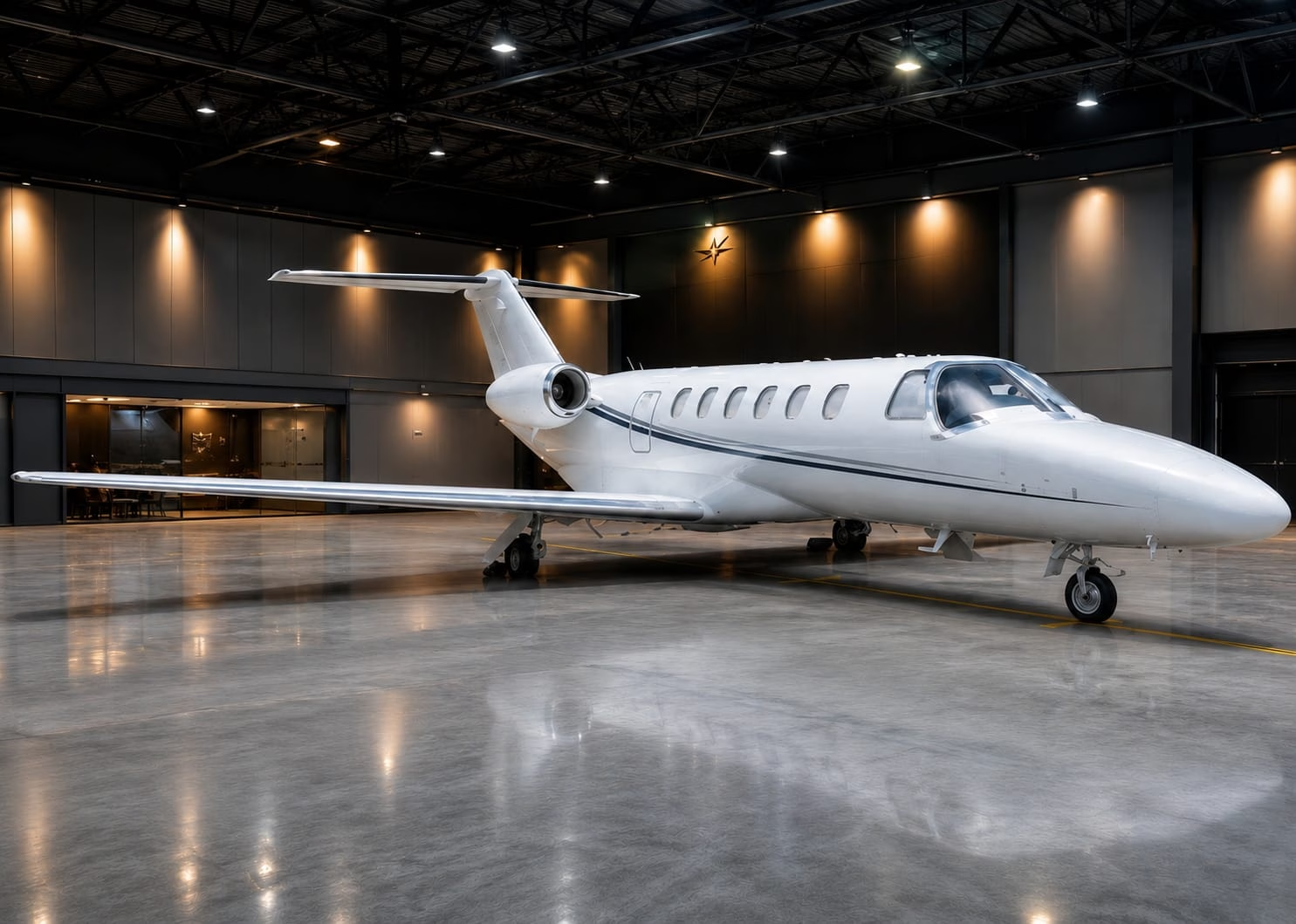
| Airport | ICAO code | Profile | Point to watch |
|---|---|---|---|
| Congonhas (São Paulo) | SBSP | Central, next to the South Zone and Faria Lima business district | Contested slots and mandatory prior FBO contract |
| Campo de Marte (São Paulo) | SBMT | Dedicated to general aviation and helicopters | Transition to instrument operations |
| São Paulo Catarina (São Roque) | SBJH | Private international business airport | Around 74 km from downtown São Paulo |
| Jundiaí | SBJD | General aviation hub with hangars and maintenance | Ground transfer to the capital |
| Santos Dumont (Rio de Janeiro) | SBRJ | Central, next to downtown Rio | Capacity shared with commercial aviation |
| Jacarepaguá (Rio de Janeiro) | SBJR | General aviation and the country's largest helicopter hub | Shorter runway, suited to smaller aircraft |
| Brasília | SBBR | Federal capital and gateway to the Center-West | Plan apron space, times and terminal in advance |
Congonhas (SBSP)
Congonhas is the most sought-after airport for business aviation in São Paulo because of its location, but also the most restricted. In October 2026, ANAC established rules requiring general aviation operators, such as air taxi companies and business jets, to contract a ground handling provider (FBO) in advance before requesting landing and takeoff slots at Congonhas. According to ANAC, the measure aims to fight the parallel slot market and ensure ground support for every operation.
Campo de Marte (SBMT)
Campo de Marte, in São Paulo's North Zone, has been run by PAX Aeroportos since 2022. At the opening of LABACE 2026, ANAC announced that the airport would begin instrument (IFR) operations on September 15, 2026, following works of around R$ 120 million, including a new taxiway and a runway end safety area. Previously, Campo de Marte operated under visual rules only and shut down in bad weather.
São Paulo Catarina (SBJH)
São Paulo Catarina International Executive Airport, in São Roque, is operated by JHSF, has a 2,470-meter runway and was authorized for international flights in June 2021. For trips abroad, Catarina avoids the competition for slots at the central airports.
Rio de Janeiro: Santos Dumont and Jacarepaguá
At Santos Dumont, commercial aviation has an annual passenger cap that, under an agreement linked to the Galeão concession, is set to rise from 2026 and disappear in 2028, which is likely to increase competition for capacity at the central airport. Jacarepaguá, also run by PAX Aeroportos, concentrates general aviation in the Barra da Tijuca area and the largest volume of helicopters in the country.
In São Paulo and Rio, the jet + helicopter combination solves most of these restrictions: the jet lands at the most suitable airport and an executive helicopter transfer takes the passenger to the helipad closest to their destination.
- Confirm slot and time window well in advance
- Check whether the airport has instrument operations in bad weather
- Book an FBO or executive lounge for boarding
- Plan the ground or helicopter transfer to the final destination
How does helicopter mobility work in São Paulo and Rio de Janeiro?
The helicopter is the urban link of business aviation in Brazil. In cities with heavy traffic, a helicopter turns a two-hour car journey into a 15- or 20-minute flight, connecting airports, helipads on office buildings, country homes and coastal destinations.
São Paulo: the largest urban fleet in the country
São Paulo has around 243 helicopters based in its metropolitan area, according to an estimate by the Flapper platform published by Bloomberg Línea in July 2026. In 2025, São Paulo's airports (Campo de Marte, Guarulhos, Congonhas and Campinas) recorded 37,422 helicopter landings and takeoffs, according to DECEA data. Including flights at helipads, the same Flapper estimate puts the region at between 61,000 and 67,000 helicopter operations, of which 24,000 to 30,000 took place at helipads. Campo de Marte alone had 25,481 helicopter operations in 2025; in 2012, it had 103,215.
Rio de Janeiro: oil changed the map
Rio de Janeiro has overtaken São Paulo in helicopter traffic at airports. In 2025, Jacarepaguá, Santos Dumont and Galeão together handled 93,579 rotary-wing operations, and Jacarepaguá alone had 87,815, up 85% in five years, according to DECEA. The main explanation is support for oil and gas platforms in the Santos Basin, which has made Jacarepaguá the airport with the most helicopter movements in Brazil since 2013.
Typical uses of business helicopters
- Airport connections: from the jet at Guarulhos, Catarina or Jundiaí to a helipad near Avenida Paulista or Faria Lima.
- Corporate agenda: same-day visits to factories, distribution centers and construction sites in the interior of São Paulo state.
- Coast and mountains: trips to Guarujá, Angra dos Reis, Paraty, Campos do Jordão and weekend destinations.
- Tourism: sightseeing flights in cities such as Rio de Janeiro, Florianópolis and Foz do Iguaçu.
Single-engine or twin-engine?
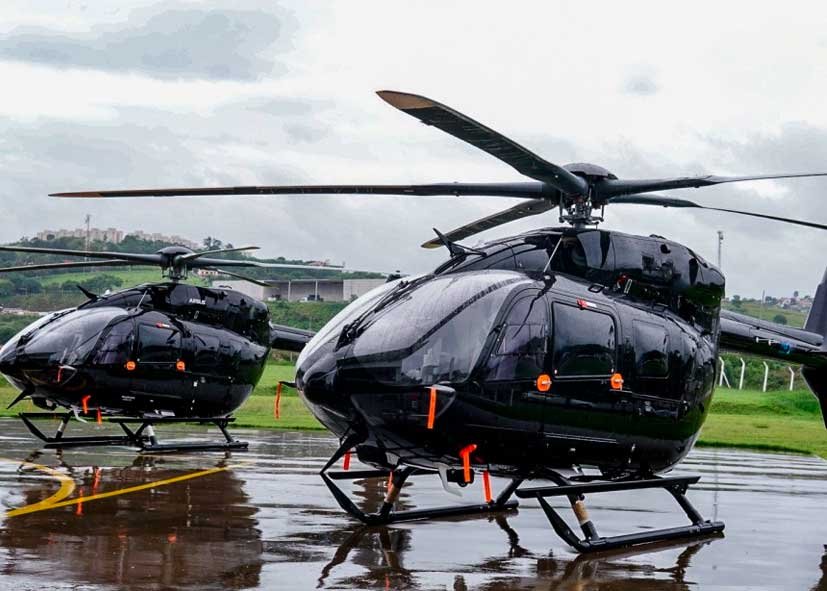
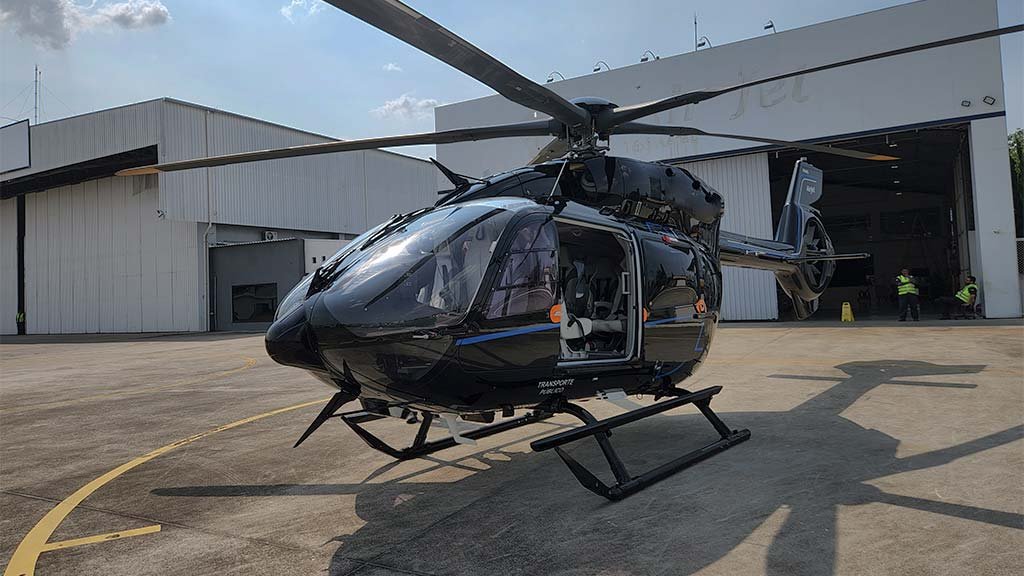
Single-engine helicopters such as the Esquilo AS350 and the Bell 407 are the most common in short-distance executive transport. Twin-engine helicopters such as the Airbus H145 and the Agusta A109 offer engine redundancy and a larger cabin, and they are required for some operations over densely populated areas or over water. The choice between single and twin engines, helipads and urban operating rules are covered in the Executive Helicopters Guide.
Restrictions that affect helicopter flights
Urban helicopter flights follow corridors and procedures defined by DECEA, and each helipad has its own limits on operating hours, weight and aircraft category. Noise, night operations and weather (low ceilings and heavy rain) are the restrictions that most often cancel or delay flights. That is why a good operator always proposes a backup plan, such as landing at an airport and continuing by road, when the destination helipad cannot be used.
What are the business aviation trends and technologies in 2026?
Business aviation in 2026 is being shaped by five forces: decarbonization, efficiency, digitalization, larger and connected cabins, and new types of aircraft such as eVTOLs. Some of these trends are already changing the passenger experience; others are still in the certification phase.
SAF and decarbonization
SAF (sustainable aviation fuel) is the main short-term route to decarbonizing aviation. In Brazil, Law No. 14,993/2024, known as the Lei do Combustível do Futuro (Fuel of the Future Law), created ProBioQAV, a program with an emissions reduction target that starts at 1% on January 1, 2027 and reaches 10% in 2037. The program was regulated by decree in August 2026, and ANAC held a public consultation until October 1, 2026 on monitoring and enforcement of the target. According to an analysis by the law firm Mayer Brown, ANAC's draft rule covers operators certified under RBAC 119, or operating under RBAC 129, with emissions equal to or above 10,000 tonnes of CO₂ per year on domestic flights; most business aviation operators fall below that threshold, but SAF supply in Brazil should grow for everyone.
Efficiency and safety
New-generation engines, more efficient wings and integrated avionics reduce fuel burn and pilot workload. Emergency autoland systems, already certified on turboprops and light jets, can fly the aircraft to an airport and land it if the pilot becomes incapacitated. Modern turboprops such as the Pilatus PC-12 show how avionics technology once reserved for jets has reached entry-level aircraft.
Digitalization
Digitalization has changed how flights are booked and operated. Quotes, contracts and passenger manifests are handled online; operators use flight planning, maintenance tracking and flight data analysis software; and passengers can check the operator and aircraft in ANAC's Voe Seguro app before boarding.
Larger cabins and connectivity
Brazilian demand is shifting toward larger aircraft, according to Citi's assessment published by Bloomberg Línea in 2025, because of the internationalization of companies and agribusiness. At the same time, broadband internet on board, including via low-earth-orbit satellite constellations, has become standard equipment on new cabins and in retrofits: business aviation passengers expect to make video calls in flight just as they would at the office.
eVTOL, Eve and urban air mobility
eVTOLs (electric vertical takeoff and landing aircraft) promise quieter urban and regional flights with a lower cost per seat than helicopters. Eve Air Mobility, controlled by Embraer, began flying its full-scale prototype at the end of 2025 in an uncrewed configuration. In June 2026, Eve revised its certification target to 2028, after earlier targets of 2026 and 2027, and reported letters of intent for more than 2,800 aircraft, according to Air Data News. Letters of intent are not firm orders. In practice, no eVTOL is carrying passengers in Brazil in 2026; until then, the helicopter remains the available urban air mobility solution.

| Trend | Status in 2026 | Impact for passengers |
|---|---|---|
| SAF | 1% mandate from 2027 in Brazil | More supply of lower-emission fuel |
| Emergency autoland | Certified on light models | An extra layer of safety |
| Broadband connectivity | Expanding | Working in flight |
| eVTOL | In flight testing, certification expected in 2028 | No commercial operations yet |
What are the main business aviation events in Brazil and worldwide?
Business aviation events are where manufacturers launch models, operators close partnerships, buyers compare aircraft side by side and regulators announce changes. Three trade shows anchor the industry calendar: LABACE in Brazil, EBACE in Europe and NBAA-BACE in the United States.
| Event | Organizer | Venue | Most recent and next edition |
|---|---|---|---|
| LABACE | ABAG | Campo de Marte Airport, São Paulo | August 4–6, 2026; next edition August 3–5, 2027 |
| EBACE26 | EBAA | Palexpo and Geneva Airport, Switzerland | June 2–4, 2026 |
| NBAA-BACE 2026 | NBAA | Las Vegas Convention Center and Henderson Executive Airport, USA | October 20–22, 2026 |
LABACE: the largest show in Latin America
LABACE (Latin American Business Aviation Conference & Exhibition) is organized by ABAG and reached its 21st edition in 2026, from August 4 to 6, at Campo de Marte Airport in São Paulo. According to the organizers, LABACE 2026 welcomed 17,200 visitors, up 23% from 14,000 in 2025, and generated around US$ 200 million in business, a figure that was estimated and not yet final at the time of the announcement. LABACE 2027 is already scheduled for August 3 to 5, 2027, again at Campo de Marte.
EBACE: the European showcase
EBACE (European Business Aviation Convention & Exhibition) is organized by EBAA, the European Business Aviation Association. EBACE26 was held from June 2 to 4, 2026, with a media day on June 1, at the Palexpo exhibition center and Geneva Airport. It is the main meeting point for European operators and of great interest to anyone flying between Brazil and Europe.
NBAA-BACE: the largest in the world
NBAA-BACE (Business Aviation Convention & Exhibition) is organized by NBAA, the US National Business Aviation Association. The 2026 edition took place from October 20 to 22, with the exhibition at the Las Vegas Convention Center (West Hall) and the static aircraft display at Henderson Executive Airport. NBAA-BACE is where many of the year's market forecasts and product launches are announced.
How to make the most of a business aviation show
- Define your typical mission beforehand (passengers, distance, runways) to filter which aircraft to visit.
- Schedule meetings with manufacturers and operators; booths get crowded at peak times.
- Ask for hourly operating cost data and maintenance availability in Brazil, not just performance figures.
- Use the show to compare pre-owned and new aircraft side by side.
Beyond the shows, the comparison continues online: the technical sheets and guides in the Embarque Oficial hub help you arrive well prepared for conversations with manufacturers and sellers.
- Confirm dates on the event's official website before booking travel
- Register early to get access to the static display
- Bring your typical mission in writing to compare aircraft
- Book flights and hotels early: host cities fill up
What are the opportunities and challenges for business aviation in Brazil?
Business aviation in Brazil is in a growth cycle, but it lives with dollar-denominated costs, a complex tax burden, expensive credit and infrastructure concentrated in a few central airports. Understanding the opportunities and challenges helps decide when to charter, when to buy and how to structure the operation.
Opportunity 1: reaching the interior
The biggest opportunity for business aviation in Brazil is geography. With commercial aviation serving just over 147 locations and business aviation helping connect more than 5,500 municipalities, according to ABAG, anyone who needs to reach mid-sized cities, industrial hubs, farms and tourist destinations depends on general aviation. This creates demand for regional airports, FBOs in the interior, aviation fuel and maintenance shops outside the state capitals.
Opportunity 2: agribusiness
Agribusiness is one of the engines of the turboprop and jet fleet. Farmers and agricultural groups use aircraft to visit properties spread across several states, monitor harvests and negotiate with trading companies and banks in the capitals. Citi, cited by Bloomberg Línea in 2025, points to agribusiness as one of the drivers of the shift toward larger aircraft.
Opportunity 3: new access models
Shared ownership, Jet Cards, shared flights and empty legs broaden the audience that can use business aviation without buying an entire aircraft. These models increase fleet utilization and tend to lower the hourly cost for the end user.
Challenge 1: cost and exchange rate
Aircraft, parts, engines and much of the maintenance are priced in US dollars. New turboprops and larger aircraft start at US$ 5 million to US$ 7 million, according to industry sources interviewed by Forbes Brasil in 2026, and every exchange rate swing affects both the purchase price and the cost per flight hour. Operating cost estimates need to account for the exchange rate, hours flown per year, mission type and maintenance program.
Challenge 2: taxes
Constitutional Amendment No. 132/2023, part of Brazil's tax reform, authorized the collection of IPVA (the state tax on vehicle ownership) on aircraft, except for agricultural aircraft and those of operators certified to provide air services to third parties. States have already adjusted their regulations: Pará, for example, published a decree in April 2026 that reproduces this exemption. Beyond IPVA, the transition to the new IBS and CBS consumption taxes, which runs until 2033, changes the taxation of services such as charter, maintenance and hangarage. Before buying, it is worth modeling the tax burden with specialized advisors.
Challenge 3: credit
High interest rates make financed purchases more expensive. The Honeywell survey released in October 2026 shows that Latin American operators give more weight to cost factors, such as access to financing, acquisition price and operating cost, than operators in other regions. Leasing structures, foreign-currency financing and share-based consortiums are alternatives that must be compared carefully. Embarque Oficial helps structure aircraft financing.
Challenge 4: illegal competition and infrastructure
Illegal air taxi distorts prices and puts passengers at risk, and the central airports of São Paulo and Rio have limited capacity. The answer lies in enforcement, business airports outside city centers, such as Catarina and Jundiaí, and planning: for aircraft owners, professional aircraft management and expert advice on aircraft sales and acquisitions reduce costs and risks.

- Model the hourly cost in Brazilian reais and in US dollars
- Include state IPVA and import taxes in the calculation
- Compare leasing, financing and shared ownership
- Check FBOs and fuel availability at destination airports
What careers are there in business aviation?
Business aviation employs far more than pilots. A single aircraft in operation involves crew, mechanics, managers, dispatchers, a sales team, ground handling staff and service providers. As the Brazilian fleet grows, so does the demand for qualified professionals in all of these roles.
Pilots
In Brazil, pilot licenses are issued by ANAC under RBAC 61. The typical path of a business aviation pilot follows these stages:
- Aeronautical medical certificate (CMA, Certificado Médico Aeronáutico) appropriate to the intended license.
- Private Pilot (PP): the first license, which does not allow paid flying.
- Instrument rating (IFR) and multi-engine rating, essential for flying turboprops and jets.
- Commercial Pilot (PC): allows working as a paid pilot, including in air taxi operations.
- Type rating: specific training, usually in a simulator, for each jet model.
- Airline Transport Pilot (PLA): the highest license, required to command larger operations and valued by operators.
In business aviation, pilots usually fly variable schedules, spend nights away from base and deal directly with passengers, which also places a premium on communication and customer service skills.
Maintenance and engineering
Aircraft maintenance technicians, rated in airframe, powerplant and avionics, are indispensable and among the most sought-after professionals in the industry. Engineers work for manufacturers such as Embraer, at certified maintenance organizations, on interior projects and in continuing airworthiness programs.
Operations and safety
- Flight dispatcher (DOV, Despachante Operacional de Voo): plans routes, fuel, weight and balance and monitors the flight.
- Safety manager: coordinates the SGSO (safety management system) required of operators and shared ownership program managers.
- Flight attendants: present on larger jets and on long-range missions.
- Aircraft managers: handle costs, crew, maintenance and documentation for owners.
Business and customer service
Charter brokers, aircraft sales and acquisition consultants, financing and insurance specialists, and FBO and concierge teams form the commercial front line of business aviation. These are roles where technical knowledge and client relationships go hand in hand. Global companies such as Embarque Oficial, with offices in Brazil, Europe, the Middle East, the United States and Asia, combine these skills to serve clients on several continents.
New frontiers
The arrival of eVTOLs, the expansion of SAF and the digitalization of operations are opening space for professionals in energy, data, software and vertiport infrastructure. Those who combine an aviation background with these skills will be well positioned for the next decade.
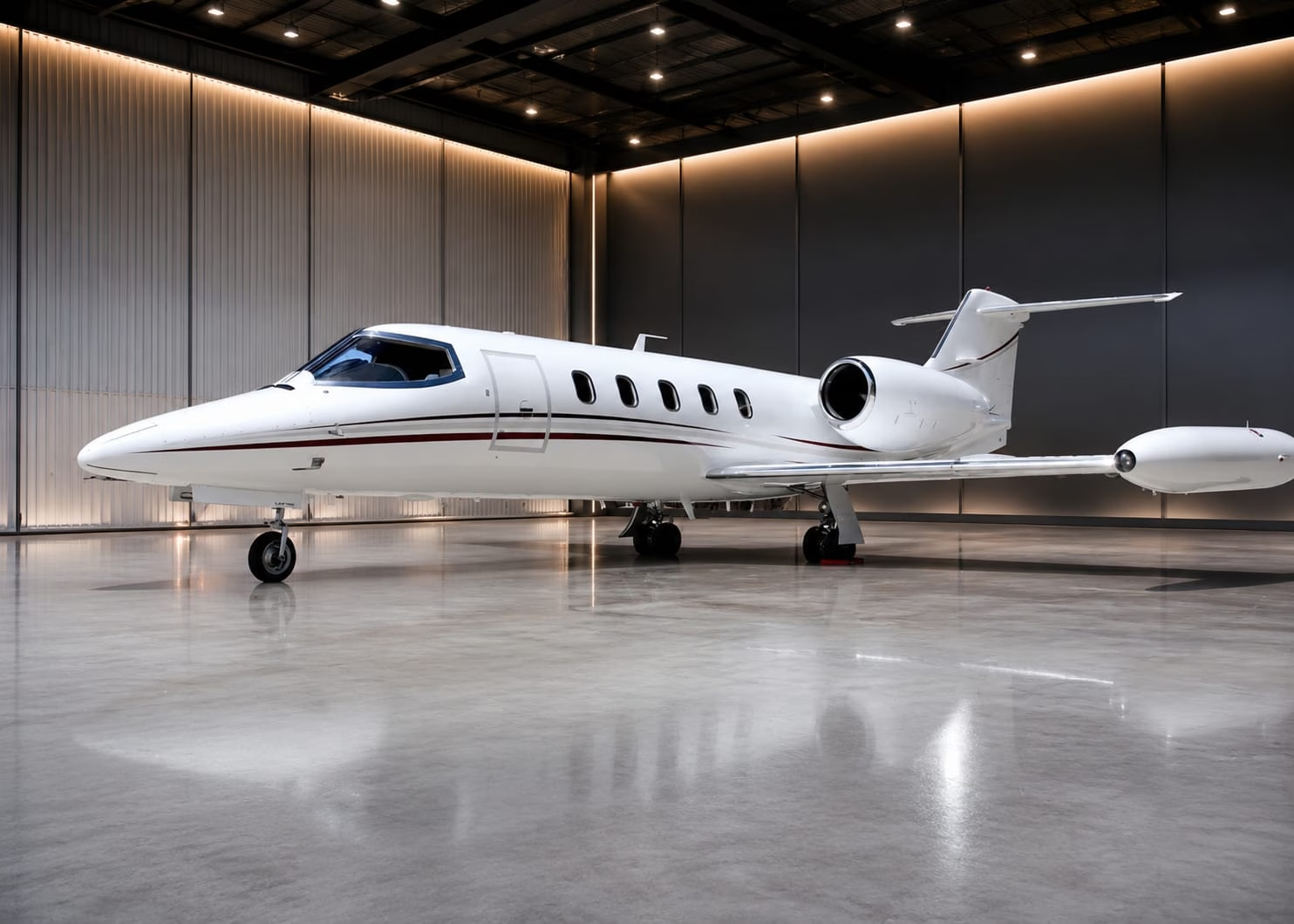
- Pilot: CMA, PP, IFR, multi-engine, PC and type rating
- Mechanic: airframe, powerplant and avionics ratings
- Operations: dispatch, safety and crew management
- Commercial: charter, aircraft sales, financing and insurance
Which aircraft represent the business aviation spectrum?
Business aviation covers a spectrum that runs from the single-engine turboprop able to land on a dirt strip to the ultra-long-range jet that links São Paulo nonstop to cities in Europe and Asia. Each aircraft category serves a typical mission, and choosing the right category is the first step to balancing comfort and cost.
| Category | Example | Typical mission |
|---|---|---|
| Single-engine turboprop | Pilatus PC-12 | Regional routes, short and unpaved runways |
| Light jet | Embraer Phenom 300E | Domestic trips of up to a few hours |
| Midsize jet | Embraer Praetor 500 | Long domestic and continental routes |
| Super-midsize jet | Bombardier Challenger 3500 | Stand-up cabin and continental range |
| Ultra-long-range jet | Gulfstream G700 | Nonstop intercontinental |
| Twin-engine helicopter | Airbus H145 | Urban transfers, coast and offshore operations |
How to read the spectrum
Turboprops such as the Pilatus PC-12 are unbeatable on short runways and inland routes, where a jet cannot land or does not make economic sense. Light jets such as the Phenom 300E dominate typical domestic routes in Brazil, such as São Paulo to Rio de Janeiro, Belo Horizonte, Florianópolis or Northeast destinations, with a technical stop depending on the load. Midsize and super-midsize jets, such as the Praetor 500 and the Challenger 3500, offer a roomier cabin and the range to cross the country or reach other South American countries nonstop. At the top, ultra-long-range jets such as the Gulfstream G700 link continents with cabins divided into separate living areas.
Helicopters in the spectrum
Helicopters complete the spectrum: they solve the urban leg and access to places without a runway. The twin-engine Airbus H145 is a benchmark in executive, air ambulance and offshore transport, and pairs well with jets to create a door-to-door journey.
How to choose the right category
Choosing the aircraft category in business aviation depends on four main variables, in this order:
- Distance and stops: the longest route that has to be flown nonstop defines the minimum range.
- Passengers and baggage: number of people, suitcases, golf bags or work equipment.
- Runways and airports: runway length, elevation, temperature and whether the destination strip is paved.
- Expected comfort: cabin height, enclosed lavatory, onboard catering and the possibility of sleeping on board.
An aircraft larger than needed makes the flight more expensive; an aircraft smaller than needed forces technical stops and reduces comfort. The balance comes from an honest analysis of the mission.
Figures and performance
The range, speed and passenger capacity of each aircraft vary with cabin configuration, payload, fuel, temperature and runway. That is why Embarque Oficial's technical sheets present the data for each model and quotes are calculated for the actual mission. See the aircraft technical sheets to compare models in detail.
From turboprop to ultra-long range: six aircraft that sum up the industry
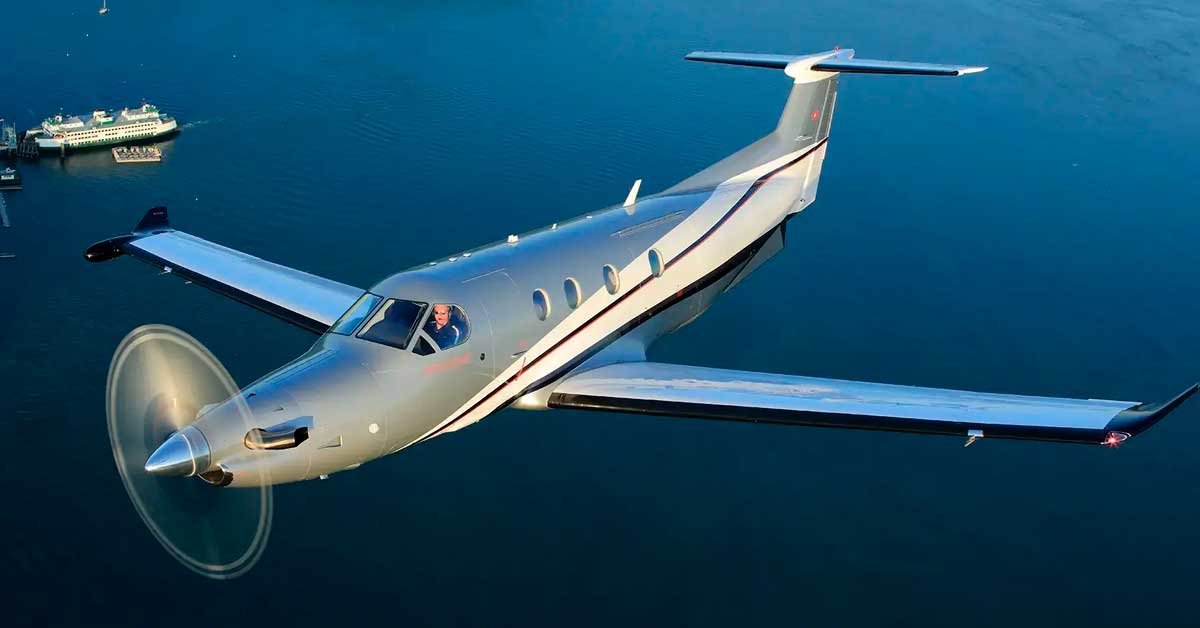 Turboélice monomotorPilatus PC-12Specifications, cabin, performance and charter options.Read more
 Jato · LightEmbraer Phenom 300ESpecifications, cabin, performance and charter options.Read moreJato · MidsizeEmbraer Praetor 500Specifications, cabin, performance and charter options.Read more
 Jato · Super-midsizeBombardier Challenger 3500Specifications, cabin, performance and charter options.Read more
 Jato · Ultra Long RangeGulfstream G700Specifications, cabin, performance and charter options.Read more
 Helicóptero · BimotorAirbus H145Specifications, cabin, performance and charter options.Read more
How to get started in business aviation safely and at the best cost?
Getting started in business aviation safely is a sequence of simple decisions: understand the mission, choose the access model, verify that the operation is legal and only then negotiate the price. Embarque Oficial arranges flights with air taxi operators certified by ANAC and offers aircraft management, sales and acquisitions, financing, Jet Card and Clube Infinity, with offices in Monaco, Dubai, London, Paris, Liverpool, Fort Lauderdale, New York, Las Vegas, Shanghai and Brazil.
Step by step
- Describe the mission: origin, destination, dates, number of passengers, baggage and schedule flexibility.
- Choose the access model: one-off charter, Jet Card, shared ownership or your own aircraft.
- Choose the aircraft category: turboprop, light, midsize, super-midsize or ultra-long-range jet, or helicopter.
- Verify legality: an operator certified by ANAC under RBAC 135 and an aircraft checked in the Voe Seguro app.
- Plan the infrastructure: airport, slot, FBO and transfer to the final destination.
- Compare complete proposals: airport fees, overnight stays, positioning and onboard service included.
What to provide when requesting a quote
A business aviation quote needs only a few details, but they must be precise: preferred cities and airports, dates and time windows, the exact number of passengers, baggage volume, whether there are pets, whether the flight is one-way or round trip and whether the aircraft should wait at the destination. With this information, the team compares available aircraft near the origin, calculates positioning legs and overnight stays and presents equivalent proposals side by side, with the responsible operator identified.
The complete guides in the hub
This guide is the gateway to the largest knowledge hub on business aviation in Brazil. To go deeper into each topic:
- how to charter, how much it costs and how to book safely: Executive Air Taxi Guide;
- categories, range, cabin and costs of each jet: Private Jets Guide;
- models, single-engine vs twin-engine and helipads: Executive Helicopters Guide;
- valuation, pre-purchase inspection, contract and registration with ANAC: Aircraft Purchase Guide;
- costs, maintenance, crew and compliance: Aircraft Management Guide.
Once the mission is defined, simply contact the Embarque Oficial team to receive a quote with available aircraft and verified operators.

Glossary: key business aviation terms
- General aviation
- The entire segment of civil aviation that is not scheduled airline transport. It includes private flying, air taxi, flight training, agricultural aviation and specialized aerial services.
- Business aviation
- The use of general aviation airplanes and helicopters for corporate and personal travel on a route and schedule defined by the user. Also called executive aviation or private aviation; in Brazil, aviação executiva.
- Air taxi
- Paid, non-scheduled, on-demand air transportation provided by a company certified by ANAC, Brazil's civil aviation authority. In Brazil, it follows RBAC 135.
- Charter
- Hiring an entire aircraft for one or more legs, with crew, for a fixed price. It is the most common way to access business aviation.
- RBAC 91
- ANAC regulation setting the general operating rules for civil aircraft in Brazil. It governs private flying and, in Subpart K, shared ownership.
- RBAC 135
- ANAC regulation setting the operating requirements for commuter and on-demand operations in Brazil, such as air taxi.
- COA
- Certificado de Operador Aéreo (air operator certificate), issued by ANAC under RBAC 119, which authorizes a company to provide paid air services in Brazil.
- Shared ownership
- A model in which several shareholders split an aircraft, with a minimum share of 1/16 for airplanes and 1/32 for helicopters, run by a program manager authorized by ANAC.
- Jet Card
- A program of prepaid business flight hours or credits, with rates and availability agreed in advance, without buying an aircraft.
- Empty leg
- A repositioning leg on which the aircraft would otherwise fly empty, sold at a discount with little flexibility on date and time.
- FBO
- Fixed base operator: a terminal and ground services provider for business aviation, with a boarding lounge, fueling, hangar and crew support.
- Slot
- An authorized landing or takeoff time at an airport with limited capacity, such as Congonhas in São Paulo.
- TACA
- Acronym used in the Brazilian industry for táxi aéreo clandestino, illegal air taxi: paid transportation provided without ANAC certification.
- SAF
- Sustainable aviation fuel, produced from biomass, waste or synthetic pathways, with lower life-cycle emissions.
- eVTOL
- Electric vertical takeoff and landing aircraft, developed for urban and regional air mobility.
- Vertiport
- Infrastructure for landing, takeoff, boarding and recharging designed for eVTOLs.
- IFR
- Instrument flight rules, which allow operations in reduced visibility using published procedures.
- Type rating
- The qualification a pilot must hold to command a specific aircraft model, such as a business jet.
Frequently asked questions about business aviation
What is business aviation?
Business aviation is the use of general aviation airplanes and helicopters for corporate and personal travel on a route, schedule and airport defined by the passenger. In Brazil, business aviation includes air taxi services regulated under RBAC 135, private flying governed by RBAC 91 and shared ownership programs. The focus is on saving time and reaching destinations without scheduled airline service.
What is the difference between business aviation and commercial aviation?
Commercial aviation sells seats on flights with fixed schedules, operated by airlines under RBAC 121 in Brazil. Business aviation puts an entire aircraft at the client's disposal, and the client chooses the schedule, route and airport. As a result, business aviation reaches thousands of municipalities, while Brazilian commercial aviation serves just over 147 locations, according to ABAG.
Is business aviation the same as general aviation?
No. General aviation is the entire segment that is not scheduled airline service, including agricultural aviation, flight training, sport aviation and specialized services. Business aviation is the part of general aviation dedicated to high-value business and personal travel, flown in jets, turboprops, helicopters and piston airplanes.
How big is the business aviation fleet in Brazil?
According to ANAC data compiled by ABAG, Brazil's business aviation fleet had 11,362 aircraft in May 2026, including 1,193 jets. Brazil has the second largest business aviation fleet in the world, behind only the United States, and jets were the fastest-growing category in the Brazil private aviation market, up 12.5% in twelve months.
How many business jets were delivered worldwide in 2025?
According to GAMA, manufacturers delivered 854 business jets in 2025, up 11.8% from 2024. Including airplanes and helicopters, the industry billed US$ 35.7 billion, an all-time record. In the first half of 2026, 383 business jets were delivered, up 8.2%, led by Gulfstream, Embraer and Bombardier.
How many business jets did Embraer deliver in 2025?
Embraer delivered 155 business jets in 2025, a company record, beating the 145 deliveries of 2010. They included 72 Phenom 300s, 14 Phenom 100s and 69 Praetor 500s and Praetor 600s, according to GAMA data. In the first half of 2026, Embraer was the second largest manufacturer by business jet deliveries.
What is shared aircraft ownership?
Shared ownership is a model in which several shareholders split the ownership of an aircraft. In Brazil, it follows Subpart K of RBAC 91, approved by ANAC Resolution No. 606/2021: the minimum share is 1/16 of an airplane or 1/32 of a helicopter, a program manager authorized by ANAC controls the operation and paid transportation on program flights is prohibited.
What is the difference between RBAC 91 and RBAC 135?
RBAC 91 sets the general operating rules and governs private flying in Brazil, in which the owner does not charge for transportation. RBAC 135 sets stricter requirements for air taxi, which is paid on-demand transportation provided by a company certified by ANAC. Whenever there is payment for the flight, the operation must follow RBAC 135.
What is illegal air taxi in Brazil and what are the risks?
Illegal air taxi, known in Brazil as TACA, is paid transportation provided by someone without ANAC certification, usually with a private aircraft. Passengers face safety risks and may be left without adequate insurance coverage in an accident. In 2020, ANAC multiplied fines for this practice by up to ten times, and they can reach R$ 200,000.
How can I tell whether an air taxi company in Brazil is legal?
Ask for the name and CNPJ (Brazilian company tax ID) of the company that will operate the flight and look up the operator and aircraft in ANAC's Voe Seguro app, available for Android, iOS and web. Also check that the digital RAB lists an operator authorized for 135 services, and require a contract identifying the aircraft, crew and insurance. Embarque Oficial works only with operators certified by ANAC in Brazil and by the local aviation authority abroad.
What is a Jet Card?
A Jet Card is a program of prepaid business flight hours or credits, with rates and availability agreed in advance, without buying an aircraft or a share. Flights are performed by certified air taxi operators. It suits people who fly often but not enough to justify owning an aircraft. Embarque Oficial offers its own Jet Card program.
What are empty legs?
Empty legs are legs on which an aircraft would fly empty to return to base or pick up another client. These flights are sold at a significant discount but with little flexibility on date, time and route. They are a good option for travelers with open schedules who want to try business aviation for less. Embarque Oficial publishes the available empty leg opportunities.
Which São Paulo airports are used by business aviation?
The main business aviation airports in the São Paulo region are Congonhas (SBSP), Campo de Marte (SBMT), São Paulo Catarina (SBJH) in São Roque and Jundiaí (SBJD), plus Guarulhos and Viracopos for international flights. Congonhas is the most central and the most restricted; Catarina is private and has been authorized for international flights since 2021.
What changed at Congonhas for business aviation in 2026?
In October 2026, ANAC established rules requiring general aviation operators, such as air taxi companies and business jets, to contract a ground handling provider (FBO) in advance before requesting slots at Congonhas, in São Paulo. The agency says the measure fights the parallel slot market and ensures ground support for every operation.
Does Campo de Marte airport operate under instrument rules?
At the opening of LABACE 2026, ANAC announced that Campo de Marte, in São Paulo, would begin instrument (IFR) operations on September 15, 2026, following works of around R$ 120 million carried out by the concessionaire PAX Aeroportos. Previously, the airport operated under visual rules only and shut down in bad weather.
When will eVTOLs start carrying passengers in Brazil?
No eVTOL is carrying passengers in Brazil in 2026. Eve Air Mobility, controlled by Embraer, has been flying a full-scale uncrewed prototype since the end of 2025 and in June 2026 revised its certification target to 2028. Eve reports letters of intent for more than 2,800 aircraft, which are not firm orders.
What is SAF and is it mandatory in Brazil?
SAF is sustainable aviation fuel, with lower life-cycle emissions. Brazil's Fuel of the Future Law (Law No. 14,993/2024) created ProBioQAV, with an emissions reduction target of 1% from 2027 and 10% in 2037. ANAC's draft rule covers operators emitting 10,000 tonnes of CO₂ or more per year, a threshold above most business aviation operators.
When is LABACE held?
LABACE, the largest business aviation show in Latin America, is organized by ABAG at Campo de Marte Airport in São Paulo. The 2026 edition ran from August 4 to 6 and welcomed 17,200 visitors. LABACE 2027 is scheduled for August 3 to 5, 2027, again at Campo de Marte.
Do business aircraft pay IPVA tax in Brazil?
Constitutional Amendment No. 132/2023 authorized Brazilian states to levy IPVA, the state ownership tax, on aircraft, except for agricultural aircraft and those of operators certified to provide air services to third parties, such as air taxi companies. Collection depends on each state's legislation; Pará, for example, adjusted its regulation in April 2026. Consult a tax specialist before buying.
How do I get started in business aviation?
Start by describing the mission: origin, destination, dates and passengers. Then choose the access model, such as charter, Jet Card or shared ownership, and the aircraft category. Check the operator's ANAC certification and compare complete proposals. Embarque Oficial arranges air taxi flights with certified operators throughout Brazil and abroad.
Sources and references
- GAMA — 2025 Aircraft Shipment and Billing Report
- AvWeb — Business Jets, Turboprops Lift Q2 GA Shipments (GAMA, 1º semestre de 2026)
- Runway Girl Network — Honeywell Aerospace forecasts continued bizav growth (out/2026)
- Forbes Brasil — Brasil chega a 11 mil aeronaves executivas e jatos puxam crescimento do setor (jul/2026)
- Bloomberg Línea — Procura por jatos maiores muda o perfil da aviação executiva no Brasil, diz Citi (ago/2025)
- Bloomberg Línea — Rio supera São Paulo em tráfego de helicópteros (jul/2026)
- ANAC — Resolução nº 606, de 11 de fevereiro de 2021 (Emenda ao RBAC 91, Subparte K)
- Aeroin — Organização da LABACE 2026 celebra edição histórica com recorde de público
- EBACE — EBAA confirms new dates for EBACE26
- The Flying Engineer — NBAA-BACE 2026
- Air Data News — Embraer sets new record in 2025 with 155 business jets delivered
- Air Data News — Eve pushes eVTOL certification target to 2028 (jun/2026)
- Mayer Brown — SAF: ANAC launches public consultation following the issuance of the regulatory decree (set/2026)
- Acessa.com — Anac estabelece regras mais restritivas para aviação em Congonhas (out/2026)
- InfoMoney — Campo de Marte terá operação por instrumentos a partir de 15 de setembro (ago/2026)
- Agência Infra — Santos Dumont ficará sem limite de passageiros a partir de 2028 (dez/2025)
- Agência Infra — ANAC decide aumentar em 10 vezes multa por táxi aéreo clandestino
- Agência Gov — Voe Seguro: aplicativo da ANAC garante viagens seguras de táxi aéreo
- Wikipedia — São Paulo Catarina Executive Airport (SBJH)
- Assembleia Legislativa do Pará — Decreto nº 5.338/2026 (Regulamento do IPVA)
Guide written by Régis Hahns, CEO of Embarque Oficial, with the company's editorial team, based on the sources above. Rules, prices and lead times change: always confirm with ANAC, the manufacturer or a specialist before deciding. Embarque Oficial serves clients worldwide, from Monaco, Dubai, Capri and Rome to every region of Brazil, and arranges each flight with operators certified by ANAC, Brazil's civil aviation authority, in Brazil and by the local aviation authority abroad.
Keep exploring the Knowledge Hub
Complete guideExecutive Air Taxi GuideHow charter works in Brazil, what it costs, ANAC rules and how to book safely.Read moreComplete guidePrivate Jets GuideCategories, range, cabin, costs and how to choose the right jet for each mission.Read moreComplete guideExecutive Helicopters GuideModels, single vs. twin engine, helipads and urban mobility by helicopter.Read moreComplete guideAircraft Acquisition GuideEvaluation, pre-purchase inspection, contracts, ANAC registration and pitfalls.Read more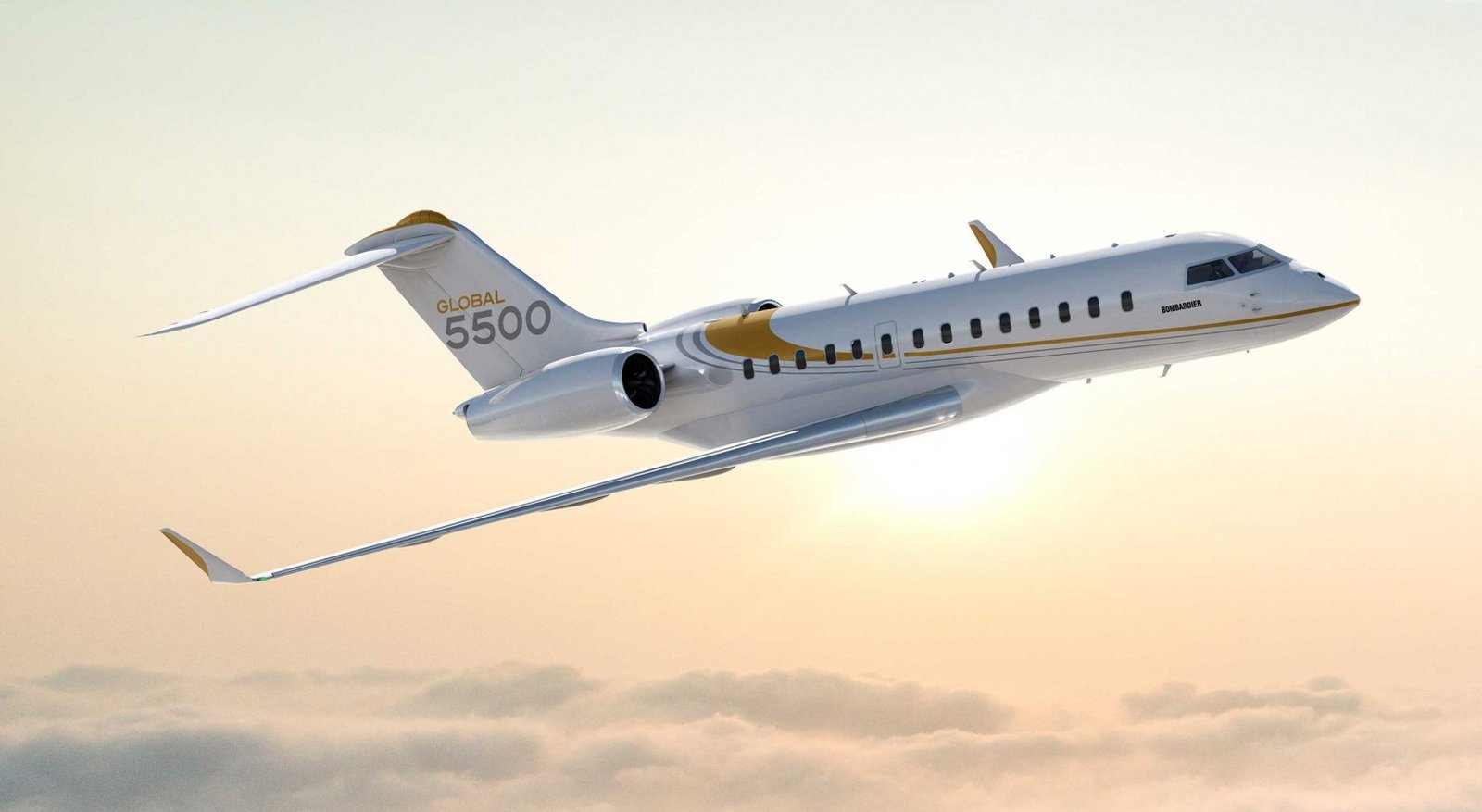 Complete guideAircraft Management GuideCosts, maintenance, crew, compliance and how to lower the cost per flight hour.Read moreEmbarque Oficial serviceTailored executive air taxiQuotes from ANAC-certified operators for jets, turboprops and helicopters.Read more
Ready to fly
Tell us where, we take care of the rest
Confidential quotes and 24/7 support, every day of the year.
WhatsApp +55 48 98877-0541 · sales@embarqueoficial.com