
Complete Guide · Executive Helicopters
The Executive Helicopters Guide: models, rules, helipads and costs
Everything you need to know to use executive helicopters in Brazil safely and efficiently: from the differences between single-engine and twin-engine aircraft to helipads, costs and the future of eVTOLs.
By Régis Hahns, CEO of Embarque Oficial · LinkedIn
- 2011flying since
- 43 minread
- 20sources cited
What is an executive helicopter?
An executive helicopter is a rotary-wing aircraft configured to carry a small number of people in comfort, quickly and privately, landing at helipads, airports and authorized areas close to both origin and destination. Executive helicopters in Brazil that carry paying passengers must be operated by air taxi companies certified by ANAC (Agência Nacional de Aviação Civil), Brazil's civil aviation authority, under RBAC 135 (Brazilian Civil Aviation Regulation 135). Models range from the piston-engine Robinson R44 to twin-engine aircraft such as the Airbus H145 and the Leonardo AW139, used for executive transfers, urban mobility and access to remote destinations.
In this guide
- What is an executive helicopter and why is it so widely used in Brazil?
- Single-engine or twin-engine helicopter: what is the difference in safety and operation?
- VFR or IFR, one pilot or two: how does this affect your helicopter flight?
- What are the categories and main models of executive helicopters?
- Executive helicopters compared: passengers, speed, range and baggage
- What are executive helicopters used for? The main applications
- How does São Paulo helicopter urban mobility work?
- Helipads and heliports: ANAC registration, DECEA review and rules of use
- Weather and limitations: when can executive helicopters not fly?
- How much does it cost to fly in executive helicopters? Hourly rates, transfers and pricing
- Safety, maintenance and certification: how to check a helicopter operator (RBAC 135)
- eVTOLs and urban air mobility: what to expect from Eve and the so-called flying cars?
- How to choose the right executive helicopter and book safely
- Glossary
- Frequently asked questions
What is an executive helicopter and why is it so widely used in Brazil?
An executive helicopter is a civil helicopter with a passenger cabin configured for comfort and productivity: individual seats, soundproofing, air conditioning on many models, headset communication between passengers and pilot and, on the larger twin-engine models, a cabin laid out like a meeting room. What defines an executive helicopter is not just the model but the mission: moving people quickly, discreetly and on a flexible schedule, landing much closer to the destination than any airplane can.
This ability to take off and land vertically is the helicopter's great advantage in business aviation. A jet needs a runway; a helicopter needs a helipad or an authorized landing area. That is why it is the link that connects airports, financial districts, hotels, farms, gated communities and islands. On a typical trip, the executive arrives by private jet at the airport and completes the final leg by helicopter, avoiding the traffic entirely.
Where the executive helicopter fits within general aviation
In Brazil, executive helicopters operate under two main regimes defined by ANAC (Agência Nacional de Aviação Civil), the country's civil aviation authority. The first is private operation, governed by RBAC 91, in which the owner uses the aircraft for their own transportation without charging for the flight. The second is air taxi (táxi aéreo), governed by RBAC 135, in which a certified company sells the flight to third parties. Anyone booking a helicopter charter in Brazil must always use an RBAC 135 operator: it is the operator that is responsible for the crew, the maintenance and the insurance. The Executive Air Taxi Guide explains this charter model in detail.
Why Brazil is such a strong helicopter market
- Large, congested metropolitan areas: in São Paulo, the trip between São Paulo/Guarulhos International Airport (SBGR) and the Avenida Faria Lima business district, which can take more than an hour by car at peak times, takes from 15 minutes by air.
- Nearby coastline and leisure destinations: Ilhabela, Angra dos Reis, Paraty, Campos do Jordão and rural gated communities are 30 to 75 minutes' flight from the city of São Paulo.
- Offshore oil and gas industry: transport to platforms in the Campos and Santos basins keeps a large fleet of medium and heavy helicopters busy, based at airports such as Jacarepaguá (SBJR) and Macaé (SBME).
- Agribusiness: farms in Brazil's Center-West and in the Matopiba agricultural frontier use helicopters for inspections and to move managers around.
Reports from 2025 cite ANAC data showing more than 2,000 helicopters registered in Brazil and place São Paulo among the cities with the most helicopters in the world. In 2026, a survey cited by Bloomberg Línea counted 243 helicopters based in the city of São Paulo, including the heliports of the metropolitan region. The numbers vary with the methodology (aircraft registered in the state versus aircraft actually based in the city), but the picture is the same: Brazil is one of the countries where the helicopter is most embedded in executive routine.
Executive, air ambulance and utility helicopters: what is the difference?
The same model can come in several versions. An Airbus H145 can be configured as an executive aircraft, with six to eight leather seats, or as an air ambulance, with a stretcher and ICU equipment. An Esquilo (the Brazilian name for the AS350/H125 family) can carry passengers on a scenic flight in the morning and an external load in the afternoon. For the passenger, what matters is the cabin configuration, the helicopter category (single-engine or twin-engine) and the operator's authorizations for that mission. Embarque Oficial arranges flights with ANAC-certified air taxi operators and recommends the right aircraft for each route, whether it is a helicopter transfer or a scenic flight.
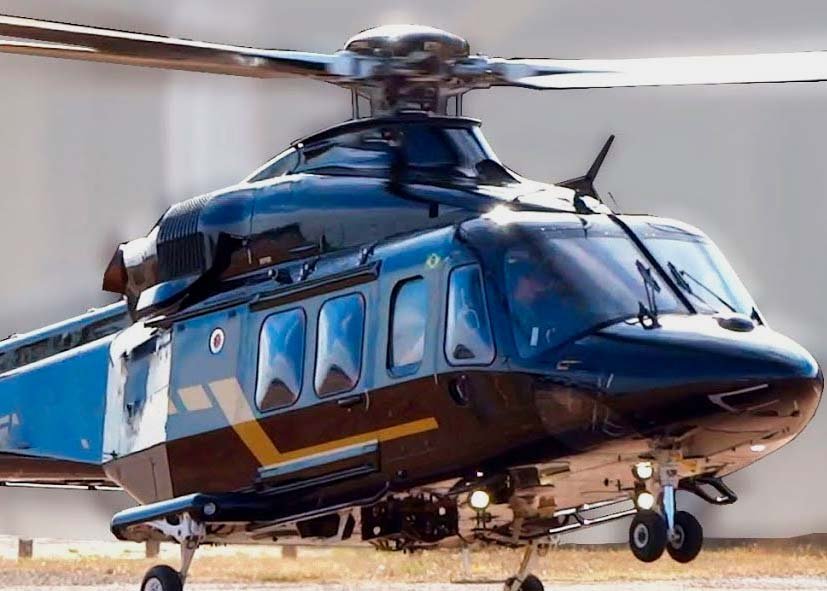
- Vertical takeoff and landing, close to origin and destination
- Executive cabin for 3 to 15 passengers, depending on the model
- Paid flights only with a certified RBAC 135 operator
- Seamless connection with jets at business aviation airports
Single-engine or twin-engine helicopter: what is the difference in safety and operation?
The first choice when booking executive helicopters is between single-engine and twin-engine. The difference goes far beyond the number of turbines: it determines where the helicopter can fly, in which weather conditions, with how many pilots and how much the flight costs.
What changes with two engines
A twin-engine helicopter, such as the Airbus H145, the Leonardo AW109 or the AW139, has power redundancy. If one engine fails, the other allows the flight to continue or a controlled landing to be made, within the one-engine-inoperative (OEI) performance limits. Modern twins also tend to have duplicated hydraulic, electrical and avionics systems, as well as a multi-axis autopilot. In a single-engine helicopter, an engine failure leads to an autorotation procedure, in which the rotor keeps turning with the airflow and the pilot guides the aircraft to an emergency landing. Every helicopter pilot trains autorotation, but it requires a clear area to land.
Performance rules: flying over cities and over water
RBAC 135 is based on the US FAA's 14 CFR Part 135, which requires, for example, that a land aircraft only carry passengers over water if it can reach land in the event of an engine failure, if it is a multi-engine aircraft with sufficient one-engine-inoperative performance or, in the case of helicopters, if it is equipped with floats. In practice, routes over the sea, such as São Paulo–Ilhabela or Rio–Angra dos Reis, are flown with twins or with single-engine helicopters fitted with emergency floats and life vests, in line with the operator's Operations Specifications. Over densely built-up areas, the special helicopter routes (REH, Rotas Especiais de Helicópteros) defined by DECEA (Departamento de Controle do Espaço Aéreo), Brazil's airspace control department, and the minimum heights aim to ensure landing options and obstacle clearance.
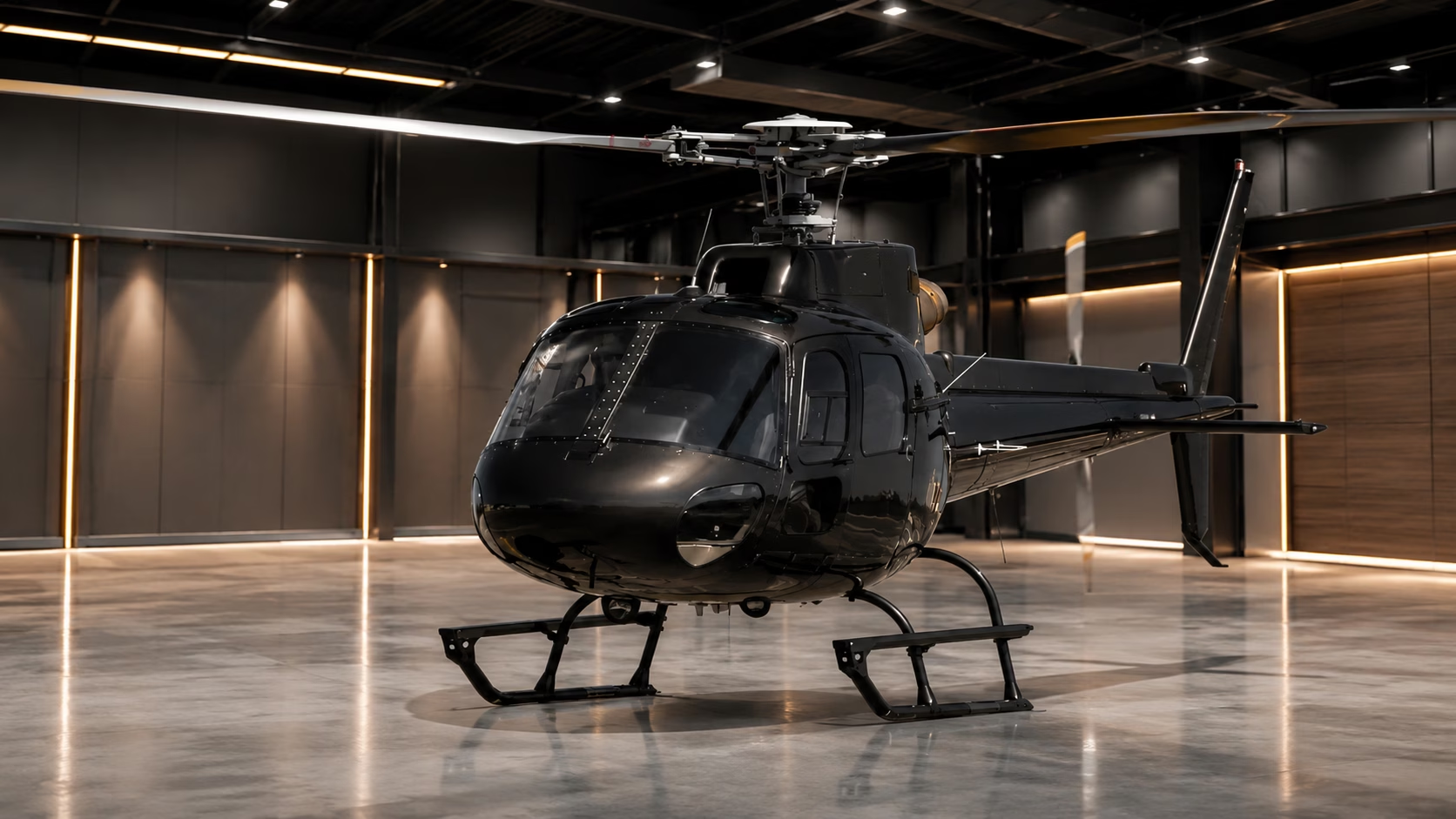
| Criterion | Single-engine turbine | Light/medium twin |
|---|---|---|
| Examples | Esquilo H125, Bell 407, Bell 505, H130, R66 | AW109, H145, AW139, H160 |
| Engine failure | Autorotation to an emergency landing | Continues on one engine, within OEI limits |
| Flight over water | Requires floats and route planning | More flexible, depending on OEI performance |
| Instrument flight | Generally VFR | Many certified for IFR |
| Hourly cost | Lower | Higher (generally double or more) |
When a single-engine helicopter is the right choice
The single-engine turbine helicopter is the workhorse of the Brazilian market. For short trips over land in visual conditions, it offers excellent value for money. A transfer between helipads in São Paulo, a flight to a farm in the interior or a sightseeing tour are typical missions for the Esquilo AS350 B2 and the Bell 407.
When a twin makes a difference
- Routes with long stretches over the sea or over areas with no landing sites.
- Flights that may require instrument procedures (IFR), if the operator and the aircraft are authorized.
- Corporate safety policies: many companies require a twin-engine aircraft and two pilots to carry their executives.
- Larger groups or more baggage, with cabins such as the Airbus H145's.
The decision is a technical one and a matter of risk policy. Embarque Oficial presents single-engine and twin-engine options for the same route so that the client can compare time, cost and level of redundancy before confirming the executive transfer.
VFR or IFR, one pilot or two: how does this affect your helicopter flight?
Two concepts explain many of the restrictions on a helicopter flight: the flight rules (VFR or IFR) and the crew composition (single pilot or two pilots).
VFR: visual flight
Under VFR (Visual Flight Rules), the pilot navigates by visual references to the ground and keeps clear of clouds and obstacles. This is how the vast majority of executive helicopters fly in Brazil, especially single-engine ones. Brazil's air traffic rules are set out in DECEA's ICA 100-12, which defines the minimum weather conditions for visual flight. As a general rule, VFR operations at controlled aerodromes require a ceiling of at least 1,500 feet and visibility of 5 km, unless the control unit grants a specific authorization. For helicopters, DECEA's ICA 100-4 sets specific rules and minimums, which the operator applies in flight planning. The US regulation on which RBAC 135 is based also requires a helicopter in VFR to have visual reference to the surface, or to lights on the surface at night, sufficient to control the aircraft safely.
IFR: instrument flight
Under IFR (Instrument Flight Rules), the pilot navigates by instruments and follows published procedures, and may fly through clouds. For that, the helicopter must be certified and equipped for IFR, the crew must be qualified and the destination must have an instrument approach procedure. Few urban helipads have this kind of procedure, so even an IFR twin often depends on visual conditions when arriving at a helipad. IFR is more common in offshore aviation and on airport-to-airport trips.
Single pilot or two pilots
Models such as the Esquilo, the Bell 407, the Bell 505 and the H130 normally fly with one pilot. The five-blade Airbus H145 received EASA certification in 2020 that includes single-pilot and IFR operation, according to the manufacturer. The Leonardo AW139, on the other hand, is a medium helicopter designed for two pilots. Even when the aircraft allows a single pilot, many operators and corporate clients prefer two pilots on twins: one flies while the other handles radio, navigation and checklists, which reduces the workload in complex airspace such as São Paulo's.
- Ask the operator whether the flight will be VFR or IFR and what the plan is if the weather closes in at the destination.
- Confirm the crew: one or two pilots, and their experience on the model.
- Check the authorizations in the Operations Specifications: night flights, IFR and flights over water depend on them.
- Arrange a ground alternative in case the flight is canceled because of the weather.
Night helicopter flights
Flying a helicopter at night requires an equipped aircraft, a qualified pilot and helipads with adequate lighting and a registration that covers night operations. Municipal laws may also limit landing and takeoff hours. In São Paulo, Municipal Law 15.003 of 2009 provides for helipads to operate between 6 a.m. and 11 p.m., depending on the characteristics of the area, with the possibility of justified alternative hours. For late-afternoon flights, it is worth scheduling the takeoff with a margin before sunset.
When you request a quote for a helicopter air taxi, state the preferred time and how flexible your schedule is. Embarque Oficial checks with the operator whether the proposed aircraft can perform the mission in the expected conditions and suggests the alternative, including twins such as the A109E Power.
- VFR: visual flight, the standard for most executive flights
- IFR: requires an authorized aircraft, crew and procedure
- Single-pilot operation is common in singles and some twins
- Night flights depend on the aircraft, the pilot and the helipad
What are the categories and main models of executive helicopters?
Executive helicopters can be grouped into four categories, according to engine type, number of engines and cabin size. Each category suits a different mission profile and budget.
1. Piston helicopters: Robinson R44
The Robinson R44 is the best-known piston helicopter on the market. According to Robinson, the R44 Raven II has four seats, a cruise speed of up to 109 knots (202 km/h) at maximum weight and a range of approximately 350 nautical miles (650 km) with no reserve, powered by a Lycoming IO-540 engine. It is used for training, scenic flights and short trips with up to three light passengers. The limitation is the useful load: with full tanks, Robinson indicates about 818 pounds (371 kg) for pilot, passengers and baggage combined.
2. Light single-engine turbine helicopters
This category includes five-seat turbine models, which combine the reliability of a turbine engine with contained costs:
- Robinson R66: five seats, Rolls-Royce RR300 turbine, cruise speed of up to 110 knots (204 km/h) and a range of about 350 nm with no reserve, with a baggage compartment for 300 pounds (136 kg).
- Bell 505 Jet Ranger X: five seats, Safran Arrius 2R turbine, maximum cruise speed of 125 knots (231 km/h) and a range of 306 nm (566 km), according to Bell.
- Bell 206 JetRanger: a business aviation classic, still present in Brazilian fleets and replaced in Bell's line-up by the 505.
3. Six- to nine-seat single-engine turbine helicopters
This is the most popular category for air taxi work in Brazil. The Esquilo (AS350, now marketed as the Airbus H125 and built in Brazil by Helibras in Itajubá, Minas Gerais) carries one pilot and up to six passengers, with a fast cruise speed of 252 km/h (136 knots) and a range of 630 km (340 nm), according to Airbus. The Bell 407GXi has seven seats and cruises at 132 to 136 knots. The Airbus EC130 B4, predecessor of the H130, has a wide cabin and a ducted tail rotor (Fenestron) that reduces noise, and the H130 carries up to seven passengers. The new Leonardo AW09 promises up to eight passengers but is still going through certification.
4. Light and medium twin-engine helicopters
Twins are the premium category. The Agusta A109E Power and its successors, the AW109 GrandNew and AW109 Trekker, are benchmarks for speed: the Trekker cruises at 148 knots (274 km/h), according to Leonardo. The Airbus H145 carries up to eight passengers in the standard configuration and up to ten in high-density layout, with a five-blade rotor on recent versions. Among medium helicopters, the Leonardo AW139 carries up to 15 passengers and cruises at up to 165 knots, and it is widely used offshore and for VIP transport.
To choose, start with the number of passengers, the weight of the baggage and the route (over land or over water). The Embarque Oficial team cross-checks this information against the aircraft availability of partner operators and sends comparable options. You can also consult the aircraft technical sheets published on the website.

Most requested single-engine turbine helicopters
Helicóptero · TurbinaRobinson R66Specifications, cabin, performance and charter options.Read more Helicóptero · MonomotorHelibras Esquilo AS350 B2Specifications, cabin, performance and charter options.Read more
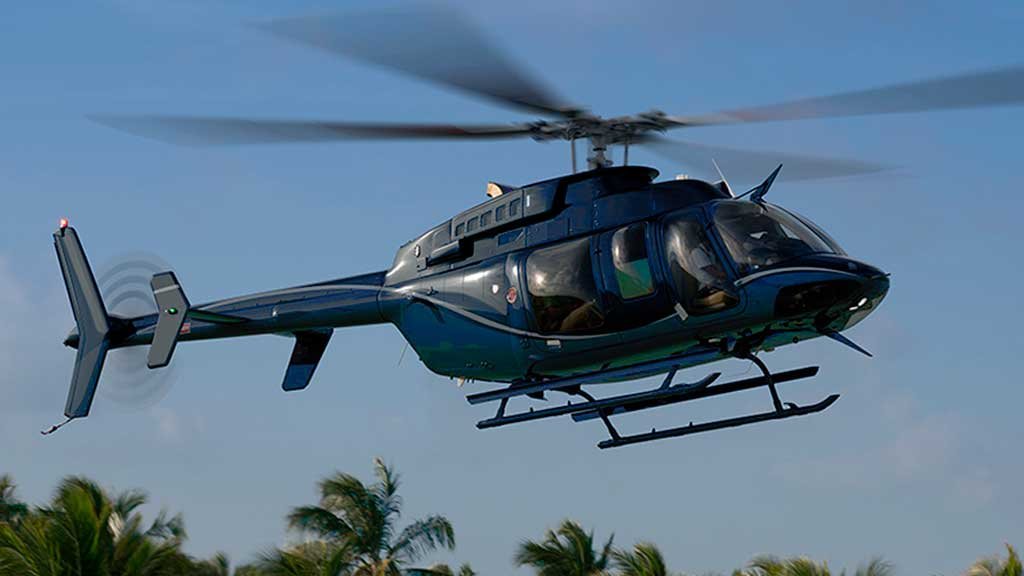 Helicóptero · MonomotorBell 407Specifications, cabin, performance and charter options.Read more
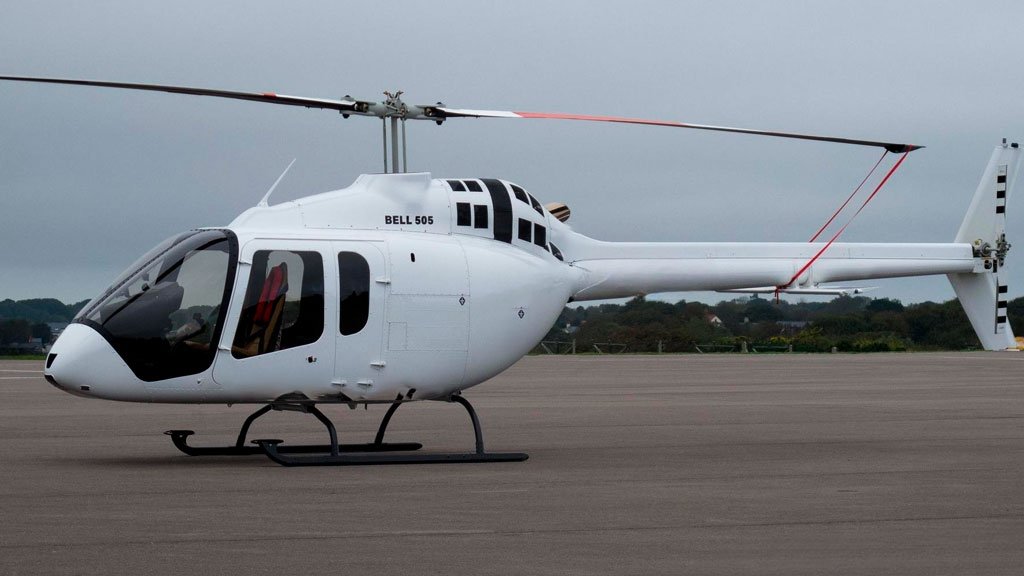 Helicóptero · MonomotorBell 505 Jet Ranger XSpecifications, cabin, performance and charter options.Read more
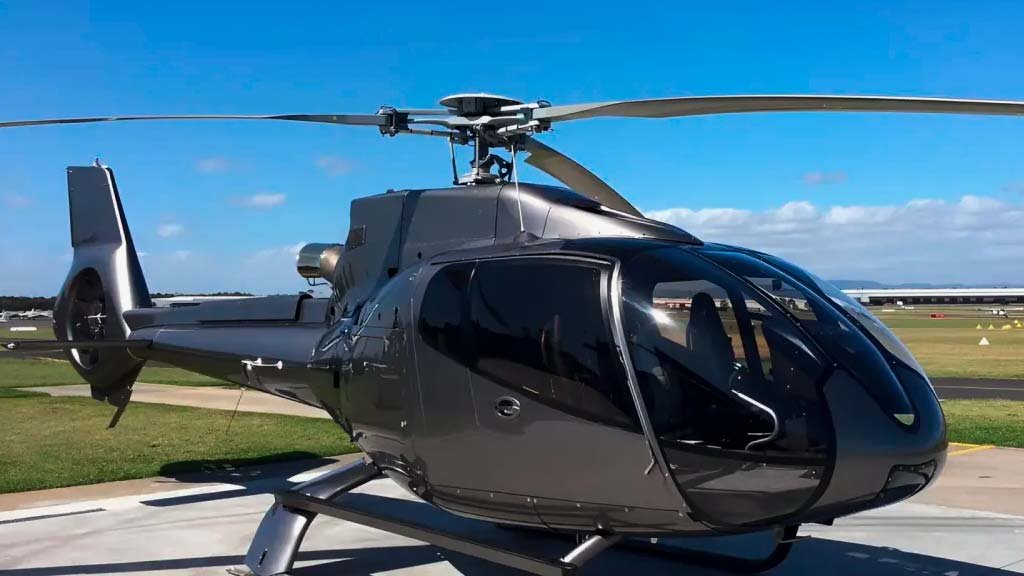 Helicóptero · MonomotorAirbus EC130 B4Specifications, cabin, performance and charter options.Read more
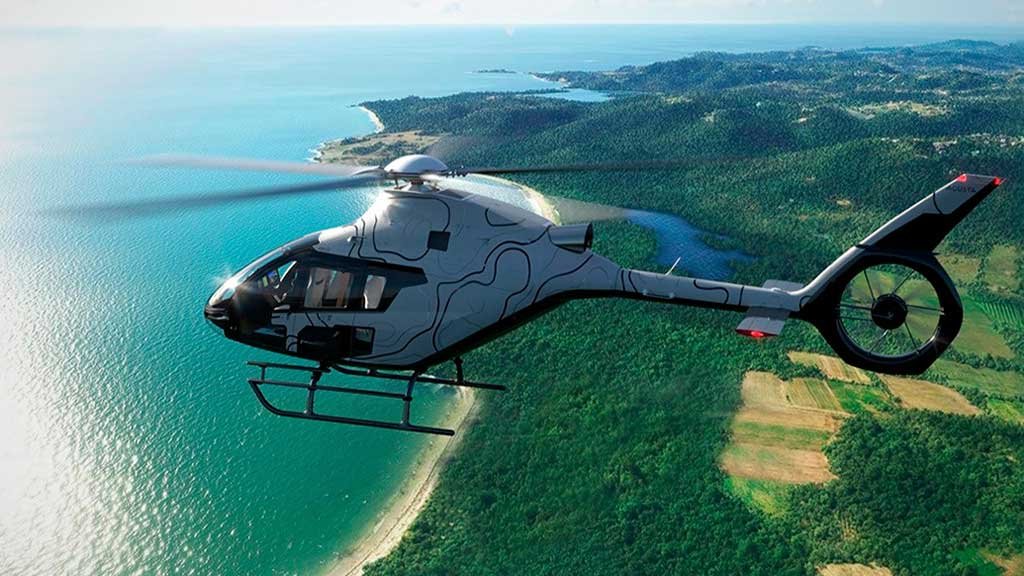 Helicóptero · MonomotorLeonardo AW09Specifications, cabin, performance and charter options.Read more
Executive helicopters compared: passengers, speed, range and baggage
The table below brings together data published by the manufacturers (Robinson, Bell, Airbus and Leonardo) for the most common executive helicopters in Brazil. Range figures are generally with no fuel reserve and in standard conditions; in real operations, the operator plans mandatory reserves, which reduces the usable distance. Speed is the cruise speed stated by the manufacturer, which may vary with weight and altitude.
| Model | Category | Occupants | Cruise | Range |
|---|---|---|---|---|
| Robinson R44 Raven II | Piston | 4 seats | up to 109 kt (202 km/h) | about 650 km |
| Robinson R66 | Turbine, single-engine | 5 seats | up to 110 kt (204 km/h) | about 650 km |
| Bell 505 Jet Ranger X | Turbine, single-engine | 5 seats | 125 kt (231 km/h) | 566 km |
| Airbus H125 (Esquilo) | Turbine, single-engine | 1 pilot + up to 6 | 136 kt (252 km/h) | 630 km |
| Airbus H130 | Turbine, single-engine | 1 pilot + 6/7 | 128 kt (237 km/h) | 615 km |
| Bell 407GXi | Turbine, single-engine | 7 seats | 132–136 kt | 615–648 km |
| Leonardo AW09 | Turbine, single-engine (in certification) | 1 pilot + up to 8 | up to 140 kt (max. speed) | up to 800 km |
| Leonardo AW109 Trekker | Light twin | 1–2 pilots + up to 6 | 148 kt (274 km/h) | 678 km (1 auxiliary tank) |
| Airbus H145 | Light twin | 1–2 pilots + up to 8 (10 in high density) | 130 kt (241 km/h) | 650 km |
| Leonardo AW139 | Medium twin | 2 pilots + up to 15 | up to 165 kt (306 km/h) | about 740 km (full cabin) |
How to read the table
Seats and real capacity are not the same thing. In a helicopter, the total takeoff weight is limited, and fuel, passengers and baggage compete for the same margin. On a hot day, at an elevated helipad or in a high-altitude town, capacity may drop. That is why the operator always asks for the approximate weight of each passenger and of the baggage before the flight. An Esquilo with six adult passengers and luggage may need to carry less fuel and make a stop that would not be needed with four passengers.
What about baggage?
Baggage is where the helicopter differs most from the jet. Some figures published by the manufacturers:
- Robinson R66: baggage compartment for up to 300 pounds (136 kg).
- Bell 407GXi: 0.45 m³ baggage compartment with a 113 kg limit.
- Bell 505: 0.5 m³ baggage compartment.
- Robinson R44: no separate baggage compartment; baggage counts toward the total of 371 kg with full tanks.
In practice, choose small, soft bags, declare special items (golf clubs, surfboards, equipment) and remember that twins such as the H145 and the AW139 carry far more baggage than light single-engine helicopters. For trips with lots of luggage, a common solution is to send the bags by road and fly with only the essentials.
Door-to-door speed
On short trips, a difference of 20 or 30 knots between models matters little. What counts most is how close the helipad is, the time needed to dispatch the aircraft and coordination with air traffic control. On trips of more than 150 km, the speed of twins such as the AW109 starts to make a real difference. When the distance exceeds 300 to 400 km, a turboprop or a light jet is usually more efficient; see the Private Jets Guide.
- Manufacturer range is generally with no fuel reserve
- Heat, altitude and weight reduce real capacity
- Give passenger and baggage weights before the flight
- Beyond 300 to 400 km, compare with a turboprop or jet
What are executive helicopters used for? The main applications
The executive helicopter is a mobility tool with very different applications. Knowing each one helps you choose the right model and operator.
Airport–city transfer
This is the classic use. The passenger gets off a commercial flight or a business jet and continues by helicopter to the helipad closest to the final destination. In São Paulo, the trip between Guarulhos (SBGR) and helipads in the Faria Lima or Avenida Paulista areas takes from 15 minutes of flight, according to route tables published by charter platforms in 2024. In Rio de Janeiro, the link between Galeão (SBGL) and Barra da Tijuca or Jacarepaguá (SBJR) follows the same logic. Embarque Oficial arranges this kind of executive helicopter transfer integrated with the main flight.
Corporate urban mobility
Companies use helicopters for back-to-back meetings in different parts of the metropolis, visits to factories in the interior and travel by board members. Corporate programs can combine helicopter and jet hours in a single contract; see the corporate aviation solutions and the Jet Card.
Access to hotels, farms, gated communities and islands
Many resorts, luxury hotels, farms and upscale gated communities have their own helipad. The helicopter turns three- to five-hour car journeys into 30- to 75-minute flights. Typical routes from São Paulo include the north coast of São Paulo state (Juquehy, Ilhabela, Ubatuba), Campos do Jordão, the Fazenda Boa Vista resort community in Porto Feliz, Paraty and Angra dos Reis. At a private helipad, landing depends on the owner's authorization; see the section on helipads.
Offshore: oil platforms
Offshore aviation mainly uses medium and heavy twins, such as the Leonardo AW139 and the Airbus H175, flown with two pilots and frequently under IFR. According to DECEA data cited by Bloomberg Línea in 2026, Rio de Janeiro recorded 93,579 helicopter takeoffs and landings in 2025 at Jacarepaguá, Santos Dumont and Galeão airports, driven by oil. These operations are contracted directly by oil companies and are not the focus of executive charter, but they show how mature the sector is in Brazil.
Air ambulance and rescue
Twins such as the H145 and the AW109 family are benchmarks for air ambulance transport, with cabins for a stretcher and a medical team. Air ICU transfers follow their own health and aviation rules and are contracted with specialized operators.
Scenic flights and experiences
Scenic flights over Rio de Janeiro, Florianópolis, Foz do Iguaçu, Balneário Camboriú and Porto Seguro are a gateway to helicopter travel. Models such as the R44, the Bell 206 JetRanger and the Esquilo are the most widely used. Explore the scenic flight itineraries and the destinations we serve.
Events and group logistics
Major events, such as Formula 1 races and festivals, create temporary helicopter shuttles. In these cases, booking in advance is essential, because demand outstrips the supply of aircraft and helipad slots.

- Transfers between airport and financial district
- Corporate schedules with several landings a day
- Access to hotels, farms, gated communities and islands
- Offshore work with medium and heavy twins
- Air ambulance with stretcher and medical team
- Scenic flights and events
How does São Paulo helicopter urban mobility work?
São Paulo is often cited as one of the cities with the largest urban helicopter fleets in the world. Reports from 2025, based on ANAC data, speak of more than 410 helicopters concentrated in the city, and the Brazilian Association of Helicopter Pilots (Abraphe) states that São Paulo has the largest helicopter fleet in the world. In 2026, a count by the CEO of the Flapper platform cited by Bloomberg Línea reached 243 helicopters based in the city, including metropolitan-area heliports such as HBR, Helipark and Helicidade, compared with fewer than 200 in Rio de Janeiro. The difference comes from the methodology, but both figures confirm the role of the São Paulo helicopter in the city's daily life.
Rio overtook São Paulo in movements, but because of oil
According to DECEA data analyzed by Bloomberg Línea, in 2025 the four main airports in the São Paulo region (Campo de Marte, Guarulhos, Congonhas and Campinas) recorded a combined 37,422 helicopter operations, while Rio recorded 93,579 at its airports, almost all at Jacarepaguá, the base for offshore transport. The comparison does not include landings at São Paulo helipads, estimated at 24,000 to 30,000 a year. In 2012, Campo de Marte (SBMT) reached 103,215 movements. Urban executive helicopter traffic remains concentrated in São Paulo.
How helicopter traffic is controlled
The airspace over the city of São Paulo is one of the most complex in Brazil, with Congonhas (SBSP), Campo de Marte (SBMT) and Guarulhos (SBGR) very close to one another. To organize helicopter traffic, DECEA established the Special Helicopter Routes (REH, Rotas Especiais de Helicópteros), corridors with altitudes assigned by direction. Where an REH exists, helicopters must use it. Control is provided by DECEA units in São Paulo, which coordinate helicopters crossing the airports' approach areas.
The city's helipads
There are three main types of landing sites in the city:
- Helipads on commercial buildings: on top of corporate towers on Faria Lima, Paulista, Berrini and in Vila Olímpia; many are private and serve the building's occupants.
- Heliports and operator bases: facilities with a hangar, fueling and a waiting lounge, which work as a terminal.
- Airports: Campo de Marte is the city's main helicopter base, and Congonhas and Guarulhos handle transfers.
Municipal law and living with the neighbors
Municipal Law 15.003, enacted in 2009, requires an operating license and a neighborhood impact study for landing and takeoff sites, sets noise and vibration limits and provides for operation between 6 a.m. and 11 p.m., depending on the area. At the time, the São Paulo City Council recorded 272 landing sites in the city. As a result, not every helipad accepts third-party landings, and some have restricted time windows.
Usage models: charter, shared seats and programs
The traditional model is chartering the whole aircraft. Since 2023, companies such as Revo have offered individual seats on twin-engine helicopters with two pilots, with legs between Guarulhos and helipads in the city from R$ 2,500 per seat, according to a 2024 announcement. For frequent flyers, hour programs such as the Jet Card and the Clube Infinity simplify booking. Embarque Oficial arranges São Paulo helicopter transfers with certified operators and recommends the most convenient helipad.
- Use helipads close to your origin and destination
- Confirm the helipad's operating hours
- Choose a twin over dense areas if your policy requires it
- Book in advance for peak hours and major events
Helipads and heliports: ANAC registration, DECEA review and rules of use
In Brazil, a heliponto (helipad) is an aerodrome intended exclusively for helicopters. The term heliporto (heliport) usually refers to a public helipad or one with support facilities and services, such as a terminal, hangar and fueling. Every site used regularly for helicopter landings must be registered and open to traffic, with its characteristics published for pilots.
Public vs private
A public helipad can receive any operator, according to its rules of use. A private helipad, on the other hand, may only be used with the owner's permission, and the Código Brasileiro de Aeronáutica (Brazilian Aeronautical Code, Law 7.565/1986) prohibits the commercial use of private aerodromes. In practice, landing at a hotel, gated community or farm helipad requires prior authorization from the person in charge, which the operator or Embarque Oficial obtains before the flight.
How a private helipad is registered in Brazil
According to the official private aerodrome registration service on the gov.br portal, the process follows these steps:
- COMAER review: the applicant asks DECEA, through the SysAGA system, to assess the helipad's impact on air navigation safety, under ICA 11-3; COMAER is the Brazilian Air Force's Aeronautics Command. The recommendation is to obtain this review before building. A favorable decision by the regional body is valid for two years.
- Construction and documentation: once the work is complete, the operator gathers the application, the ART (technical responsibility record) registered with CREA (the regional engineering council) and proof of payment of the TFAC (civil aviation inspection fee). Elevated helipads must also prove compliance with RBAC 155, with an as-built design, photos and technical reports.
- Application to ANAC: the process is opened in SEI, the federal electronic filing system. The average processing time given by ANAC is about 50 days, with no outstanding issues.
- Registration ordinance: if approved, ANAC publishes an ordinance in the Diário Oficial da União (Brazil's federal gazette) with the Aerodrome Characteristics List.
- Aeronautical publication: the helipad is listed in the ROTAER (Brazil's aerodrome directory), and only then is it open to traffic.
The fee (TFAC) stated on the portal is R$ 500 for a private ground-level helipad and R$ 2,000 for a private elevated helipad. The regulations cited include ANAC Resolution 736/2024, ANAC Ordinance 14.323/2024 and RBAC 155, which covers helipad design requirements. In addition, the municipality may require its own permits, such as the operating license and the neighborhood impact study in São Paulo.
Landing and operating rules
- Dimensions and strength: each helipad has published weight and aircraft size limits; not every helipad accepts a medium twin.
- Night operations: require compatible lighting and registration.
- Hours: municipal and building rules may restrict time windows.
- Occasional landing areas: landings away from registered helipads follow specific rules and depend on the operator's risk assessment.
What the passenger needs to do
The passenger provides the origin and destination addresses; the operator checks the nearest registered helipads, the weight and time restrictions and the authorizations required. Owners thinking of building a helipad at home, on a farm or at a hotel in Brazil should start with the DECEA review and hire a specialized designer. Anyone planning to buy a helicopter can consult the Aircraft Purchase Guide and the aircraft sales services.
- Private helipad: only with the owner's authorization
- Registration starts with a DECEA review via SysAGA
- Elevated helipads must comply with RBAC 155
- Open to traffic only after publication in the ROTAER
Weather and limitations: when can executive helicopters not fly?
Weather is the factor that most often cancels or delays executive helicopter flights. Since most fly under VFR, the pilot needs to see the ground and stay clear of clouds. Understanding the limitations helps you plan your schedule and keep an alternative ready.
The main weather phenomena that affect the flight
- Low ceiling and fog: morning fog in São Paulo, in valleys and over the Serra do Mar coastal range can prevent takeoffs until mid-morning. Routes to the north coast and to Angra and Paraty cross the mountains and depend on visual conditions along the way.
- Heavy rain and thunderstorms: cumulonimbus clouds bring severe turbulence, hail and lightning. In the summer in Brazil's Southeast, they build up in the afternoon, so morning flights tend to be more predictable.
- Strong wind and gusts: affect landings at elevated helipads, where wind accelerates between buildings, and in coastal areas.
- Heat and altitude: hot, thin air reduces rotor and engine performance. On hot days or at elevated locations, such as Campos do Jordão, payload capacity may be lower.
Who decides whether the flight goes
The final decision always rests with the pilot in command, based on official weather information (METAR, TAF and satellite and radar imagery) and on the operator's minimums, which are often more conservative than the regulatory ones. No client should pressure the pilot to fly in marginal conditions: pressure to keep to a schedule is a known factor in general aviation accidents.
Operational limitations beyond the weather
- Weight and balance: passengers and baggage must be within the limits calculated for that takeoff.
- Fuel and reserves: long trips may require a refueling stop, especially in light single-engine helicopters.
- Helipad hours and daylight: night VFR flights depend on authorizations and lit helipads.
- Airspace: restricted areas, events and congestion can cause holding.
- Flying over water: routes over the sea require a twin or floats and survival equipment.
How to plan with the weather on your side
For critical schedules, such as a wedding, a board meeting or an international connection, plan a buffer window and a ground alternative. Prefer morning flights in summer and confirm the time the day before. The operator warns of cancellation risks in advance, and Embarque Oficial's concierge team can keep an executive car on standby in case the flight is not possible. On longer trips, another option is to combine the helicopter with an airplane: a Pilatus PC-12 or a King Air B200 flies on instruments between airports, and the helicopter covers only the final leg.
Weather cancellations: who pays?
Commercial terms vary by operator. In general, flights canceled before takeoff because of the weather can be rescheduled, and flights interrupted en route are charged for the time actually flown. Confirm the policy in writing when you book.
- Fog and low ceilings are the main causes of delays
- Summer thunderstorms usually build up in the afternoon
- Heat and altitude reduce the useful load
- Always have a ground alternative for critical schedules
How much does it cost to fly in executive helicopters? Hourly rates, transfers and pricing
The price of an executive helicopter flight is calculated, in most cases, from the aircraft's hourly rate, multiplied by the total mission time, including positioning the helicopter from its base to the departure point and back. The figures below are published references and should be read as estimates, since prices change with the exchange rate, fuel and demand.
| Service | Published reference | Source and year |
|---|---|---|
| Single-turbine (AS350/Esquilo family) | R$ 7,000 to R$ 8,700 per hour | Flapper, Jan 2024 |
| Twin-turbine (EC135, A109, AW109SP, Bell 429, H145) | R$ 13,950 to R$ 22,000 per hour | Flapper, Jan 2024 |
| Guarulhos–Faria Lima (route) | from R$ 11,000, about 15 min | Flapper, Jan 2024 |
| São Paulo–Ilhabela (route) | from R$ 16,000, about 30 min | Flapper, Jan 2024 |
| São Paulo–Angra dos Reis (route) | from R$ 25,000, about 1h15 | Flapper, Jan 2024 |
| Shared seat Guarulhos–São Paulo | from R$ 2,500 per seat | Revo, Oct 2024 |
Piston helicopters, such as the R44, usually have a lower hourly rate than single-turbine models, but carry fewer passengers and less baggage. Medium twins, such as the AW139, sit above the range of light twin-turbines.
How the price is built
- Flight time with passengers: the main leg, calculated from the distance and the cruise speed.
- Positioning: the empty flight from the operator's base to the origin and from the destination back to base. That is why a one-way flight far from the base can cost almost double the actual flight time.
- Minimum time: many operators charge a minimum per dispatch, even for 10-minute flights.
- Helipad and airport fees: landing, parking and, in some cases, use of a waiting lounge.
- Waiting and overnight stays: when the aircraft waits for the client or the crew sleeps away from base.
- Aircraft type: single-engine or twin-engine, age and interior configuration.
- Date and demand: public holidays, summer on the coast and major events make the flight more expensive and reduce availability.
Costs for the owner
For anyone who owns a helicopter, costs include fixed items (hangar, insurance, pilot salaries, training, management) and variable items (fuel, hourly maintenance, reserves for engine and component overhauls). Manufacturers require inspections at hour or calendar intervals. Professional management helps reduce the hourly cost and generate revenue from charter; see the Aircraft Management Guide and the aircraft management service.
How to save without compromising safety
- Group passengers and legs into the same dispatch.
- Choose helipads close to the operator's base.
- Consider shared seats on regular routes.
- For frequent use, compare hour programs such as the Jet Card.
- Never hire an uncertified operator: the savings from illegal air taxi services are not worth the risk.
For any helicopter charter in Brazil, Embarque Oficial sends detailed quotes with flight time, positioning and fees itemized separately, so the client can compare proposals transparently. Request yours through the contact form.
Safety, maintenance and certification: how to check a helicopter operator (RBAC 135)
The safety of an executive helicopter flight rests on three pillars: the aircraft, the crew and the organization operating the flight. In Brazil, ANAC regulates all three, and passengers can verify much of the information before boarding.
The certified RBAC 135 operator
Paid public air transport of passengers by helicopter may only be carried out by a company certified by ANAC under RBAC 135. Certification covers a general operations manual, a pilot training program, a safety management system (SGSO, the Brazilian equivalent of an SMS), maintenance control and the Operations Specifications (Especificações Operativas), which list the authorized aircraft and the permitted types of operation (for example, day VFR, night VFR, IFR, flight over water). A privately owned helicopter, operated solely for private use under RBAC 91, may not sell flights; when that happens, it is an illegal air taxi operation.
How to check before you fly
- Ask for the operator's name and CNPJ (Brazilian company tax ID) and check that it is listed as an authorized air taxi company on the ANAC website.
- Check the aircraft registration (a prefix such as PR-XXX or PT-XXX) in the RAB (Registro Aeronáutico Brasileiro, the Brazilian Aeronautical Registry) and verify that it is linked to an operator authorized to provide Part 135 service, that is, air taxi.
- Ask about the crew: commercial helicopter pilot license, type rating on the model and experience on the route.
- Request the insurance certificate showing third-party liability coverage for passengers.
- Understand the flight plan: aircraft, time, helipads and the alternative in case of bad weather.
Helicopter maintenance
Helicopters have many dynamic components (rotors, transmissions, shafts) with lives limited in hours or cycles. Maintenance follows the manufacturer's program and airworthiness directives and is carried out by maintenance organizations certified by ANAC under RBAC 145. Robinson, for example, specifies overhauls of the R44 and R66 at defined hour and calendar intervals. In air taxi operations, maintenance control is the operator's responsibility and is audited by ANAC.
Aircraft certification
Each helicopter model needs a type certificate issued or validated by ANAC. Models built abroad are usually certified first by EASA (Europe) or by the FAA (United States). The Leonardo AW09, for example, was still in its flight test campaign for EASA certification in 2026; the Safran Arriel 2K engine that powers it received EASA certification in July 2026. Until the helicopter is certified and validated in Brazil, the model cannot be used for air taxi work in the country.
Safety best practices for passengers
- Approach the helicopter only when cleared, and from the front, in the pilot's view.
- Never walk toward the tail rotor.
- Secure loose items (caps, scarves, bags) before reaching the landing area.
- Keep your seat belt fastened throughout the flight and follow the safety briefing.
- On flights over water, wear the life vest as instructed.
Embarque Oficial works only with certified operators, by ANAC in Brazil and by the local aviation authority abroad, and tells the client which operator is responsible for each flight. Learn more about Embarque Oficial.
- Operator holds ANAC RBAC 135 certification
- Aircraft listed in the Operations Specifications
- Pilot rated on the model and experienced on the route
- Third-party liability insurance for passengers
- Maintenance at an RBAC 145 certified organization
- Plan B defined for bad weather
eVTOLs and urban air mobility: what to expect from Eve and the so-called flying cars?
eVTOLs (electric vertical takeoff and landing aircraft) are the industry's bet for the next phase of urban air mobility. Popularly called flying cars, they promise short flights within cities with less noise and lower operating costs than helicopters. But as of November 2026, no eVTOL was in commercial passenger service in Brazil.
Eve Air Mobility, from Embraer
Eve Air Mobility, a company created by Embraer, is developing a lift + cruise eVTOL: eight rotors for vertical flight and a rear pusher propeller for cruise. The design calls for one pilot and four passengers, with a range of about 100 km. The production line is planned for Taubaté, in São Paulo state. The full-scale prototype made its first flight in December 2025.
Status in 2026
According to the second-quarter 2026 earnings call, held in August:
- The prototype had completed 66 flights and was in the partial transition phase, with forward speed of 30 knots, and full transition was expected by the end of 2026.
- Eve plans six conforming prototypes in 2027, with the first crewed flight of a conforming prototype in the second half of 2027.
- The target for ANAC certification and entry into service moved to 2028, with EASA validation expected 12 to 15 months after the ANAC and FAA approvals.
- The pre-order backlog stands at about 2,700 aircraft, mostly letters of intent; about 100 are firm orders.
These timelines are company targets and may change. In the United States, companies such as Joby Aviation and Archer Aviation are also at advanced stages of FAA certification.
What changes for people flying in executive helicopters today
- Infrastructure: eVTOLs will need vertiports with electric charging, and many existing helipads could be adapted.
- Air traffic: the expected volume requires new urban airspace management systems, and São Paulo's experience with helicopter routes is an important foundation.
- Price: the promise is to reduce the cost per seat, but initial fares have not yet been set.
- Coexistence: in the early years, eVTOLs are expected to complement rather than replace helicopters, which still offer more range, payload and flexibility.
Fly by helicopter now or wait for the eVTOL?
For anyone who needs air mobility now, the helicopter remains the only certified and available option. Helicopter operators are already natural partners for eVTOL manufacturers, and Revo, which sells helicopter seats in São Paulo, is among Eve's launch customers. Follow industry trends in the Business Aviation Guide and on the Embarque Oficial blog.

- Eve: first prototype flight in December 2025
- Certification and entry-into-service target: 2028
- Design for 1 pilot and 4 passengers, about 100 km
- The helicopter remains the certified option available today
How to choose the right executive helicopter and book safely
Choosing the right executive helicopter means balancing four variables: number of passengers and baggage, distance and type of route, safety policy and budget. The process below is the same one the Embarque Oficial team uses to put together a quote.
Step by step to book
- Define the mission: origin, destination, date, preferred time and flexibility.
- Provide passenger and baggage details: number of people, approximate weight and special items.
- Choose the level of redundancy: single-engine for short trips over land; twin-engine for routes over water, corporate policies or larger groups.
- Confirm the helipads: registered, authorized and with compatible hours.
- Compare equivalent proposals: same aircraft category, positioning and itemized fees.
- Check the operator: RBAC 135 certification, aircraft in the Operations Specifications and insurance.
- Agree on plan B: an executive car on standby in case of bad weather.
Which helicopter for each mission
| Mission | Recommended category | Examples |
|---|---|---|
| 15- to 30-minute scenic flight | Piston or light single-engine | R44, Bell 206, R66 |
| Urban transfer with 2 to 4 passengers | Single-engine turbine | Esquilo, Bell 407, Bell 505 |
| Family with baggage heading to the coast | Single-engine with floats or twin-engine | H130, Esquilo with floats, H145 |
| Executives with a corporate policy | Twin-engine with two pilots | AW109, H145 |
| Group of 8 to 12 people | Medium twin | AW139 |
Charter or buy?
For anyone flying less than a few dozen hours a year, charter is usually cheaper than ownership. Above that, it is worth studying a purchase with financing and professional management, which can place the aircraft on charter to reduce fixed costs. Embarque Oficial also works in aircraft sales and acquisitions and management.
Why book with Embarque Oficial
Embarque Oficial arranges flights with ANAC-certified air taxi operators, compares models and prices and handles end-to-end logistics, including connections with jets and concierge services on the ground. Service is provided online, via WhatsApp and in person at boarding. See the list of available aircraft and request your executive helicopter transfer.
- Mission, times and flexibility defined
- Passengers and baggage with weights provided
- Departure and arrival helipads confirmed
- RBAC 135 operator and insurance verified
Helicopters for every mission profile
 Helicóptero · PistãoRobinson R44Specifications, cabin, performance and charter options.Read more
 Helicóptero · MonomotorBell 206 JetRangerSpecifications, cabin, performance and charter options.Read moreHelicóptero · MonomotorHelibras Esquilo AS350 B2Specifications, cabin, performance and charter options.Read moreHelicóptero · MonomotorBell 407Specifications, cabin, performance and charter options.Read moreHelicóptero · BimotorAgusta A109E PowerSpecifications, cabin, performance and charter options.Read moreHelicóptero · BimotorAirbus H145Specifications, cabin, performance and charter options.Read more
Glossary: key executive helicopters terms
- Executive helicopter
- Civil helicopter with a cabin configured to carry passengers in comfort and privacy, used for transfers, urban mobility and short trips.
- Single-engine
- Helicopter with a single engine. In the event of an engine failure, the pilot performs an autorotation to an emergency landing.
- Twin-engine
- Helicopter with two engines, able to keep flying with one engine inoperative within its certified performance limits.
- Autorotation
- Maneuver in which the main rotor is turned by the airflow, without engine power, allowing a controlled landing after an engine failure.
- OEI
- One Engine Inoperative: flight condition of a twin-engine aircraft with one engine inoperative, with performance published by the manufacturer.
- VFR
- Visual Flight Rules: rules for visual flight, in which the pilot keeps visual reference to the ground and stays clear of clouds.
- IFR
- Instrument Flight Rules: rules for instrument flight, which require an authorized aircraft, crew and procedures.
- Helipad (heliponto)
- Aerodrome intended exclusively for helicopters, which may be public or private, at ground level or elevated.
- Heliport (heliporto)
- Helipad, usually public, with support facilities such as a terminal, hangar and fueling.
- RBAC 135
- ANAC regulation that sets the requirements for air taxi operations and complementary public air transport in Brazil.
- RBAC 155
- ANAC regulation that sets helipad design and operating requirements, mandatory when registering elevated helipads in Brazil.
- REH
- Rotas Especiais de Helicópteros (Special Helicopter Routes): corridors defined by DECEA, with altitudes by direction, that organize helicopter traffic in Brazilian cities.
- SysAGA
- DECEA system used to request the review of aerodromes, helipads and planned structures in the airspace.
- Operations Specifications
- Especificações Operativas: operator document approved by ANAC listing the authorized aircraft and types of operation, such as night flight and IFR.
- Fenestron
- Ducted tail rotor used by Airbus on models such as the H130 and H145, which reduces noise and improves protection on the ground.
- eVTOL
- Electric vertical takeoff and landing aircraft, developed for urban air mobility, such as the Eve Air Mobility project.
Frequently asked questions about executive helicopters
What are executive helicopters?
Executive helicopters are rotary-wing aircraft configured to carry passengers in comfort, quickly and privately, landing at helipads close to origin and destination. In Brazil, paid flights must be operated by an air taxi company certified by ANAC, the Brazilian civil aviation authority, under RBAC 135. Common models include the Esquilo, the Bell 407, the Airbus H145 and the Leonardo AW109.
What is the difference between a single-engine and a twin-engine helicopter?
A single-engine helicopter has one engine and, if it fails, performs an autorotation to an emergency landing. A twin-engine helicopter has two engines and can keep flying with one inoperative, within certified limits. Twins such as the H145 and the AW109 offer more redundancy and more flexibility over water, but cost more per flight hour.
Can a single-engine helicopter fly over the sea with passengers?
Yes, provided the route and the aircraft meet the performance rules and the operator's Operations Specifications. In general, a single-engine helicopter flying over water with passengers needs emergency floats and life vests, or must keep a height that allows it to reach land in case of engine failure. For long routes over the sea, a twin is the most common choice.
How many passengers fit in an executive helicopter?
It depends on the model. The Robinson R44 has four seats, including the pilot's. Single-engine helicopters such as the Esquilo H125 carry one pilot and up to six passengers. The Airbus H145 carries up to eight passengers in the standard configuration, and the Leonardo AW139 up to 15. Real capacity also depends on weight, fuel and temperature.
How much does an executive helicopter cost per flight hour in Brazil?
References published by Flapper in January 2024 indicated, as an estimate, R$ 7,000 to R$ 8,700 per hour for single-turbine helicopters in the Esquilo family and R$ 13,950 to R$ 22,000 per hour for twin-turbines such as the A109 and H145. The final price of an executive helicopter flight depends on positioning, fees, date and operator.
How much does a helicopter transfer from Guarulhos to São Paulo cost?
As a reference published in 2024, the Guarulhos–Faria Lima helicopter route was listed from R$ 11,000 per chartered flight, with about 15 minutes of flight time, and shared seats from R$ 2,500. These figures are estimates and vary with the model, time, helipad and demand. Ask for an updated quote before booking.
Do executive helicopters fly at night?
An executive helicopter can fly at night if the aircraft is equipped, the pilot is qualified, the operator holds authorization in its Operations Specifications and the helipad is lit and registered for night operations. Municipal laws also limit hours: in São Paulo, Law 15.003 of 2009 provides for helipads to operate between 6 a.m. and 11 p.m., depending on the area.
Do helicopters fly in rain or fog?
Most executive helicopter operations are flown under VFR and need visual reference to the ground, so fog, low ceilings and thunderstorms can delay or cancel a helicopter flight. Light rain with good visibility does not normally prevent the operation. The decision always rests with the pilot in command, based on weather reports and the operator's minimums.
Can I land a helicopter anywhere?
No. Regular helicopter landings must be made at registered helipads, heliports or airports, respecting weight, size and time limits. Private helipads require the owner's authorization. Landings away from registered sites follow specific rules and depend on the operator's risk assessment, as well as on the applicable authorizations.
How do you register a private helipad with ANAC in Brazil?
The first step to register a private helipad in Brazil is to obtain the COMAER review, requested from DECEA through SysAGA. After construction, the operator applies to ANAC through SEI, with the application form, the ART and payment of the TFAC. Elevated helipads must prove compliance with RBAC 155. ANAC publishes a registration ordinance, and the helipad only opens to traffic after it is listed in the ROTAER.
What is the difference between a helipad and a heliport?
A helipad (heliponto) is an aerodrome intended exclusively for helicopters, which may be public or private, at ground level or elevated. A heliport (heliporto) usually refers to a helipad, generally public, with support facilities such as a passenger terminal, hangar and fueling. For the passenger, what matters is that the site is registered and authorized for that operation.
How can I tell whether a helicopter company in Brazil is legal?
Ask for the operator's name and CNPJ (Brazilian company tax ID) and check that the helicopter company is listed as an authorized air taxi company on the ANAC website. Also check that the aircraft is in the company's Operations Specifications, that the pilot is rated on the model and that there is third-party liability insurance. A privately owned helicopter may not sell flights.
What is RBAC 135?
RBAC 135 is the ANAC regulation that sets the requirements for air taxi operations in Brazil, including helicopters. It covers company certification, pilot training, maintenance, operating limits and performance. Every company that sells executive helicopter flights in Brazil must be certified under RBAC 135.
Which executive helicopter is the most used in Brazil?
The Airbus Esquilo family, now marketed as the H125 and built in Brazil by Helibras in Itajubá, Minas Gerais, is one of the most common helicopters in Brazilian air taxi fleets. Also common are the Robinson R44 and R66, the Bell 407 and, among twins, the Agusta A109 family and the Airbus H145.
How long is a helicopter flight from São Paulo to the coast?
According to route tables published in 2024, helicopter flights from São Paulo to Juquehy and Ilhabela take from 30 minutes, to Ubatuba and Campos do Jordão from 45 minutes, and to Angra dos Reis about 1h15. Actual flight time depends on the model, the wind and the route authorized by air traffic control.
Can executive helicopters carry baggage?
Yes, helicopters can carry baggage, but with weight and volume limits lower than a jet's. The Robinson R66 has a compartment for up to 136 kg, the Bell 407GXi for 113 kg in 0.45 m³ and the Bell 505 has 0.5 m³, according to the manufacturers. Choose soft bags and declare special items in advance so the operator can calculate the weight.
Does São Paulo have the largest helicopter fleet in the world?
São Paulo is often cited among the cities with the most helicopters in the world. Reports from 2025 mention more than 410 helicopters in the city, based on ANAC data, and a survey cited by Bloomberg Línea in 2026 counted 243 helicopters based in São Paulo. In terms of movements, Rio overtook São Paulo in 2025 because of offshore traffic.
When will eVTOLs start carrying passengers in Brazil?
There is no confirmed date yet for eVTOL passenger flights in Brazil. Embraer's Eve Air Mobility flew its prototype for the first time in December 2025 and, in August 2026, reported a target of certification and entry into service in 2028. These timelines depend on the flight test campaign and on ANAC certification, and may change.
Are executive helicopters safe?
An executive helicopter operated by a company certified under RBAC 135, with up-to-date maintenance and trained pilots, is a safe means of transport. Passengers can reduce risk by checking the operator with ANAC, respecting the pilot's weather decisions and following the safety briefing, especially when approaching and boarding the helicopter.
How do I book an executive helicopter with Embarque Oficial?
To book an executive helicopter with Embarque Oficial, provide the origin, destination, date, time, number of passengers and baggage via the website or WhatsApp. Embarque Oficial consults ANAC-certified air taxi operators, confirms the helipads and sends single-engine and twin-engine options with itemized prices. Once approved, the team monitors the flight and arranges ground support, including the backup plan.
Sources and references
- Robinson Helicopter – R44 Raven II / Clipper II
- Robinson Helicopter – R66 Specifications
- Airbus Helicopters – Civil range brochure (key figures)
- Airbus – H145 technical information
- Bell – 407GXi product specifications
- Bell 505 fact sheet
- Leonardo Helicopters – AW09
- Leonardo Helicopters – AW109 Trekker
- Business Jet Traveler – Leonardo AW139
- AIN – Production AW09 leading flight testing program (fev/2026)
- AIN – EASA issues type certificate for AW09 Arriel 2K engine (jul/2026)
- CompositesWorld – Five-bladed H145 receives type certification by EASA
- gov.br – Inscrever aeródromo privado no cadastro de aeródromos (ANAC)
- Economic News Brasil – Maior frota de helicópteros do mundo está no Brasil (jun/2025)
- eCFR – 14 CFR 135.183, land aircraft operated over water
- Bloomberg Línea – Rio supera São Paulo em tráfego de helicópteros (2026)
- Câmara Municipal de São Paulo – Sancionada lei que regula funcionamento de helipontos
- MarketBeat – Eve Q2 2026 earnings call highlights
- Flapper – How much does it cost to charter a helicopter in São Paulo?
- Forbes Brasil – Conexão pelos ares (Revo, 2024)
Guide written by Régis Hahns, CEO of Embarque Oficial, with the company's editorial team, based on the sources above. Rules, prices and lead times change: always confirm with ANAC, the manufacturer or a specialist before deciding. Embarque Oficial serves clients worldwide, from Monaco, Dubai, Capri and Rome to every region of Brazil, and arranges each flight with operators certified by ANAC, Brazil's civil aviation authority, in Brazil and by the local aviation authority abroad.
Keep exploring the Knowledge Hub
 Complete guideExecutive Air Taxi GuideHow charter works in Brazil, what it costs, ANAC rules and how to book safely.Read more
 Complete guidePrivate Jets GuideCategories, range, cabin, costs and how to choose the right jet for each mission.Read more
 Complete guideAircraft Acquisition GuideEvaluation, pre-purchase inspection, contracts, ANAC registration and pitfalls.Read more
 Complete guideAircraft Management GuideCosts, maintenance, crew, compliance and how to lower the cost per flight hour.Read more
 Complete guideBusiness Aviation GuideThe sector in Brazil and worldwide: market, rules, technology and trends.Read moreEmbarque Oficial serviceExecutive Helicopter TransferAirport, city, hotel or island: a tailor-made transfer with certified operators.Read more
Ready to fly
Tell us where, we take care of the rest
Confidential quotes and 24/7 support, every day of the year.
WhatsApp +55 48 98877-0541 · sales@embarqueoficial.com