
Executive Travel · Door-to-door, worldwide
Executive travel: the complete door-to-door journey, planned around you
Trip planning and concierge, private terminals, immigration, helicopter transfers, chauffeurs, discreet security, hotels and villas, the great events of 2027, families and pets, health, duty of care and connectivity, organized as one journey by Embarque Oficial since 2011.
By Régis Hahns, CEO of Embarque Oficial · LinkedIn
- 2011flying since
- 38 minread
- 20sources cited
What is executive travel?
Executive travel is the door-to-door organization of a journey for principals, executives and families: the private flight with a certified operator, plus everything around it. That includes trip planning and concierge, private terminals (FBOs), immigration and customs, helicopter transfers, vetted chauffeurs, licensed security, hotels and villas, events, pets, health and connectivity. One organizer coordinates every hand-off, so the traveller measures the whole journey, not just the time in the air.
On this page
- What is executive travel, and what does door-to-door really mean?
- How is a door-to-door executive trip planned? Trip planning and concierge
- Private terminals, FBOs and VIP terminals: how departures and arrivals work
- Fast-track immigration and customs: passports, visas and travel authorizations in 2026
- Helicopter transfers: the last mile of executive travel
- Secure ground transport and chauffeurs: the part of the trip people forget
- Discreet travel and security for principals: executive protection without the noise
- Hotels, villas, yachts and estates: planning the destination
- Executive travel to major events in 2027: Monaco, Cannes, Miami, Dubai, São Paulo and Rio
- Travelling with families, children, pets and staff
- Health and medical considerations: fitness to fly, medical support and air ambulance
- Duty of care: how companies and family offices protect travelling principals
- Connectivity on the move: Wi-Fi in the air and secure communications
- How Embarque Oficial organizes executive travel worldwide
- Glossary
- Frequently asked questions
What is executive travel, and what does door-to-door really mean?
Executive travel is the planning and delivery of a complete journey for a principal, an executive, a family or a delegation, from the front door at home to the front door at the destination. The flight is only one part of it. A well-run executive trip connects the car that collects the traveller, the private terminal, immigration and customs, the aircraft, a helicopter for the last few kilometres, the chauffeur waiting on arrival, the hotel or villa, the meetings or events of the trip, and the return. Every hand-off is planned in advance, so the traveller never queues, never waits for a decision and never has to explain the plan twice.
The term is used in different ways. Corporate travel departments use executive travel to describe the travel policy for senior leaders. Luxury travel advisers use it for premium itineraries. In private aviation, executive travel means the whole journey around a private flight, and that is the sense used on this page. If you want to understand the aircraft side first, read our overview of private aviation and the complete guide to business aviation.
The five layers of an executive journey
- Planning and concierge: the itinerary, documents, reservations, special requests and a single point of contact.
- Air: the jet, turboprop or helicopter, arranged with a certified operator for each leg, through on-demand air charter or an existing program.
- Ground: vetted chauffeurs, suitable vehicles and, when the profile calls for it, licensed executive protection.
- Destination: hotels, villas, yachts, venues and events, booked and briefed before arrival.
- Care: health, medical contingencies, duty of care, connectivity and privacy throughout the trip.
Why door-to-door matters more than flight time
A two-hour flight can sit inside a seven-hour journey once the drive to a hub airport, check-in, security, boarding, baggage claim and a taxi queue are added. Executive travel attacks the hours around the flight. The traveller uses an airport or heliport closer to home, boards through a private terminal, clears formalities in minutes where the country allows it, and lands as close as possible to the final address. On the Côte d'Azur, for example, the helicopter hop from Nice Côte d'Azur Airport to Monaco Heliport takes about seven minutes, according to Visit Monaco. That is the logic of door-to-door executive travel: measure the whole journey, not the time in the air.
Who uses executive travel services
- High-net-worth individuals and family offices who want privacy, flexibility and one trusted organizer.
- Chief executives, board members and deal teams on tight schedules, often linked to corporate aviation programs.
- Families travelling with children, grandparents, nannies, household staff and pets.
- Public figures, artists and athletes who need discretion and security.
- Guests attending major events such as the Monaco Grand Prix, the Cannes Film Festival or Carnival in Rio.
Embarque Oficial has organized this kind of journey since 2011, for clients in Monaco, Dubai, Capri, Rome and every region of Brazil. The aircraft is chosen for the mission and the ground plan is built around the traveller, not around a standard package.

- Single point of contact from door to door
- Certified operators for every flight leg
- Ground, air and destination planned together
- Privacy and duty of care built into the plan
Aircraft often used in executive travel
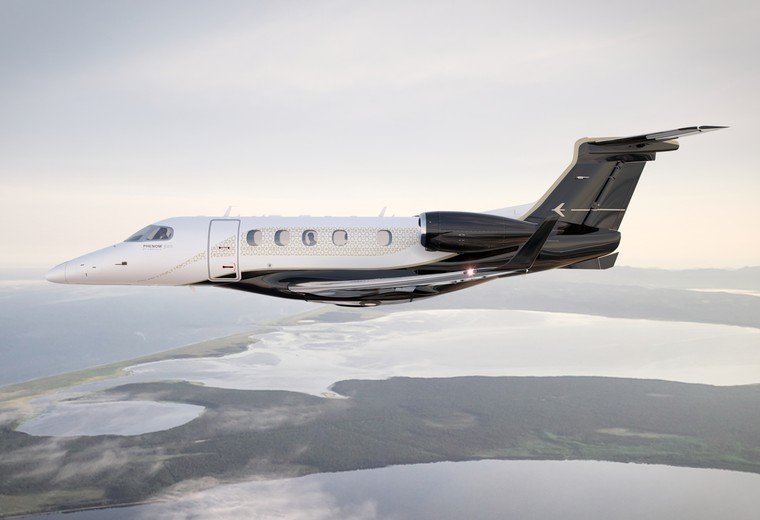 Jato · LightEmbraer Phenom 300ESpecifications, cabin, performance and charter options.Read more
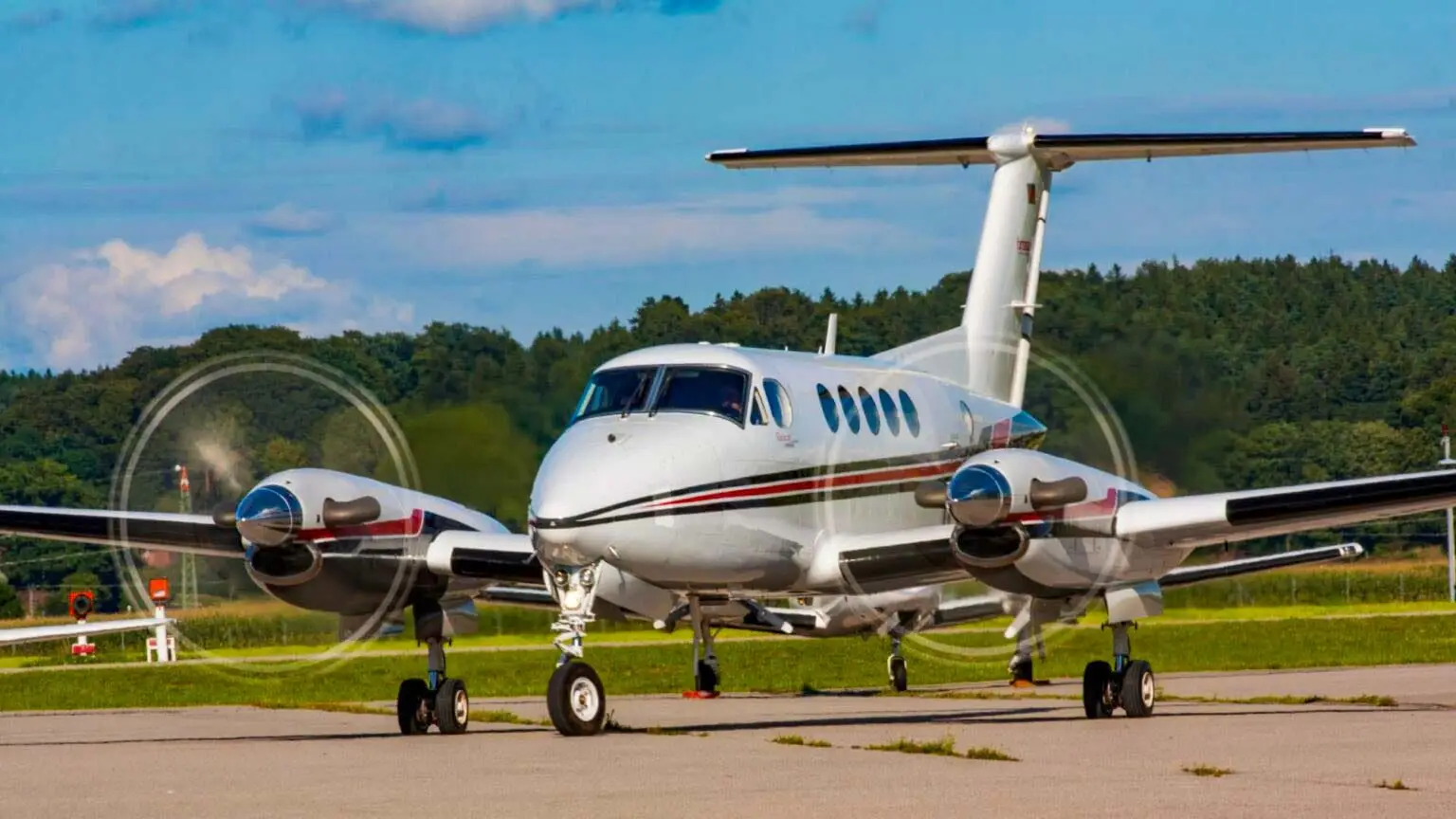 TurboéliceBeechcraft King Air B200Specifications, cabin, performance and charter options.Read more
 Jato · Super-midsizeBombardier Challenger 3500Specifications, cabin, performance and charter options.Read more
 Jato · LargeEmbraer Legacy 650Specifications, cabin, performance and charter options.Read more
 Jato · Long RangeBombardier Global 6500Specifications, cabin, performance and charter options.Read more
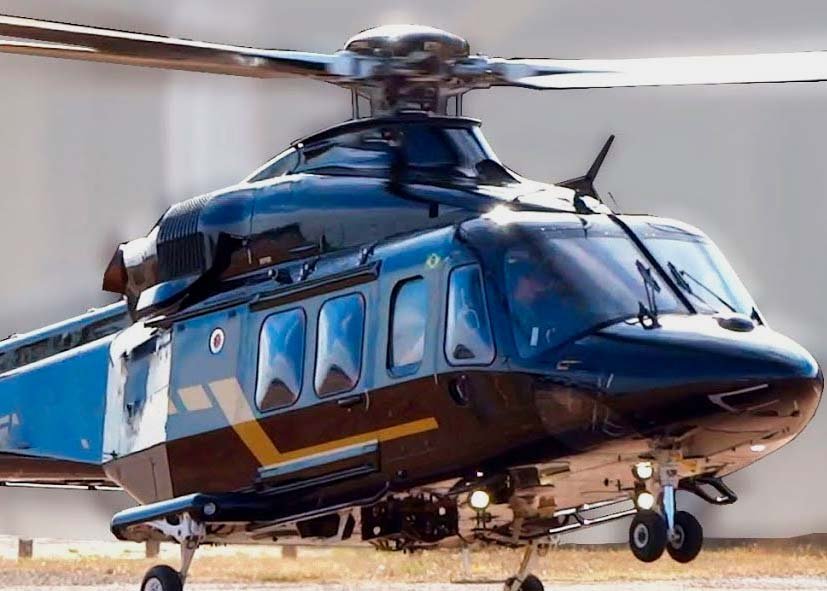 Helicóptero · BimotorAgusta A109E PowerSpecifications, cabin, performance and charter options.Read more
How is a door-to-door executive trip planned? Trip planning and concierge
Executive trip planning starts with questions, not with an aircraft. Who is travelling, and what does each person need? What is the purpose of the trip? Which addresses matter at origin and destination? What is fixed, and what may change? Which documents does each passenger hold? A good planner turns those answers into an itinerary in which every segment has a time, a place, a responsible person and a backup.
What the executive travel concierge handles
A concierge service for executive travel coordinates everything that is not the flight itself, and some things that are. Typical requests include restaurant and hotel reservations, villa preparation, tickets and hospitality for events, catering preferences on board, a chauffeur who speaks the client's language, flowers or gifts on arrival, a meeting room near the airport, a tailor, a doctor on call, a translator or a photographer. The concierge also keeps the client profile up to date: dietary restrictions, seating preferences, allergies, favourite newspapers and the names of the people who usually travel along.

A typical planning timeline
| When | What gets done | Why it matters |
|---|---|---|
| Weeks before | Purpose of trip, passengers, dates, documents, visas or travel authorizations, events and venues | Visas, pet paperwork and event hospitality can take weeks |
| 7 to 14 days before | Aircraft and operator confirmed, ground transport and hotels booked, catering preferences collected | Peak dates around major events sell out early |
| 48 to 72 hours before | Final passenger manifest, passport data, weather and slot review, helicopter and chauffeur briefings | Authorities and operators need passenger data in advance |
| Day of travel | Pick-up, private terminal, departure, live updates, arrival hand-off | One contact follows the journey in real time |
| After the trip | Feedback, profile updates, invoices and receipts | The next trip starts better informed |
Multi-city and multi-country itineraries
Executive itineraries rarely go from A to B and back. A European week may connect London, Paris, Geneva and Monaco; a Middle East trip may combine Dubai, Abu Dhabi and Riyadh; a Brazil visit may combine São Paulo, Rio de Janeiro and a weekend in Trancoso or Florianópolis. Each leg can need a different aircraft, a different operator and a different set of rules. Read how we organize these journeys in global air mobility, and how to combine domestic and intercontinental flights on one trip.
Plan B is part of plan A
Weather closes helipads, events change schedules and meetings run late. Every executive itinerary should name its alternatives: a second airport, a ground option if the helicopter cannot fly, a later departure slot, a backup hotel. Flexibility is the main reason executives travel privately, and it only works when the alternatives have been prepared in advance rather than improvised at the curb.
- Passenger profiles with preferences and documents
- Every segment with a time, place and owner
- Backup airport, ground option and hotel named
- Live updates on the day of travel
Private terminals, FBOs and VIP terminals: how departures and arrivals work
Private flights do not use the crowded airline terminal. In most countries, executive travellers depart from a fixed-base operator (FBO), a private terminal that handles business aviation passengers, crews and aircraft, or from a dedicated general aviation or VIP terminal. The FBO provides a lounge, parking, baggage handling, catering delivery, fuel and ramp services, and it coordinates with customs, immigration and security when the flight is international.
What the traveller experiences
- The car usually drives to the FBO entrance; in some airports, and with the right authorizations, it may approach the aircraft.
- Passengers typically arrive a short time before departure rather than hours early, subject to the operator's and the airport's rules.
- Baggage goes directly from the car to the aircraft hold.
- Security screening follows the rules of each country and airport, and is usually done in the private terminal.
- International passengers clear immigration and customs in the terminal or, at some airports, with officers who come to the aircraft.
Examples around the world
In Dubai, the VIP Terminal at Dubai World Central (Al Maktoum International, OMDW) opened in 2016 within the Mohammed Bin Rashid Aerospace Hub. According to Aviation Week, the hub recorded 18,000 business aviation movements in 2024 and 9,753 in the first half of 2025, up 15 percent year on year. In Monaco, Visit Monaco notes that passengers on certain flights from Nice can complete check-in formalities at the Monaco heliport terminal. In Brazil, executive terminals operate at airports such as São Paulo Congonhas (SBSP), Campo de Marte (SBMT), Guarulhos (SBGR), Rio de Janeiro Santos Dumont (SBRJ) and Galeão (SBGL), and Florianópolis (SBFL).
| Step | Airline terminal | Private terminal (FBO) |
|---|---|---|
| Arrival at airport | Public drop-off, long walk | Car to the FBO door |
| Check-in and baggage | Counters and queues | Handled by the FBO and crew |
| Security | Shared checkpoint | Screening in the private terminal, as required |
| Immigration | Main hall, shared queues | In the terminal or at the aircraft, where permitted |
| Waiting | Gate area or airline lounge | Private lounge, often only minutes |
Data the authorities need in advance
Speed at the terminal depends on paperwork done earlier. For flights to the United States, US Customs and Border Protection rules (19 CFR 122.22) require the pilot to transmit the arrival manifest and notice of arrival through an approved electronic system no later than 60 minutes before departure from the foreign airport, and to receive approval to land. The United Kingdom uses the General Aviation Report (GAR); Brazil requires authorizations for foreign private aircraft and coordination with the Federal Police and Federal Revenue at international airports. This is why the executive travel team collects passport data well before the day of travel: a missing name on a manifest can delay a departure more than any weather.
Fast-track immigration and customs: passports, visas and travel authorizations in 2026
Executive travel cannot remove border controls, but it can make them smooth. The private terminal shortens the process; correct documents make it predictable. Since 2025, several of the world's most visited destinations have introduced new digital systems, and executive travellers, their families and their staff all need to comply.
New rules every executive traveller should know
- Schengen Area, Entry/Exit System (EES): the EU's EES started gradually on 12 October 2025 and became fully operational on 10 April 2026, according to the French Ministry for Europe and Foreign Affairs. It records non-EU travellers' entries and exits, with a facial image and fingerprints, and replaces passport stamping for short stays.
- Schengen Area, ETIAS: the European Travel Information and Authorisation System, for visa-exempt visitors, was still not operational in November 2026 and the European Commission had not set a start date; the planned fee is 20 euros, with three years' validity. Check official EU channels before travelling. Check its status on official EU channels before every trip, and beware of unofficial websites.
- United Kingdom, ETA: visa-exempt visitors, including US, Canadian and EU nationals, need an Electronic Travel Authorisation. GOV.UK lists the fee at 20 pounds; a decision usually arrives within one day, and the ETA lasts two years or until the passport expires, for multiple trips.
- Brazil, visas for US, Canadian and Australian citizens: since 10 April 2025, citizens of these countries need a visa, available as an e-visa, to visit Brazil.
- United States: visitors need a visa or an approved ESTA, according to their nationality, and private flights must transmit passenger data to CBP before departure.
Fast track: what it really means in private aviation
In airline travel, fast track is a paid lane. In executive travel, the faster path comes from three things: the private terminal, an accurate manifest sent in advance, and passengers who carry exactly the documents that were declared. Trusted traveller programs, such as Global Entry in the United States, can help in some situations, but their availability depends on the airport and the type of flight. The executive travel team checks these details for every passenger, every time, rather than assuming that last year's rules still apply.
Customs, valuables and declarations
Private flights carry the same customs obligations as airline flights. High-value jewellery, watches, art, cash above the declaration threshold, professional equipment and gifts may need to be declared. Some countries strictly control certain prescription medicines, and travellers should carry prescriptions and check the destination's rules. For truly high-value items, such as artwork for a fair or equipment for a production, Embarque Oficial organizes urgent and high-value cargo as a special operation, with authorized operators.
Documents for staff and crew
Nannies, chefs, assistants and security staff need their own visas and travel authorizations, which can differ from the principal's. A household employee with a different nationality may need a visa where the family needs only an ETA. Building the document check into the planning timeline avoids the most common cause of a delayed departure: one passenger who cannot board.
- Passport validity checked for every passenger
- EES, ETIAS, UK ETA and visa status confirmed
- Manifest data sent to the operator in advance
- Valuables and medicines declared where required
- Staff documents checked as carefully as the principal's
- Rules rechecked before each trip, not assumed
Helicopter transfers: the last mile of executive travel
The helicopter is what turns a fast flight into a true door-to-door journey. It links the airport to the city, the city to the coast, the hotel to the event and the yacht to the shore, often in minutes where the road would take an hour or more. A helicopter transfer is usually the first and last leg of the executive journey, and it is the leg most exposed to weather and local rules.
Where helicopter transfers make the biggest difference
- Nice to Monaco: about seven minutes from Nice Côte d'Azur Airport to Monaco Heliport in Fontvieille, according to Visit Monaco, with regular services also to Cannes-Mandelieu and Saint-Tropez.
- London: the London Heliport at Battersea (EGLW), on the Thames, connects central London with the business aviation airports around the capital.
- São Paulo: one of the busiest urban helicopter markets in the world, where executives use rooftop helipads to avoid traffic between offices, airports and the coast.
- Rio de Janeiro and Angra dos Reis: transfers from the city's airports to the islands and resorts of the Costa Verde.
- Dubai and Abu Dhabi: transfers between airports, hotels and events, including race weekends.
Single-engine or twin-engine?
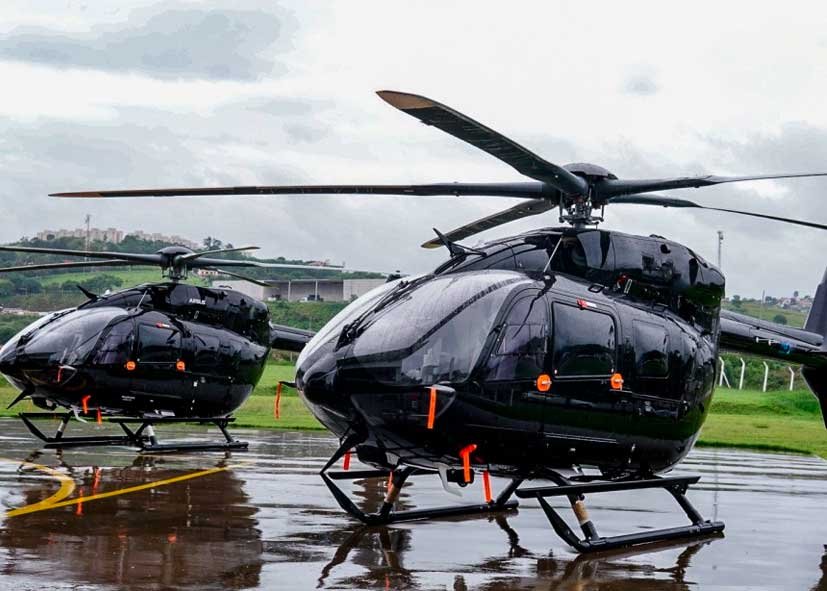
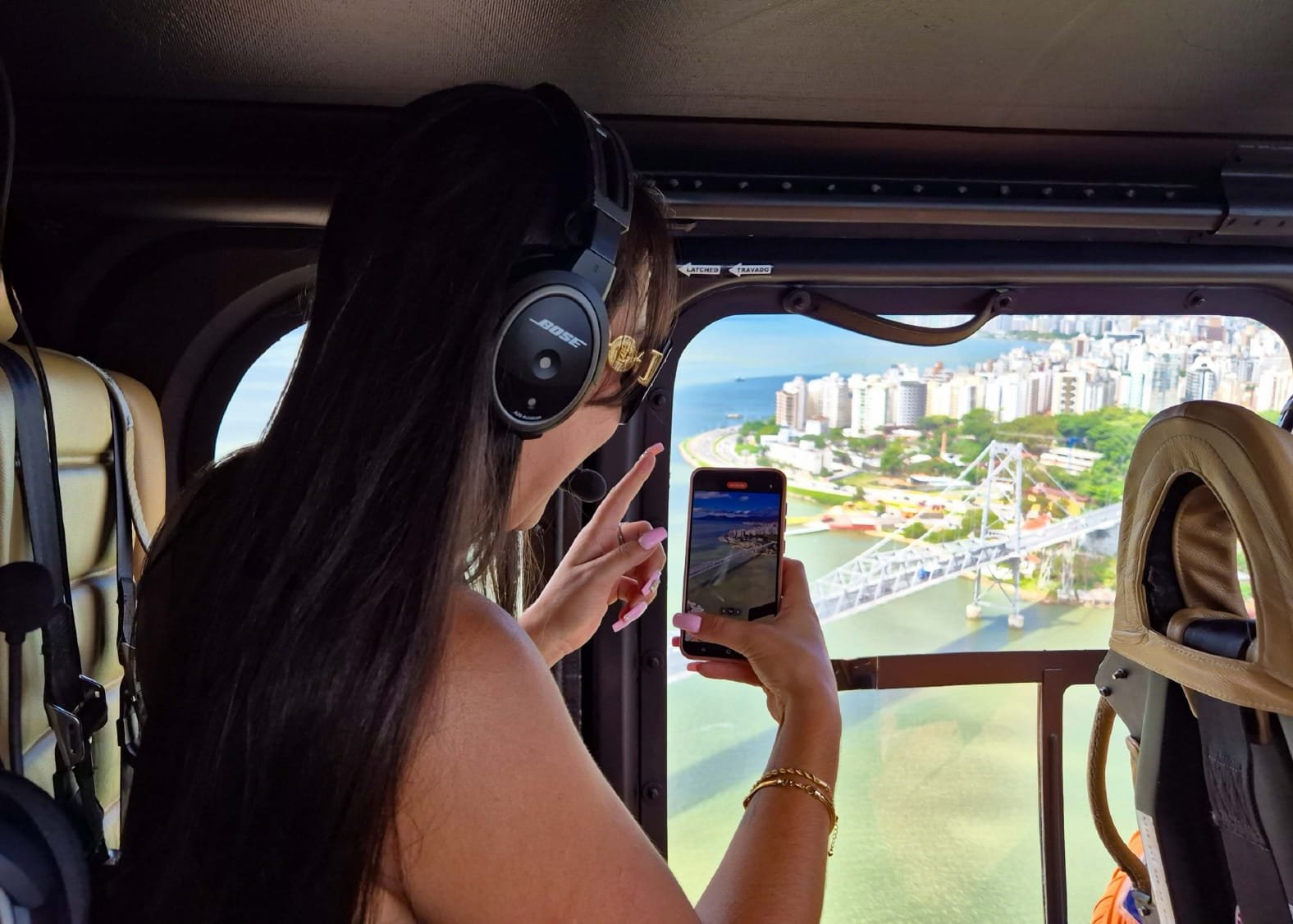
The choice depends on the route, the number of passengers, the baggage, the operating rules and the client's profile. Single-engine turbine helicopters such as the Leonardo AW09 or the Airbus EC130 suit short transfers with few passengers. Twin-engine models such as the Agusta A109 and the Airbus H145 are often preferred for executive transfers over cities and water, and some operations require two engines. The guide to executive helicopters explains the differences in depth.
What to plan in advance
- Confirm the landing sites at both ends: certified heliport, hotel helipad, private estate or yacht.
- Check baggage volume: helicopters carry less than jets, and large suitcases may follow by car.
- Coordinate times with the jet's arrival, including immigration, so the helicopter does not wait with its rotors turning.
- Prepare the ground alternative: weather minimums for helicopters are stricter, and a chauffeur should be on standby.
- Consider noise rules and curfews, which restrict helicopter operations in many cities and resorts.
Embarque Oficial arranges helicopter transfers with operators authorized in each country, from the Riviera to the Brazilian coast. See the helicopters we can arrange and, for leisure flights, our panoramic flights.
Secure ground transport and chauffeurs: the part of the trip people forget
Most of an executive journey happens on the ground, yet ground transport is where many trips fail. A late car, a driver who does not know the private terminal entrance, a vehicle too small for the baggage or a chauffeur who talks about the client in public can undo the work of a perfect flight. In executive travel, the chauffeur is part of the security and privacy plan, not just a driver.
What good executive ground transport looks like
- Vetted companies and drivers: licensed operators, insured vehicles, background-checked chauffeurs and confidentiality commitments.
- The right vehicle: sized for passengers and baggage, with child seats when needed, and discreet rather than conspicuous.
- Knowledge of the airport: the chauffeur knows the FBO entrance, the waiting rules and the contact person at the private terminal.
- Live coordination: the driver receives flight updates and adjusts the pick-up time to the real landing time.
- Language and local knowledge: a chauffeur who speaks the client's language and knows the venues, the event closures and the alternative routes.
Armoured vehicles and higher-risk destinations
In some cities, and for some profiles, an armoured vehicle and a trained security driver are the norm. Armoured vehicles are regulated differently in each country, and in Brazil private security services are authorized and supervised by the Federal Police under the Private Security Statute (Law 14,967 of 2024). The decision to use armour, and the level of protection, belongs to a professional risk assessment for that principal and that destination, never to habit or appearance.
Event days are different
During the Monaco Grand Prix, Carnival in Rio or the São Paulo Grand Prix, roads close, traffic multiplies and access to venues depends on credentials and timing. The ground plan for event days should include the exact drop-off points, the credentials needed, the walking distances and a fallback time. A helicopter can bypass part of the congestion, but the final metres are usually on foot or by car.
Questions to ask before confirming ground transport
- Who is the chauffeur, and has the company vetted them?
- Is the vehicle insured and licensed for passenger transport in that country?
- Does the driver have the flight number and the FBO contact?
- What happens if the flight is early, late or diverted?
- Who is the 24-hour contact if something changes?
Embarque Oficial coordinates ground transport as part of the journey, through its executive concierge, so that the car and the aircraft work from the same plan.
- Licensed and insured transport companies
- Chauffeurs vetted and briefed on confidentiality
- Vehicle sized for passengers and baggage
- Driver receives live flight updates
Discreet travel and security for principals: executive protection without the noise
For high-net-worth individuals, executives and public figures, discretion is a form of security. The less the world knows about where a principal will be, and when, the fewer risks need to be managed. Executive travel protects privacy by design: fewer people involved, information shared only with those who need it, and a travel style that does not draw attention.
Privacy principles in executive travel
- Need-to-know: itineraries, manifests and addresses are shared only with the operator, the authorities and the providers who need them.
- Confidentiality: drivers, hosts and suppliers commit to confidentiality, and the planning team does not publish client names, images or routes.
- Low profile: discreet vehicles, private terminals and unbranded arrangements reduce visibility.
- Digital hygiene: no real-time posting of locations by the travelling party or staff, and care with what appears on social media after the trip.
- Data protection: passport copies and personal data are handled under data protection laws such as Brazil's LGPD and Europe's GDPR.
When executive protection is part of the trip
Some principals travel with their own security team; others need protection arranged at the destination. Executive protection is a regulated profession in many countries. In the United Kingdom, anyone guarding individuals against assault under contract needs a Close Protection licence from the Security Industry Authority (SIA). In Brazil, private security companies are authorized and supervised by the Federal Police under Law 14,967 of 2024. The executive travel organizer does not replace these professionals; it makes sure the protection team, the operator, the FBO and the chauffeurs work from the same timetable and communicate through agreed channels.
Security in the aviation part of the trip
The aviation side has its own safeguards. Certified operators follow security programs required by their authorities, private terminals control access to the ramp, and passenger lists are shared with the authorities as the law requires. When the principal is a government authority or a diplomat, additional coordination with official bodies is common. For more than ten years, Embarque Oficial has organized the transport of authorities with security, always with authorized operators, as one of its special operations.
What a principal should expect from the organizer
- A single, discreet point of contact who knows the whole plan.
- Confirmation that every provider is licensed and insured.
- Communication plans that work if phones are lost or networks fail.
- Alternatives prepared for each critical segment.
- No surprises: changes are proposed, not imposed.
Learn how our consultative approach works in corporate aviation, and how security and transparency fit into private aviation in general.
- Need-to-know sharing of itineraries
- Confidentiality from every supplier
- Licensed protection teams where required
- Shared timetable for security, crew and drivers
Hotels, villas, yachts and estates: planning the destination
In executive travel, the destination is not a dot on a map but a specific address: a hotel suite in Monaco, a villa on Capri, an apartment in Paris, a beach house in Trancoso, a farm in the interior of Brazil, a yacht anchored off Saint-Tropez. The journey is designed backwards from that address. Which airport is closest for the aircraft? Is there a helipad, and is it licensed? How long is the drive? Who receives the guests and the baggage?
Hotels and resorts as destinations
Many of the world's great hotels and resorts are reached most easily by a private jet and a helicopter, from the Riviera to the Brazilian coast. Embarque Oficial treats hotels and brands strictly as destinations: we plan the flight and the transfer to the property chosen by the client, coordinate arrival times with the reception, and arrange that baggage arrives with the guests or ahead of them. Hotels with their own helipads or nearby heliports make the last mile shorter, but rules vary; some allow only certain helicopter types or certain hours.
Villas and private estates
Villas and estates bring more variables: access roads, gate codes, house staff, security, provisioning and, sometimes, a private helipad that needs prior authorization. The executive travel team collects these details in advance and briefs the drivers and the helicopter operator. When the villa is on an island, such as Capri, the plan may combine a jet to Naples, a helicopter or a boat, and a car on arrival.
Yachts and boats
For yacht guests, timing is everything. The jet arrives at the nearest business aviation airport, the transfer goes to the marina or to a helipad, and a tender takes guests on board. The plan must be coordinated with the captain's schedule and the port authority's rules, and it should include what happens if the sea is rough.
Destinations we organize regularly
- Europe: Monaco, the Côte d'Azur, Capri and the Amalfi Coast, Rome, Paris, London and the Alps.
- Middle East: Dubai and Abu Dhabi, with business and leisure combined; see our Dubai destination page.
- Americas: Miami, Fort Lauderdale, New York, Las Vegas and the Caribbean.
- Brazil: São Paulo, Rio de Janeiro, Angra dos Reis, Trancoso, Florianópolis and every other region of the country.
Browse more ideas on our destinations page. Wherever the address, the principle is the same: the traveller should arrive at the door, not at an airport.

- Destination address defines the whole plan
- Helipad licences and hours confirmed
- Baggage arrives with or before the guests
- Hotels and brands treated as destinations only
Executive travel to major events in 2027: Monaco, Cannes, Miami, Dubai, São Paulo and Rio
Major events concentrate demand for aircraft, airport parking, helicopter slots, hotel rooms and chauffeurs into a few days. For executive travellers, the solution is simple: plan early, and plan the ground as carefully as the flight. The table below lists 2027 dates confirmed by the organizers or by official sources at the time of writing.
| Event | Where | 2027 dates | Executive travel note |
|---|---|---|---|
| Carnival in Rio (Special Group parades) | Sambadrome, Rio de Janeiro | 7 to 9 February 2027 | Santos Dumont, Galeão and Jacarepaguá airports; helicopter transfers to Angra dos Reis and the Costa Verde |
| Dubai World Cup | Meydan, Dubai | 27 March 2027 | Dubai World Central VIP Terminal and Dubai International |
| Cannes Film Festival (80th edition) | Cannes, France | 11 to 22 May 2027 | Cannes-Mandelieu for smaller jets, Nice for larger cabins, helicopter transfers along the coast |
| Monaco Grand Prix | Monte Carlo | 4 to 6 June 2027 (sprint weekend) | Nice plus a seven-minute helicopter transfer to Monaco Heliport |
| São Paulo Grand Prix | Interlagos, São Paulo | 5 to 7 November 2027 (sprint weekend) | Congonhas, Campo de Marte and Guarulhos; helicopters avoid race-day traffic |
| Abu Dhabi Grand Prix (season finale) | Yas Marina, Abu Dhabi | 10 to 12 December 2027 (sprint weekend) | Abu Dhabi airports, or Dubai with a road or helicopter transfer |
Art Basel Miami Beach
Art Basel Miami Beach 2026 runs from 4 to 6 December 2026, with VIP days on 2 and 3 December, according to Art Basel. The 2027 dates had not been published at the time of writing; the fair traditionally takes place in the first week of December. Executive travellers usually land at Opa-locka (KOPF), Miami (KMIA) or Fort Lauderdale (KFLL), and Embarque Oficial has an office in nearby Fort Lauderdale. Collectors who ship artwork can ask about our high-value cargo operations.
How to plan an event trip
- Book the aircraft early, because the best aircraft and parking at the nearest airports go first.
- Reserve helicopter transfers at the same time as the jet, especially for Monaco and Cannes.
- Confirm hotels or villas, and the exact address for drivers and helicopters.
- Collect credentials, tickets and hospitality passes, and match them to the drop-off plan.
- Plan the departure: event weekends end with everyone leaving at once, so a confirmed slot or a Monday departure can save hours.
Event schedules can change; we reconfirm dates with the organizers before every booking. Ask us about roadshows and corporate travel programs built around events.
Travelling with families, children, pets and staff
Executive travel is often family travel. Grandparents, children, nannies, a chef, an assistant, a security officer and the family dog may all be on the same flight. Private aviation makes this far easier than airline travel, but each traveller brings documents and needs that must be planned.
Children and minors
Children need their own passports and, depending on nationality, their own visas or travel authorizations. Brazil has specific rules for minors leaving the country. Under CNJ Resolution 131 of 2011, as explained by the Rio de Janeiro Court of Justice, a minor travelling abroad with only one parent needs the other parent's written authorization with a notarized signature; a minor travelling alone or with another adult needs authorization from both parents. A passport that expressly authorizes travel abroad replaces that document. Other countries have their own rules, and the executive travel team checks them for every itinerary.
Pets on private flights
Private jets are one of the most comfortable ways to travel with pets, because dogs and cats can usually fly in the cabin at the operator's discretion. The aircraft is the easy part; the paperwork is not.
- Leaving Brazil: dogs and cats need an International Veterinary Certificate (CVI) issued by Vigiagro, of the Ministry of Agriculture and Livestock, requested by an authorized vet. For the United States, the analysis takes about 48 hours on average, and the certificate is valid for entry within 5 days for dogs and 10 days for cats.
- Entering the European Union: microchip, rabies vaccination at least 21 days before travel, an EU animal health certificate issued no more than 10 days before arrival and, from most non-EU countries, a rabies antibody titration test with a three-month wait after the blood sample.
- Entering Great Britain: the rules are separate from the EU's and include checks on the route used; confirm them with the UK government before every trip.
- Entering the United States: since 1 August 2024, the CDC requires dogs to be at least six months old, microchipped and accompanied by the CDC Dog Import Form receipt, with extra rules for dogs from high-risk rabies countries.
Because titration tests can take months, pet travel should be the first item on the planning timeline, not the last.
Household staff and assistants
Staff need their own visas and authorizations, which may differ from the family's. They also need clear roles on the day: who carries the children's documents, who handles the pet, who coordinates with the chauffeur. A short briefing before departure avoids confusion at the terminal.
Comfort for every generation
Car seats, special meals, quiet zones for sleeping, medical needs of older travellers and entertainment for children can all be arranged in advance. The charter quote should reflect the real passenger list, including staff and pets, so that the aircraft, the seats and the baggage space are right.
- Passports and authorizations for every child
- Pet certificates planned months ahead
- Staff visas checked separately
- Real passenger list in the quote
Health and medical considerations: fitness to fly, medical support and air ambulance
Health is part of every executive journey, from jet lag on a long-haul flight to a passenger recovering from surgery. Private aviation offers more control than airline travel: the cabin, the schedule, the catering and the people on board can all be adapted. But the decisions about a passenger's fitness to fly belong to a physician, and the executive travel organizer's role is to make sure that medical advice is followed throughout the trip.
Before the trip
- Fitness to fly: passengers with recent surgery, heart or lung conditions, pregnancy or reduced mobility should consult their doctor before flying.
- Cabin altitude: even pressurized cabins have less oxygen than at sea level. Some modern long-range business jets keep a lower cabin altitude, which many travellers find more comfortable, but a doctor may still advise medical oxygen.
- Medicines: carry them in hand baggage with prescriptions, and check whether the destination restricts any of them.
- Vaccines and health entry rules: some destinations require specific vaccinations; check before travel.
- Insurance: confirm that travel medical insurance covers the destinations, the activities and, where relevant, medical evacuation.
On board and at the destination
Catering can follow medical diets. Long flights can be planned with rest in mind, adjusting departure times to reduce jet lag. At the destination, the concierge can identify hospitals, clinics and doctors who speak the traveller's language, and keep their contact details ready. For travellers with chronic conditions, a medical summary in the destination language is a simple precaution.
Air ambulance and aeromedical transport
When the situation is medical rather than a matter of comfort, the right answer is an air ambulance. For more than ten years, Embarque Oficial has organized air ambulance and aeromedical transport (known in Brazil as UTI aérea) as a special operation, always with operators authorized for this activity. An air ambulance flight carries a medical team and equipment suited to the patient's condition, and the transfer is coordinated from hospital to hospital, including ground ambulances at both ends.
International quality marks help families and companies assess air ambulance providers. EURAMI, the European Aero-Medical Institute, accredits fixed-wing and rotary-wing air ambulance services and airline medical escort, with re-accreditation audits every three years; in the United States, CAMTS performs a similar role. Ask the organizer which certificates and accreditations apply to the operator proposed for a specific mission.
Medical escort on a private flight
Not every medical need requires a full air ambulance. Some passengers travel on a private jet with a doctor or nurse on board, with oxygen and specific equipment approved by the operator. The choice depends on medical advice, the operator's approval and the regulations of the countries involved.
- Physician decides fitness to fly
- Medicines carried with prescriptions
- Insurance covers destinations and evacuation
- Air ambulance organized as a special operation
Duty of care: how companies and family offices protect travelling principals
Duty of care is the responsibility an organization has for the health, safety and security of the people it sends to travel. For companies, it is often a legal and governance obligation; for family offices, it is a matter of responsibility for the family and its staff. In executive travel, duty of care means knowing where principals are, what risks they face, and what will happen if something goes wrong.
ISO 31030, the travel risk management standard
ISO 31030:2021, Managing travel risks, guidance for organizations, was published in September 2021. It guides organizations of any sector or size in developing, implementing and reviewing a travel risk management policy and programme, building on ISO 31000 risk management principles and aligning with ISO 45001 on occupational health and safety. It covers risks to people, reputation, finances, business continuity, data and equipment. Although the standard does not cover tourism and leisure travel, its logic applies well to any executive journey.
The elements of a duty of care plan for executive travel
- Risk assessment: destination, route, profile of the travellers, events taking place, health risks and weather season.
- Approved providers: certified aircraft operators, licensed transport and security companies, accredited medical providers.
- Traveller information: briefings on the destination, local laws, emergency numbers and the communication plan.
- Tracking and communication: knowing where principals are at each stage, with consent and with respect for privacy.
- Incident response: who decides, who calls whom, and what the options are for medical evacuation, early return or relocation.
- Review: learning from each trip and updating the policy.
Choosing aviation providers with duty of care in mind
The aircraft operator is one of the most important choices in the plan. A paid flight must be operated by a company certified for commercial air transport: an RBAC 135 air taxi company under ANAC in Brazil, a Part 135 operator under the FAA in the United States, or an operator with an air operator certificate in Europe and the Middle East. Embarque Oficial arranges every flight with operators certified by ANAC in Brazil and by the aviation authority of each country abroad, such as the FAA and EASA. The business aviation guide explains how operators are certified and audited.
Corporate travel programs
Companies that send executives on frequent trips benefit from a framework agreement: approved aircraft categories, standard ground arrangements, travel policy rules and consolidated reporting. Learn more about our travel programs and about corporate aviation for leadership teams.
- Risk assessment before every trip
- Certified operators and licensed providers only
- Communication plan known by all travellers
- Incident response options defined in advance
Connectivity on the move: Wi-Fi in the air and secure communications
For executives, a flight is often part of the working day, and connectivity decides how productive it is. Business aviation connectivity has changed quickly since 2024, with low-Earth-orbit satellite systems arriving on business jets alongside the established air-to-ground and geostationary networks.
Starlink and the new generation of in-flight Wi-Fi
- In October 2024, Gulfstream announced the first FAA supplemental type certificate (STC) from a business jet manufacturer for Starlink, on the G650 and G650ER. Gulfstream claimed download speeds of roughly 40 to 220 Mbps and latency below 99 milliseconds.
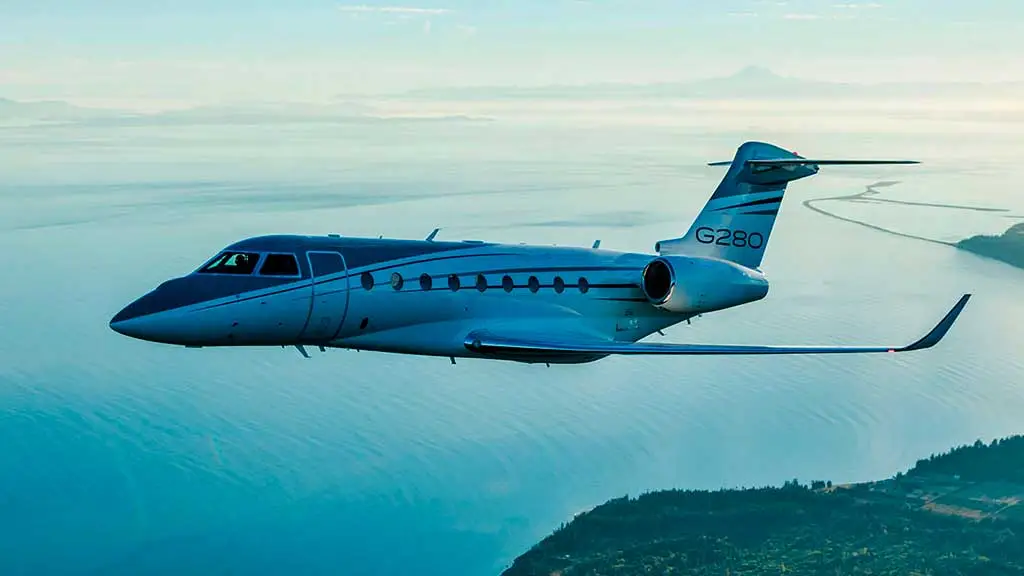
- Gulfstream also announced that it was pursuing Starlink certification for other models, from the G280 to the G800, while independent maintenance organizations had already installed it on other Gulfstream aircraft under their own certificates.
- Other manufacturers and large fleet operators have followed with their own Starlink programs, so availability is growing quickly across business jet categories.
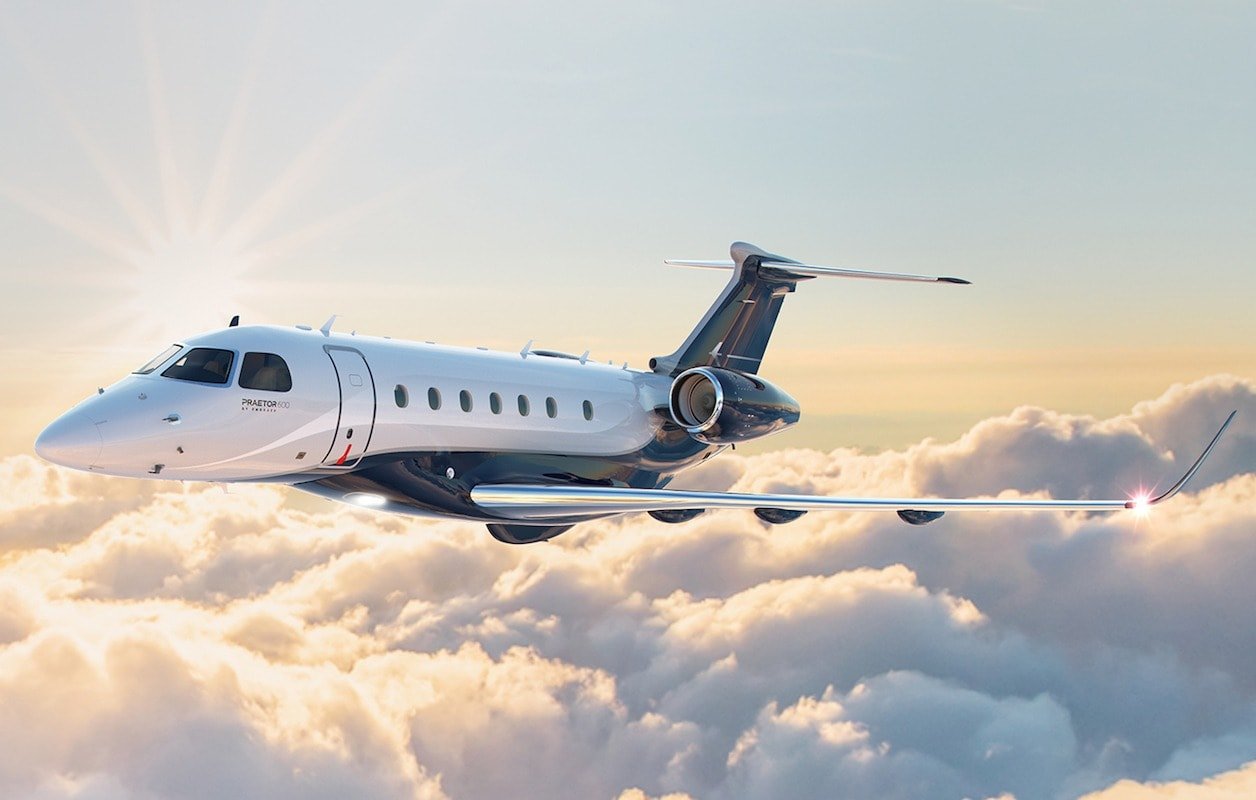
Connectivity is not the same on every aircraft. Systems differ by coverage, speed, data limits and whether they work over oceans. When video calls or large file transfers matter, the executive travel team confirms the system installed on the specific aircraft, not just the model. The Embraer Praetor 500 and the Bombardier Global 7500 are examples of aircraft where connectivity options are available, depending on each aircraft's installation.
Secure communications
- Use a company VPN on any network that is not under your control, including on board and in hotels.
- Avoid public Wi-Fi at airports and venues for confidential work.
- Carry a spare phone or a backup communication method with the key contacts saved.
- Agree on code words or confirmation procedures for urgent changes to the itinerary.
- Keep sensitive documents encrypted and avoid printing them in shared business centres.
On the ground
Local SIM cards or eSIMs, mobile hotspots in vehicles and verified Wi-Fi at the villa keep the principal connected after landing. The concierge can arrange them before arrival so that the traveller is online as soon as the aircraft door opens.
- Connectivity confirmed on the specific aircraft
- VPN on every network not under your control
- Backup phone and contact list
- eSIM or local data ready on arrival
How Embarque Oficial organizes executive travel worldwide
Embarque Oficial is a global executive aviation company, in the air since 2011 and headquartered in Florianópolis, Brazil, with offices in Monaco, Dubai, London, Paris, Liverpool, Fort Lauderdale, New York, Las Vegas, Shanghai and Brazil. The company serves clients worldwide, from Monaco, Dubai, Capri and Rome to every region of Brazil, and organizes the complete executive journey: aircraft, helicopters, ground transport, destination arrangements and special requests.
How we serve you
Our offices do not offer walk-in service to the public. Clients are served online, on WhatsApp at +55 48 98877-0541, and in person at embarkation, at heliports, airports and FBOs in many places around the world. Embarque Oficial arranges every flight with operators certified by ANAC in Brazil and by each country's aviation authority abroad, such as the FAA and EASA.
What we organize for executive travellers
- Private jet, turboprop and helicopter charter, one-way, round trip or multi-city.
- Intercontinental flights, empty legs and helicopter transfers.
- Jet Card, Clube Infinity, corporate programs and roadshows.
- Concierge services: ground transport, hotels, villas, restaurants and events.
- Aircraft management, purchase and sale, and aircraft financing for clients who decide to own.
Special operations for more than 10 years
For more than ten years, Embarque Oficial has organized special operations, always with authorized operators: air ambulance and aeromedical transport, urgent and high-value cargo, aerial filming and photography, and the transport of authorities with security.
How to request an executive travel plan
- Tell us the dates, the addresses at origin and destination, and who is travelling, including children, staff and pets.
- Share the purpose of the trip and any events, meetings or special needs.
- Receive a proposal with the aircraft, the certified operator, the ground plan and what is included.
- Confirm, sign and receive the detailed itinerary with the contacts for each segment.
Start on our contact page or on WhatsApp, or read more about Embarque Oficial. Whether the trip is a weekend in Monaco or a family journey from Dubai to São Paulo, the plan is built door to door.
- Worldwide service, all regions of Brazil
- Certified operators in every country
- Online, WhatsApp and in person at embarkation
- Special operations for more than 10 years
Glossary: key executive travel terms
- Executive travel
- The complete door-to-door planning and delivery of a journey for principals, executives and families, combining private flights with ground, destination, security and care.
- Principal
- The main person a travel or protection plan is built around, such as an executive, a family head or a public figure.
- FBO (fixed-base operator)
- A private terminal at an airport that serves business aviation passengers, crews and aircraft, with lounge, ramp and fuel services.
- EES (Entry/Exit System)
- The EU's digital border system that records the entries and exits of non-EU short-stay travellers with biometrics; fully operational since 10 April 2026.
- ETIAS
- The European Travel Information and Authorisation System for visa-exempt visitors to the Schengen Area, announced for the last quarter of 2026.
- UK ETA
- The United Kingdom's Electronic Travel Authorisation for visa-exempt visitors, valid for two years or until the passport expires.
- eAPIS
- The US electronic system used to send passenger manifests and arrival notices to CBP before private flights to or from the United States.
- Helicopter transfer
- A short helicopter flight that connects an airport, city, resort, event or yacht, usually as the first or last leg of an executive journey.
- Executive protection
- Licensed personal security for a principal, planned with the travel itinerary and regulated by national authorities in many countries.
- Duty of care
- An organization's responsibility for the health, safety and security of the people it sends to travel.
- ISO 31030
- The international standard, published in 2021, that guides organizations in managing travel risks.
- CVI (International Veterinary Certificate)
- The certificate issued by Brazil's Ministry of Agriculture, through Vigiagro, for dogs and cats travelling abroad.
- Air ambulance
- An aircraft configured to carry a patient with a medical team and equipment; called UTI aérea in Brazil.
- Cabin altitude
- The equivalent altitude of the air pressure inside a pressurized cabin; lower cabin altitudes are generally more comfortable on long flights.
Frequently asked questions about executive travel
What is executive travel?
Executive travel is the complete planning and delivery of a journey for a principal, an executive or a family, from door to door. It combines the private flight with trip planning, private terminals, immigration, helicopter transfers, chauffeurs, hotels or villas, events, security, health and connectivity, coordinated by one organizer so the traveller never waits or repeats the plan.
How is executive travel different from private aviation?
Private aviation is the flight on a whole aircraft. Executive travel is the whole journey around that flight: the car to the private terminal, the formalities, the helicopter for the last mile, the chauffeur, the hotel and the event access. A private flight without that coordination saves time in the air but can still lose hours on the ground.
What is an FBO?
An FBO, or fixed-base operator, is a private terminal for business aviation. It provides a lounge, parking, baggage handling, fuel, catering and ramp services, and it coordinates with customs, immigration and security on international flights. Executive travellers usually arrive at the FBO a short time before departure, subject to the operator's and the airport's rules.
Do private jet passengers go through immigration and customs?
Yes. Private jet passengers follow the same immigration and customs laws as airline passengers. The difference is where and how fast it happens: usually in the private terminal or, at some airports, at the aircraft. Passenger data must be sent in advance; for the United States, the manifest goes to CBP no later than 60 minutes before departure.
Do I need an ETA or ETIAS for a private flight to Europe or the UK?
The rules apply to private flights too. Visa-exempt visitors to the United Kingdom need an Electronic Travel Authorisation, which costs 20 pounds on GOV.UK. The Schengen Area's Entry/Exit System has been fully operational since 10 April 2026, while ETIAS was still not operational in November 2026.
How long does the helicopter transfer from Nice to Monaco take?
According to Visit Monaco, the helicopter flight from Nice Côte d'Azur Airport to Monaco Heliport in Fontvieille takes about seven minutes. It is the most common way for executive travellers to reach the Principality after landing a private jet in Nice, especially during the Monaco Grand Prix, when road traffic is heavy.
Can I bring my dog or cat on a private jet?
Usually yes, in the cabin, at the operator's discretion. The challenge is the paperwork: Brazil's International Veterinary Certificate for departures, the EU's microchip, rabies vaccine and health certificate rules, Great Britain's approved routes and the US CDC dog import rules. Some destinations require a rabies titration test, which can take months, so start early.
What documents does a child need to travel abroad from Brazil?
A child needs a passport and any visa or authorization required by the destination. Under CNJ Resolution 131 of 2011, a minor leaving Brazil with only one parent needs the other parent's notarized written authorization; a minor travelling alone or with another adult needs authorization from both parents, unless the passport expressly authorizes travel abroad.
Does Embarque Oficial organize air ambulance flights?
Yes. For more than ten years, Embarque Oficial has organized air ambulance and aeromedical transport, known in Brazil as UTI aérea, as a special operation, always with operators authorized for this activity. The flight carries a medical team and equipment suited to the patient, with coordination from hospital to hospital, including ground ambulances at both ends.
What is duty of care in executive travel?
Duty of care is an organization's responsibility for the health, safety and security of the people it sends to travel. In executive travel, it means assessing risks, using certified and licensed providers, informing travellers, tracking journeys with consent and preparing incident responses. ISO 31030:2021 offers guidance for building a travel risk management programme.
Can executive protection be arranged at the destination?
Yes, through licensed professionals. Executive protection is regulated in many countries: in the UK, close protection under contract requires an SIA licence, and in Brazil private security companies are authorized and supervised by the Federal Police under Law 14,967 of 2024. The travel organizer coordinates the protection team with the operator, the FBO and the drivers.
Is there Wi-Fi on private jets?
Many private jets have Wi-Fi, but the system varies by aircraft. Low-Earth-orbit services such as Starlink are spreading quickly: in October 2024, Gulfstream received an FAA STC for Starlink on the G650 and G650ER, claiming roughly 40 to 220 Mbps. Other manufacturers and fleets have followed. Always confirm the system installed on the specific aircraft, not just the model.
When are the Monaco Grand Prix and the São Paulo Grand Prix in 2027?
According to the 2027 Formula 1 calendar, the Monaco Grand Prix takes place from 4 to 6 June 2027 and the São Paulo Grand Prix from 5 to 7 November 2027, both as sprint weekends. Executive travellers should book aircraft, helicopter transfers and hotels early, because demand peaks on these dates.
Does Embarque Oficial have offices where I can walk in?
No. Embarque Oficial's offices in Monaco, Dubai, London, Paris, Liverpool, Fort Lauderdale, New York, Las Vegas, Shanghai and Brazil do not offer walk-in service. Clients are served online, on WhatsApp at +55 48 98877-0541, and in person at embarkation, at heliports, airports and FBOs in many places around the world.
How do I request an executive travel plan?
Send the dates, the addresses at origin and destination, the passenger list including children, staff and pets, and the purpose of the trip. Embarque Oficial returns a proposal with the aircraft, the certified operator, the ground plan and what is included. You can start through the contact page or on WhatsApp.
Sources and references
- McLaren: 2027 Formula 1 calendar announced
- Screen Daily: Cannes Film Festival confirms 2027 dates for 80th edition
- Diário do Rio: Rio Carnival 2027 Special Group parade order and dates
- Gulf Today: DRC announces dates for Carnival and 31st Dubai World Cup
- Art Basel: Miami Beach, at the show (2026 dates)
- Visit Monaco: Arriving in Monaco by helicopter
- Aviation Week: Bizav traffic grows at Dubai aerospace hub (October 2025)
- eCFR: 19 CFR 122.22, electronic manifest requirements for private aircraft
- France Diplomacy: EES, the new European border system, from 10 April 2026
- GOV.UK: Get an electronic travel authorisation (ETA) to visit the UK
- EY: Brazil reinstates visa requirement for nationals of Australia, Canada and the United States (April 2025)
- CDC: Dog importation regulation, new rules from 1 August 2024
- Your Europe: Travelling with pets and other animals in the EU
- Gov.br: International Veterinary Certificate (CVI) for dogs and cats travelling to the United States
- TJRJ: Travel authorization for minors (CNJ Resolution 131/2011)
- ISO TC 262: ISO 31030:2021, Managing travel risks
- EURAMI: The EURAMI accreditation
- GOV.UK Regulated Professions: Close protection operative (SIA)
- Câmara dos Deputados: Private Security Statute (Law 14,967/2024) comes into force
- GlobalAir: Gulfstream gets STC for Starlink in G650 and G650ER
Written by Régis Hahns, CEO of Embarque Oficial, with the company's editorial team, based on the sources above. Rules, prices and lead times change: always confirm with ANAC, the manufacturer or a specialist before deciding. Embarque Oficial serves clients worldwide, from Monaco, Dubai, Capri and Rome to every region of Brazil, and arranges each flight with operators certified by ANAC, Brazil's civil aviation authority, in Brazil and by the local aviation authority abroad.
Keep exploring the Knowledge Hub
Complete guideExecutive Air Taxi GuideHow charter works in Brazil, what it costs, ANAC rules and how to book safely.Read more Complete guidePrivate Jets GuideCategories, range, cabin, costs and how to choose the right jet for each mission.Read moreComplete guideExecutive Helicopters GuideModels, single vs. twin engine, helipads and urban mobility by helicopter.Read more
 Complete guideAircraft Acquisition GuideEvaluation, pre-purchase inspection, contracts, ANAC registration and pitfalls.Read moreComplete guideBusiness Aviation GuideThe sector in Brazil and worldwide: market, rules, technology and trends.Read more
 Embarque Oficial serviceExecutive Travel ConciergeFlights, helicopters, chauffeurs, hotels and events, organized door to door.Read more
Ready to fly
Tell us where, we take care of the rest
Confidential quotes and 24/7 support, every day of the year.
WhatsApp +55 48 98877-0541 · sales@embarqueoficial.com