
Global Air Mobility · The 2026 big picture
Global air mobility: how the world moves by air in 2026 and the next decade
Record business jet activity, the hubs and the gaps, ultra-long-range jets, eVTOL certification, SAF mandates, digital booking and special operations: the big picture of moving people and goods by air around the world.
By Régis Hahns, CEO of Embarque Oficial · LinkedIn
- 2011flying since
- 35 minread
- 20sources cited
What is global air mobility?
Global air mobility is the worldwide system that moves people and goods by air on demand, alongside the airline network: business jets that link continents nonstop, turboprops and helicopters that reach regional cities and the last mile, special missions such as air ambulance and urgent cargo, and the first eVTOL air taxis now in testing. According to WINGX, business jets flew a record 3.88 million departures in 2025, and Honeywell expects the business aircraft fleet to reach nearly 51,000 by 2035. Every paid flight must use an operator certified by the FAA, EASA-system authorities, ANAC or the GCAA.
On this page
- What is global air mobility and what does it include?
- How big is global business aviation in 2026? Fleet, flights and deliveries
- Where are the world's air mobility hubs? The US, Europe, the Middle East, Asia and Latin America
- Where are the connectivity gaps that on-demand aviation fills?
- How are long-range jets shrinking the world? Nonstop city pairs in 2026
- Where do eVTOL air taxis and advanced air mobility stand in November 2026?
- What is regional air mobility and why does it matter for the next decade?
- How are SAF mandates and CORSIA reshaping global air mobility?
- How is digitalization changing the way the world books and flies?
- Air ambulance, urgent cargo and special missions: the hidden side of global air mobility
- What will global air mobility look like by 2035?
- What does global air mobility mean for travelers and companies?
- How does Embarque Oficial organize global air mobility?
- Glossary
- Frequently asked questions
What is global air mobility and what does it include?
Global air mobility is the worldwide system that moves people and goods by air on demand, alongside and beyond the scheduled airline network. It covers the business jet that crosses an ocean nonstop, the turboprop that links a capital to a farming town, the helicopter that solves the last few miles between an airport and a hotel helipad and, from 2026 onward, the first electric air taxis entering service tests. It also includes the missions that rarely make headlines: air ambulance flights, urgent spare parts, high-value cargo and the secure transport of public authorities.
Airlines are built on scale: fixed routes, fixed timetables and large hubs. Global air mobility is built on flexibility: the aircraft goes where and when the passenger or the cargo needs it. The two systems complement each other. A traveler may fly an airline between two large hubs and then switch to a private aircraft for the leg that has no scheduled service, or skip the hub entirely when time matters more than cost.
The four layers of global air mobility
- Intercontinental mobility: long-range and ultra-long-range business jets that connect continents nonstop, such as São Paulo to London or New York to Hong Kong.
- Continental and regional mobility: light and midsize jets and turboprops that serve hundreds of airports airlines do not reach, from Aspen to Trancoso.
- Urban and last-mile mobility: helicopters today and eVTOL air taxis tomorrow, connecting airports, city centers, resorts and helipads.
- Special operations: aeromedical transport, urgent and high-value cargo, aerial filming and photography, and government or security missions.
Who sets the rules?
Global air mobility runs on a common legal foundation. The Chicago Convention and ICAO standards separate private flights from commercial air transport, and each country applies them through its own authority: the FAA in the United States, EASA and the national authorities in Europe, ANAC in Brazil, the GCAA in the United Arab Emirates and the CAAC in China. Whenever a passenger pays for a flight, the aircraft must be operated by a company certified for commercial operations by the relevant authority. That principle does not change whether the aircraft is a jet, a helicopter or a future eVTOL.
This page looks at the big picture: how much the world flies, where the hubs and the gaps are, which technologies are changing the map and what all of it means for travelers and companies. For the mechanics of chartering or owning an aircraft, read our pages on private aviation and air charter; for the industry fundamentals, the Business Aviation Guide is the best starting point.
- Intercontinental: long-range jets connect continents nonstop
- Regional: turboprops and light jets reach secondary cities
- Urban: helicopters today, eVTOL air taxis in testing
- Special operations: aeromedical, urgent cargo and security missions
How big is global business aviation in 2026? Fleet, flights and deliveries
Global business aviation is larger and busier than ever. Three independent data sets, from WINGX, GAMA and Honeywell, describe the same picture: record flight activity, rising aircraft deliveries and a fleet that is expected to keep growing for at least another decade.
Flight activity: a record 2025
According to WINGX flight-tracking data reported by Private Jet Card Comparisons, business jets flew 3,878,336 departures worldwide in 2025, a record. That was 4.6% more than in 2024 and 34% more than in 2019, before the pandemic changed how many people view private flying. The United States alone accounted for 2,633,282 departures, up 5% on 2024, while Europe recorded 555,254, roughly 1% more. Charter and fractional flights (Part 135 and Part 91K) reached 2,010,143 departures globally, up 5%, which shows that much of the growth comes from people who do not own an aircraft.
The momentum continued into 2026. WINGX data published by GlobalAir at the end of August 2026 put global business jet activity 3.5% ahead of 2025 year to date, with North America responsible for more than 71% of all worldwide activity and Europe up 1.1%, driven mainly by Italy and Spain.
New aircraft: deliveries up, billings at a record
The General Aviation Manufacturers Association (GAMA) reported that manufacturers delivered 854 business jets in 2025, 11.8% more than the 764 delivered in 2024. Turboprop deliveries fell to 594 and helicopter deliveries were 938, and total billings for all general aviation aircraft reached a record US$35.7 billion. GAMA noted that the figures were preliminary because one manufacturer's fourth-quarter helicopter data was not yet available.
The next decade: Honeywell's 2026 outlook
Honeywell's 35th Global Business Aviation Outlook, published in October 2026, forecasts about 14,000 new business aircraft deliveries between 2026 and 2035: 9,950 business jets and 4,200 turboprops. Honeywell expects the global fleet of business aircraft to grow from about 39,400 in 2025 to nearly 51,000 in 2035, with flight hours rising about 34% over the decade and the midsize jet fleet growing fastest, by 40%.

| Indicator | Figure | Source and year |
|---|---|---|
| Business jet departures worldwide | 3,878,336 (+4.6%) | WINGX, 2025 |
| Charter and fractional departures | 2,010,143 (+5%) | WINGX, 2025 |
| Business jets delivered | 854 (+11.8%) | GAMA, 2025 |
| Total aircraft billings | US$35.7 billion (+14.6%) | GAMA, 2025 |
| Business aircraft fleet | ~39,400 to ~51,000 | Honeywell forecast, 2025 to 2035 |
Forecasts are not guarantees: interest rates, geopolitics, fuel prices and supply-chain delays all move the numbers. But the direction is consistent across sources, and it explains why aircraft availability, pricing and delivery slots matter so much to anyone who flies or buys. If you are thinking about acquiring an aircraft, see our aircraft purchase and sale service.
Where are the world's air mobility hubs? The US, Europe, the Middle East, Asia and Latin America
Global air mobility is not evenly spread. A handful of regions concentrate most aircraft, most flights and most of the infrastructure, such as FBOs (private terminals), maintenance centers and heliports. Knowing how each region works helps travelers plan connections and helps companies decide where to base aircraft and teams.
North America: the center of gravity
The United States and Canada dominate global business aviation. According to Honeywell's 2026 outlook, they account for about 63% of global deliveries and fleet, about 68% of flight hours and about 83% of fractional flight activity. Business aviation airports such as Teterboro (KTEB) near New York, Van Nuys (KVNY) in Los Angeles, Palm Beach (KPBI) and Fort Lauderdale Executive (KFXE) in Florida work as dedicated private hubs.
Europe: dense, regulated and seasonal
Europe holds about 10% of the global fleet and 13% of global flight activity, according to Honeywell. Activity peaks in summer around the Mediterranean: Nice Côte d'Azur (LFMN) for Monaco and Saint-Tropez, Geneva (LSGG), Paris Le Bourget (LFPB), London Farnborough (EGLF) and the airports that feed Italian destinations such as Capri and the Amalfi Coast. WINGX data shows that in 2026 European growth was concentrated in Italy and Spain.
The Middle East: hub between continents
The Gulf sits within a few hours of Europe, Africa and Asia, which makes cities such as Dubai and Abu Dhabi natural crossroads for long-range flights. Much of Dubai's business aviation is handled at Al Maktoum International (OMDW), also known as Dubai World Central, and the United Arab Emirates are also the world's main testing ground for electric air taxis, covered later on this page. WINGX weekly data in the fall of 2026 showed Middle East business jet activity below 2025 levels, a reminder that regional demand can shift quickly.
Asia-Pacific: long distances, long-range jets
Asian Sky Group counted 1,168 business jets in Asia-Pacific at the end of 2025, up 1.5%. Mainland China had 243 jets, Australia 218 and India 188, after adding 20 aircraft in a year. Distances explain the fleet mix: 34.9% of the region's business jets are long-range models. Hong Kong (VHHH), Singapore Seletar (WSSL) and Shanghai Hongqiao (ZSSS) are key gateways.
Latin America: the second-largest fleet
Latin America holds about 15% of the global business aircraft fleet, the second-largest regional fleet in the world, according to Honeywell. Brazil leads: ANAC data compiled by ABAG shows 11,362 business aircraft in May 2026, including 1,193 jets. São Paulo combines Congonhas (SBSP), Campo de Marte (SBMT) and one of the world's busiest urban helicopter networks.

| Region | Share or size | Key gateways |
|---|---|---|
| US and Canada | ~63% of fleet, ~68% of flight hours | KTEB, KVNY, KPBI, KFXE |
| Europe | ~10% of fleet, ~13% of activity | LFMN, LSGG, LFPB, EGLF |
| Middle East | Crossroads between three continents | OMDW, Abu Dhabi |
| Asia-Pacific | 1,168 business jets (2025) | VHHH, WSSL, ZSSS |
| Latin America | ~15% of fleet; Brazil 11,362 aircraft | SBSP, SBMT, SBRJ |
Embarque Oficial has offices in several of these hubs, from Fort Lauderdale and New York to Monaco, Dubai and Shanghai. See our destinations, including Dubai and China.
Where are the connectivity gaps that on-demand aviation fills?
Airline networks are designed to fill large aircraft between large cities. That model is efficient, but it leaves gaps: places, schedules and missions that the scheduled network cannot serve well. Global air mobility exists largely to fill those gaps.
1. Secondary cities and remote regions
Most of the world's airports have little or no scheduled service. In Brazil, agribusiness capitals in Mato Grosso, Goiás and western Bahia, mining regions and coastal resorts often have one daily flight or none. In the United States, business aviation reaches thousands of public-use airports. A light jet or turboprop turns a full day of connections into a direct flight of an hour or two, as our air taxi across Brazil service shows every week.
2. Thin long-haul routes
Some city pairs are important for business but too thin for frequent nonstop airline service. South America and Asia are the clearest example: São Paulo and Shanghai are more than 10,000 nautical miles apart in a straight line, beyond the range of any business jet in service, so the trip always involves a technical stop, often in Europe, the Middle East or Africa. Planning that stop well, with permits, crew rest and handling, is what makes a South America to Asia trip work.
3. Intra-African and intra-regional links
In parts of Africa, Central Asia and Latin America, the quickest airline route between two neighboring capitals can still run through a hub on another continent. A direct private flight can save a whole day, which is why WINGX data in 2026 showed Africa and South America among the faster-growing regions in several weeks of the year.
4. Islands, mountains and the last mile
Capri has no airport, Monaco relies on its heliport and many Brazilian beach resorts are best reached by helicopter. The last mile between the airport and the final destination is often where the journey loses most time, and the helicopter is the certified answer today. Our executive helicopter transfer service covers exactly that leg.
5. Time and urgency
Some missions cannot wait for the next scheduled flight: a patient who needs intensive care in another city, a spare part that grounds an airliner or a factory, a document that must be signed today. These gaps are measured in hours, not in routes, and they are covered in our section on special operations below.
For a structured look at how these gaps translate into routes, see the South America flights page and our executive travel guide.
- Secondary cities with little or no airline service
- Thin long-haul routes such as South America to Asia
- Intra-regional links that airlines route through distant hubs
- Islands and resorts without airports
- Last-mile legs between airport and destination
- Time-critical missions measured in hours
How are long-range jets shrinking the world? Nonstop city pairs in 2026
Twenty years ago, crossing from South America to the Middle East in a business jet meant at least one fuel stop. In 2026, the newest ultra-long-range jets cover most intercontinental city pairs nonstop, and that is one of the biggest changes in global air mobility.
The ultra-long-range generation
Gulfstream lists a maximum range of 8,200 nautical miles at Mach 0.85 for the G800, and 7,000 nm at Mach 0.90, as theoretical NBAA IFR ranges with eight passengers, four crew and reserves. Bombardier's Global 8000 entered service on 8 December 2025 with a range of 8,000 nm and a top speed of Mach 0.95, according to Flying magazine. The Gulfstream G700 and the Bombardier Global 7500 complete the top tier. In Asia-Pacific, Asian Sky Group reported that 30 of the 40 business jets delivered to the region in 2025 were long-range models.
Which city pairs are now nonstop?
The table shows approximate great-circle distances, the shortest path over the Earth's surface. Real flight distances are longer because of winds, airways and airspace restrictions, so every route must be confirmed by the operator for the specific aircraft, payload and season.
| City pair | Great-circle distance | What it means in practice |
|---|---|---|
| Fort Lauderdale to São Paulo | ~3,560 nm | Within reach of large-cabin and long-range jets |
| Nice (for Monaco) to São Paulo | ~5,000 nm | Nonstop with long-range jets |
| São Paulo to London | ~5,110 nm | Nonstop with long-range jets |
| New York to Dubai | ~5,940 nm | Nonstop with long-range jets |
| São Paulo to Dubai | ~6,600 nm | Ultra-long-range territory; winds decide |
| New York to Hong Kong | ~6,990 nm | Ultra-long-range jets only |
| São Paulo to Shanghai | ~10,030 nm | Always needs a technical stop |
Why range is only half the story
- Cabin altitude and comfort: on flights of 12 to 15 hours, lower cabin altitude, crew rest areas and real beds matter as much as speed.
- Crew duty limits: long sectors require augmented crews under the rules of each authority.
- Permits and overflights: some routes depend on overflight permits and on which airspace is open at the time.
- Cost per hour: an ultra-long-range jet costs more per hour than a large-cabin jet with one stop; for some trips, the stop is the smarter choice.
Choosing between nonstop and one-stop options is exactly the kind of decision our intercontinental flights team handles. The Private Jets Guide explains jet categories, cabins and range in more depth.
Long-range jets that connect continents
 Jato · Ultra Long RangeBombardier Global 7500Specifications, cabin, performance and charter options.Read more
 Jato · Ultra Long RangeGulfstream G800Specifications, cabin, performance and charter options.Read more
 Jato · Long RangeBombardier Global 6500Specifications, cabin, performance and charter options.Read more
 Jato · Long RangeBombardier Global 6000Specifications, cabin, performance and charter options.Read more
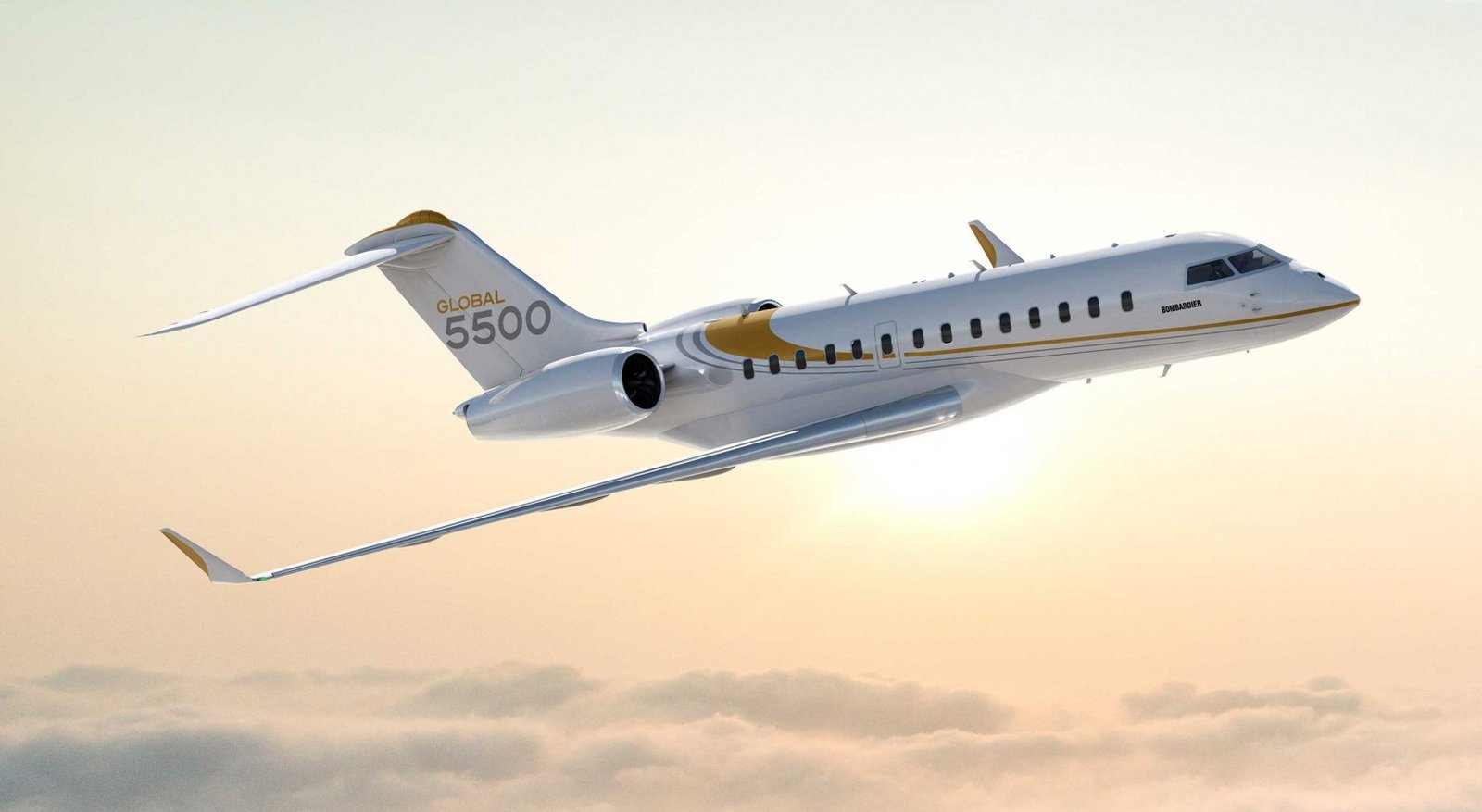 Jato · Long RangeBombardier Global 5500Specifications, cabin, performance and charter options.Read more
 Jato · Long RangeGulfstream G550Specifications, cabin, performance and charter options.Read more
Where do eVTOL air taxis and advanced air mobility stand in November 2026?
Advanced air mobility (AAM) is the umbrella term for new aircraft and operating concepts, mainly electric or hybrid, that aim to make short flights quieter, cleaner and more accessible. Its best-known form is the eVTOL (electric vertical takeoff and landing aircraft), designed to work as an air taxi in cities. In November 2026, the sector is moving from prototypes to the first restricted operations, but the picture differs by country.
United States (FAA)
The FAA finalized rules for the pilot training and operation of powered-lift aircraft, the category that includes most eVTOLs, in October 2024. In March 2026, the Department of Transportation and the FAA selected eight projects across 26 states for the eVTOL Integration Pilot Program (eIPP), covering air taxis, regional flights, cargo, emergency medical response and autonomous flight, with operations expected to begin by summer 2026, according to the FAA. Joby Aviation flew its first FAA-conforming aircraft in March 2026, entering the final stage of type certification, with FAA pilots due to conduct the formal tests later in the year.
United Arab Emirates (GCAA)
The UAE is the most advanced launch market. Joby holds six years of exclusive air taxi operating rights in Dubai after service starts, with an initial network of four vertiports, one near Dubai International Airport, and planned its first passenger operations for before the end of 2026. In May 2026, the GCAA moved Archer's Midnight into a Restricted Type Certificate program, a pathway to limited commercial operations in Abu Dhabi with Abu Dhabi Aviation as the local operator.
Brazil (ANAC)
ANAC is the lead authority for Eve, the eVTOL company controlled by Embraer, with FAA and EASA validation running in parallel. In June 2026, Eve moved its certification and entry-into-service target to 2028, and it reports more than 2,800 aircraft in letters of intent. Our Portuguese page on mobilidade aérea details the Brazilian rules and routes.
China (CAAC) and Europe (EASA)
China is the only country where an eVTOL already carries paying passengers: EHang's autonomous EH216-S holds CAAC type, production and airworthiness certificates, and in March 2025 two operators in Guangzhou and Hefei received air operator certificates for sightseeing flights. In Europe, the sector consolidated: Lilium stopped operating and Volocopter changed ownership in 2025.
| Authority | Main programs | Status in November 2026 |
|---|---|---|
| FAA (US) | Joby, Archer, BETA, Wisk | No eVTOL type certificate yet; eight eIPP projects selected in March 2026 |
| GCAA (UAE) | Joby (Dubai), Archer (Abu Dhabi) | First restricted passenger services being prepared |
| ANAC (Brazil) | Eve | Prototype testing; target 2028 |
| CAAC (China) | EHang EH216-S | Certified; paid sightseeing flights since 2025 |
Certification dates are company targets and often move. For travelers who need urban air mobility now, the certified option is the helicopter, which Embarque Oficial organizes through our helicopter services. Follow the eVTOL story on our eVTOL page (in Portuguese).
What is regional air mobility and why does it matter for the next decade?
Regional air mobility is the use of smaller aircraft to connect cities and towns that are too far apart for a comfortable drive but too small for frequent airline service: typically trips of 100 to 800 kilometers. It is the least glamorous part of global air mobility and, for many economies, the most important.
Today's workhorses: turboprops and light jets
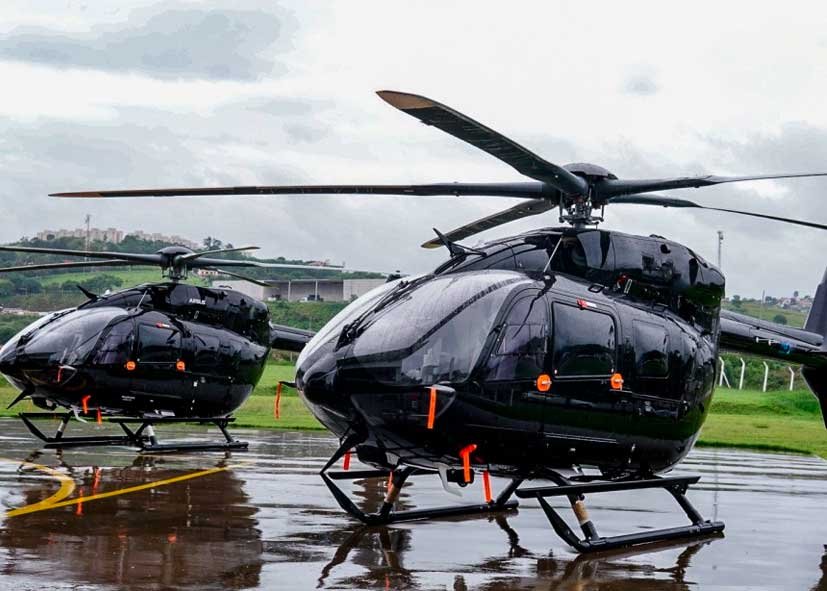
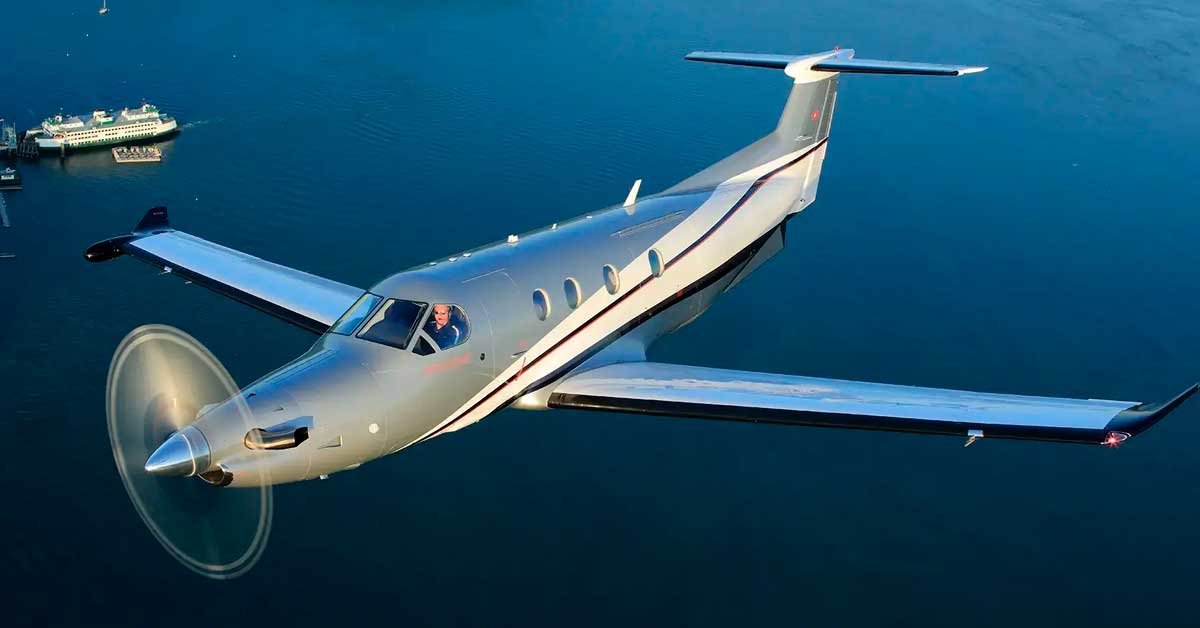
Turboprops such as the Pilatus PC-12 and the Beechcraft King Air B200 operate from short and unpaved runways, carry useful loads and burn less fuel than jets on short sectors. Light jets such as the Embraer Phenom 300E add speed on routes of one to three hours. Honeywell's 2026 outlook expects about 18,000 turboprops in the global business fleet by 2035, the largest single class, which shows how central these aircraft remain.
Why regional mobility matters
- Economic reach: agribusiness, mining, energy and tourism often operate far from big airports.
- Healthcare access: regional aircraft bring patients to specialized hospitals and doctors to remote areas.
- Resilience: when roads close or airline schedules shrink, small aircraft keep regions connected.
- Time: a 600 km drive becomes a flight of about an hour and a half in a turboprop.
Brazil as a case study
Brazil is a continental country where regional air mobility is a daily reality. ANAC data compiled by ABAG shows 11,362 operational business aircraft in May 2026, 8.5% more than a year earlier, with jets growing 12.5% to 1,193 aircraft. Executives fly from São Paulo to farms in Mato Grosso, from Florianópolis to Porto Alegre and Curitiba, and from Rio de Janeiro to the offshore energy hubs on the coast.
What is coming: hybrid-electric and short takeoff
The next wave of regional mobility includes electric and hybrid-electric aircraft with conventional or very short takeoff, which promise lower operating costs and less noise. Several of these developers, including Electra, Ampaire and BETA, are among the participants in the FAA's 2026 eVTOL Integration Pilot Program, which explicitly includes regional passenger and cargo flights. None of these aircraft is in commercial passenger service in Brazil or Europe yet, so for the coming years regional mobility will continue to rely on certified turboprops, light jets and helicopters.
Embarque Oficial organizes regional flights with certified operators in every region of Brazil and abroad; companies with recurring routes can combine them in our flight programs.
How are SAF mandates and CORSIA reshaping global air mobility?
Sustainability is now a regulatory reality for aviation, not only a voluntary goal. Three instruments matter most for anyone who moves people or goods by air across borders: fuel mandates that require a growing share of sustainable aviation fuel, the global CORSIA offsetting scheme and national laws such as Brazil's Fuel of the Future law.
Sustainable aviation fuel (SAF)
SAF is jet fuel produced from waste oils, residues, other renewable feedstocks or synthetic processes. It is a drop-in fuel: it can be blended with conventional jet fuel and used in existing aircraft and engines, which makes it the main short-term lever to cut lifecycle emissions.
| Instrument | Where | What it requires | Timeline |
|---|---|---|---|
| ReFuelEU Aviation (Regulation (EU) 2023/2405) | European Union | Minimum SAF share in fuel supplied at EU airports | 2% in 2025, 6% in 2030, 20% in 2035, 34% in 2040, 42% in 2045, 70% in 2050 |
| UK SAF Mandate | United Kingdom | SAF share of total UK jet fuel demand | 2% in 2025, 10% in 2030, 22% in 2040 |
| CORSIA (ICAO) | International flights | Offsetting of emissions growth above 85% of 2019 levels | First phase 2024 to 2026 (voluntary); second phase 2027 to 2035 (mandatory, with exceptions) |
| Law 14,993/2024, ProBioQAV | Brazil, domestic flights | Emissions reduction through SAF | 1% from 1 January 2027 to 10% in 2037 |
Who is actually covered?
Coverage varies. Under CORSIA, monitoring and reporting apply to operators that emit more than 10,000 tonnes of CO₂ a year on international flights with aircraft above 5,700 kg of maximum takeoff mass, so many small business aviation operators fall below the threshold. In Brazil, according to Mayer Brown, ProBioQAV was regulated by Decree 13,094 of 12 August 2026, and ANAC's draft rule targets certified operators with at least 10,000 tonnes of CO₂ a year from domestic flights, with compliance mainly through CS-SAF certificates in a book-and-claim model. In Europe, the fuel mandate falls on suppliers at EU airports, so it shapes the price and availability of fuel for every aircraft that refuels there.
What it means for travelers and companies
- Fuel costs will gradually reflect SAF blending, especially in Europe and the UK.
- Companies with climate targets increasingly ask for emissions data per flight.
- Right-sizing the aircraft, flying empty legs and consolidating trips remain the simplest ways to cut emissions today.
- Newer aircraft and engines are more efficient than older models of similar size.
The practical side of SAF for private flyers is covered in our private aviation page; this section focuses on how the rules reshape the global system.
How is digitalization changing the way the world books and flies?
Global air mobility used to run on phone calls and personal networks. In 2026, it runs increasingly on data: online quoting, live aircraft availability, flight tracking, digital permits and public databases that let passengers check who is really operating their flight.
Booking platforms and marketplaces
Charter marketplaces and booking apps show aircraft options, indicative prices and empty legs in seconds. They make the market more transparent, but they have limits. A platform is not an operator: behind each listing there must be a company certified by the FAA, a national authority in the EASA system, ANAC or the relevant local authority. Prices shown online are usually estimates that change with positioning, crew duty, permits, airport fees and the actual date.
Flight data and market intelligence
Flight-tracking data, mostly derived from ADS-B transponder signals, now powers market reports such as those from WINGX, which this page cites. For companies, the same data helps compare routes, seasons and aircraft categories, and benchmark what a mission should cost. For travelers, real-time tracking lets family, assistants and ground teams follow a flight and coordinate the arrival.
Digital safety checks
Digital tools are also changing safety. In May 2026, the FAA added a searchable list of certified Part 135 charter operators, including their aircraft, to its Safe Air Charter website, so passengers and brokers can check whether a company is authorized to carry paying passengers. In Brazil, ANAC publishes information that lets passengers verify air taxi companies and aircraft registrations. Checking the operator is the single most important step before any paid flight.
Paperwork goes digital
- Overflight and landing permits are requested and tracked through electronic systems in many countries.
- Advance passenger information for international arrivals is filed electronically in several countries, including the United States.
- Aircraft records, maintenance tracking and crew duty times are increasingly managed in digital systems.
- Electronic flight bags and connected cabins turn the aircraft into an office.
Where people still matter
Technology accelerates the routine, but complex trips still depend on judgment: choosing between two operators, deciding whether a winter route needs a stop, arranging a helicopter connection or handling a medical flight at night. That is the role of a consultative team and of our concierge service. Frequent flyers can also lock in access and rates through our Jet Card and the Clube Infinity membership.
- Online platforms show options; a certified operator flies
- Flight data helps benchmark routes and costs
- Check the operator in official databases before flying
- Permits and passenger information are filed electronically
Air ambulance, urgent cargo and special missions: the hidden side of global air mobility
When people think of global air mobility, they picture executives and holidaymakers. But some of the most important flights carry patients, spare parts, valuables, film crews and public authorities. These special operations are a core part of how the world moves by air, and they require specific aircraft, crews and authorizations.
Air ambulance and aeromedical transport
An air ambulance, called UTI aérea in Brazil, is an aircraft configured as a flying intensive care unit, with a stretcher, medical equipment and a medical team on board. It moves patients between cities, countries and continents when time and clinical conditions make airline travel impossible. Turboprops and light jets cover regional missions, while long-range jets handle international repatriations. The aircraft must be operated by a company authorized for aeromedical transport, and the medical team follows the health regulations of each country.
Urgent and high-value cargo
- Urgent cargo: aircraft parts that ground another aircraft (AOG), industrial components, medical supplies and documents that cannot wait for the next airline flight.
- High-value cargo: jewelry, art, precious metals and sensitive equipment, often with dedicated security and chain-of-custody procedures.
- Time-definite delivery: the whole aircraft is dedicated to one shipment, so departure time is set by the client, not by a schedule.
Aerial filming and photography
Helicopters and fixed-wing aircraft are used for advertising, cinema, real estate, events and inspections. These flights involve specific authorizations, planning of the flight area and coordination with air traffic control, especially over cities.
Transport of authorities with security
Governments, diplomats and public figures need confidentiality, security coordination and flexible schedules. These missions combine certified operators, security teams on the ground and careful planning of airports, FBOs and routes.
Embarque Oficial's experience
For more than 10 years, Embarque Oficial has organized air ambulance and aeromedical transport, urgent and high-value cargo, aerial filming and photography, and the transport of authorities with security, always with operators authorized for each type of mission. The FAA's 2026 eVTOL Integration Pilot Program also lists emergency medical response and cargo among its use cases, a sign that special operations will be among the first to benefit from new aircraft. For a special mission, contact our team through the contact page or WhatsApp.
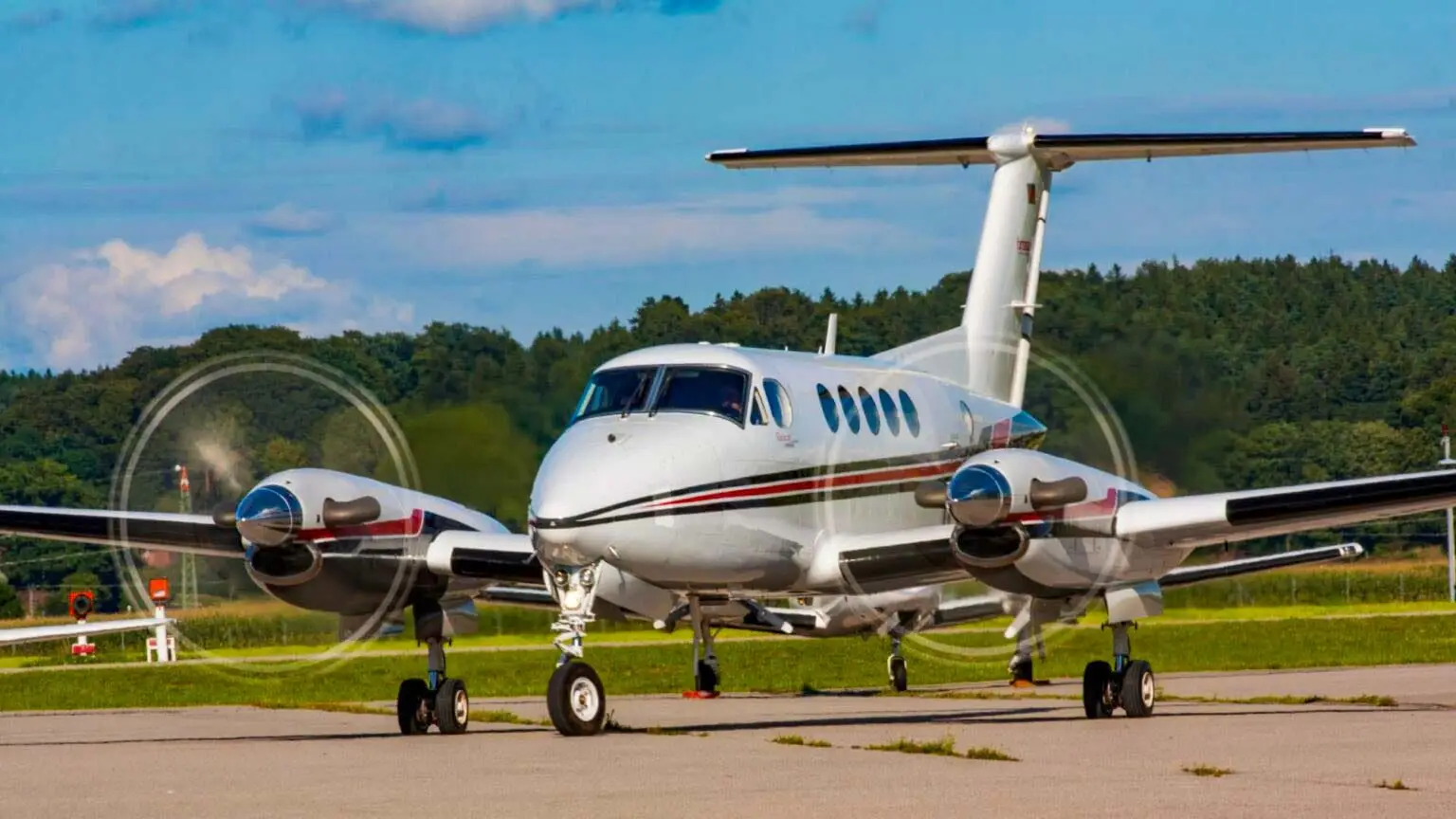
- Air ambulance and aeromedical transport (UTI aérea)
- Urgent cargo, including AOG aircraft parts
- High-value cargo with security procedures
- Aerial filming and photography
- Transport of authorities with security
- Always with operators authorized for the mission
What will global air mobility look like by 2035?
The next decade will not replace today's aircraft; it will add new layers on top of them. Based on the forecasts and certification programs available in November 2026, five trends are likely to shape global air mobility through 2035.
1. A larger, younger fleet
Honeywell's 2026 outlook projects about 14,000 new business aircraft deliveries between 2026 and 2035 and a fleet of nearly 51,000 aircraft in 2035, with annual deliveries rising from about 1,280 in 2026 to more than 1,500 by 2035. The midsize jet fleet is forecast to grow 40%, the fastest of any segment. More aircraft means more charter availability, but also more competition for crews, maintenance slots and parking at busy airports.
2. Ultra-long range becomes normal
With the G800 and the Global 8000 in service, nonstop flights of 14 hours or more are becoming routine for the top of the market. Expect more nonstop links between South America, the Middle East and Asia, and more demand for crew rest areas, connectivity and wellness features on board.
3. eVTOL moves from pilot to network
If certification targets hold, the first eVTOL networks in Dubai, Abu Dhabi and the United States should expand during the second half of the decade, with Brazil following after Eve's targeted 2028 certification. The pace will depend on certification, vertiport infrastructure, battery performance and public acceptance of noise and safety. Helicopters will remain the backbone of urban air mobility for years.
4. Fuel and emissions rules tighten
The EU's SAF mandate jumps from 6% in 2030 to 20% in 2035, the UK targets 10% in 2030, CORSIA becomes mandatory for most states from 2027 and Brazil's ProBioQAV starts in 2027. Operators will need data on emissions per flight, and clients will increasingly ask for it.
5. Data, automation and new business models
Digital booking, real-time data and more automation in the cockpit and on the ground will make on-demand aviation faster to arrange. At the same time, regulators are strengthening tools against illegal charter, which favors certified operators and transparent intermediaries.
What could slow it down
- Shortages of pilots, technicians and supply-chain capacity.
- Geopolitical events that close airspace or reduce demand in a region.
- Delays in eVTOL certification and in SAF production.
- Airport and heliport capacity limits in major cities.
For the broader industry trends, read the Business Aviation Guide.
What does global air mobility mean for travelers and companies?
All these numbers and technologies lead to practical decisions. Whether you travel for business or pleasure, or run a company with people and goods spread across several countries, global air mobility changes what is possible and how you should plan.
For travelers
- Think door to door, not airport to airport: the right combination of jet and helicopter often saves more time than a faster aircraft.
- Use the right aircraft for each leg: a long-range jet for the ocean crossing, a light jet or turboprop for the regional hop and a helicopter for the last mile.
- Plan around seasons: the Mediterranean in summer, the Alps and Aspen in winter and major events book up early.
- Check the operator: every paid flight must be operated by a certified company, whatever the platform or intermediary.
For companies
- Map your network: list the cities your teams visit and see where airline connectivity fails; those are the routes where on-demand aviation pays back.
- Choose the access model: on-demand charter for occasional trips, programs or jet cards for regular flying, and ownership with professional management for intensive use. Our corporate aviation page compares the options.
- Plan multi-city trips: investor tours and site visits are more productive with a dedicated aircraft, as in our roadshow service.
- Prepare for emissions reporting: request emissions data per flight and prefer efficient aircraft.
- Have a contingency plan: know in advance how you would organize an air ambulance or urgent cargo flight.
For aircraft owners
Owners face rising demand, higher costs and new rules. Professional aircraft management keeps the aircraft compliant and can help offset costs, while a well-timed sale or replacement benefits from a market where deliveries and activity are strong.
Embarque Oficial's corporate aviation solutions bring these decisions together for companies that fly regularly in Brazil and abroad.
- Plan door to door, combining jet and helicopter
- Match the aircraft to each leg of the trip
- Verify the certified operator of every paid flight
- Map the routes where airline service fails
- Request emissions data per flight
- Keep a plan for medical and urgent cargo flights
How does Embarque Oficial organize global air mobility?
Embarque Oficial is a global executive aviation company, flying since 2011, headquartered in Florianópolis, Brazil, with offices in Monaco, Dubai, London, Paris, Liverpool, Fort Lauderdale, New York, Las Vegas, Shanghai and Brazil. The company serves clients all over the world, from Monaco, Dubai, Capri and Rome to every region of Brazil.
How we work
Embarque Oficial organizes flights with operators certified by ANAC in Brazil and by the aviation authority of each country abroad, such as the FAA and EASA-system authorities. We do not present ourselves as the owner of a fleet: our job is to choose the right certified operator and aircraft for each mission, coordinate every leg and stay with the client from the first message to the final destination.
Our offices are not open to the public. Clients are served online, by WhatsApp on +55 48 98877-0541 and in person at the point of departure, at helipads, airports and FBOs in many places around the world.
What we organize
- Air taxi and private charter with jets, turboprops and helicopters.
- Intercontinental flights, empty legs and executive helicopter transfers.
- Scenic flights, corporate aviation, flight programs and roadshows.
- Aircraft management, purchase and sale, and financing.
- Jet Card, Clube Infinity and concierge services.
- Special operations: air ambulance, urgent and high-value cargo, aerial filming and photography, and the transport of authorities with security.
From the big picture to your next trip
Global air mobility is complex, but each trip comes down to a few decisions: which aircraft, which operator, which airports and which connections. Tell us where you need to go, with dates, passengers and luggage, and our team will put together the options. Learn more about Embarque Oficial or see how our international structure works on our global presence page (in Portuguese).
Glossary: key global air mobility terms
- Global air mobility
- The worldwide system of on-demand air transport for people and goods, from intercontinental business jets to helicopters, special missions and future eVTOL air taxis.
- Advanced air mobility (AAM)
- An umbrella term for new aircraft and operating concepts, mostly electric or hybrid, designed for urban, regional and cargo flights.
- Urban air mobility (UAM)
- The part of advanced air mobility focused on short flights within and around cities, such as airport to city center.
- Regional air mobility
- Air transport between cities and towns roughly 100 to 800 km apart that have little or no airline service, today mainly by turboprops and light jets.
- eVTOL
- Electric vertical takeoff and landing aircraft, designed to take off like a helicopter and cruise efficiently, mainly as an air taxi.
- Powered-lift
- The FAA aircraft category for aircraft that take off and land vertically using powered lift and fly on wings in cruise, which includes most eVTOLs.
- Vertiport
- A dedicated takeoff and landing area for eVTOLs, with charging, passenger processing and safety infrastructure.
- Restricted Type Certificate
- A certification pathway, used by the UAE's GCAA for Archer's Midnight, that allows limited commercial operations of a new aircraft under defined conditions.
- Ultra-long-range jet
- A business jet able to fly about 7,000 nautical miles or more nonstop, such as the Gulfstream G800 or Bombardier Global 8000.
- Great-circle distance
- The shortest distance between two points on the Earth's surface; actual flight distance is longer because of winds and airways.
- SAF
- Sustainable aviation fuel: jet fuel made from renewable, waste or synthetic sources that can be blended with conventional fuel and used in current aircraft.
- CORSIA
- ICAO's Carbon Offsetting and Reduction Scheme for International Aviation, which requires covered operators to monitor emissions and offset growth above a baseline.
- Book and claim
- A system that separates the environmental attribute of SAF from the physical fuel, so an operator can claim SAF use through certificates.
- Special operations
- Missions beyond passenger transport, such as air ambulance, urgent and high-value cargo, aerial filming and the transport of authorities.
Frequently asked questions about global air mobility
What is global air mobility?
Global air mobility is the worldwide system that moves people and goods by air on demand, alongside the airline network. It includes intercontinental business jets, regional turboprops and light jets, helicopters for the last mile, special operations such as air ambulance and urgent cargo, and the first eVTOL air taxis now in testing. Every paid flight must be operated by a company certified by the relevant aviation authority.
How many business jet flights are there worldwide each year?
According to WINGX data reported by Private Jet Card Comparisons, business jets flew a record 3,878,336 departures worldwide in 2025, 4.6% more than in 2024 and 34% more than in 2019. The United States accounted for 2,633,282 departures and Europe for 555,254. In 2026, global activity was running about 3.5% ahead of 2025 through late August, according to WINGX.
How many business aircraft are there in the world?
Honeywell's 2026 Global Business Aviation Outlook estimates a global business aircraft fleet of about 39,400 jets and turboprops in 2025 and forecasts nearly 51,000 by 2035, growth of about 29%. North America accounts for about 63% of the fleet, and Latin America, led by Brazil, holds about 15%, the second-largest regional fleet.
Which region has the most business aviation activity?
North America is by far the largest. WINGX data from August 2026 shows that North America accounted for more than 71% of worldwide business jet activity. Honeywell estimates that the United States and Canada represent about 63% of the global fleet and about 68% of flight hours, followed by Latin America and Europe in fleet size.
Can a business jet fly nonstop from Brazil to Europe or the Middle East?
Yes, with the right aircraft and conditions. São Paulo to London is about 5,110 nautical miles in a straight line and São Paulo to Dubai about 6,600 nm, within the published range of ultra-long-range jets such as the Gulfstream G800 or Bombardier Global 8000. Winds, payload and season decide, so the operator must confirm each route for the specific aircraft.
Can a private jet fly nonstop from São Paulo to Shanghai?
No. São Paulo and Shanghai are about 10,030 nautical miles apart in a straight line, more than the range of any business jet in service in 2026. The trip always includes a technical stop, typically in Europe, the Middle East or Africa, where the aircraft refuels and the crew may change. Good planning of permits, handling and crew rest keeps the stop short.
Are eVTOL air taxis already carrying passengers?
Only in limited form. In China, EHang's autonomous EH216-S has carried paying passengers on sightseeing flights since operators received certificates in March 2025. In Dubai, Joby planned its first passenger operations for before the end of 2026, and Archer is preparing restricted services in Abu Dhabi. In November 2026, no eVTOL had an FAA, EASA or ANAC type certificate.
When will eVTOLs fly in Brazil?
Eve, the eVTOL company controlled by Embraer, has ANAC as its lead certifying authority and moved its certification and entry-into-service target to 2028 in June 2026. Commercial routes in Brazil depend on that certification, on vertiport rules and on airspace integration. Until then, helicopters remain the certified option for urban air mobility in Brazilian cities.
What is the difference between urban, regional and global air mobility?
Urban air mobility covers short flights within cities, such as airport to downtown, by helicopter today and eVTOL in the future. Regional air mobility links cities a few hundred kilometers apart with turboprops and light jets. Global air mobility is the complete system, including long-range jets crossing oceans and special operations such as air ambulance and urgent cargo.
What is SAF and is it mandatory?
SAF, sustainable aviation fuel, is jet fuel made from waste, renewable or synthetic sources that works in existing aircraft. It is mandatory for fuel suppliers in some places: the EU requires 2% at its airports from 2025 and 6% in 2030, and the UK requires 2% in 2025 rising to 10% in 2030. Brazil's ProBioQAV program starts with a 1% emissions reduction target in 2027.
Does CORSIA apply to private jets?
CORSIA applies to operators of international flights that emit more than 10,000 tonnes of CO₂ a year with aircraft above 5,700 kg of maximum takeoff mass. Many small business aviation operators fall below that threshold. The first phase runs from 2024 to 2026 on a voluntary basis, and the second phase, from 2027 to 2035, is mandatory for most states, with limited exceptions.
Is air ambulance part of global air mobility?
Yes. Air ambulance flights, known as UTI aérea in Brazil, move patients between cities and countries in aircraft configured as flying intensive care units. They are a core special operation of global air mobility. For more than 10 years, Embarque Oficial has organized aeromedical transport, always with operators authorized for this type of mission and a qualified medical team on board.
Can I charter an aircraft just for cargo?
Yes. Urgent cargo flights carry aircraft parts, industrial components, medical supplies or documents when the next airline flight is too late, and high-value cargo flights move jewelry, art or sensitive equipment with security procedures. The whole aircraft is dedicated to the shipment. Embarque Oficial has organized urgent and high-value cargo flights for more than 10 years with authorized operators.
How can I check that an operator is certified?
Use official sources. In the United States, the FAA's Safe Air Charter website added a searchable list of certified Part 135 operators and their aircraft in May 2026. In Brazil, ANAC publishes information on certified air taxi companies and aircraft registrations. In Europe and the Middle East, ask for the air operator certificate (AOC) and check it with the issuing authority.
How does Embarque Oficial help with global air mobility?
Embarque Oficial, flying since 2011 and headquartered in Florianópolis, organizes flights worldwide with operators certified by ANAC and by each country's authority, such as the FAA and EASA-system authorities. It has offices in Monaco, Dubai, London, Paris, Liverpool, Fort Lauderdale, New York, Las Vegas, Shanghai and Brazil, and serves clients online, by WhatsApp on +55 48 98877-0541 and in person at the point of departure.
Sources and references
- WingX 2025 Full Year Private Jet Flight Activity Analysis (Private Jet Card Comparisons, Jan 2026)
- Business jet activity cools in August; the regional divide says more (GlobalAir, Aug 2026)
- GAMA releases 2025 Aircraft Shipment and Billing Report
- Honeywell Aerospace forecasts continued bizav growth (Runway Girl Network, Oct 2026)
- Bizjet fleet ticking up in Asia on long-range demand (AIN, Apr 2026)
- Brasil chega a 11 mil aeronaves executivas (Forbes Brasil, Jul 2026)
- Gulfstream G800 specifications (Gulfstream)
- Bombardier Global 8000 enters service (Flying, Dec 2025)
- DOT and FAA unveil eight selections for the eVTOL Integration Pilot Program (FAA, Mar 2026)
- With new rule, FAA is ready for air travel of the future (FAA, Oct 2024)
- Joby announces first FAA-conforming eVTOL takes first flight (GlobalAir, Mar 2026)
- Joby Aviation's Dubai launch (The Motley Fool, Oct 2026)
- UAE moves closer to flying taxi launch as Archer's Midnight gets key approval (Khaleej Times, May 2026)
- Eve pushes eVTOL certification target to 2028 (AirData News, Jun 2026)
- EHang's EH216-S eVTOL operators obtain Air Operator Certificates (EHang, Mar 2025)
- ReFuelEU Aviation, Regulation (EU) 2023/2405 (EUR-Lex)
- Sustainable aviation fuel (SAF) mandate (UK Government)
- Taking stock of CORSIA (Mondaq, Jan 2024)
- SAF: ANAC launches public consultation following the regulatory decree (Mayer Brown, Sep 2026)
- FAA adds Part 135 operator list to Safe Air Charter website (AVweb, May 2026)
Written by Régis Hahns, CEO of Embarque Oficial, with the company's editorial team, based on the sources above. Rules, prices and lead times change: always confirm with ANAC, the manufacturer or a specialist before deciding. Embarque Oficial serves clients worldwide, from Monaco, Dubai, Capri and Rome to every region of Brazil, and arranges each flight with operators certified by ANAC, Brazil's civil aviation authority, in Brazil and by the local aviation authority abroad.
Keep exploring the Knowledge Hub
Complete guideExecutive Air Taxi GuideHow charter works in Brazil, what it costs, ANAC rules and how to book safely.Read more Complete guidePrivate Jets GuideCategories, range, cabin, costs and how to choose the right jet for each mission.Read moreComplete guideExecutive Helicopters GuideModels, single vs. twin engine, helipads and urban mobility by helicopter.Read more
 Complete guideAircraft Acquisition GuideEvaluation, pre-purchase inspection, contracts, ANAC registration and pitfalls.Read moreComplete guideBusiness Aviation GuideThe sector in Brazil and worldwide: market, rules, technology and trends.Read moreEmbarque Oficial serviceIntercontinental Private FlightsLong-range jets and connections across continents with certified operators.Read more
Ready to fly
Tell us where, we take care of the rest
Confidential quotes and 24/7 support, every day of the year.
WhatsApp +55 48 98877-0541 · sales@embarqueoficial.com