
Corporate Aviation · Companies and boards
Corporate aviation: the business case, policies and operating models for companies
Time savings, productivity, access to secondary cities and confidentiality, with the travel policies, safety standards, cost controls and ESG reporting that boards expect, in Brazil, Latin America and worldwide.
By Régis Hahns, CEO of Embarque Oficial · LinkedIn
- 2011flying since
- 34 minread
- 20sources cited
What is corporate aviation?
Corporate aviation is the use of business aircraft by companies to move executives, teams, customers and critical cargo on their own schedule, to destinations that airlines serve poorly or not at all. Companies access it by chartering flights from certified operators, buying jet cards or fractional shares, or owning aircraft run by an in-house flight department or a management company. A sound corporate aviation programme rests on a documented business case, a written travel policy with duty-of-care rules, vetted operators, cost control and transparent ESG reporting. Embarque Oficial organizes corporate flights with certified operators worldwide.
On this page
- What is corporate aviation and how is it different from private aviation?
- What is the business case for corporate aviation?
- How should a corporate travel policy handle private aviation and duty of care?
- What is IS-BAO and which safety standards should a company require?
- How do roadshows and multi-city business trips work on a business aircraft?
- Why do M&A teams and site visits rely on business aircraft?
- What is a corporate shuttle program?
- Should a company buy an aircraft, charter, use a jet card or go fractional?
- Corporate flight department or aircraft management company?
- How do companies control corporate aviation costs?
- How do ESG and SAF reporting apply to corporate aviation?
- What does corporate aviation look like in Brazil and Latin America?
- How does Embarque Oficial support companies and boards?
- Glossary
- Frequently asked questions
What is corporate aviation and how is it different from private aviation?
Corporate aviation is the use of business aircraft by a company to move its people, and sometimes its goods, on the company's own schedule. The aircraft may be owned by the company, held through a leasing or trust structure, shared through a fractional program, accessed through a jet card or simply chartered flight by flight from a certified operator. What defines corporate aviation is not the ownership model but the purpose: the flight exists because it creates value for the business, and the company is accountable for that decision to its board, its auditors, its shareholders and, in many countries, its tax authority.
Corporate aviation, business aviation and private aviation
The three terms overlap and are often used as synonyms, but they are not identical. Business aviation is the industry-wide term used by associations such as NBAA in the United States, EBAA in Europe and ABAG in Brazil: it covers every non-scheduled flight flown for a business purpose, from a single-pilot turboprop to a long-range jet. Corporate aviation is the subset in which a company is the customer or the owner, with a flight department or an external manager, written policies and budget lines. Private aviation is the broader consumer term that also includes leisure and family flights; our page on private aviation covers that side of the market, while this page focuses on the needs of companies, executive committees and boards.
Who uses corporate aviation
Contrary to the stereotype, corporate aviation is not limited to Fortune 500 headquarters. In the 2018 Harris Poll survey commissioned by NBAA and GAMA, 62% of the pilots and flight department leaders interviewed said their company operates a single turbine-powered aircraft, and most business aviation users were companies with 500 or fewer employees. In Brazil the profile is similar: agribusiness groups in Mato Grosso, mining and energy companies, construction firms, banks, family offices and fast-growing mid-market companies all use business aircraft to reach places that scheduled airlines serve poorly or not at all.
What a corporate flight is made of
A corporate flight combines an aircraft, a certified operator responsible for the flight, qualified crew, ground handling at a fixed-base operator (FBO), and a set of internal rules: who may approve the trip, who may travel, how costs are allocated and how the flight is recorded for tax and ESG purposes. When those pieces are aligned, the aircraft becomes a productivity tool rather than a perk. For the wider industry context, read our complete guide to business aviation.
- The flight has a documented business purpose
- A certified operator holds operational control
- A written travel policy defines who may fly
- Costs are allocated to a business unit or project
What is the business case for corporate aviation?
The business case for corporate aviation rests on four arguments that a board can test against numbers: time saved, productivity in transit, access to places airlines do not reach and confidentiality. None of them is automatic. Each depends on the routes, the people on board and the alternatives available, which is why a serious company builds the case trip by trip before committing to an ownership model.
1. Time savings
The time a business aircraft saves is rarely the flight time itself; a light jet and an airliner cruise at similar speeds. The savings come from everything around the flight: no connections, departures from airports close to the office, private terminals with check-in measured in minutes, the ability to fly several cities in a day and to return home the same night. A trip that would consume two working days with scheduled flights and an overnight stay can often be done in one.
2. Productivity on board
In the 2018 NBAA and GAMA survey conducted by Harris Poll, passengers reported spending on average 63% of their time on board business aircraft working, against 42% when flying commercially, and two-thirds said they were more productive on the business aircraft than in the office. The cabin is a private meeting room: a leadership team can review a deal, rehearse an investor presentation or hold a confidential call without being overheard.
3. Access to secondary cities
Airline networks concentrate on large hubs, while business aircraft can use thousands of smaller airports and airstrips. In Brazil the gap is striking: ABAG noted in July 2026 that scheduled airlines operate at about 147 airports, while air taxi operators give access to more than 5,500 municipalities. Plants, farms, mines, energy assets and customers are often located exactly where airline service is thin.
4. Confidentiality and security
Who is travelling with whom, and where, can be market-sensitive information. A corporate flight keeps the passenger list off public airline systems, avoids public terminals and lets the security team control the itinerary from door to door.

How to quantify the case
| Factor | How to measure it | Typical data source |
|---|---|---|
| Time saved | Door-to-door hours, airline versus private, per trip | Travel management records, itinerary simulations |
| Value of time | Loaded hourly cost of each traveller | HR and compensation data |
| Overnight costs avoided | Hotels, meals and per diems not incurred | Expense reports |
| Business outcome | Deals closed, sites visited, customer meetings held | CRM and project records |
| Risk reduced | Exposure avoided in high-risk locations | Security and travel risk assessments |
The comparison is always an estimate, because the value of an executive's hour and the value of a closed deal depend on each company. What matters is that the method is written down and applied consistently. Our team can simulate door-to-door times and costs for real routes as part of a corporate aviation program.
How should a corporate travel policy handle private aviation and duty of care?
A company that puts employees on an aircraft has a duty of care toward them: a legal and moral obligation to take reasonable steps to protect their health, safety and security while travelling on business. The international reference for structuring that obligation is ISO 31030:2021, Managing travel risks: Guidance for organizations, published in September 2021. It belongs to the ISO 31000 risk management family, is aligned with ISO 45001 on occupational health and safety, and applies to organizations of any sector and size. It is a guidance standard: it tells a company how to build a travel risk policy and programme, not which aircraft to buy.
What a corporate aviation policy should define
- Eligibility. Which roles may use business aircraft, and for which purposes (customer visits, site inspections, roadshows, crisis response).
- Approval. Who approves each trip, and how approvals are recorded.
- Operator standards. Minimum requirements for the operator: valid air operator certificate, safety management system, insurance limits, audit ratings, crew experience.
- Key-person limits. How many members of the executive committee or board may travel on the same aircraft. Many companies cap this number to protect business continuity.
- Personal and guest use. Whether spouses, family or guests may fly, and how that use is valued for tax and disclosure purposes.
- Security and privacy. Passenger manifest handling, flight-tracking privacy and ground transport.
- Emergency response. Who is notified, and how, if a flight is diverted or an incident occurs.
The most common gap: unverified operators
The single biggest risk in corporate aviation is not the aircraft type, it is flying with an operator that is not authorized to carry paying passengers. In Brazil, paid transport of passengers on demand is reserved for air taxi companies certified by ANAC under RBAC 135; an aircraft registered for private operation under RBAC 91 cannot legally be chartered. ANAC's Voe Seguro app lets anyone check whether an aircraft and an operator are authorized before boarding. In the United States the equivalent split is between private operations under Part 91 and on-demand commercial operations under Part 135.
Integrating aviation into the travel programme
Corporate aviation works best when it is part of the company's overall travel programme, not a separate world managed by the CEO's office. That means the same risk assessments, the same traveller tracking and the same reporting lines as airline travel, with an extra layer of operator vetting. Our executive travel page explains how private and commercial segments can be combined in a single itinerary.
- Written eligibility and approval rules
- Operator vetting before every new supplier
- Cap on key executives per aircraft
- Personal-use rules aligned with tax law
- Passenger privacy and manifest controls
- Emergency contact tree tested every year
What is IS-BAO and which safety standards should a company require?
IS-BAO, the International Standard for Business Aircraft Operations, is a code of best practices for business aircraft operators established by the International Business Aviation Council (IBAC) and its member associations. It is built on ICAO Standards and Recommended Practices, has a safety management system (SMS) at its core and has accepted registrations since 2002. According to NBAA, the FAA and Transport Canada recognize IS-BAO as meeting the ICAO standard, and the European Committee for Standardization (CEN) recognizes it as an industry standard. In 2012 it was amended to better serve helicopter operators.
How IS-BAO registration works
An operator is audited by an accredited IS-BAO auditor and, once the audit is accepted, is registered by IBAC. Registration is offered at three stages, which reflect the growing maturity of the safety management system:
- Stage 1: the SMS infrastructure is established and the operator meets the standard's requirements.
- Stage 2: safety risk management is in active use and producing results.
- Stage 3: safety management activities are fully integrated into the operation and the culture.
IBAC also offers FlightPlan Stage 1, a streamlined path for small single-aircraft, single-base operators, and Progressive Stage 3, an option for experienced operators with a customized one-day audit.
Is IS-BAO mandatory?
No. IS-BAO is voluntary. It is not a licence to operate and does not replace the air operator certificate issued by ANAC, the FAA, EASA member states or any other authority. For a corporate flight department operating its own aircraft privately, IS-BAO is one of the most recognized ways to show the board and insurers that the operation is run to an international standard. For a company that charters, IS-BAO registration is one of several signals worth asking about, alongside third-party audits such as ARGUS and Wyvern.
The regulatory baseline: SMS for charter operators
Safety management systems are becoming a regulatory requirement for charter operators, not just a voluntary standard. In the United States, the FAA final rule published on 26 April 2024 extends SMS requirements to Part 135 operators and Part 91.147 air tour operators, with existing operators given 36 months from the rule's effective date of 28 May 2024 to comply.
When Embarque Oficial organizes a corporate flight, it works only with operators certified by ANAC in Brazil and by the aviation authority of each country abroad. Our page on operational safety (in Portuguese) details the checks applied.

- Valid air operator certificate for the type of flight
- Active safety management system
- Insurance certificate naming the company where required
- Third-party audit or IS-BAO registration on request
How do roadshows and multi-city business trips work on a business aircraft?
A roadshow is a sequence of meetings with investors, lenders, regulators or customers in several cities over a few days. It is the classic use of corporate aviation: an IPO, a bond issue, a capital increase or a product launch often requires a management team to present in four or five cities in a week, and every missed connection is a missed meeting. With a business aircraft, the itinerary is built around the meetings, not around airline timetables.
Typical roadshow patterns
- Brazil domestic: São Paulo, Rio de Janeiro, Belo Horizonte, Brasília and Porto Alegre in two or three days, with same-day returns where possible.
- Latin America: São Paulo, Buenos Aires, Santiago, Lima, Bogotá and Mexico City, with customs and immigration planned at each international stop.
- North America: New York, Boston, Chicago and Toronto, often followed by a West Coast leg.
- Europe and the Middle East: London, Paris, Frankfurt, Geneva and Dubai, with attention to slot and parking rules at busy airports.
What makes a roadshow work
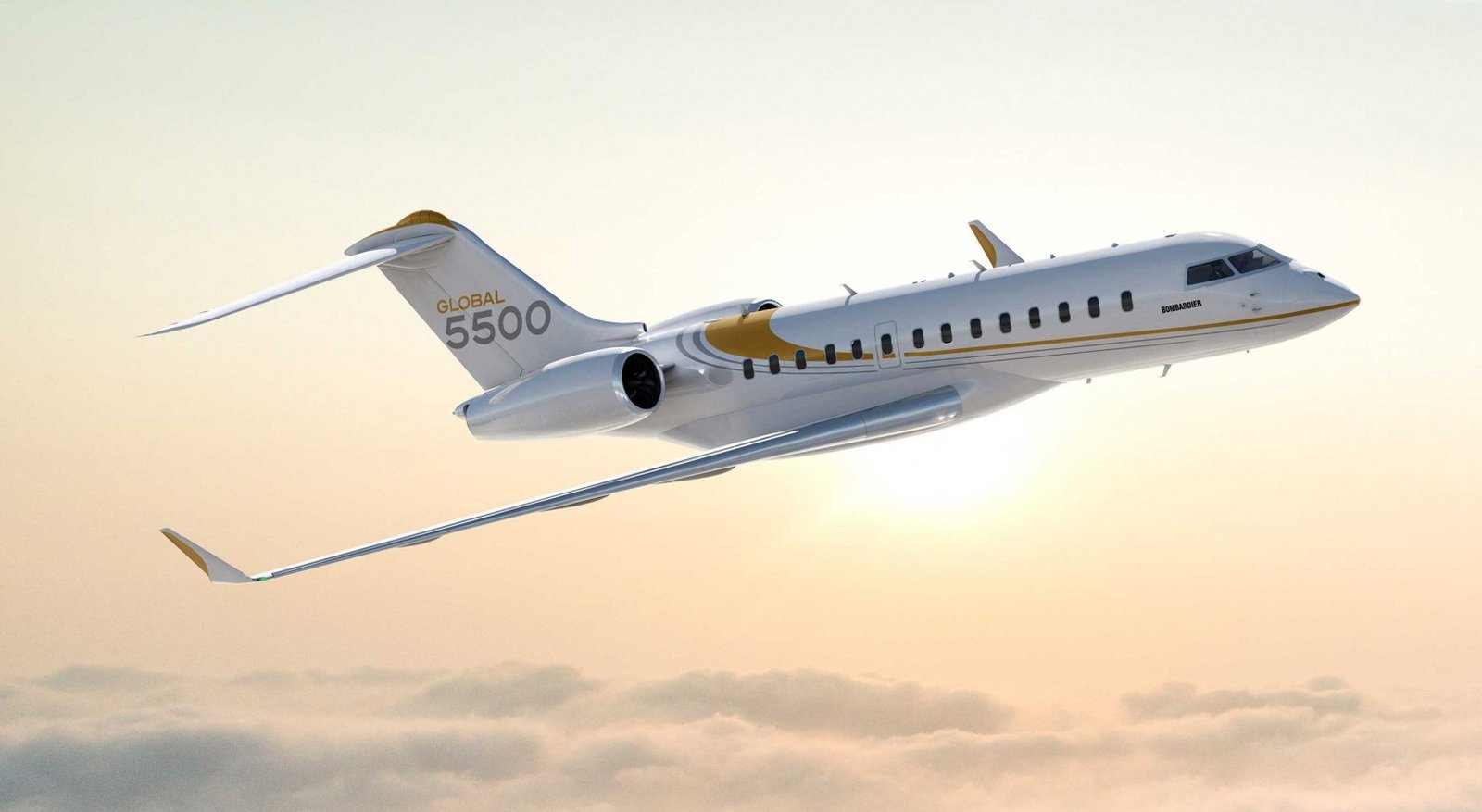
- Right aircraft for the longest leg. The aircraft must fly the longest sector non-stop with the full team and luggage. Intercontinental roadshows call for a large or long-range jet such as the Bombardier Global 6000; regional roadshows are well served by a super-midsize such as the Challenger 3500.
- Crew duty limits. Pilots have legal limits on duty and flight time. Long days with five legs may require an augmented crew or a planned overnight.
- Slots and handling. Some airports require slots for business aviation. Since 15 October 2026, ANAC requires general aviation operators to have an FBO contracted before requesting slots at São Paulo-Congonhas (SBSP).
- Ground logistics. Cars waiting at the aircraft, helicopter transfers where traffic is severe, and buffers for late-running meetings.
- Flexibility. Meetings move. The plan must allow departure times to shift without losing the slot or the crew's legal duty window.
Embarque Oficial plans dedicated roadshow flights (page in Portuguese), combining jets, helicopter transfers and ground transport, and can extend the itinerary across continents with intercontinental flights.

Why do M&A teams and site visits rely on business aircraft?
Mergers and acquisitions, asset purchases and due diligence share a common need: the right people must see the right assets quickly, and nobody outside the deal team should know. Business aircraft address both needs. A site visit to a mine in Pará, a soybean farm in Mato Grosso, a wind farm in Rio Grande do Norte or a plant in the interior of São Paulo can be done in a day, with the buyer's executives, advisers and engineers on the same aircraft.
Confidentiality in practice
Confidentiality starts long before take-off. Passenger names should be shared only with the operator and the authorities that require them. Public flight-tracking websites can reveal where a company's aircraft is going; in the United States, the FAA's LADD (Limiting Aircraft Data Displayed) programme lets owners and operators ask that their flight data not be displayed publicly through FAA data feeds, and the PIA (Privacy ICAO Address) programme lets operators use alternate, temporary ICAO aircraft addresses not linked to the owner in the civil registry. NBAA notes that neither programme stops third parties from capturing ADS-B transmissions directly, so privacy is a reduction of exposure, not a guarantee. On chartered flights, a confidentiality clause with the operator and the broker is good practice.
Reaching assets where they are
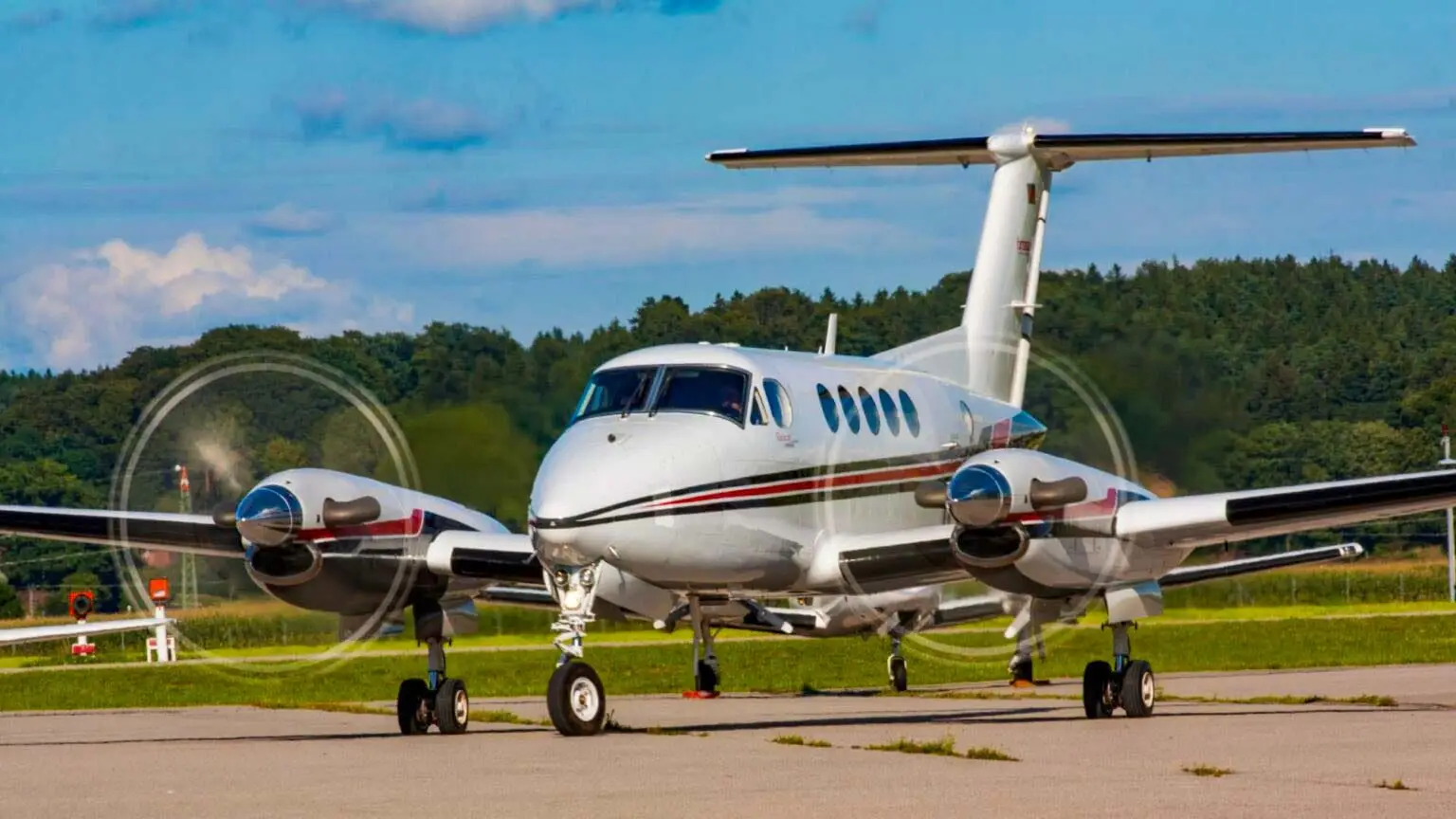
Industrial and natural-resource assets are rarely near a major airport. A turboprop such as the King Air B200 or the Pilatus PC-12 operates from shorter runways, while helicopters reach sites with no runway at all. In Brazil, many farms and mining sites have private airstrips; the operator must confirm that each strip is registered and suitable for the aircraft and the operation, and the company must accept that some sites will only be reachable by helicopter or by road from the nearest public airport.
Multi-site due diligence
Large transactions often involve visiting several assets in sequence: three plants in three states, or a portfolio of farms across Mato Grosso, Goiás and the Matopiba region. A business aircraft lets the team visit them in one trip, with working sessions on board between stops. The same logic applies to post-merger integration, when leaders need to be present at many sites in the first weeks after closing.
- Limit passenger data to those who need it
- Ask about flight-tracking privacy options
- Include confidentiality clauses in the charter contract
- Confirm every airstrip and helipad in advance
- Plan helicopter legs for sites with no runway
- Keep a written record of the business purpose
What is a corporate shuttle program?
A corporate shuttle is a recurring air service that a company organizes for its own people between fixed points: headquarters and a plant, a city and a mine, two offices in different states, or an airport and a remote operation. Unlike ad hoc charter, a shuttle runs on a published schedule, with seats booked by employees through an internal system. It is common in mining, oil and gas, agribusiness and manufacturing, and among companies with several sites in the same region.
How a shuttle is structured
- Dedicated aircraft: an aircraft placed at the company's disposal by a certified operator for a contracted number of hours or days.
- Block charter: a series of flights contracted in advance on fixed days, priced as a package.
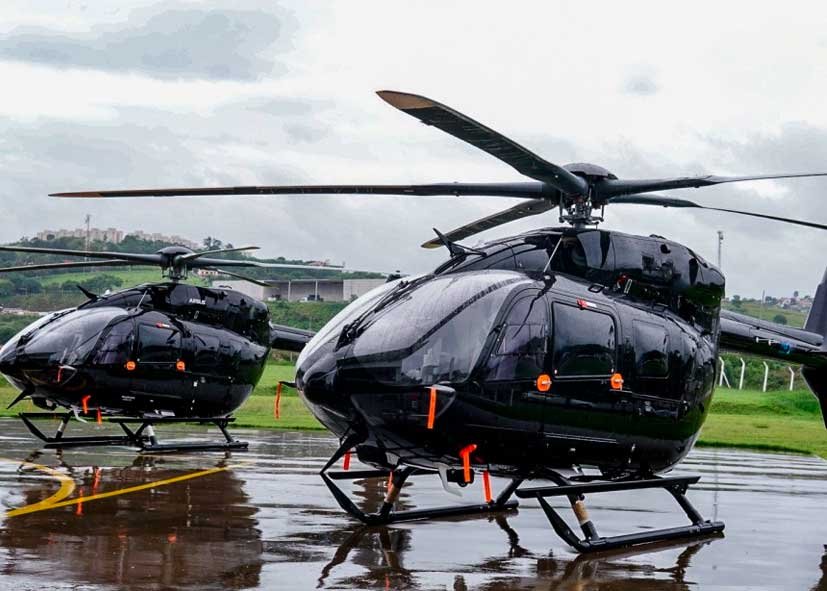
- Helicopter shuttle: short urban or regional legs, for example between a São Paulo heliport and an industrial site within helicopter range, or between Campo de Marte (SBMT) and an executive airport.
Helicopters in corporate shuttles
Helicopters play a large role in Brazilian corporate mobility. According to DECEA data reported by Bloomberg Línea in July 2026, Rio de Janeiro's airports recorded 93,579 rotary-wing take-offs and landings in 2025, most of them at Jacarepaguá (SBJR) supporting offshore oil platforms in the Santos and Campos basins. São Paulo's main airports recorded 37,422 helicopter operations, plus an estimated 24,000 to 30,000 more at helipads, and a count cited in the same report put the number of helicopters based in São Paulo at 243. Offshore crew change flights are a specialised operation with their own contracts and requirements, but the same principle applies to executive shuttles: a scheduled, audited service is safer and cheaper than improvised trips. Our executive helicopter transfers cover urban and regional legs.
When a shuttle makes sense
A shuttle makes sense when the same route is flown often enough that a fixed schedule beats ad hoc booking, and when the alternative is long road journeys or unreliable airline connections. The economics depend on load factor: a shuttle that flies half empty may cost more per seat than airline tickets, so companies should track occupancy and adjust frequency. Light jets such as the Embraer Phenom 300E and turboprops are common choices for regional shuttles because of their low cost per seat on short sectors.
- Fixed route and published schedule
- Internal booking and approval system
- Monthly occupancy and cost-per-seat report
- Backup plan for weather and maintenance
Should a company buy an aircraft, charter, use a jet card or go fractional?
The choice between chartering, a jet card, fractional ownership and whole ownership is primarily a function of how many hours a company flies each year, how predictable those hours are and how much control it needs. NBAA's long-standing Rules of Thumb for business aircraft ownership remain a useful starting point, provided they are read as rules of thumb and adjusted to each company's routes and costs.
| Model | How it works | Usage indicated by NBAA rules of thumb | Main trade-off |
|---|---|---|---|
| On-demand charter | Pay per trip to a certified operator | Fewer than about 50 hours a year; becomes disadvantageous above roughly 100 hours | No capital, but availability and aircraft vary |
| Jet card | Prepaid or committed hours at fixed hourly rates | Typically under 50 hours a year | Price certainty, but rates per hour are higher |
| Fractional ownership | Buy a share of an aircraft managed by a program | Worth considering up to about 175 hours a year | Guaranteed access, but monthly fees and contract terms |
| Whole ownership | Company owns or leases the aircraft | Above about 175 hours a year | Full control, but capital, crew and residual value risk |
Jet cards
Jet cards give a company predictable hourly rates and guaranteed availability within service terms. According to Private Jet Card Comparisons, at the end of the third quarter of 2026 the average entry-level hourly rate in the United States was US$ 8,333 for light jets, US$ 9,607 for midsize jets, US$ 12,485 for super-midsize jets and US$ 14,791 for large-cabin jets, including fuel surcharges and the 7.5% federal excise tax. Rates vary with blackout days, peak-day surcharges, minimum flight times and repositioning rules, so contracts should be compared line by line. See our Jet Card options.
Fractional ownership in Brazil
Brazil regulated shared ownership programmes in RBAC 91, Subpart K, through ANAC Resolution 606 of 11 February 2021, creating a legal framework for fractional programmes in the country.
Whole ownership
NBAA also suggests buying an aircraft that covers up to 90% of the company's missions and chartering for the rest, instead of buying a larger aircraft for the occasional long trip. Before buying, read our aircraft acquisition guide, see how aircraft sales and aircraft brokerage work, and consider aircraft financing. Companies that fly less can start with air charter and empty legs.
Aircraft frequently chosen for corporate missions
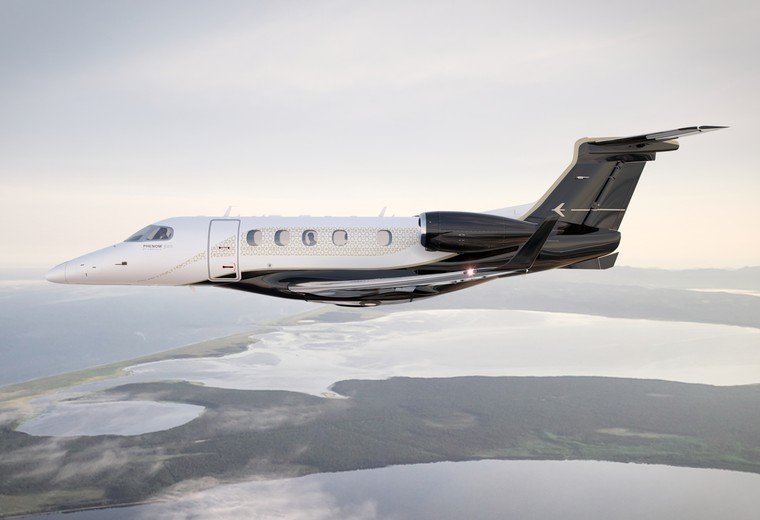 Jato · LightEmbraer Phenom 300ESpecifications, cabin, performance and charter options.Read more
 Jato · MidsizeCessna Citation XLSSpecifications, cabin, performance and charter options.Read more
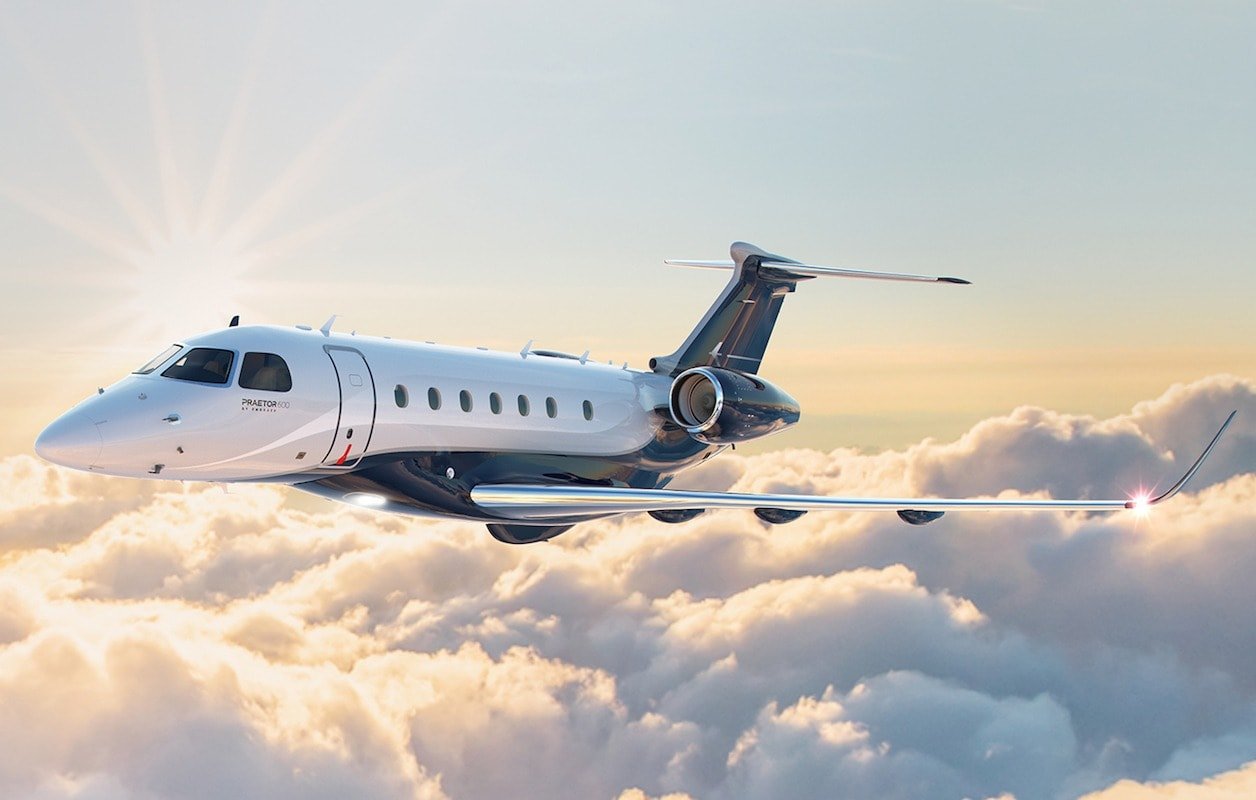 Jato · MidsizeEmbraer Praetor 500Specifications, cabin, performance and charter options.Read more
 Jato · MidsizeCessna Citation AscendSpecifications, cabin, performance and charter options.Read more
 Jato · LargeBombardier Challenger 650Specifications, cabin, performance and charter options.Read more
 Jato · Long RangeBombardier Global 6500Specifications, cabin, performance and charter options.Read more
Corporate flight department or aircraft management company?
Once a company owns an aircraft, it must decide who operates it. There are three main models: an in-house flight department, with pilots, maintenance staff and schedulers on the company payroll; an aircraft management company, which provides crew, maintenance oversight, hangar, insurance and compliance for a fee; and hybrid arrangements, such as several owners sharing a flight department or a company keeping its chief pilot in-house while outsourcing the rest.
Rules of thumb
NBAA's rules of thumb note that a whole owner can either employ the pilots, technicians and other staff directly or contract some or all of those services to a management company. As a general pattern, the higher the annual utilization and the stronger the board's need for control, the more an in-house department makes sense. The in-house model gives the most control and privacy and builds a dedicated, loyal crew, but requires upfront investment in hangar space, tools and people. A management company spreads overheads across a fleet, can provide replacement aircraft when the company's own aircraft is in maintenance and, where the rules allow, can place the aircraft on a charter certificate to offset costs.
Regulatory differences that matter
- Brazil: an aircraft operated privately under RBAC 91 may carry the company's own people and guests but may not be offered for paid transport to third parties. Placing the aircraft on an RBAC 135 air taxi certificate allows charter revenue but subjects the aircraft to the operator's rules and schedule.
- United States: 14 CFR 91.501 allows a company to carry its officials, employees, guests and property on its own aircraft when incidental to its business, and permits time sharing, interchange and joint ownership agreements. Under time sharing, the owner may charge only listed expenses, with fuel recoverable at up to twice its cost.
Choosing the model
- Estimate annual hours and their seasonality for at least three years.
- List the control and privacy requirements of the board.
- Compare full annual cost, including crew training, insurance and hangar, under both models.
- Decide whether charter revenue is desirable or a risk to availability.
- Define reporting: monthly costs, hours, maintenance status and safety indicators.
Our aircraft management guide explains costs, crew and compliance in depth, and Embarque Oficial offers aircraft management for owners who prefer to delegate operations.
- Annual hours forecast for three years
- Full cost comparison of both models
- Board decision on charter revenue
- Monthly reporting template agreed in advance
How do companies control corporate aviation costs?
Corporate aviation is expensive, and boards rightly ask whether the money is well spent. Cost control starts with understanding what a flight really costs and continues with policies that prevent waste without making the aircraft useless.
What drives the cost of a flight
- Aircraft category: the largest single factor. A light jet costs a fraction of a long-range jet per hour.
- Repositioning: on one-way charter, the customer usually pays for the aircraft to return to base or to reach the departure point. Empty legs can reduce this cost when the timing fits.
- Waiting and overnight: crew per diems, hotel and parking when the aircraft waits for passengers.
- Airport and navigation charges: landing, parking, FBO handling and air navigation fees, which vary widely by airport.
- Peak periods: holidays and major events raise prices and reduce availability.
Policies that reduce cost
- Right-size the aircraft. Match the aircraft to the passengers and the leg, not to the seniority of the traveller.
- Consolidate trips. Combine teams travelling to the same region in the same week.
- Book early when possible. Short-notice trips cost more and offer fewer options.
- Compare quotes on the same basis. Ask for a breakdown of flight hours, repositioning, taxes, fees and waiting time. Our page on quote transparency (in Portuguese) explains what to look for.
- Use empty legs and round trips intelligently. Sometimes keeping the aircraft waiting is cheaper than two repositioning flights.
Personal use, tax and disclosure
Personal use of company aircraft is a cost and a governance issue. In the United States, employees who fly personally on company aircraft generally have imputed taxable income, commonly valued with the IRS Standard Industry Fare Level (SIFL) rates. For public companies, NBAA warns that non-business use of company aircraft and heightened executive security programmes may trigger SEC reporting requirements as executive perquisites. NBAA also notes that companies offering personal use typically limit it to senior executives, often with an annual hour cap, and need a written policy that is actually followed. Brazilian companies should seek tax advice on how personal use and fringe benefits are treated locally.
- Breakdown of every quote by cost item
- Aircraft size matched to the mission
- Monthly cost per hour and per passenger
- Written personal-use and guest policy
- Annual review of usage against the business case
- Benchmark of charter, card and ownership costs
How do ESG and SAF reporting apply to corporate aviation?
For companies with climate targets, business aircraft are a visible source of emissions and a frequent topic in ESG reports. The first step is to classify emissions correctly. Under the GHG Protocol, fuel burned in an aircraft the company owns or controls is a Scope 1 emission, while flights bought from airlines or charter operators fall under Scope 3, Category 6 (business travel). Mixing the two makes year-on-year comparisons meaningless.
Sustainable aviation fuel and book and claim
Sustainable aviation fuel (SAF) is a drop-in fuel made from waste oils, residues or other feedstocks that can reduce life-cycle emissions compared with fossil jet fuel. Because SAF is not available at most airports, companies increasingly buy SAF certificates under a book and claim system: the fuel is delivered into the supply chain somewhere, and the environmental attribute is transferred to the buyer through a registry such as the RSB Book and Claim Registry or the SAFc Registry. Under RSB rules, each unit can support one Scope 1 claim by the fuel user and up to two Scope 3 claims, and claimants should disclose book-and-claim reductions separately rather than subtracting them from the inventory.
What the GHG Protocol says in 2026
The GHG Protocol's standard development plan of July 2026 states that market-based approaches such as SAF book and claim are not currently included in or allowed under the Scope 3 Standard, with a revised standard expected later in the decade. Until then, the prudent approach is to report gross Category 6 emissions unchanged and disclose SAF purchases as a separate decarbonization action, with tonnes, registry and serial numbers.
Mandates that affect corporate flights
- European Union: ReFuelEU Aviation (Regulation (EU) 2023/2405) requires a minimum SAF share in fuel supplied at EU airports of 2% in 2025, rising to 6% in 2030 and 70% in 2050, and includes an anti-tankering rule for departing flights.
- Brazil: the Fuel of the Future Law (Law 14,993/2024) created ProBioQAV, which requires covered air operators to reduce emissions on domestic flights by 1% from 1 January 2027, rising to 10% in 2037, mainly through SAF. Decree 13,094 of 12 August 2026 regulates the programme, and ANAC's draft rule applies to operators that emit 10,000 tonnes of CO2 or more per year.
Practical steps include choosing efficient aircraft for each mission, reducing repositioning flights, asking operators for fuel-burn data per flight and buying SAF certificates through recognized registries. Our global air mobility page looks at how new technologies fit into corporate travel.
- Separate Scope 1 and Scope 3 aviation emissions
- Fuel-burn data requested for every flight
- SAF certificates from a recognized registry
- SAF reported separately from the gross inventory
What does corporate aviation look like in Brazil and Latin America?
Brazil is one of the largest business aviation markets in the world. According to ANAC data compiled by ABAG, the country had 11,362 operational business aircraft (jets, turboprops and turbine helicopters) in May 2026, up 8.5% from a year earlier, including 1,193 jets, up 12.5%. The air taxi fleet reached 739 aircraft in May 2026, up 5.6%. Continental distances, a concentrated airline network and the economic weight of the interior explain much of this demand.
São Paulo: the corporate hub
São Paulo concentrates headquarters, banks and investors, and the largest share of Brazil's civil fleet: RAB data reported by Forbes in June 2025 showed 5,609 airworthy civil aircraft registered in São Paulo state, out of 15,499 nationwide. Corporate flights use Campo de Marte (SBMT), Congonhas (SBSP), where slot rules for business aviation tightened in October 2026, Guarulhos (SBGR), Viracopos in Campinas (SBKP), and the Catarina Executive Airport (SBJH) in São Roque, about 74 km from downtown, with a 2,470 m runway and international status since June 2021. Helicopters connect offices, heliports and airports across the metropolitan area.
Agribusiness hubs
Agribusiness is a major driver of corporate aviation in Brazil. The same RAB data showed 1,857 airworthy aircraft in Mato Grosso and 4,080 across the three Centre-West states. Executives and producers fly between Cuiabá, Sinop, Sorriso, Lucas do Rio Verde, Nova Mutum and Primavera do Leste, and to the Matopiba frontier in Maranhão, Tocantins, Piauí and Bahia. Private executive airports have been built specifically for agribusiness; near Cuiabá, the Maggi Scheffer family's Bom Futuro airport houses about 70 aircraft. Turboprops such as the King Air C90 and light jets are common on these routes.
Mining and energy
Mining companies fly between Belo Horizonte and the Iron Quadrangle in Minas Gerais and to the Carajás region in Pará. The energy sector combines offshore oil in the Santos and Campos basins, served by helicopter bases on the Rio de Janeiro coast and in Macaé, with wind and solar assets across the Northeast. These operations often combine fixed-wing flights to a regional airport with helicopter legs to the site.
Latin America
Across Latin America, corporate flights link São Paulo with Buenos Aires, Santiago, Lima, Bogotá, Panama City and Mexico City. International flights require customs, immigration and overflight planning, and in some countries authorization for foreign operators. Our South America flights and air taxi in Brazil pages cover these routes.
How does Embarque Oficial support companies and boards?
Embarque Oficial is a global business aviation company, flying since 2011, headquartered in Florianópolis, Brazil, with offices in Monaco, Dubai, London, Paris, Liverpool, Fort Lauderdale, New York, Las Vegas, Shanghai and Brazil. It serves clients around the world, from Monaco, Dubai, Capri and Rome to every region of Brazil. The offices do not receive walk-in visitors: service is provided online, by WhatsApp (+55 48 98877-0541) and in person at embarkation, at heliports, airports and FBOs in many locations worldwide.
How we work with companies
Embarque Oficial organizes flights with operators certified by ANAC in Brazil and by the aviation authority of each country abroad, such as the FAA and EASA. We do not present ourselves as the owner of a fleet; our role is to understand the company's missions, select the right aircraft and operator, coordinate the logistics and keep the company informed from the first request to the last leg.
Services for corporate clients
- On-demand flights: executive air taxi with jets, turboprops and helicopters.
- Programmes: flight programmes, Jet Card and the Clube Infinity membership.
- Roadshows and multi-city trips across Brazil, Latin America, North America, Europe and the Middle East.
- Aircraft ownership: aircraft purchase and sale, financing and aircraft management.
- Concierge: ground transport, hotels and event logistics through our concierge service.
Special operations
For more than ten years Embarque Oficial has organized special operations with authorized operators: air ambulance and aeromedical transport, urgent and high-value cargo, aerial filming and photography, and transport of authorities with security. For companies, these capabilities matter in emergencies, when an employee needs medical evacuation or a critical part must reach a stopped plant.
How to start
- Tell us about your typical missions: routes, passengers and frequency.
- We map aircraft options and access models, from charter to ownership.
- We present quotes with a clear breakdown of costs.
- We coordinate each flight with the certified operator and the ground team.
Use the form below or contact our team. Quotes depend on operator availability and on the details of each mission.

Glossary: key corporate aviation terms
- Corporate aviation
- The use of business aircraft by a company, owned or chartered, to transport its people and goods for business purposes.
- Duty of care
- An organization's obligation to take reasonable steps to protect the health, safety and security of employees travelling on its behalf.
- ISO 31030
- International guidance standard published in 2021 for managing travel risks in organizations of any sector and size.
- IS-BAO
- International Standard for Business Aircraft Operations, a voluntary code of best practice built around a safety management system and administered by IBAC.
- SMS
- Safety management system: a structured approach to identifying hazards, managing risk and assuring safety in an aviation organization.
- Flight department
- The in-house team of pilots, technicians and schedulers that operates a company's own aircraft.
- Aircraft management company
- A firm that operates an aircraft on behalf of its owner, providing crew, maintenance oversight, insurance and compliance.
- Jet card
- A prepaid or committed-hours programme that gives access to business aircraft at fixed hourly rates under defined service terms.
- Fractional ownership
- Ownership of a share of an aircraft within a managed programme, regulated in Brazil by RBAC 91, Subpart K.
- Roadshow
- A sequence of meetings with investors or customers in several cities over a short period, often flown on a business aircraft.
- Corporate shuttle
- A recurring company air service on fixed routes and schedules, for example between headquarters and a plant or mine.
- SAF
- Sustainable aviation fuel, a drop-in jet fuel from renewable or waste feedstocks that can reduce life-cycle emissions.
- Book and claim
- A system in which the environmental attributes of SAF are transferred to a buyer through a registry, separately from the physical fuel.
- SIFL
- Standard Industry Fare Level, the US IRS formula commonly used to value personal flights on company aircraft as taxable income.
Frequently asked questions about corporate aviation
What is corporate aviation?
Corporate aviation is the use of business aircraft by companies to transport executives, teams, customers and cargo on their own schedule. It includes owned aircraft operated by a flight department or a management company, fractional shares, jet cards and on-demand charter from certified operators. The defining feature is the business purpose: each flight should be justified by time saved, productivity, access to hard-to-reach locations or confidentiality, and recorded under a written company policy.
Is corporate aviation only for large companies?
No. In the 2018 Harris Poll survey for NBAA and GAMA, 62% of the flight departments interviewed operated a single turbine aircraft, and most business aviation users were companies with 500 or fewer employees. Mid-sized companies often start with on-demand charter or a jet card, which require no capital investment, and only consider ownership when annual flight hours justify it.
How does a company justify private flights to its board?
A company justifies corporate flights with a written business case that compares door-to-door travel time, the value of the travellers' time, overnight costs avoided and the business outcomes of each trip, such as deals closed or sites visited. The method should be applied consistently and reviewed annually. Boards also expect a travel policy, operator vetting standards and transparent cost and emissions reporting.
What is IS-BAO?
IS-BAO, the International Standard for Business Aircraft Operations, is a voluntary code of best practice for business aircraft operators, established by the International Business Aviation Council and built on ICAO standards with a safety management system at its core. Operators are audited by accredited auditors and registered at Stage 1, 2 or 3. IS-BAO does not replace an air operator certificate issued by a national authority.
Is IS-BAO registration mandatory for charter operators?
No. IS-BAO is voluntary. What is mandatory is the air operator certificate issued by the national authority, such as ANAC under RBAC 135 in Brazil or the FAA under Part 135 in the United States. Many companies still ask charter operators about IS-BAO registration or third-party audits, such as ARGUS or Wyvern, as part of their vetting process.
What should a corporate travel policy say about business aircraft?
A corporate travel policy for business aircraft should define who may use the aircraft and for what purposes, who approves each trip, the minimum standards for operators, the maximum number of key executives on one aircraft, rules for personal and guest use, privacy of passenger data and the emergency response procedure. ISO 31030:2021 provides guidance on structuring travel risk management.
How many hours a year justify buying an aircraft?
NBAA rules of thumb suggest that on-demand charter suits companies flying fewer than about 50 hours a year, fractional ownership is worth considering up to about 175 hours, and whole ownership becomes economically viable above about 175 hours. These are starting points: routes, aircraft category, residual values, financing and the need for control all shift the break-even point.
What is the difference between a flight department and a management company?
A flight department is an in-house team that operates the company's aircraft, giving maximum control and privacy but requiring investment in staff, hangar and systems. A management company operates the aircraft for the owner for a fee, spreads overheads across a fleet and can provide replacement aircraft. Higher utilization and stronger control needs favour the in-house model.
How are roadshows organized with a business aircraft?
A roadshow on a business aircraft is planned around the meeting schedule. The aircraft must fly the longest leg non-stop with the full team, crew duty limits must cover the longest day, slots and FBO handling must be booked at busy airports, and ground transport must wait at each stop. Plans should allow departure times to shift when meetings run late.
How can a company keep corporate flights confidential?
A company can protect confidentiality by sharing passenger data only with the operator and the authorities that require it, including confidentiality clauses in charter contracts and using private terminals. In the United States, the FAA's LADD and PIA programmes reduce public flight tracking of an aircraft, although they cannot stop third parties from capturing ADS-B signals directly.
How are corporate flight emissions reported?
Under the GHG Protocol, fuel burned by aircraft a company owns or controls is reported as Scope 1, while chartered and airline flights are Scope 3, Category 6, business travel. SAF certificates bought under book and claim should currently be disclosed separately from the gross inventory, with registry, serial number and quantity, rather than subtracted from reported emissions.
What is the Brazilian SAF mandate?
Brazil's Fuel of the Future Law, Law 14,993 of 2024, created ProBioQAV, which requires covered air operators to cut emissions on domestic flights by 1% from January 2027, rising to 10% in 2037, mainly by using sustainable aviation fuel. Decree 13,094 of August 2026 regulates the programme, and an ANAC draft rule targets operators emitting 10,000 tonnes of CO2 or more per year.
Can a private aircraft in Brazil be chartered by a company?
Only if it is operated by an air taxi company certified by ANAC under RBAC 135. An aircraft operated privately under RBAC 91 can carry its owner's people and guests but cannot be offered for paid transport to third parties. Chartering an unauthorized aircraft exposes the company to safety, legal and insurance risks. ANAC's Voe Seguro app helps check authorization.
Which airports do business aircraft use in São Paulo?
Business aircraft in São Paulo use Campo de Marte (SBMT), Congonhas (SBSP), Guarulhos (SBGR), Viracopos in Campinas (SBKP) and the Catarina Executive Airport (SBJH) in São Roque. Since October 2026, ANAC requires general aviation operators to contract an FBO before requesting slots at Congonhas. Helicopters link heliports and airports across the metropolitan area.
How does Embarque Oficial work with companies?
Embarque Oficial organizes corporate flights with operators certified by ANAC in Brazil and by the aviation authority of each country abroad. It maps a company's missions, recommends aircraft and access models, presents quotes with clear cost breakdowns and coordinates each flight. It also offers jet cards, programmes, roadshows, aircraft sales, financing and management, with service online, by WhatsApp and at embarkation.
Sources and references
- NBAA — IS-BAO
- ISO/TC 262 — ISO 31030:2021 Managing travel risks: Guidance for organizations
- NBAA — Latest Harris Poll survey reaffirms importance of business aviation (Oct 2018)
- NBAA — Rules of Thumb: Business Aircraft Ownership and Operating Options
- eCFR mirror — 14 CFR 91.501 (time sharing, interchange and company carriage)
- NBAA Business Aviation Insider — Management policies for personal use of business aircraft
- NBAA — Limiting Aircraft Data Displayed (LADD) and PIA
- Federal Register — FAA Safety Management Systems final rule (26 Apr 2024)
- Private Jet Card Comparisons — Jet card prices fall 3.1% in Q3 (Oct 2026)
- Regreener — How to report SAF certificates in Scope 3
- EBAA — ReFuelEU Aviation
- Mayer Brown — SAF: ANAC launches public consultation following the regulatory decree (Sep 2026)
- Forbes Brasil — Brazil reaches 11,000 business aircraft (ANAC/ABAG, Jul 2026)
- Aeroin — Brazil's air taxi fleet grows 5.6% (ABAG, Jul 2026)
- Forbes Brasil — From Bonanza to Citation: agribusiness aviation fleet (Jun 2025)
- Bloomberg Línea — Rio overtakes São Paulo in helicopter traffic (Jul 2026)
- Aeroin — ANAC requires an FBO for business jet slots at Congonhas (Oct 2026)
- Wikipedia — São Paulo Catarina Executive Airport (SBJH)
- Agência Gov — Voe Seguro: ANAC app for safe air taxi travel (Jan 2024)
- ANAC — Resolution 606 of 11 February 2021 (RBAC 91, Subpart K)
Written by Régis Hahns, CEO of Embarque Oficial, with the company's editorial team, based on the sources above. Rules, prices and lead times change: always confirm with ANAC, the manufacturer or a specialist before deciding. Embarque Oficial serves clients worldwide, from Monaco, Dubai, Capri and Rome to every region of Brazil, and arranges each flight with operators certified by ANAC, Brazil's civil aviation authority, in Brazil and by the local aviation authority abroad.
Keep exploring the Knowledge Hub
Complete guideExecutive Air Taxi GuideHow charter works in Brazil, what it costs, ANAC rules and how to book safely.Read more Complete guidePrivate Jets GuideCategories, range, cabin, costs and how to choose the right jet for each mission.Read moreComplete guideAircraft Acquisition GuideEvaluation, pre-purchase inspection, contracts, ANAC registration and pitfalls.Read more
 Complete guideAircraft Management GuideCosts, maintenance, crew, compliance and how to lower the cost per flight hour.Read more
 Complete guideBusiness Aviation GuideThe sector in Brazil and worldwide: market, rules, technology and trends.Read more
 Embarque Oficial serviceCorporate Aviation ProgramsFlights, roadshows and shuttles for companies, with certified operators worldwide.Read more
Ready to fly
Tell us where, we take care of the rest
Confidential quotes and 24/7 support, every day of the year.
WhatsApp +55 48 98877-0541 · sales@embarqueoficial.com