
Global Aviation · Aircraft Brokerage
Aircraft brokerage: how brokers, buyer's agents and charter brokers really work
Who the intermediary works for, how they get paid, what they must disclose and how to vet them before you sign, whether you are buying a jet, selling one or chartering a flight in Brazil, the US, Europe or the Middle East.
By Régis Hahns, CEO of Embarque Oficial · LinkedIn
- 2011flying since
- 36 minread
- 20sources cited
What is aircraft brokerage?
Aircraft brokerage is the professional intermediation of aviation deals. The term has two meanings: transaction brokerage, where a broker represents the seller (or an acquisition agent represents the buyer) of a jet, turboprop or helicopter, and charter brokerage, where a broker arranges a flight that a certified operator performs. In both cases the broker is not the owner or the operator of the aircraft, so the key questions are whose side the broker is on, how the broker is paid and what the broker must disclose. See also our page on aircraft sales.
On this page
- What is aircraft brokerage, and what does an aircraft broker actually do?
- Transaction brokerage vs charter brokerage: what are the two meanings of the term?
- Seller's broker or buyer's agent: whose side is the intermediary on?
- What does an aircraft acquisition agent do for a buyer?
- How are aircraft brokers paid? Commissions, retainers and flat fees
- How do exclusive aircraft brokerage agreements work?
- How do you vet an aircraft broker? IADA, NBAA and other credentials
- What are the red flags when hiring an aircraft or charter broker?
- How do charter brokers work, and what does US DOT Part 295 require?
- Who is liable when a broker is involved? Contracts, insurance and documentation
- How does aircraft brokerage work in Brazil?
- How does aircraft brokerage work in the US, Europe and the Middle East?
- How does Embarque Oficial work as an aircraft brokerage and acquisition partner?
- Glossary
- Frequently asked questions
What is aircraft brokerage, and what does an aircraft broker actually do?
Aircraft brokerage is the business of bringing the two sides of an aviation deal together and managing the deal until it closes, without the broker owning the aircraft or operating the flight. An aircraft broker is paid to find a counterparty, frame the negotiation, coordinate the specialists (lawyers, inspection facilities, escrow agents, insurers, customs brokers) and keep the timeline moving. In business aviation, where a single pre-owned jet can change hands for tens of millions of dollars across three or four jurisdictions, the broker is often the only person who sees the whole transaction at once.
Aircraft brokerage is frequently confused with three neighbouring roles. The differences matter, because each role creates different duties, different incentives and different risks for the client.
Broker, dealer, acquisition agent and consultant
| Role | Who it works for | Takes title to the aircraft? | Typical pay |
|---|---|---|---|
| Seller's broker | The owner selling the aircraft | No | Success fee at closing (percentage or flat) |
| Acquisition agent (buyer's agent) | The buyer | No | Flat fee, retainer plus success fee, or percentage |
| Aircraft dealer | Itself (acts as principal) | Yes, buys and resells | Spread between purchase and resale price |
| Independent consultant or appraiser | Whoever hires it, for advice only | No | Hourly or project fee, not tied to closing |
The line between broker and dealer is the most important one. A broker acts as an agent and earns a fee for a result. A dealer buys aircraft for its own account and resells them, so its profit is the margin between what it pays and what it receives. Many firms do both, and some also appraise aircraft or manage them. None of this is wrong, but the client must always know which hat the firm is wearing in a specific deal.
What a competent aircraft broker delivers
- Market intelligence: recent comparable transactions, not just asking prices, and an honest view of how long a given model is taking to trade.
- Reach: access to owners, flight departments, dealers and other brokers, including aircraft that are not publicly listed.
- Process control: a sequence from letter of intent (LOI) to deposit, pre-purchase inspection, closing and delivery, with deadlines everyone respects.
- Translation between worlds: technical findings turned into price adjustments, and legal or tax constraints turned into practical steps.
- Discretion: many principals in business aviation are public figures or companies that do not want a sale or purchase to be known before it closes.
What an aircraft broker should not do is replace your lawyer, your tax adviser or your independent inspection facility. The full purchase sequence is covered in our aircraft acquisition guide; this page focuses on the intermediary itself.
Transaction brokerage vs charter brokerage: what are the two meanings of the term?
Search for “aircraft brokerage” and you will find two industries that share a word but very little else. Aircraft transaction brokerage deals with the ownership of an asset: a jet, turboprop or helicopter is sold, bought, leased or traded. Air charter brokerage deals with a service: a client needs a flight, and the broker sources an aircraft and crew from a certified operator. Some firms work in both markets, but the rules, the contracts and the risks are different.
| Aspect | Transaction brokerage | Charter brokerage |
|---|---|---|
| What changes hands | Ownership (title) of an aircraft | A seat or the entire cabin for one or more flights |
| Typical value | From hundreds of thousands to tens of millions of dollars per deal | From a few thousand to a few hundred thousand dollars per trip |
| Main counterparties | Owners, buyers, dealers, lenders, lessors | Certified operators (air carriers) and passengers |
| Key documents | Listing or representation agreement, LOI, purchase agreement, escrow instructions, bill of sale | Quote, charter agreement, operator disclosure, passenger manifest |
| Main regulator touchpoint | Aircraft registries (FAA Registry, Brazil's RAB, others), tax and customs authorities | Civil aviation authority of the operator (ANAC, FAA, EASA member states, GCAA, GACA) and, in the US, the DOT |
| Biggest risk for the client | Paying the wrong price for the wrong aircraft, or a defective title | Flying with an operator that is not authorised for the flight |
Why the distinction matters to you
A buyer who calls a charter broker to find an aircraft to purchase, or a traveller who books a flight through a firm that mainly sells aircraft, may get a capable answer, but should ask direct questions about experience in that specific market. Transaction brokerage requires knowledge of registries, liens, maintenance programmes and import rules. Charter brokerage requires knowledge of operator certificates, traffic rights, crew duty limits and same-day logistics.
There is also a third, narrower use of the word: brokers who arrange aircraft leases (dry leases, where only the aircraft is provided, or wet leases with crew, maintenance and insurance) for airlines and operators. That market is mostly business to business and sits outside the scope of private and corporate travellers.
If your need is a flight, start with our English pages on air charter and private aviation. If your need is an asset, read on: most of this page deals with transaction brokerage, and the charter side is covered in depth further down.
Seller's broker or buyer's agent: whose side is the intermediary on?
In every aircraft transaction there are two sides with opposite goals. The seller wants the highest price, the fastest closing and the fewest post-inspection concessions. The buyer wants the lowest price, the most thorough inspection and the strongest warranties. A seller's broker is hired by the owner and paid, in most cases, out of the sale proceeds. A buyer's agent (also called an acquisition agent or buyer's representative) is hired by the purchaser. Both can be professional and honest, but they cannot both represent your interests in the same negotiation.
Where conflicts of interest come from
- Dual agency: the same firm represents seller and buyer in one deal. It can be legal if disclosed and accepted in writing, but neither side can expect the firm to fight hard for it on price.
- Back-to-back trades: the intermediary quietly buys the aircraft from the seller and sells it to the buyer at a higher price in a simultaneous closing, presenting itself as a broker to both. Ask directly whether the firm will take title at any point.
- Multiple listings of the same model: a broker with three similar aircraft listed may steer buyers toward the one that has been on the market longest, or where its commission is higher.
- Dealer or OEM inventory: a firm that also owns aircraft, or a manufacturer's pre-owned department, may favour its own stock.
- Hidden referral fees: payments from inspection facilities, maintenance shops, lenders or completion centres that the broker recommends to you.
- Closing-only compensation: an agent paid only when a deal closes has an incentive to close any deal, even one you should walk away from after the inspection.
How professionals manage the conflict
Good practice is simple to state and harder to follow: one client per side, written disclosure of any relationship with the other party or with the aircraft, a no back-to-back clause in the agreement unless the client consents in writing, and full transparency on every fee received from anyone in connection with the deal. Industry commentators such as Business Jet Traveler have also noted that a broker who represents buyers or performs appraisals while listing your aircraft may have conflicts worth discussing before you sign.
For a buyer, the strongest protection is to have someone on your side of the table: an acquisition agent, an independent consultant and your own aviation lawyer, all paid by you. For a seller, it is to know whether the broker who brings an offer also represents that buyer. If you want to understand the commercial side of selling, our page on selling and buying aircraft covers the market and the sale process, while the due diligence page (in Portuguese) covers technical and legal verification.

- Ask in writing whom the intermediary represents in this deal
- Ask whether the firm will take title to the aircraft at any point
- Require disclosure of every fee paid by third parties
- Ask whether the broker lists or owns competing aircraft
- Reject dual agency unless it is disclosed and accepted in writing
- Hire your own aviation lawyer, paid by you
What does an aircraft acquisition agent do for a buyer?
An aircraft acquisition agent is the buyer's professional representative in an aircraft purchase. Where the seller's broker markets one aircraft, the acquisition agent searches the whole market for the aircraft that best fits the buyer's mission and budget, then negotiates on the buyer's behalf. Large corporations with flight departments often do this in house; private individuals, family offices and first-time corporate buyers usually hire an outside agent.
Typical scope of an acquisition mandate
- Mission definition: typical and maximum stage length, passengers, runways, budget and ownership horizon, turned into a short list of models.
- Market sweep: every serial number of the target models that is listed or could be available off market, with history, hours, cycles and maintenance programme status.
- Ranking and valuation: comparison of candidates on value, condition, inspection status and enrolment in engine and APU hourly programmes.
- Offer and LOI: price, deposit, inspection scope, delivery location and conditions precedent.
- Pre-purchase inspection oversight: choosing an inspection facility that has no relationship with the seller, attending the inspection and turning discrepancies into price or repair negotiations.
- Closing coordination: escrow, title search, insurance, export and import, registration and crew or management handover.
What an acquisition agent should not do
An acquisition agent should not accept a commission from the seller without telling you, should not steer you to an inspection facility paid by the seller, and should not draft your purchase agreement in place of your lawyer. If the agent is also a dealer, it should never sell you an aircraft from its own inventory while acting as your representative, unless you have agreed to that in writing.
Specialist knowledge depends on the segment
Buying a light jet and buying an ultra-long-range jet are different exercises. The pool of serial numbers, the maintenance events that drive price (for example, large structural inspections and engine overhauls), the completion centres and the buyers who compete with you all change from one category to the next. Ask the agent how many transactions it has completed in the exact segment you are targeting, not just in business aviation. The aircraft below illustrate segments that require distinct market knowledge; their technical sheets are on our site, and our aircraft directory lists many more.
When a buyer is coming from charter, a structured comparison of charter, jet card and ownership costs usually comes before the search itself. The step-by-step purchase process is in the English aircraft acquisition guide.
Segments where specialist brokerage knowledge matters
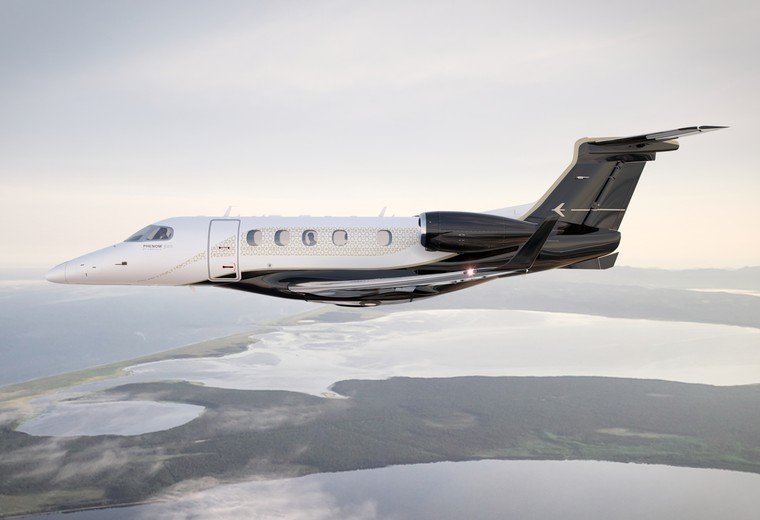 Jato · LightEmbraer Phenom 300ESpecifications, cabin, performance and charter options.Read more
 Jato · LightCessna Citation CJ3Specifications, cabin, performance and charter options.Read more
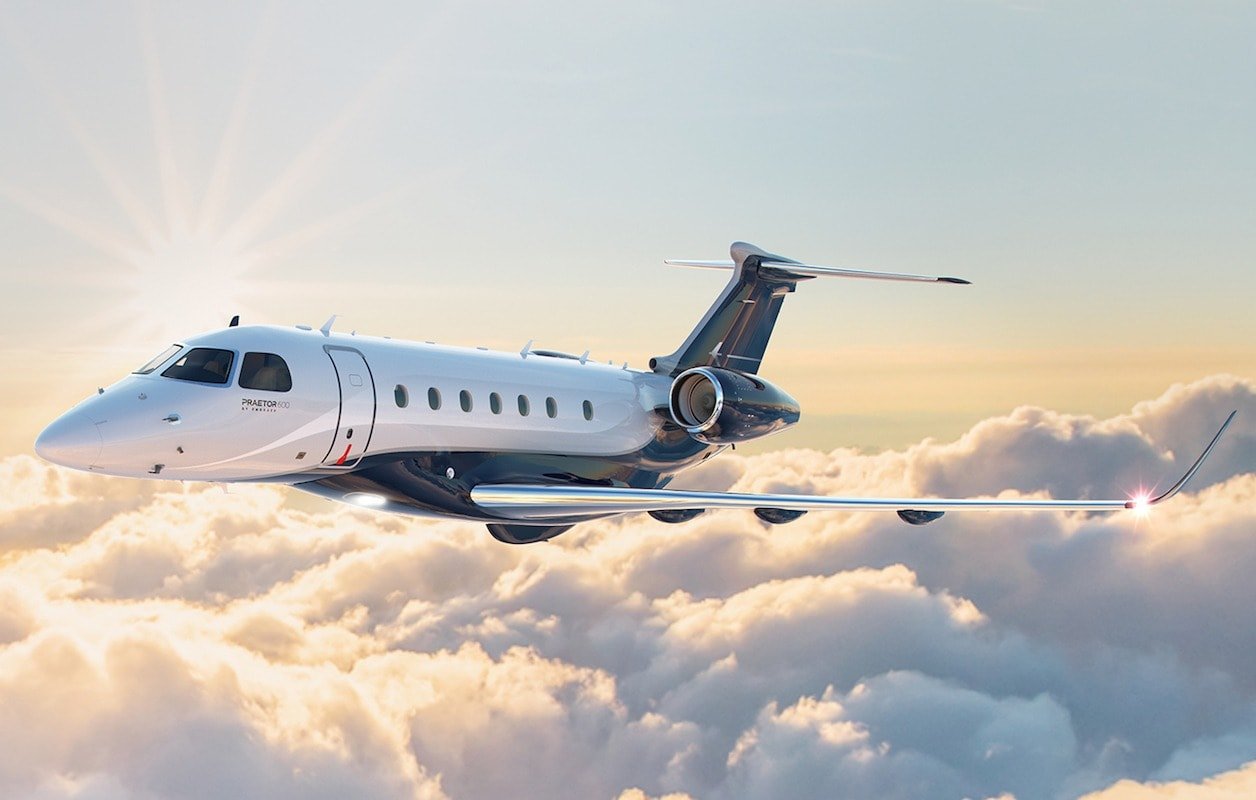 Jato · MidsizeEmbraer Praetor 500Specifications, cabin, performance and charter options.Read more
 Jato · Super-midsizeBombardier Challenger 3500Specifications, cabin, performance and charter options.Read more
 Jato · Ultra Long RangeGulfstream G700Specifications, cabin, performance and charter options.Read more
 Jato · Ultra Long RangeBombardier Global 7500Specifications, cabin, performance and charter options.Read more
How are aircraft brokers paid? Commissions, retainers and flat fees
There is no official tariff for aircraft brokerage anywhere in the world, and compensation is always negotiated. What follows are market references drawn from published industry commentary, not quotes and not rules. Actual fees depend on the aircraft's value, the complexity of the deal (cross-border import, lease return, damage history), the scope of work, exclusivity and the strength of the market at the time.
Transaction brokerage: common structures
| Structure | How it works | Published market reference | Watch out for |
|---|---|---|---|
| Percentage commission (seller side) | Paid from sale proceeds at closing | Lower percentages on high-value jets (roughly 1% to 3% is often cited) and higher ones on small aircraft; some commentators cite a wider 1% to 10% band across all aircraft | Incentive to accept a lower price for a faster close |
| Flat fee | A fixed amount agreed upfront, payable at closing | Common on high-value jets; Business Jet Traveler cites an example of US$150,000 regardless of price | Less incentive to push for the last dollar |
| Sliding scale | Fee rises with the achieved price | Example cited by Business Jet Traveler: US$130,000 at one price, US$170,000 at a higher one | Make the thresholds realistic |
| Retainer plus success fee (buyer side) | Monthly or upfront retainer, credited against a fee at closing | Used by many acquisition agents; amounts vary widely | Retainer with no defined deliverables |
Two practical points recur in industry advice. First, the commission is normally paid through escrow at closing; a broker demanding a large payment before any work is done is a warning sign. Second, choosing the broker with the lowest commission is rarely the best decision: an under-motivated broker can cost more in price and time than the fee saved.
Charter brokerage: margins rather than commissions
Charter brokers usually earn the difference between the operator's price and the price quoted to the client, or a commission paid by the operator. Published estimates vary widely: a broker-side source cites fees of about 5% to 10% of the trip cost, while a direct-booking platform that competes with brokers cites markups of 10% to 25%. Both figures come from interested parties and neither is audited. The useful takeaway is that a margin exists, that it pays for sourcing, vetting and support, and that you are entitled to know the total price and, in the US, to ask for it under DOT rules.
Questions to settle before you sign
- Is the fee a percentage, a flat amount or a scale, and is it calculated on the gross price or net of trade-ins?
- Who pays marketing, travel and demonstration-flight costs?
- If another broker brings the buyer, how is the fee shared (co-brokerage)?
- Is any fee owed if the deal fails after inspection, or if you withdraw?
For financing structures that may affect the fee base, see our aircraft financing service.
How do exclusive aircraft brokerage agreements work?
Most serious sale mandates are signed on an exclusive basis: one broker or firm is appointed to market the aircraft for a fixed period, and other brokers who bring buyers cooperate with that broker rather than with the owner directly. Exclusivity gives the broker the security to invest time and money in marketing, and gives the market a single, consistent message about price and availability. Non-exclusive listings, where several brokers advertise the same aircraft at slightly different prices, tend to make buyers suspicious and can damage the aircraft's perceived value.
The main types of mandate
- Exclusive right to sell: the broker earns its fee if the aircraft is sold during the term, regardless of who finds the buyer, including the owner.
- Exclusive agency: the broker is the only agent, but the owner keeps the right to sell directly to a buyer it finds without paying a fee.
- Open (non-exclusive) listing: any broker who brings the buyer earns the fee; the owner pays only one.
- Exclusive buyer representation: the buyer appoints one acquisition agent for a period, often with a list of models or a budget range.
Term, tail and exclusions
According to Business Jet Traveler, a term of three to six months is fairly standard for a sale mandate, and the agreement is negotiable. Almost every agreement contains a tail (or protection) clause: if a buyer introduced by the broker during the term buys the aircraft within a set period after the term ends, the fee is still due. Owners who already know possible buyers should list them as exclusions, so that a sale to one of them carries no fee or a reduced fee.
The Brazilian Civil Code on exclusivity
In Brazil, brokerage agreements are governed by the Civil Code (Law 10,406/2002, articles 722 to 729). Article 725 makes the fee due once the agreed result is achieved, even if the deal later falls through because the parties change their minds. Article 726 provides that, when exclusivity is agreed in writing, the broker is owed the full fee even if the deal is closed without its involvement, unless the broker's inactivity is proven. Article 727 keeps the fee due when a deal closes after the broker was dismissed, or after the term ended, as a result of the broker's work. These rules make the drafting of Brazilian mandates particularly important.
Embarque Oficial structures sale and acquisition mandates through its aircraft purchase and sale service, with the term, exclusions and fee written down before any marketing begins.
- Mandate type: exclusive right to sell, exclusive agency or open
- Term in months and how either side can terminate
- Tail period and the list of protected buyers the broker must deliver
- Exclusions for buyers you already know
- Fee basis, trigger (signed agreement or closing) and payment through escrow
- Co-brokerage terms with other brokers
- No back-to-back clause and conflict disclosures
- Confidentiality, governing law and dispute resolution
How do you vet an aircraft broker? IADA, NBAA and other credentials
In most countries, including the United States and Brazil, no government licence is required to act as an aircraft broker. Some US states impose dealer registrations for tax purposes (Florida, for example, requires aircraft dealers to register with its Department of Revenue), but that is not a professional qualification. Vetting therefore rests on industry credentials, track record and references.
What IADA accreditation and certification mean
The International Aircraft Dealers Association (IADA), formerly the National Aircraft Resale Association (NARA), runs the best-known credentialing scheme in transaction brokerage. It has two levels:
- IADA Accredited Dealer (firm level): according to IADA's June 2026 announcement, a firm must have been in business for at least three years, maintain an active sales organisation and a professional office, show qualifying transaction experience, carry appropriate insurance and agree to IADA's 14-point Code of Ethics. Accreditation is reviewed annually, and at least 80% of a dealer's sales staff must be certified brokers (new firms have their first year to reach that level).
- IADA Certified Aircraft Broker (individual level): the candidate must work for an IADA Accredited Dealer or an approved manufacturer, have at least two years of industry experience with that organisation and pass an exam administered by an independent credentialing firm, with recertification every five years. In June 2026, IADA reported 233 certified brokers worldwide.
IADA accreditation is a meaningful signal of process and ethics, but it is not a guarantee, and many capable brokers are not members. Business Jet Traveler has noted that most aircraft brokers are not IADA members.
What NBAA membership means, and what it does not
The National Business Aviation Association (NBAA) represents business aviation in the US and publishes guidance, including its Part 295 Q&A and its Best Practices for Air Charter Brokering (updated August 2024). NBAA does not accredit or certify aircraft brokers. Membership shows engagement with the industry, not a vetted standard of conduct. The same is true of regional associations such as ABAG in Brazil, EBAA in Europe and MEBAA in the Middle East.
Charter brokers: the Air Charter Association seal
For charter brokers, the UK-based Air Charter Association (ACA) has a Code of Practice and, as reported in July 2026, a Seal of Accreditation tied to minimum trading history and endorsements from operators and other members.
Evidence that matters more than logos
Ask for a list of recent closed transactions in your segment, call at least two clients and one aviation lawyer who has worked opposite the broker, check who will personally handle your file, and compare valuations from more than one firm. A valuation far above everyone else's may be a tactic to win the listing. For a broader advisory perspective, see our page on aviation consulting (in Portuguese).

- Check IADA accreditation of the firm and certification of the individual
- Request recent closed deals in your exact segment
- Call clients and a lawyer who sat opposite the broker
- Confirm who will personally manage your mandate
- Compare at least two independent valuations
- Read the broker's standard agreement before committing
What are the red flags when hiring an aircraft or charter broker?
Most problems in aircraft brokerage are visible before the contract is signed, if you know what to look for. These warning signs come up repeatedly in industry guidance, legal commentary and regulator material.
Red flags in transaction brokerage
- Upfront fees without deliverables: a large payment requested before any marketing or search, rather than a success fee paid through escrow.
- No written agreement: a broker who prefers a handshake, or refuses to put the fee, term and exclusions on paper.
- Inflated valuation: a price far above other estimates, offered to win the listing and later reduced.
- Vague answer on representation: unclear about whether it represents you, the other side or both.
- Pressure to skip steps: discouraging an independent pre-purchase inspection, a title search or a lawyer “to save time”.
- Funds sent to the broker's own account instead of a recognised escrow agent, or bank details that change by email.
- Same aircraft, several brokers, several prices: a sign that nobody has a real mandate from the owner.
- No verifiable track record in the type of aircraft or in the countries involved.
Red flags in charter brokerage
- Operator not named before you pay, or a refusal to share the operator's air operator certificate (AOC).
- A price far below the market for the same aircraft category, which may indicate an aircraft flown outside commercial rules (the so-called grey or illegal charter).
- “We own the fleet” claims that do not match the name on the aircraft or on the certificate.
- No answer on insurance: unclear whether the broker carries liability insurance or what limits the operator holds.
- Cash-only or urgent wire requests to unknown accounts.
- Last-minute aircraft or operator substitutions without written notice.
In Europe, the European Business Aviation Association (EBAA) advises passengers that if an operator or broker cannot show a valid AOC and, for non-EU operators, proof of traffic rights for the flight, the flight is probably not compliant, and insurance cover, including life insurance, may be invalidated. In Brazil, ANAC's free Voe Seguro app lets passengers check whether an air taxi company and aircraft are regular before boarding. Our air charter guide explains how operator certification works.
How do charter brokers work, and what does US DOT Part 295 require?
An air charter broker sells a flight that someone else operates. The broker receives the request, sources suitable aircraft from certified operators, presents options, contracts with the client and supports the trip. The operator (in US terms, the direct air carrier) holds the certificate, employs the crew, maintains the aircraft and exercises operational control of the flight: the authority to start, conduct or stop it. The broker never holds operational control.
Part 295 in the United States
In the US, the Department of Transportation regulates charter brokers under 14 CFR Part 295, published in the Federal Register in September 2018 and in force since February 14, 2019. It was the first time the DOT regulated air charter brokers directly. The rule applies to brokers of single entity charters, including brokers that use foreign operators. Its main requirements are:
- Advertising (§ 295.23): all solicitation materials and advertisements, including web pages, must clearly state that the firm is an air charter broker, that it is not a direct air carrier in operational control of aircraft, and that the flight will be provided by a properly licensed direct air carrier. A broker may show its name and logo on an aircraft only if the operator's name is displayed prominently and clearly.
- Mandatory disclosures before contracting (§ 295.24): the name of the operator and any other names it uses, the capacity in which the broker acts (agent of the charterer, agent of the operator or indirect air carrier) and whether the broker carries liability insurance covering the charterer, passengers and property, with the limits.
- Disclosures on request: any business relationship with the operator that could affect its selection (when the broker acts as the client's agent), the total cost including fees and taxes, and third-party fees the client pays directly, such as fuel, landing or hangar fees.
- Remedies: if required information is not provided within a reasonable time, the charterer may cancel and receive a full refund; disclosures must always be made before the flight begins.
- Prohibited practices (§ 295.50): among others, misrepresenting the broker as an operator, misrepresenting the aircraft, the crew's qualifications or safety record, claiming passengers are insured when they are not, misrepresenting membership in an auditing organisation, and selling a flight the operator cannot legally perform.
NBAA notes that there is no government registry of brokers, that the DOT rejected the idea that customers can waive these disclosures by agreement, and that double brokering is allowed only if at least one broker acts as an agent rather than as an indirect air carrier.
How to use a charter broker well
Ask for the operator's name and certificate before paying, ask which third-party audits the operator holds (ARGUS, Wyvern or IS-BAO are common references), and keep the written quote with the aircraft registration. Embarque Oficial organises air charter, intercontinental flights and empty legs with operators certified by ANAC in Brazil and by the aviation authority of each country abroad. See our air charter page for how the service works.
- Operator name and any trade names it uses
- Capacity in which the broker acts
- Broker liability insurance and its limits
- Total price including taxes and fees
- Third-party fees you will pay directly
- Aircraft registration and operator certificate
Who is liable when a broker is involved? Contracts, insurance and documentation
Liability in aircraft brokerage follows the contracts. A broker who acts purely as an agent, and makes that clear, generally answers for its own conduct: negligence, misrepresentation, breach of its agreement or of its duty to inform. A broker who places itself in the contractual chain, buying a flight from an operator and reselling it to the client, or buying an aircraft and reselling it, takes on obligations that look much more like those of a principal.
Transaction brokerage
The broker is not a party to the aircraft purchase agreement in most deals; the seller and buyer are. Representations about the aircraft, its condition and its title should therefore come from the seller, in the purchase agreement, not from a broker's brochure. Brazilian law is explicit on the broker's duty to inform: article 723 of the Civil Code requires the broker to act with the diligence and prudence the deal requires and to give the client all information on the progress of the deal, on the risks and on changes in value, under penalty of liability for losses and damages. In common-law jurisdictions, agents owe comparable duties of care and loyalty to their principal, defined largely by contract and case law.
Charter brokerage
The operator is responsible for the safety and legality of the flight. The broker's exposure arises from what it sells and says: choosing an operator that is not authorised for the flight, misdescribing the aircraft, failing to disclose required information or mishandling client funds. The specialist insurer ITIC recommends that charter brokers contract operator and customer directly where possible, match the terms closely when they must contract back to back, get all instructions in writing, carry professional indemnity insurance and, where they contract on their own account, non-owned aircraft liability cover. In Brazil, the Consumer Defence Code (Law 8,078/1990) makes the suppliers in a consumer service chain jointly liable for defects, a principle that can reach intermediaries who sell flights to consumers.
Documents that protect every party
| Deal | Document | What it should settle |
|---|---|---|
| Sale | Exclusive listing agreement | Term, fee, tail, exclusions, marketing plan, conflicts |
| Purchase | Buyer representation agreement | Scope, fee or retainer, exclusivity, independence from sellers |
| Both | Letter of intent and aircraft purchase agreement | Price, deposit, inspection, delivery, warranties, title |
| Both | Escrow instructions | When funds move, to whom, and the broker's fee payment |
| Charter | Quote and charter agreement | Operator, aircraft, price, cancellation, substitutions, insurance |
Owners who move from a sale into a new aircraft often need help with operations afterwards; our aircraft management service covers that phase, and the corporate aviation page explains flight department models.
How does aircraft brokerage work in Brazil?
Brazil has one of the largest general aviation fleets in the world and a long-standing market for pre-owned jets, turboprops and helicopters, a large share of which is imported from the United States. Aircraft brokerage in Brazil combines international market access with domestic rules that foreign brokers often underestimate.
Transaction brokerage in Brazil
- No specific licence: we found no professional licence specific to aircraft brokers in Brazil. Brokerage agreements follow the general rules of the Civil Code (articles 722 to 729), including the exclusivity rule in article 726 and the duty to inform in article 723.
- Registry: ownership and liens are recorded in the Brazilian Aeronautical Registry (RAB), maintained by ANAC. Transfers, imports and nationality marks go through the RAB.
- Imports: buying abroad involves export from the country of origin, customs clearance, taxes and registration in Brazil. The import process is detailed in our aircraft acquisition guide.
- Currency and payment: most deals are priced in US dollars, so the agreement should state the currency, the exchange mechanism and who bears the cost of foreign exchange.
Charter brokerage in Brazil
Commercial passenger flights on demand in Brazil must be operated by air taxi companies certified by ANAC under RBAC 135. An intermediary that sells a flight does not hold that certificate and cannot operate the flight itself. Flights carried out by private aircraft for payment, outside RBAC 135, are known as clandestine air taxi (TACA) and are a recurring enforcement focus for ANAC. Before boarding, passengers can check the company and aircraft in ANAC's Voe Seguro app.
Practical tips for foreign buyers and sellers
Work with a broker who can read Brazilian maintenance records and RAB certificates, involve a Brazilian aviation lawyer from the LOI onwards, and plan delivery flights around ANAC and customs timing. Embarque Oficial is headquartered in Florianópolis and serves every region of Brazil, which makes it a natural bridge between Brazilian clients and the international market. For flights within the country, see our Brazil air charter service.

- Brazilian aviation lawyer engaged from the LOI
- RAB certificate of ownership and liens reviewed
- Currency, exchange and tax responsibilities written down
- Operator checked on ANAC's Voe Seguro app before any charter
How does aircraft brokerage work in the US, Europe and the Middle East?
Aircraft brokerage is a global business, but each region has its own habits, rules and associations. A broker who works across borders should be fluent in all of them, or should know exactly whom to call.
United States
The US is the largest business aviation market and the deepest pool of pre-owned aircraft. Transaction brokerage there is unlicensed at federal level, with IADA as the leading credential, and title work runs through the FAA Aircraft Registry and, for qualifying aircraft and engines, the International Registry under the Cape Town Convention. Charter brokerage is regulated by the DOT under Part 295, while operators hold FAA Part 135 certificates. Many sale mandates use US escrow agents and US law even when the buyer is foreign.
Europe
In the European Union, commercial air transport requires an air operator certificate issued under EASA rules and, for EU carriers, an operating licence under Regulation (EC) 1008/2008. We found no EU-wide licensing regime for charter brokers; professional standards come from associations such as EBAA and, in the UK, the Air Charter Association, whose Code of Practice asks brokers to verify that operators are properly licensed, insured, documented and competent, and to make clear whether they act as principal or commission-only broker. Transaction brokerage follows national contract law, with English law often chosen for cross-border deals.
Middle East
In the Gulf, charter flights are performed by operators holding an AOC from the national authority, such as the GCAA in the United Arab Emirates or GACA in Saudi Arabia, or by foreign operators with the permits each state requires. In February 2025, GACA announced that foreign charter operators could apply to fly domestic routes in Saudi Arabia from May 1, 2025, opening a market that was previously closed to them. MEBAA represents business aviation in the region. Transactions often involve aircraft registered offshore, which makes registry, tax and sanctions checks a central part of the broker's work.

Comparison at a glance
| Region | Charter broker rules | Main associations | Typical transaction feature |
|---|---|---|---|
| Brazil | Operator must hold ANAC RBAC 135 certificate | ABAG | US dollar pricing, imports, RAB registration |
| United States | DOT 14 CFR Part 295 | NBAA, IADA | FAA Registry, escrow, Cape Town filings |
| Europe | No EU-wide broker licence; operator AOC and licence | EBAA, Air Charter Association | Multiple registries, VAT planning |
| Middle East | Operator AOC from GCAA, GACA or other authority | MEBAA | Offshore registrations, sanctions screening |
For the mobility side of these markets, see global air mobility and executive travel.
How does Embarque Oficial work as an aircraft brokerage and acquisition partner?
Embarque Oficial is a global executive aviation company, flying since 2011, headquartered in Florianópolis, Brazil, with offices in Monaco, Dubai, London, Paris, Liverpool, Fort Lauderdale, New York, Las Vegas, Shanghai and Brazil. It serves clients around the world, from Monaco, Dubai, Capri and Rome to every region of Brazil. The offices do not receive walk-in clients: service is provided online, on WhatsApp (+55 48 98877-0541) and in person at embarkation, in heliports, airports and FBOs in many places around the world.
Transaction brokerage and acquisition
Through its aircraft purchase and sale service, Embarque Oficial represents buyers and sellers of jets, turboprops and helicopters, coordinates independent inspection facilities, aviation lawyers, escrow agents and customs brokers, and can connect the deal to financing and, after delivery, to aircraft management. The role in each deal, the fee and any relationship with the other side are set out in writing before work begins.
Charter and special operations
For flights, Embarque Oficial organises air charter, corporate aviation programmes, Jet Card solutions and concierge services with operators certified by ANAC in Brazil and by the aviation authority of each country abroad, such as the FAA or authorities under the EASA system. For more than ten years, the company has also organised air ambulance and aeromedical transport, urgent and high-value cargo, aerial filming and photography, and secure transport of authorities, always with authorised operators.
To discuss a sale, an acquisition or a flight, contact the team with the aircraft, route or mission you have in mind.
- Written mandate with role, fee and conflicts disclosed
- Independent inspection facilities and lawyers
- Certified operators in Brazil and abroad
- Service online, on WhatsApp and at embarkation
Glossary: key aircraft brokerage terms
- Aircraft broker
- An intermediary who represents a party in an aircraft sale, purchase or lease without taking ownership of the aircraft, usually paid a success fee at closing.
- Aircraft dealer
- A firm that buys aircraft for its own account and resells them, earning the margin between purchase and resale price rather than a commission.
- Acquisition agent
- The buyer's representative in an aircraft purchase, who searches the market, evaluates candidates and negotiates on the buyer's behalf. Also called a buyer's agent.
- Exclusive right to sell
- A mandate under which the broker earns its fee if the aircraft sells during the term, whoever finds the buyer, including the owner.
- Tail period
- A period after a brokerage agreement ends during which the fee is still owed if a buyer introduced by the broker closes the deal. Also called a protection period.
- Dual agency
- A situation in which one intermediary represents both seller and buyer in the same transaction. Acceptable only with full written disclosure and consent.
- Back-to-back transaction
- A deal in which an intermediary buys an aircraft and resells it simultaneously to the end buyer, often at a higher price, instead of acting as a pure agent.
- Co-brokerage
- Cooperation between the seller's broker and another broker who brings the buyer, with the fee shared under an agreed split.
- Air charter broker
- A firm that arranges charter flights performed by a certified operator. In the US it is regulated by the DOT under 14 CFR Part 295.
- Direct air carrier
- The operator that actually performs the flight, holding the certificate and operational control. In Brazil, an air taxi company certified under RBAC 135.
- Indirect air carrier
- Under US rules, a broker that contracts as principal with the customer and separately with the operator, without operating the aircraft itself.
- Operational control
- The authority to initiate, conduct and terminate a flight. It always rests with the operator, never with a charter broker.
- IADA Certified Aircraft Broker
- An individual credential from the International Aircraft Dealers Association, requiring employment at an accredited dealer or approved manufacturer, two years of experience and a proctored exam.
- Escrow agent
- A neutral third party that holds deposits and purchase funds and releases them, including the broker's fee, only when agreed closing conditions are met.
Frequently asked questions about aircraft brokerage
What is aircraft brokerage?
Aircraft brokerage is the professional intermediation of aviation deals. It covers transaction brokerage, where a broker represents the seller or an acquisition agent represents the buyer of an aircraft, and charter brokerage, where a broker arranges a flight performed by a certified operator. In both cases the broker does not own the aircraft or operate the flight, so clients should confirm whom the broker represents, how it is paid and what it must disclose.
What is the difference between an aircraft broker and an aircraft dealer?
An aircraft broker acts as an agent and earns a fee for bringing a deal to closing without taking ownership of the aircraft. An aircraft dealer buys aircraft for its own account and resells them, so its profit is the spread between purchase and resale price. Many firms do both, so clients should ask in writing which role the firm plays in each deal and whether it will take title at any point.
Do I need a buyer's agent if the seller already has a broker?
Yes, in most cases. The seller's broker is hired and usually paid by the seller, and its duty is to obtain the best result for the seller. A buyer's agent, or acquisition agent, works for the buyer: it searches the whole market, challenges the price, oversees the pre-purchase inspection and negotiates the findings. Together with the buyer's own aviation lawyer, it ensures someone is on the buyer's side of the table.
How much does an aircraft broker charge?
There is no official tariff. Published industry references show percentage commissions falling as aircraft value rises, with roughly 1% to 3% often cited for high-value jets and higher percentages on small aircraft, as well as flat fees and sliding scales. Buyer's agents often use retainers plus success fees. Treat these as market references only; the actual fee depends on value, complexity, scope and exclusivity, and is always negotiated.
Who pays the aircraft broker's commission?
The client who hires the broker pays it. A seller's broker is normally paid from the sale proceeds at closing, through escrow. A buyer's agent is paid by the buyer, by flat fee, retainer or success fee. When a second broker brings the buyer, the fee is often shared under a co-brokerage arrangement. Any payment a broker receives from the other side or from third parties should be disclosed in writing.
How long is an exclusive aircraft listing agreement?
Industry commentary describes three to six months as a fairly standard term for an exclusive sale mandate, although the term is negotiable and depends on the aircraft and market conditions. Most agreements add a tail period, during which the fee remains due if a buyer introduced by the broker closes after the term ends. Owners should also list buyers they already know as exclusions from the fee.
What does IADA accreditation mean?
IADA, the International Aircraft Dealers Association, accredits firms and certifies individual brokers. An accredited dealer must have at least three years in business, an active sales organisation, transaction experience, insurance and adherence to a 14-point Code of Ethics, with annual review. A certified broker must work for an accredited dealer or approved manufacturer, have two years of experience and pass an independent exam. IADA reported 233 certified brokers in June 2026.
Does NBAA certify aircraft brokers?
No. The National Business Aviation Association represents business aviation in the United States and publishes guidance, including a Part 295 question-and-answer document and Best Practices for Air Charter Brokering updated in August 2024, but it does not accredit or certify aircraft brokers. NBAA membership shows engagement with the industry. For transaction brokers, the most recognised credential is IADA accreditation and certification.
What is DOT Part 295?
Part 295 is the US Department of Transportation regulation for air charter brokers, codified at 14 CFR Part 295 and in force since February 14, 2019. It requires brokers to state in all advertising that they are brokers and not operators, to disclose the operator's name, their own capacity and their liability insurance before contracting, and it prohibits misrepresentations about the aircraft, crew, safety record, insurance or price.
Can a charter broker operate the flight?
No. A charter broker sells and arranges flights, but the flight is performed by a certified operator that holds operational control: an FAA Part 135 carrier in the US, an RBAC 135 air taxi company in Brazil or an AOC holder in Europe and the Middle East. A broker that presents itself as the operator, or names its own fleet when it has none, is giving a serious warning sign.
How can I check the operator behind a charter broker?
Ask the broker for the operator's name and air operator certificate before paying, and the aircraft registration. In the US, Part 295 makes the operator's name a mandatory disclosure before contracting. In Brazil, ANAC's Voe Seguro app shows whether an air taxi company and aircraft are regular. In Europe, EBAA advises checking the AOC with the issuing authority and, for non-EU operators, proof of traffic rights.
What are the main red flags when hiring an aircraft broker?
The main red flags are upfront fees without deliverables, refusal to sign a written agreement, valuations far above the market to win a listing, unclear answers about whom the broker represents, pressure to skip the independent inspection or title search, and requests to send money to the broker's own account instead of a recognised escrow agent. Several brokers advertising the same aircraft at different prices is another warning sign.
Is an aircraft broker liable if something goes wrong?
A broker answers for its own conduct, such as negligence, misrepresentation or breach of its agreement. In Brazil, article 723 of the Civil Code makes the broker liable for losses if it fails to inform the client about risks and changes in value. Representations about the aircraft itself should come from the seller in the purchase agreement. Charter brokers can also face liability for selecting an unauthorised operator or misdescribing a flight.
How does aircraft brokerage work in Brazil?
In Brazil, brokerage agreements follow the Civil Code, articles 722 to 729. Article 726 gives an exclusive broker with a written mandate the full fee even if the deal closes without its involvement, unless its inactivity is proven. Ownership and liens are recorded in ANAC's Brazilian Aeronautical Registry, and charter flights must be operated by RBAC 135 air taxi companies. Most aircraft are priced in US dollars and many are imported.
Does Embarque Oficial act as an aircraft broker?
Embarque Oficial represents buyers and sellers of jets, turboprops and helicopters through its aircraft purchase and sale service and organises charter flights with operators certified by ANAC in Brazil and by the aviation authority of each country abroad. Service is provided online, on WhatsApp (+55 48 98877-0541) and in person at embarkation. To start, share the aircraft, route or mission through the contact page.
Sources and references
- NBAA: 14 CFR Part 295 Air Charter Broker Questions and Answers (updated Feb. 2019)
- NBAA: New Air Charter Broker Rule Takes Effect Today (Feb. 14, 2019)
- NBAA: Updated Air Charter Broker Best Practices Guide Now Available (Aug. 2024)
- Brazilian Civil Code (Law 10,406/2002), arts. 722 to 729 on brokerage (CRECI-ES transcription)
- Cornell LII: 14 CFR § 295.23, Advertising
- Cornell LII: 14 CFR § 295.24, Disclosures
- Cornell LII: 14 CFR § 295.50, Violations
- IADA: 16 new Certified Aircraft Brokers in 2026 (press release, June 2026)
- GlobalAir: IADA just certified 16 more brokers, what the badge actually means (June 2026)
- Business Jet Traveler: Hiring an Aircraft Broker (Jeff Wieand)
- Flying411: 15 Pros and Cons of Using an Aircraft Broker (2026)
- Vref: Things to Consider When Hiring an Aircraft Broker to Sell Your Plane (2019)
- Aero Law Center: What Legal Rights Do Aircraft Buyers Have in Brokerage Agreements?
- SkyAccess: The true cost of charter brokers per leg (2026)
- The Air Charter Association: Code of Practice
- AIN: Seal of Accreditation Vets Standards for Air Charter Firms (July 2026)
- ITIC: Top 10 checklist for air charter brokers (2019)
- EBAA: What to do if you suspect that your flight is non-compliant (passenger brochure)
- GACA: Saudi Arabia opens domestic aviation market to international charter operators (Feb. 2025)
- Agência Gov: Voe Seguro, ANAC app for safe air taxi travel (Jan. 2024)
Written by Régis Hahns, CEO of Embarque Oficial, with the company's editorial team, based on the sources above. Rules, prices and lead times change: always confirm with ANAC, the manufacturer or a specialist before deciding. Embarque Oficial serves clients worldwide, from Monaco, Dubai, Capri and Rome to every region of Brazil, and arranges each flight with operators certified by ANAC, Brazil's civil aviation authority, in Brazil and by the local aviation authority abroad.
Keep exploring the Knowledge Hub
Complete guideExecutive Air Taxi GuideHow charter works in Brazil, what it costs, ANAC rules and how to book safely.Read moreComplete guidePrivate Jets GuideCategories, range, cabin, costs and how to choose the right jet for each mission.Read more Complete guideExecutive Helicopters GuideModels, single vs. twin engine, helipads and urban mobility by helicopter.Read more
 Complete guideAircraft Acquisition GuideEvaluation, pre-purchase inspection, contracts, ANAC registration and pitfalls.Read more
 Complete guideAircraft Management GuideCosts, maintenance, crew, compliance and how to lower the cost per flight hour.Read moreEmbarque Oficial serviceAircraft Purchase and SaleSale and acquisition mandates for jets, turboprops and helicopters worldwide.Read more
Ready to fly
Tell us where, we take care of the rest
Confidential quotes and 24/7 support, every day of the year.
WhatsApp +55 48 98877-0541 · sales@embarqueoficial.com