
Air Charter · The buyer's guide
Air charter: how to charter an aircraft, step by step
A practical guide for anyone hiring an aircraft, anywhere in the world: the booking process, brokers versus operators under US DOT Part 295, the questions to ask, safety audits, how a quote is built, what the contract should say, and the rules for chartering in Brazil, Europe and the Middle East.
By Régis Hahns, CEO of Embarque Oficial · LinkedIn
- 2011flying since
- 41 minread
- 20sources cited
What is air charter?
Air charter is the hire of an entire aircraft, with its crew, for a trip the client defines: origin, destination, date, time and passengers. The flight is operated by a company certified for commercial air transport by its national authority, such as the FAA under Part 135, ANAC in Brazil under RBAC 135, or an EASA member-state authority in Europe, and that operator keeps operational control. You pay for the aircraft, not the seat, and the price depends on flight time, positioning, fees and crew costs. Companies such as Embarque Oficial arrange the flight; the certified operator flies it.
On this page
- What is air charter, and when does it make sense?
- How do you charter an aircraft, step by step?
- Broker or operator: who are you really buying from?
- What should you ask a charter operator before you book?
- How do ARGUS, Wyvern and IS-BAO safety audits work?
- Which aircraft category should you charter?
- One-way, round trip, multi-leg or empty leg: which trip type fits?
- How does group and airliner charter work, and what is ACMI?
- When does helicopter charter make sense?
- How is air charter priced?
- What should an air charter contract say, and how does cancellation work?
- How does air charter work in and to Brazil?
- What changes when you charter in Europe, the Middle East or the United States?
- How does Embarque Oficial arrange an air charter?
- Glossary
- Frequently asked questions
What is air charter, and when does it make sense?
Air charter is the hire of a whole aircraft for a trip that you design. Instead of buying a seat on a scheduled airline, the charterer contracts the entire cabin of a jet, turboprop, helicopter or airliner, together with its crew, and decides the route, the departure time and the passenger list. Private jet charter, on-demand charter, ad hoc charter and, in Brazil, táxi aéreo (air taxi) are different names for the same basic product: commercial, non-scheduled air transport sold one trip at a time.
Air charter is commercial aviation, not private flying
The single most important idea for an air charter buyer is that a charter flight is a commercial operation. Because someone pays for the transport, the flight must be operated by a company that holds an air operator certificate issued by the aviation authority of its country. In the United States that means an FAA certificate for on-demand operations under 14 CFR Part 135, which covers airplanes with up to 30 passenger seats and 7,500 pounds of payload, plus every helicopter charter. In Brazil, ANAC certifies air taxi companies under RBAC 135, with a reference ceiling of 19 passenger seats. In the European Union, charter operators hold an AOC under the EASA Air Operations Regulation (EU) 965/2012. A privately registered aircraft flown under general operating rules, such as Part 91 in the US or RBAC 91 in Brazil, cannot legally be sold for hire, however polished it looks.
Air charter compared with other ways to fly private
Air charter sits at the flexible end of business aviation. Jet cards and memberships trade a deposit for fixed hourly rates and guaranteed availability. Fractional ownership buys a share of a specific aircraft. Full ownership gives total control in exchange for capital, crew, maintenance and hangar costs. Charter asks for no commitment at all: you pay per trip and can choose a different aircraft for each mission, from a light jet for two people to an airliner for a team. The page on private aviation options compares these models side by side, and companies weighing a flight department against charter can start with corporate aviation.
When chartering an aircraft is the right tool
- Thin or no airline service: resort islands, mining towns, farm regions and secondary cities often have no direct flights.
- Time-critical itineraries: three cities in one day, a site visit and back by dinner, or a departure at the exact minute a meeting ends.
- Groups that travel together: a family with luggage and pets, a board, a film crew, a sports team or an incentive group.
- Privacy and security: private terminals, no public queues and a passenger list that you control.
- Special missions: aeromedical transfers, urgent or high-value cargo, aerial filming and photography, and the transport of authorities with security, always with operators authorized for that work.
- You hire the whole aircraft, not a seat
- The operator holds the air operator certificate
- You set the route, schedule and passenger list
- Each trip is priced on its own
How do you charter an aircraft, step by step?
Chartering an aircraft is a short process when you know what each stage is for. The sequence below is the one a professional charter desk follows, whether the flight is a 40-minute helicopter transfer or a nonstop from São Paulo to London.
- Define the mission. Origin and destination airports (or heliports), dates, preferred times, number of passengers, the amount and size of luggage, and anything special: pets, sports equipment, medical needs, a child seat or catering requests.
- Choose the trip type. One-way, round trip with the aircraft waiting, round trip with the aircraft going home in between, multi-leg tour, or an open request that could fit an empty leg.
- Select the aircraft category. Passenger count, luggage, real-world range, runway length at both ends and cabin comfort for the flight time decide the category before any brand or model.
- Request quotes. Ask for the specific aircraft model, its registration and year, the operator's legal name and certificate, the estimated flight time per leg, positioning legs and what is and is not included.
- Compare like with like. Two quotes are only comparable when they cover the same category, the same legs, the same fees and the same cancellation terms.
- Check the operator. Confirm the certificate with the regulator, ask for insurance details and, if relevant, third-party safety audit reports.
- Sign the charter agreement. Read the clauses on cancellation, substitution, delays, weather and extra charges before you pay.
- Pay and send passenger data. Full names as on passports, dates of birth and document numbers for international flights, and the luggage list.
- Receive the trip sheet. Final schedule, FBO or terminal address, crew names, aircraft registration, and contact numbers for the day of travel.
- Fly, then settle the final invoice. Some costs, such as de-icing, extra waiting time or catering changes, are confirmed only after the flight.
What to send with a quote request
A complete request gets a precise quote. Include the airports or cities, dates and time windows, number of passengers and luggage, nationality of passengers on international trips, flexibility on times and airports, and the level of service expected on board. Flexibility of one or two hours, or the willingness to use a secondary airport, often opens more aircraft options.
How far ahead should you book?
Air charter can be arranged at short notice when an aircraft and crew are available near the origin. Availability shrinks around holidays, major sports events, conferences and peak seasons, when the best aircraft are booked early. For those dates, starting early and confirming as soon as the itinerary is stable is the safest approach. Embarque Oficial does not promise a fixed response time; each quote depends on the route, the aircraft and the operators available for that date.
- Mission, dates and passengers defined
- Trip type and aircraft category chosen
- Quotes name model, registration and operator
- Operator certificate verified
- Contract read before payment
- Passenger data and trip sheet confirmed
Broker or operator: who are you really buying from?
Every air charter has an operator, the company that holds the air operator certificate, employs or contracts the crew, maintains the aircraft and keeps operational control of the flight. Many charters are also arranged by a broker, an intermediary that finds the right aircraft among many operators, negotiates the price and manages the trip on the client's behalf. Neither model is better by definition. A good operator knows its own aircraft intimately; a good broker gives access to a much wider market and an independent view of which operator fits the mission.

| Item | Operator (direct air carrier) | Broker (indirect) |
|---|---|---|
| Certificate | Holds the AOC (Part 135, RBAC 135, EASA AOC) | Does not operate aircraft |
| Operational control | Yes: crew, maintenance, go or no-go decisions | No |
| Fleet choice | Its own managed fleet | Aircraft from many operators |
| Main value | Direct knowledge of aircraft and crew | Market reach, comparison and trip management |
| Key question to ask | Is this aircraft on my certificate? | Which operator will fly, and in what capacity are you acting? |
US DOT Part 295: the rules for air charter brokers
In the United States, the Department of Transportation regulates charter brokers under 14 CFR Part 295, published in September 2018 and in force since February 14, 2019. It was the first federal regulation of the air charter broker industry and followed safety recommendations from the NTSB after accidents involving brokered flights. Part 295 defines an air charter broker as anyone who holds out, sells or arranges single-entity charter air transportation using a direct air carrier. Its main rules are:
- Authorized carriers only (295.20): a broker may not arrange a flight with a carrier that lacks DOT economic authority and FAA (or foreign) safety authority, nor sell a service the carrier is not authorized to perform. Domestic US flights must be flown by US-citizen carriers.
- Advertising (295.23): ads and websites must state clearly that the company is a broker, not the direct carrier in operational control, and that a licensed carrier will operate the flight.
- Disclosures before contracting (295.24): the operator's corporate name, the capacity in which the broker is acting (as principal or as agent), and whether the broker holds liability insurance and its limits. On request, the broker must also disclose business relationships with the operator, the total cost including fees and taxes, and known third-party fees such as fuel or landing charges.
- Refund rights: if required information is not given in time, the charterer may cancel with a full refund. Cash and check refunds are due within 20 days of a complete request (295.26).
- Misrepresentation (295.50): claiming to be a carrier, or misrepresenting aircraft type, pilot qualifications, safety records, audit affiliations, insurance or fares, is an unfair or deceptive practice under 49 U.S.C. 41712, with civil penalties.
The same principle outside the United States
Part 295 is a US rule, but its logic is universal. The UK Civil Aviation Authority tells passengers that the seller must say who operates the flight, and that they should check that operator on the official AOC list. In Brazil, ANAC lets passengers check the air taxi company and the aircraft in its Voe Seguro app. Embarque Oficial works the same way: it does not own or operate aircraft, it organizes flights with operators certified by ANAC in Brazil and by the aviation authority of each country abroad, and the quote and the flight confirmation name the operator responsible. Charter brokers should not be confused with aircraft brokers, who represent buyers and sellers in transactions, a service covered on the aircraft brokerage page.
- Ask who the operator is, by legal name
- Ask whether the seller acts as agent or principal
- Ask for the seller's liability insurance limits
- Get total cost, fees and taxes in writing
What should you ask a charter operator before you book?
A professional operator answers these questions quickly and in writing. Hesitation, vague answers or a price far below the market are the classic signs of illegal charter, sometimes called gray charter: a private aircraft flown for money without a commercial certificate. Passengers on those flights may be uninsured and lose the safety oversight that the law requires.
Certificate and legality
- What is your legal company name and air operator certificate number, and which authority issued it?
- Is this exact aircraft, by registration, listed on your certificate for charter use?
- For international legs: do you hold the permits needed for this country, and are any legs affected by cabotage rules?
Aircraft
- What are the model, year of manufacture and year of the last interior refurbishment?
- What is the real range with my passengers and bags on this route, in this season?
- Is there an enclosed lavatory, Wi-Fi, a flat-floor cabin or a berthing option?
- If this aircraft has a technical problem, what replacement do you offer and at whose cost?
Crew
- Will there be two pilots? How many hours do they have in type?
- Will there be a flight attendant on long flights?
- How do crew duty limits affect a long day or a late return?
Safety and insurance
- Do you run a safety management system (SMS)? Are you ARGUS, Wyvern or IS-BAO audited?
- What liability insurance covers passengers, and what are the limits?
- What is your accident and incident history in recent years?
Price and service
- Is the price all-inclusive? Which taxes, landing and handling fees, catering and de-icing are excluded?
- What are the cancellation terms and the waiting-time charges?
- Which FBO or terminal will we use, and who is the contact on the day?
When Embarque Oficial arranges a flight, this checklist is part of the work done before the quote reaches the client, and the answers stay available on request. The same questions apply to a helicopter transfer, a jet or an airliner, and to any country. The page on executive travel covers the ground side of the trip: cars, FBOs, hotels and security.
How do ARGUS, Wyvern and IS-BAO safety audits work?
The regulator's certificate is the legal minimum. Independent audits go further, checking how an operator actually runs its safety management, training and maintenance. They are voluntary and paid for by the operator, and they are widely used by brokers and corporate travel departments as a screen. Three names dominate the air charter market, with a fourth used in the US.
ARGUS
ARGUS rates charter operators in tiers. Gold starts with background checks on pilots, accident and incident history, operating certificates and insurance; in October 2025 ARGUS added 14 audit categories to Gold, covering SMS, emergency response plans, training, fatigue management and maintenance, and more than 400 operators held the rating at the time. Platinum requires a two-day on-site audit of the safety management system, emergency response, operational control, training and maintenance, with renewal every two years. Platinum Elite replaces that cycle with continuous monitoring and reviews every six months. ARGUS also publishes trip-level TripCHEQ reports.
Wyvern
Wyvern issues the Wingman certification after a two- to three-day on-site audit against the Wingman Standard, followed by continuous background checks on operator, aircraft and crew in the Wyvern database. Wingman PRO is the company's highest rating, focused on the whole SMS, human factors and safety culture, with quarterly monitoring. Wyvern's PASS report is a trip-specific check, not a rating.
IS-BAO
The International Standard for Business Aircraft Operations (IS-BAO) was introduced in 2002 by the International Business Aviation Council (IBAC) and is based on ICAO standards. Registration has three stages: Stage 1 confirms the SMS infrastructure is in place, Stage 2 confirms risks are being managed effectively, and Stage 3 confirms safety management is fully integrated into the business with a sustained safety culture. Audits take place every two to three years. Because IS-BAO is international, it is a useful benchmark for operators in Europe, the Middle East and Latin America.
ACSF Industry Audit Standard
In the United States, the Air Charter Safety Foundation runs the Industry Audit Standard (IAS), which evaluates an operator's SMS and its Part 135 compliance on a 24-month cycle. Operators that pass become IAS Registered Operators.

| Program | Run by | Levels | Audit cycle |
|---|---|---|---|
| ARGUS | ARGUS International | Gold, Platinum, Platinum Elite | Platinum renewed every 2 years; Elite reviewed every 6 months |
| Wyvern | Wyvern | Wingman, Wingman PRO | On-site audit plus continuous monitoring |
| IS-BAO | IBAC | Stage 1, 2, 3 | Every 2 to 3 years |
| ACSF IAS | Air Charter Safety Foundation | Registered Operator | Every 24 months |
Government tools to verify an operator
On May 11, 2026, the FAA added a searchable database of certificated Part 135 operators and their aircraft to its Safe Air Charter website, so passengers and brokers can check whether both the company and the specific aircraft are cleared for charter. Asking the operator for a copy of its certificate and confirmation that the aircraft is on it remains good practice. In the UK, the CAA publishes the list of UK AOC holders. In Brazil, ANAC's Voe Seguro app shows whether an air taxi company and its aircraft are authorized. More on how Embarque Oficial reads these signals is in the global air mobility overview.
- A regulator certificate is the legal minimum
- Audits are voluntary and show how safety is managed
- Ask for the audit report, not just the logo
- Check that the audit is current on the flight date
Which aircraft category should you charter?
Choosing the category is the decision that moves an air charter price the most. A larger aircraft costs more per hour, so the goal is the smallest aircraft that does the mission comfortably and safely, with a margin for weather and winds. Categories are a market convention, not an official classification, and the detailed numbers on range, speed and runway for each one are in the Private Jets Guide.
| Category | Typical passengers | Best for | Watch out for |
|---|---|---|---|
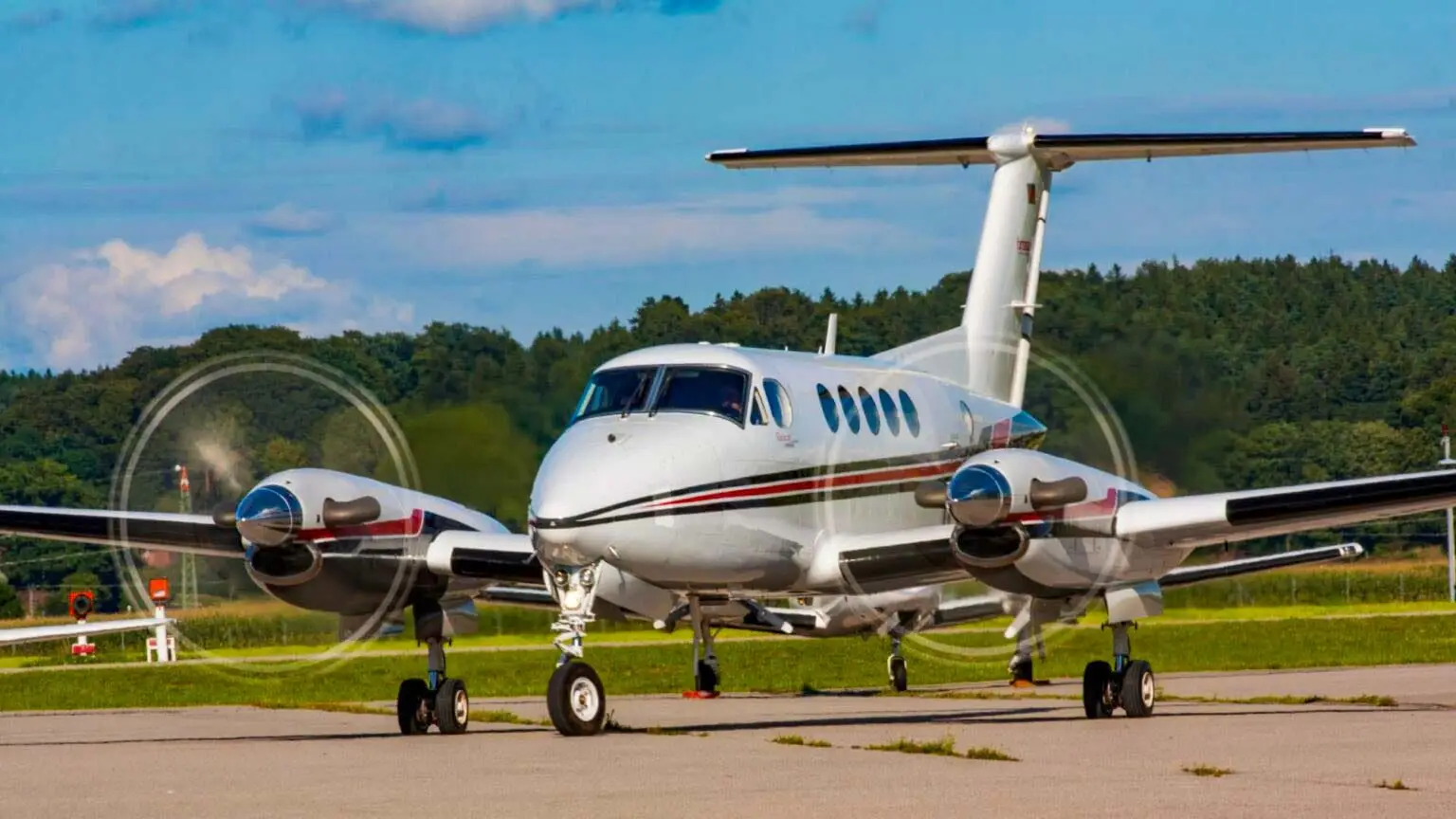
| Turboprop | 6 to 9 | Short runways, unpaved or remote strips, regional hops | Slower; less comfortable on long legs |
| Very light and light jet | 4 to 9 | Regional business trips of one to three hours | Limited luggage space and cabin height |
| Midsize | 7 to 9 | Longer domestic flights with a stand-up cabin | Range drops with a full cabin and headwinds |
| Super-midsize | 8 to 12 | Coast-to-coast and many continental flights nonstop | Higher hourly rate than midsize |
| Large and long range | 10 to 17 | Transatlantic and intercontinental routes, overnight flights | Larger runways and higher fees |
| Ultra long range and bizliner | 13 or more | Nonstop city pairs across continents, VIP groups | Limited availability; book early |
| Helicopter | 3 to 8 | City transfers, resorts, heliports, events | Weather limits and minimum billing |
| Airliner (group charter) | 30 or more | Teams, incentives, events and evacuations | Larger airports, longer lead times |
Five questions that decide the category
- How many people and how much luggage? Golf bags, skis and large suitcases can push a trip into the next category even with few passengers.
- What is the real range? Brochure range assumes few passengers and standard conditions. Winter headwinds, alternates and reserves cut it, sometimes forcing a fuel stop.
- Which runways? Short or high-altitude runways, such as those at many resort airports, limit which aircraft can land or take off fully loaded.
- How long is the flight? Over three hours, a stand-up cabin and an enclosed lavatory matter. Overnight flights call for a large cabin with flat beds.
- What is the budget? A one-category step up multiplies the hourly cost; a stop for fuel can be cheaper than a bigger aircraft.
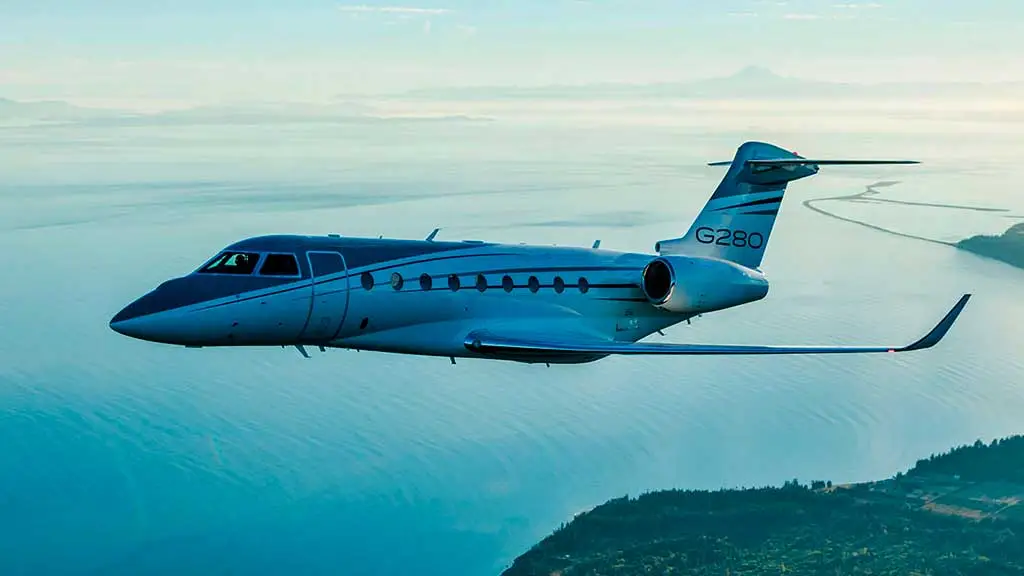
The aircraft below are frequent choices for charter in each category, each with its own technical page. For a buyer thinking beyond charter, the aircraft sales page explains when ownership starts to make sense.
Popular charter aircraft by category
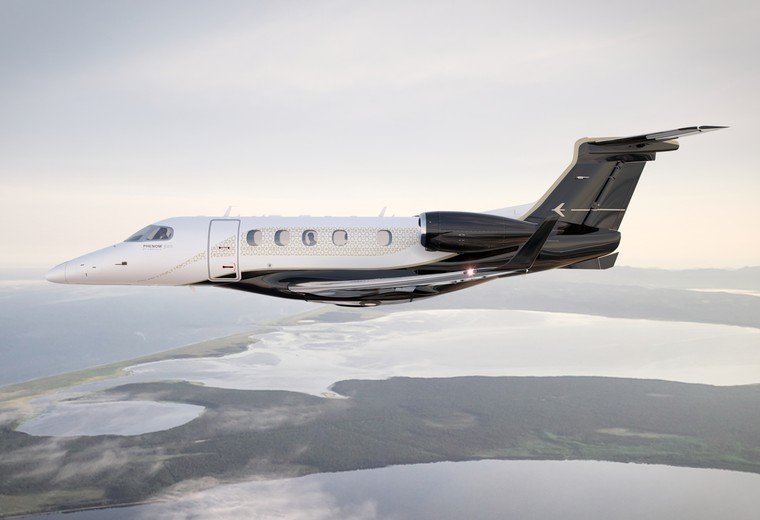
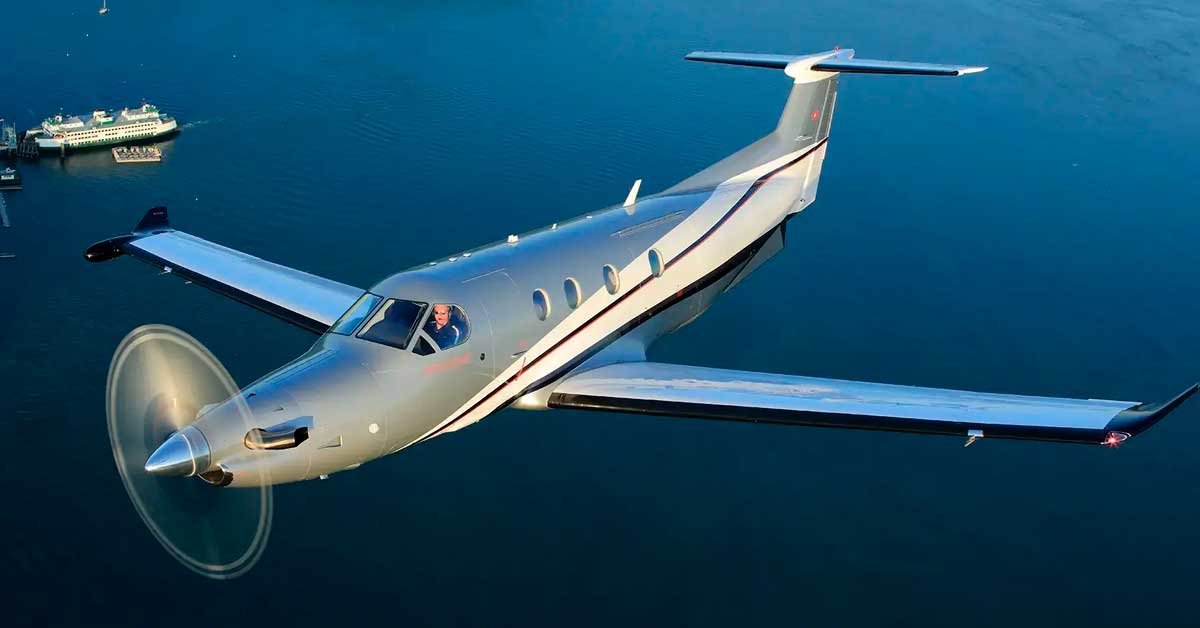 Turboélice monomotorPilatus PC-12Specifications, cabin, performance and charter options.Read moreJato · LightEmbraer Phenom 300ESpecifications, cabin, performance and charter options.Read more
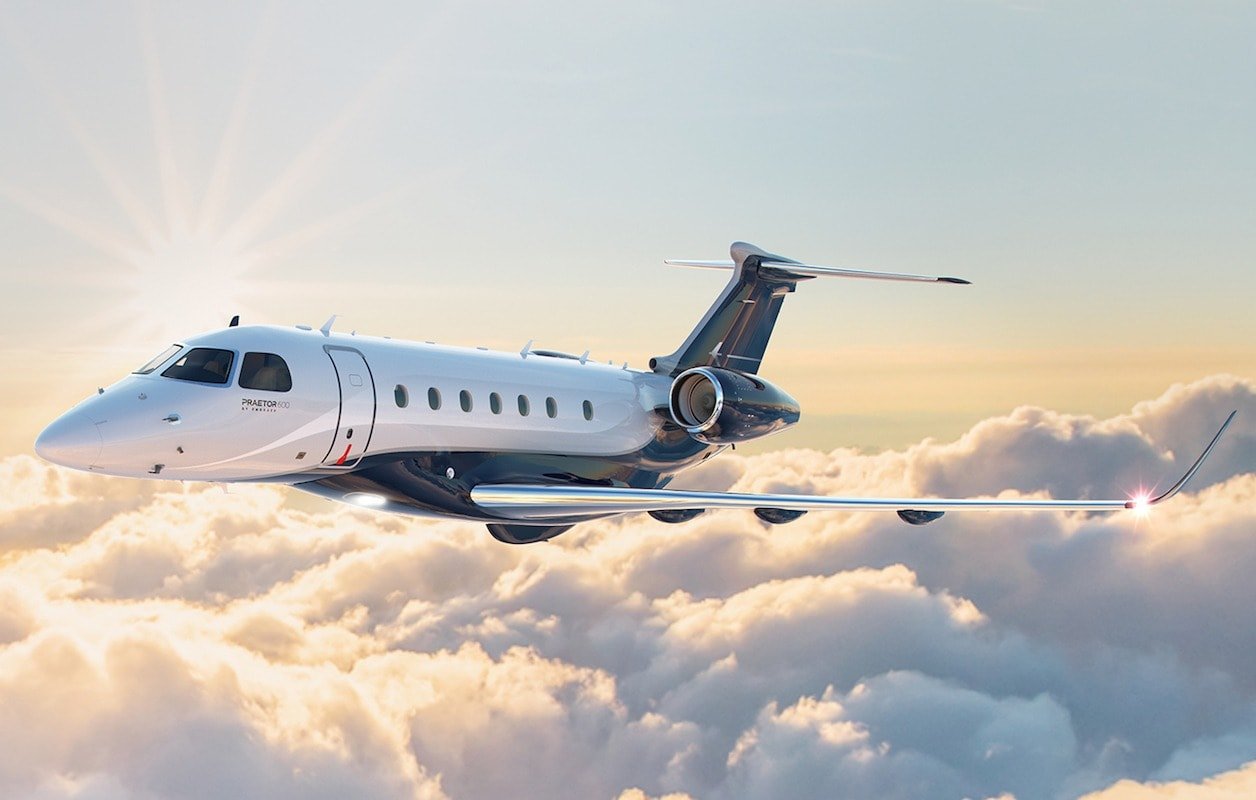 Jato · MidsizeEmbraer Praetor 500Specifications, cabin, performance and charter options.Read more
 Jato · Super-midsizeBombardier Challenger 3500Specifications, cabin, performance and charter options.Read more
 Jato · LargeBombardier Challenger 650Specifications, cabin, performance and charter options.Read more
 Jato · Ultra Long RangeBombardier Global 7500Specifications, cabin, performance and charter options.Read more
One-way, round trip, multi-leg or empty leg: which trip type fits?
The shape of the itinerary changes the air charter price as much as the aircraft does, because the client usually pays for every hour the aircraft flies for the trip, including the hours without passengers.
Round trip, same day or with the aircraft waiting
On a same-day round trip, the aircraft and crew wait at the destination. The client pays the two legs plus any waiting charges, and the day must fit within the crew's legal duty time. For trips of a few days, the operator compares two options: keep the aircraft and crew at the destination, paying overnight costs such as crew hotel, per diem and sometimes a daily standby fee, or fly the aircraft home and send it back, paying four legs instead of two. A good quote shows both.
One-way
A one-way charter often includes the return of the aircraft to its base, because the operator has no paying passenger for that leg. In busy markets with many aircraft based at both ends, one-way pricing can be lower when an operator expects to fill the return. Asking for aircraft based near the destination, or for a return that the operator is already planning, can reduce the cost.
Multi-leg trips and roadshows
Multi-city tours, investor roadshows and site visits are where air charter saves the most time. The operator plans each leg against crew duty and rest rules, which may require a second crew on long days. Embarque Oficial organizes roadshows and corporate programs with this kind of routing, and the corporate aviation page explains how companies structure recurring travel.
Empty legs
An empty leg is a positioning flight that an operator sells at a discount because the aircraft would fly empty anyway. The price can be attractive, but the route and time are set by the original charter, and the flight can be cancelled or moved if that charter changes. Empty legs suit flexible travelers with a backup plan, not a fixed meeting. Current opportunities are listed on the empty legs page.
| Trip type | What you pay for | Best for |
|---|---|---|
| Same-day round trip | Two legs plus waiting time | Meetings and site visits |
| Round trip over several days | Two legs plus overnights, or four legs | Holidays and events |
| One-way | Passenger leg plus return positioning, unless shared | Relocations and onward airline connections |
| Multi-leg | All legs, positioning and crew costs | Roadshows and tours |
| Empty leg | A discounted fixed leg | Flexible travelers |
- Round trips can include waiting or overnight costs
- One-ways often include the return to base
- Multi-leg days must fit crew duty limits
- Empty legs are cheaper but can be cancelled
- Ask the operator for both overnight and return-home options
- Aircraft based near your route cost less to position
How does group and airliner charter work, and what is ACMI?
When the group outgrows a business jet, air charter moves to airliners and to a different class of operator. In Brazil, the RBAC 135 air taxi framework uses a reference of up to 19 passenger seats; larger aircraft fly with airlines certified under RBAC 121. In the United States, on-demand Part 135 operations cover airplanes with up to 30 passenger seats and 7,500 pounds of payload; above that, charter is a supplemental operation under Part 121. In Europe, airlines and charter carriers hold an AOC under the same EASA framework as business aviation operators.
Who charters airliners
- Sports teams and their staff, with equipment and tight schedules.
- Corporate incentive trips, product launches, conventions and roadshows for large teams.
- Wedding parties, festivals and major events such as Formula 1 races.
- Governments, NGOs and companies for crew changes, repatriations and evacuations.
- VIP clients flying executive airliners, the so-called bizliners, with private cabins.
Single-entity charter versus public charter
A single-entity charter is paid by one party, such as a company or a team, for the whole aircraft; passengers do not buy individual tickets. A public charter sells individual seats to the public and, in the US, follows separate DOT rules under 14 CFR Part 380. Most corporate and event flights are single-entity charters.
ACMI, wet lease, damp lease and dry lease
ACMI stands for Aircraft, Crew, Maintenance and Insurance. In an ACMI or wet lease, the lessor supplies those four elements and the lessee, normally an airline, pays the direct operating costs: fuel, airport fees, ground handling, navigation charges and catering. Pricing is set per block hour, the time from leaving the gate to arriving at the gate, often with a minimum number of hours. A damp lease is a variation in which the lessee supplies its own cabin crew. A dry lease is the aircraft alone, usually for years, with no crew.
For a company or a team, ACMI is rarely the right product, because it leaves fuel, fees, permits and handling to the customer. Group clients normally buy a full charter at an all-in price per flight, and the charter provider deals with the rest. ACMI matters mainly to airlines that need capacity for a season, a route launch or a fleet gap.
Planning tips for group charter
- Confirm the exact seat count and the luggage, including equipment, before choosing the aircraft.
- Check which airports can handle the aircraft type and whether slots are needed.
- Ask for the passenger manifest deadline and document rules for every country on the route.
- Agree in writing how changes in passenger numbers affect the price.
Embarque Oficial arranges group flights with certified airlines and operators and coordinates the ground side; long-haul options are on the intercontinental flights page.
- Above 19 seats in Brazil, airline rules apply
- Above 30 seats in the US, charter is supplemental
- ACMI leaves fuel and fees to the customer
- Groups usually buy an all-in full charter
When does helicopter charter make sense?
Helicopter charter covers the trips that are too short or too congested for a jet: the transfer from an airport to a city heliport, the hop from a business district to a beach resort, a vineyard visit, the arrival at a racetrack or a festival, or the last leg to an island hotel. It is also the platform for aerial filming and photography, survey flights and many aeromedical missions. In the United States every helicopter charter, whatever its size, is an on-demand operation under Part 135; in Brazil, helicopter air taxi companies are certified by ANAC under RBAC 135 like airplane operators.
Single-engine or twin-engine?
Single-engine helicopters such as the Helibras Esquilo AS350 and the Bell 407 are efficient for short daytime transfers in good weather. Twin-engine helicopters such as the Agusta A109E Power and the Airbus H145 add redundancy, more cabin room and, depending on certification and crew, the ability to fly at night or in instrument conditions. Some cities, routes over water and corporate travel policies call for twin-engine aircraft. The full comparison of models, heliports and urban helicopter mobility is in the Executive Helicopters Guide.
What drives a helicopter charter quote
- Minimum billing: operators usually charge a minimum flight time per mission, even for a ten-minute hop.
- Positioning: the helicopter may need to fly from its base to the pickup point and back.
- Heliport fees and permissions: private and hotel heliports have their own rules and may require prior authorization.
- Weather: many helicopter flights are flown under visual flight rules, so low cloud, rain or poor visibility can delay or cancel the flight; the contract should say what happens then.
- Luggage: cabins are small and weight is critical, so bags may need to travel by car.
Helicopter and jet combined
The most efficient door-to-door itineraries combine a jet for the long leg and a helicopter for the last mile, for example a jet to a regional airport and a helicopter to a coastal resort. Embarque Oficial plans both legs together so that the helicopter is waiting at the FBO when the jet lands. Options for city and resort transfers are on the helicopter transfers page, and sightseeing flights are on the scenic flights page.
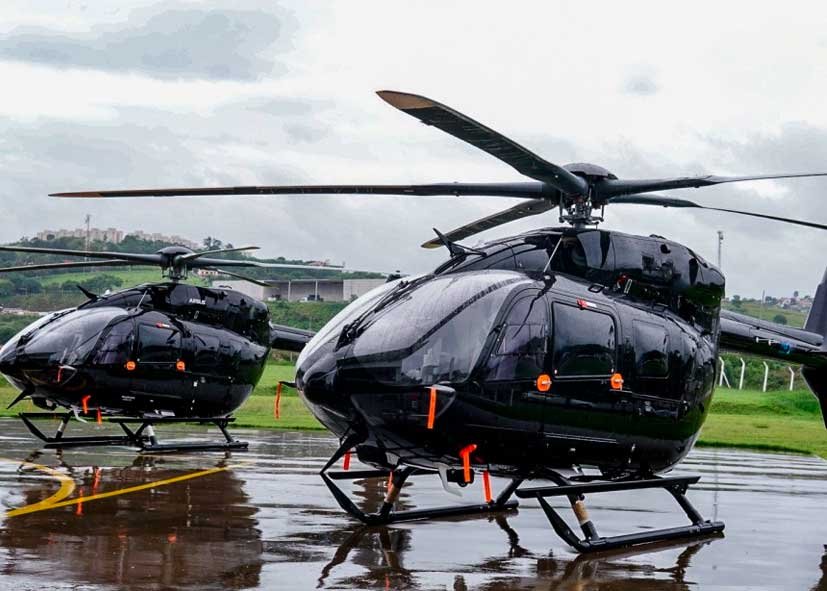
- Ideal for transfers under an hour
- Expect minimum billing per mission
- Twin-engine for night, water or policy needs
- Weather can delay visual flights
How is air charter priced?
There is no fare table in air charter. Each quote is built from the hourly rate of the aircraft, the hours it will fly for your trip, and a list of fees and costs that vary by airport, country and season. That is why two quotes for the same route can differ, and why the cheapest one is not always the best value.
| Component | What it covers | What makes it rise |
|---|---|---|
| Hourly rate | Aircraft, fuel, maintenance reserves, crew salaries and insurance | Larger category, fuel prices, peak demand |
| Positioning (ferry) | Empty legs to reach you and to return to base | Aircraft based far from your route |
| Daily minimum | A minimum number of billable hours per day | Short flights on a given day |
| Overnight and crew | Crew hotel, per diem, sometimes a standby fee | Multi-day trips with the aircraft waiting |
| Airport and handling fees | Landing, parking, FBO handling, navigation charges, slots | Major hubs, international airports |
| International costs | Overflight and landing permits, customs, foreign handling | Several countries on one trip |
| De-icing | Fluid and service to clear snow and ice before departure | Winter, large aircraft, cold airports |
| Taxes | National taxes on air transport | Country of departure and arrival |
| Extras | Catering, Wi-Fi, ground transport, special requests | Long flights and custom menus |
A reference for hourly rates
Private Jet Card Comparisons publishes average hourly rates for entry-level US jet cards, including fuel surcharges and the 7.5% federal excise tax. At the end of the third quarter of 2026 they were: turboprop US$5,022; very light jet US$7,341; light jet US$8,333; midsize US$9,607; super-midsize US$12,485; large cabin US$14,791; and ultra long range US$19,433. These figures are a market reference, not a quote: ad hoc charter prices move with availability, positioning and season, and prices in Brazil, Europe or the Middle East follow local costs and currencies. The same source reported an average daily minimum of 95 minutes, ranging from about 79 minutes for light jets to about 120 minutes for large cabins.
Costs that surprise first-time buyers
- De-icing: typical bills run about US$2,000 to US$10,000 depending on aircraft size and airport, and extreme cases have passed US$30,000 for large jets. It is usually passed on to the charterer and may be invoiced weeks after the flight.
- International handling: landing and overflight permits, foreign handling agents, customs and immigration add costs on every international leg, and the total depends on the airports and countries on the route.
- US taxes: in 2026, domestic US charter carries the 7.5% federal excise tax plus a segment fee of US$5.30 per passenger per segment; international arrivals and departures carry US$23.40 per passenger.
- Waiting time: a late passenger can push a crew beyond its duty limits and force an overnight.
Embarque Oficial does not publish a price list because each air charter is calculated for its own route and date; the quote shows what is included and what is not. Frequent flyers who prefer a fixed hourly rate can look at the Jet Card program.
- Compare the same category and the same legs
- Check whether positioning is included
- Ask which fees and taxes are excluded
- Budget for de-icing in winter
What should an air charter contract say, and how does cancellation work?
The charter agreement turns a quote into obligations. It should be short enough to read and precise enough to settle any disagreement. Whether the contract is signed with the operator directly or through a broker, the operator remains in operational control of the flight.
Essential clauses
- Parties: the operator's legal name, certificate and issuing authority, and the capacity in which any intermediary acts.
- Aircraft: model, registration and the rule for substitution with an equivalent or larger aircraft if the original is unavailable.
- Itinerary: airports, dates, scheduled times and how long the aircraft will wait for late passengers.
- Passengers and luggage: maximum number, weight and volume, pets, sports gear and items not allowed on board.
- Price: what is included and what is billed afterwards, the currency and the exchange rule.
- Payment: deposit, balance, due dates and how funds are handled before the flight.
- Changes and cancellation: the charges for each notice period and for changes of time, route or aircraft.
- Weather, safety and force majeure: the pilot in command's authority to delay or divert, and what happens to the money if the flight cannot be completed.
- Insurance and liability: the operator's coverage and limits.
- Law and jurisdiction.
How cancellation usually works
Most operators use a sliding scale: a small or no charge when the flight is cancelled well in advance, rising as departure approaches, up to the full price for a late cancellation or a no-show. The exact percentages and deadlines vary by operator, aircraft and season, and peak dates often carry stricter terms. Ask for the scale in writing before paying, and check what happens if the operator cancels for a technical reason: a replacement aircraft, a refund, or both options.
Refunds and liability
Under US Part 295, a charterer who does not receive required disclosures in time may cancel with a full refund, and brokers must refund cash or check payments within 20 days of a complete request. On international flights, the carrier's liability to passengers is generally governed by the Montreal Convention, whose limits are expressed in Special Drawing Rights and revised periodically, so the contract should state which regime applies. In Brazil, air taxi operators must carry RETA liability insurance under the rules of the national insurance regulator.
Red flags in a charter agreement
- No operator name, or only a brand name.
- Payment to a personal account or a company unrelated to the flight.
- Unlimited substitution rights with no equivalence rule.
- Vague language on extra charges such as handling or de-icing.
The aircraft brokerage page explains how contracts work when the goal is to buy an aircraft rather than charter one.
- Operator and certificate named in the contract
- Substitution rule: equivalent or better aircraft
- Cancellation scale in writing
- Weather and force majeure clauses clear
- Payment to the contracting company only
- Insurance limits stated
How does air charter work in and to Brazil?
Brazil is one of the largest business aviation markets in the world, with a continental territory and many destinations that airlines serve poorly. Air charter in Brazil is known as táxi aéreo and is regulated by the National Civil Aviation Agency, ANAC. The practical guide to the Brazilian market, with costs, airports and certification, is the Executive Air Taxi Guide.
Who can operate charter flights in Brazil
ANAC certifies air taxi companies under RBAC 135, the Brazilian equivalent of FAA Part 135, covering airplanes and helicopters with a reference ceiling of 19 passenger seats; larger aircraft are flown by airlines certified under RBAC 121. A privately registered aircraft flown under RBAC 91 cannot be sold for hire, and paid flights outside these rules are clandestine air taxi, which ANAC actively combats. Passengers can check the company and the aircraft registration in ANAC's Voe Seguro app or its web version.
The cabotage rule for foreign aircraft
Article 216 of the Brazilian Aeronautical Code (Law 7,565 of 1986) reserves domestic public air transport to Brazilian companies. In practice, a foreign charter operator can fly a client from abroad into Brazil and back out again, with the required ANAC authorizations and permits, but it cannot sell a flight between two Brazilian cities, such as São Paulo to Trancoso or Rio de Janeiro to Florianópolis. Those domestic legs must be flown by a Brazilian air taxi company. A foreign private aircraft flying its owner without payment follows different rules and needs its own flight authorization from ANAC, but it can never be used to sell domestic flights.
How a visitor should plan a Brazil itinerary
- Fly the international leg, for example New York to São Paulo or Miami to Recife, with a foreign operator certified by its own authority or with a Brazilian operator authorized for international flights.
- Make the first landing at an international airport with customs and immigration.
- Book domestic legs, for example São Paulo to Angra dos Reis by helicopter or to Fernando de Noronha by jet, with Brazilian operators certified by ANAC.
- Leave the country from an international airport on the same or another aircraft.
What makes Brazil different
- Helicopters are part of everyday mobility in São Paulo, with flights between rooftops, airports and coastal homes.
- Many resort airports have short runways, daylight-only operation or seasonal congestion, which limits aircraft choice.
- Peak periods such as New Year, Carnival and July school holidays fill aircraft and parking at popular destinations.
Embarque Oficial is headquartered in Florianópolis and arranges air charter across Brazil with operators certified by ANAC, as well as inbound flights from Europe, the United States and the Middle East on the intercontinental service.

- Domestic Brazilian legs need a Brazilian operator
- Foreign operators can fly in and out of Brazil
- Check operators in ANAC's Voe Seguro app
- Clear customs at an international airport first
What changes when you charter in Europe, the Middle East or the United States?
The principles of air charter are the same everywhere: a certified operator, a clear contract and a legal route. What changes from region to region is who may fly which legs, and how airports and permits work.
Europe
In the European Union, commercial operators hold an AOC issued by their national authority under the EASA Air Operations Regulation (EU) 965/2012, with common rules for commercial air transport (Part-CAT). The EU works as a single market: an operator licensed in one member state can fly charter between other member states, so a Malta- or Austria-based jet can fly Nice to Paris. Operators from outside the bloc need a Third Country Operator (TCO) authorization from EASA and the permits of each state, and they generally cannot sell flights between two points inside the EU. The United Kingdom, outside the EU since Brexit, has its own rules: the UK CAA publishes the list of AOC holders, requires sellers to tell passengers who operates the flight, and prosecutes illegal public transport. For summer on the Riviera, ski season in the Alps or events in Monaco, aircraft based in Europe usually offer the best combination of price and availability.
The Middle East
In the United Arab Emirates, cabotage by non-UAE carriers is prohibited unless specifically authorized. In Dubai, business aviation uses both Dubai World Central (DWC) at Dubai South and Dubai International (DXB), each with private aviation terminals and FBOs; the choice depends on slots, parking and where in the city the passengers are going. Saudi Arabia went the other way: from May 1, 2025, the General Authority of Civil Aviation (GACA) opened the domestic charter market to international on-demand operators that meet its requirements, as part of a plan to grow business aviation in the kingdom. Rules in the region change quickly, so each trip should be checked against current permits.
The United States
In the US, charter operators hold Part 135 certificates and brokers follow Part 295. Foreign-registered charter aircraft face strict cabotage rules: they may carry passengers between two US points only if those passengers arrived from abroad on that aircraft or will leave the country on it. Customs and Border Protection enforces the rule per passenger and can refuse boarding on the day. A visitor flying in on a foreign jet who wants to add New York to Miami should book that leg with a US operator.
| Region | Who certifies | Domestic legs by foreign operators |
|---|---|---|
| Brazil | ANAC (RBAC 135 and 121) | Not allowed for paid flights |
| United States | FAA (Part 135 and 121), DOT for brokers | Only passengers arriving or leaving on the same aircraft |
| European Union | National authorities under EASA rules | EU operators free across the EU; non-EU operators generally not |
| United Arab Emirates | GCAA | Prohibited unless specifically authorized |
| Saudi Arabia | GACA | Open to approved foreign on-demand operators since May 2025 |
With offices in Monaco, Dubai, London, Paris and New York, Embarque Oficial plans these cross-border itineraries for clients worldwide. The global air mobility page shows how multi-country trips are coordinated, and executive travel covers the ground arrangements.
- EU operators can fly between member states
- Non-EU operators need TCO and permits
- US cabotage is enforced per passenger
- Saudi Arabia opened domestic charter in 2025
How does Embarque Oficial arrange an air charter?
Embarque Oficial is a global executive aviation company, in the air since 2011, headquartered in Florianópolis, Brazil, with offices in Monaco, Dubai, London, Paris, Liverpool, Fort Lauderdale, New York, Las Vegas, Shanghai and Brazil. It serves clients around the world, in places such as Monaco, Dubai, Capri and Rome, and in every region of Brazil.
How we work
Our offices are not open to walk-in visitors. Clients are served online, on WhatsApp at +55 48 98877-0541, and in person at the point of departure: heliports, airports and FBOs in many places around the world. Embarque Oficial does not own a fleet. It organizes flights with operators certified by ANAC in Brazil and by the aviation authority of each country abroad, such as the FAA in the United States and the national authorities under EASA rules in Europe, and every quote names the operator responsible for the flight.
What we arrange
- Private jet and turboprop charter in Brazil and abroad, including intercontinental flights.
- Empty legs, helicopter transfers and scenic flights.
- Corporate programs, roadshows and the Jet Card.
- Aircraft management, aircraft buying and selling, financing, the Clube Infinity and concierge services.
- For more than ten years, special operations with authorized operators: air ambulance and aeromedical transport, urgent and high-value cargo, aerial filming and photography, and the transport of authorities with security.
To request a quote
Send the route, dates, preferred times, number of passengers and luggage, and any special needs through the contact page or on WhatsApp. The team checks aircraft and operators available for the date, explains the options and their differences, and confirms the operator, the aircraft and the conditions in writing before any payment. Response time depends on the route and on availability, so complex international trips are best started early.

- Global team, no walk-in offices
- Service online, on WhatsApp and at departure
- Certified operators named in every quote
- Jets, helicopters, groups and special operations
Glossary: key air charter terms
- Air charter
- The hire of an entire aircraft with crew for a trip defined by the client, operated by a company certified for commercial air transport.
- Air operator certificate (AOC)
- The certificate an aviation authority issues to a company allowed to carry passengers or cargo for hire. Part 135 in the US, RBAC 135 in Brazil and the EASA AOC in Europe are examples.
- Operational control
- The authority over the start, conduct and end of a flight, held by the certified operator, not by the broker or the passenger.
- Air charter broker
- A company that arranges charter flights with operators on behalf of clients. In the US, brokers are regulated by DOT under 14 CFR Part 295.
- Part 135
- The FAA rules for on-demand and commuter operations, covering airplanes with up to 30 passenger seats and 7,500 pounds of payload, and all helicopter charter.
- RBAC 135
- The ANAC regulation for air taxi companies in Brazil, the local equivalent of Part 135, with a reference ceiling of 19 passenger seats.
- Positioning (ferry) leg
- A flight without passengers to bring the aircraft to the departure point or back to base, usually billed to the charter.
- Empty leg
- A positioning flight sold at a discount. The route and time are fixed and the flight can be cancelled if the original charter changes.
- Daily minimum
- The minimum number of billable flight hours an operator charges per day of use, even when the flights are shorter.
- ACMI (wet lease)
- A lease in which the lessor provides Aircraft, Crew, Maintenance and Insurance, priced per block hour, while the lessee pays fuel and fees.
- Block hour
- The time from when the aircraft leaves the gate or parking position until it stops at the destination, the usual unit for airliner charter pricing.
- Cabotage
- Carrying paying passengers between two points in the same country with a foreign operator or aircraft, restricted or banned in most countries.
- Federal excise tax (FET)
- The US tax on domestic air transport, 7.5% of the price in 2026 plus a segment fee per passenger, also charged on charter flights.
- IS-BAO
- The International Standard for Business Aircraft Operations, an ICAO-based safety standard created by IBAC in 2002, with three stages of registration.
Frequently asked questions about air charter
What is air charter?
Air charter is the hire of a whole aircraft, with its crew, for a trip the client defines: route, date, time and passengers. The flight is operated by a company certified for commercial air transport, such as a Part 135 operator in the US, an RBAC 135 air taxi company in Brazil or an EASA AOC holder in Europe. The client pays for the aircraft, not for individual seats.
How do I charter a private jet?
Define the route, dates, passengers and luggage, then request quotes that name the aircraft model, registration and operator. Compare quotes for the same category and legs, verify the operator's certificate, read the charter agreement, pay and send passenger data. Embarque Oficial handles these steps through its contact page or WhatsApp and confirms the operator in writing.
What is the difference between a charter broker and an operator?
The operator holds the air operator certificate and keeps operational control: it employs the crew, maintains the aircraft and decides whether the flight can go. A broker arranges the flight with one or more operators, compares options and manages the trip for the client. In the United States, brokers must follow DOT rules under 14 CFR Part 295.
What does DOT Part 295 require from air charter brokers?
Part 295, in force since February 14, 2019, requires US air charter brokers to use only authorized carriers, to state in advertising that they are brokers and not carriers, and to disclose before contracting the operator's name, the capacity in which they act and their liability insurance. On request they must disclose total cost and third-party fees. Missing disclosures give the client a right to a full refund.
Is it legal to charter a private aircraft from its owner?
Only if the flight is operated by a company holding a commercial certificate, such as Part 135 in the US or RBAC 135 in Brazil, and the aircraft is listed on that certificate. An owner who sells flights on a privately registered aircraft under Part 91 or RBAC 91 is running an illegal charter, and passengers may be uninsured and without regulatory oversight.
What are ARGUS, Wyvern and IS-BAO?
They are independent safety audit programs for charter operators. ARGUS rates operators Gold, Platinum or Platinum Elite; Wyvern awards the Wingman and Wingman PRO certifications after on-site audits; and IS-BAO, created by IBAC in 2002, registers operators in three stages of safety management maturity. They are voluntary and complement, but never replace, the regulator's certificate.
How much does air charter cost per hour?
There is no fixed price. As a market reference, average US jet card rates at the end of the third quarter of 2026 ranged from about US$5,000 per hour for turboprops and US$8,300 for light jets to about US$14,800 for large cabin jets and US$19,400 for ultra long range jets. Ad hoc charter quotes also depend on positioning, fees, taxes and season.
What extra costs can appear on a charter invoice?
Common extras include positioning legs, overnight crew costs, waiting time, de-icing, landing and handling fees, overflight permits, catering, Wi-Fi and taxes. De-icing alone typically costs US$2,000 to US$10,000 per event and is often billed after the flight. A clear quote lists what is included and what will be charged afterwards, so the client can compare offers fairly.
Are empty legs a good way to save on air charter?
Empty legs can cost much less than a normal charter because the aircraft would fly empty anyway. The trade-off is that the route and time are set by the original booking, and the flight can be cancelled or moved if that booking changes. They suit flexible travelers with a backup plan. Embarque Oficial lists current offers on its empty legs page.
How can I charter an aircraft for a large group?
Groups larger than business jet cabins fly on airliners operated by airlines: RBAC 121 carriers in Brazil above the 19-seat air taxi reference, or supplemental Part 121 carriers in the US above 30 seats. Most corporate, sports and event groups buy a full charter at an all-in price. ACMI wet leases, which leave fuel and fees to the customer, are mainly used by airlines.
Can a foreign aircraft fly me between two cities in Brazil?
Not on a paid flight. Article 216 of the Brazilian Aeronautical Code reserves domestic public air transport to Brazilian companies. A foreign charter operator can fly you into and out of Brazil, but legs between Brazilian cities must be operated by an ANAC-certified Brazilian air taxi company. Embarque Oficial coordinates both parts of the trip as a single itinerary.
Can a European or US charter jet fly domestic legs in another country?
Usually not. EU-licensed operators can fly between EU member states, but non-EU operators generally cannot sell intra-EU flights. In the US, a foreign charter aircraft may move passengers between US points only if they arrived from abroad on that aircraft or leave on it. Saudi Arabia opened its domestic charter market to approved foreign operators from May 1, 2025.
What happens if I cancel a charter flight?
Most operators apply a sliding cancellation scale: little or no charge well before departure, increasing as the flight approaches, up to the full price for very late cancellations or no-shows. The percentages vary by operator, aircraft and season, and peak dates are often stricter. Always get the cancellation terms in writing before paying, along with the rules for weather and technical cancellations.
When is helicopter charter better than a jet?
Helicopter charter is best for short trips of up to about an hour, such as airport to city transfers, rooftop to resort flights and access to islands, vineyards or events without runways. It is also the platform for aerial filming. Expect minimum billing per mission, tight luggage limits and weather restrictions. See the helicopter transfers page for options.
Does Embarque Oficial own the aircraft it charters?
No. Embarque Oficial does not own a fleet. It organizes flights with operators certified by ANAC in Brazil and by the aviation authority of each country abroad, such as the FAA or EASA member-state authorities, and names the responsible operator in every quote. Service is online, on WhatsApp at +55 48 98877-0541 and in person at airports, heliports and FBOs.
Sources and references
- GovInfo: 14 CFR Part 295, Air Charter Brokers (full text, 2023 edition)
- NBAA: New air charter broker rule takes effect (Feb 2019)
- eCFR: 14 CFR 110.2, definitions of on-demand and supplemental operations
- AVweb: FAA adds certified Part 135 operators to Safe Air Charter website (May 2026)
- UK CAA: Making sure your flight is legal
- ARGUS: The ARGUS audit ecosystem
- AIN: ARGUS enhances and expands Gold audit standard (Oct 2025)
- Wyvern: White Cloud Charter renews its Wyvern Wingman certification
- Private Jet Card Comparisons: Jet Linx maintains Wyvern Wingman PRO certification (Jun 2026)
- Schubach Aviation: What private jet flyers need to know about IS-BAO (Jun 2025)
- ACSF: Industry Audit Standard
- Private Jet Card Comparisons: Jet card prices fall 3.1% in Q3 2026 (Oct 2026)
- Private Jet Card Comparisons: What you need to know about deicing before you get the bill (Nov 2024)
- FAA: Current Aviation Excise Tax Structure and Rates 2026
- OAG: What is wet leasing?
- Universal Weather: US cabotage restrictions for non-US business aircraft
- Agência Gov: ANAC's Voe Seguro app for checking air taxi companies (Jan 2024)
- Melhores Destinos: foreign airlines and domestic flights in Brazil (Art. 216 of the Brazilian Aeronautical Code)
- AIN: GACA opens Saudi domestic charter market to foreign operators (Feb 2025)
- Jetex: Cabotage in Europe, the Middle East and Africa
Written by Régis Hahns, CEO of Embarque Oficial, with the company's editorial team, based on the sources above. Rules, prices and lead times change: always confirm with ANAC, the manufacturer or a specialist before deciding. Embarque Oficial serves clients worldwide, from Monaco, Dubai, Capri and Rome to every region of Brazil, and arranges each flight with operators certified by ANAC, Brazil's civil aviation authority, in Brazil and by the local aviation authority abroad.
Keep exploring the Knowledge Hub
Complete guideExecutive Air Taxi GuideHow charter works in Brazil, what it costs, ANAC rules and how to book safely.Read more Complete guidePrivate Jets GuideCategories, range, cabin, costs and how to choose the right jet for each mission.Read moreComplete guideExecutive Helicopters GuideModels, single vs. twin engine, helipads and urban mobility by helicopter.Read moreComplete guideAircraft Acquisition GuideEvaluation, pre-purchase inspection, contracts, ANAC registration and pitfalls.Read more
 Complete guideAircraft Management GuideCosts, maintenance, crew, compliance and how to lower the cost per flight hour.Read more
 Embarque Oficial serviceRequest an air charter quoteJets, turboprops and helicopters with certified operators worldwide.Read more
Ready to fly
Tell us where, we take care of the rest
Confidential quotes and 24/7 support, every day of the year.
WhatsApp +55 48 98877-0541 · sales@embarqueoficial.com