
Private Aviation · Global guide with a Brazil lens
Private aviation: how it works worldwide and how to fly private to Brazil
Charter, jet cards, fractional ownership, managed aircraft and helicopters; the rules of the FAA, EASA, ANAC and GCAA; permits, cabotage and airports in Brazil; the routes that connect Brazil to Florida, New York, Europe, Monaco and Dubai; and what private aviation really costs.
By Régis Hahns, CEO of Embarque Oficial · LinkedIn
- 2011flying since
- 34 minread
- 20sources cited
What is private aviation?
Private aviation is travel on a whole aircraft, a business jet, turboprop or helicopter, where the client controls the schedule, the route and the passenger list instead of buying an airline seat. People access private aviation through on-demand charter, empty legs, jet cards, fractional ownership, whole ownership or managed aircraft. When the flight is paid for, it must be operated by a certified company: Part 135 in the United States, an AOC in Europe and the Gulf, or RBAC 135 under ANAC in Brazil.
On this page
- What is private aviation and how is it different from commercial and business aviation?
- What are the ways to fly private: charter, jet cards, fractional, ownership and managed aircraft?
- Which aircraft are used in private aviation and how far can they fly?
- How do helicopters fit into private aviation, from Monaco to São Paulo?
- Who regulates private aviation worldwide? FAA, EASA, ANAC and GCAA compared
- How do you fly private to Brazil? Permits, entry airports, customs and visas
- Flying private within Brazil: cabotage rules and the main executive airports
- What are the most popular private aviation routes to, from and within South America?
- How much does private aviation cost? Hourly ranges, jet cards and fractional
- How safe is private aviation and how do you check an operator?
- Private aviation and sustainability: SAF mandates in Europe and Brazil
- How does Embarque Oficial organize private aviation worldwide?
- Glossary
- Frequently asked questions
What is private aviation and how is it different from commercial and business aviation?
Private aviation is any flight in which the passenger, the family or the company controls the aircraft, the schedule and the route, instead of buying a seat on a scheduled airline. The passenger chooses when to leave, which airport to use, who flies along and where the aircraft goes next. Private aviation covers small turboprops and helicopters, light and midsize business jets, long-range jets that cross oceans nonstop and, at the top of the market, VIP-configured airliners.
The vocabulary overlaps, and it helps to separate the terms. Commercial aviation is the scheduled airline network: fixed routes, fixed timetables and tickets sold seat by seat. General aviation is everything that is not scheduled airline or military flying, from flight schools to agricultural aircraft. Business aviation, also called executive aviation or corporate aviation, is the part of general aviation that uses aircraft as a business tool. In everyday language, private aviation, flying private, private jet travel and business aviation describe the same experience: a whole aircraft working for one client.
Private flights are not all the same in the eyes of the law
Private aviation has one distinction that matters more than any other. When an owner flies their own aircraft and nobody pays for the transportation, the flight is a private operation, under rules such as FAA Part 91 in the United States or RBAC 91 in Brazil. When a client pays to be carried, the flight is commercial air transportation, even if it feels private, and it must be operated by a certified company: a Part 135 operator in the United States, an RBAC 135 air taxi company in Brazil or an operator holding an air operator certificate (AOC) in Europe and the Middle East. Every legitimate charter, jet card flight and empty leg sits on this second side of the line.
Why people and companies fly private
- Time: door-to-door journeys shrink because passengers use smaller, closer airports and board through a private terminal (FBO) minutes before departure.
- Reach: private aircraft land at thousands of airports and helipads that airlines do not serve, from mountain resorts to coastal towns and farms.
- Privacy and security: confidential meetings, public figures and families travel without crowds.
- Productivity: several cities in one day, with the aircraft waiting between meetings.
- Special missions: aeromedical flights, urgent cargo, aerial filming and the transport of authorities.
Brazil is one of the places where all of this is most visible. According to ANAC data compiled by ABAG and published by Forbes Brasil, the country had 11,362 operational business aircraft in May 2026, including 1,193 jets, a 12.5% increase in jets in twelve months, and is the world's second-largest business aviation market, behind only the United States. For the full industry overview, read the Business Aviation Guide; companies that use aircraft as a business tool will find more on our corporate aviation page.

- You control the schedule, route and passenger list
- Access to thousands of airports and helipads
- Private terminals (FBOs) instead of airline terminals
- Paid flights must use a certified operator
What are the ways to fly private: charter, jet cards, fractional, ownership and managed aircraft?
There are six main ways to access private aviation, and each one balances fixed cost, flexibility and commitment differently. The right model depends on how many hours a year you fly, how predictable your routes are and how much capital you want to tie up in an aircraft.
1. On-demand charter
On-demand charter is the rental of a whole aircraft, with crew, for a specific trip: one way, round trip or a multi-leg itinerary. You pay only for the flight, with no membership and no fixed cost. The operator holds the certificate, controls the crew and the aircraft, and quotes based on flight hours, positioning, fees and crew expenses. Charter is the entry door to private aviation and the most flexible model, because you can pick the right aircraft for each mission. Our air charter page covers every charter format in depth.
2. Empty legs
Empty legs are repositioning flights that would otherwise fly without passengers, sold at a reduced price. The trade-off is rigidity: the route and time belong to the original trip and can change or be cancelled. Follow the empty leg offers if your dates are flexible.
3. Jet cards
A jet card is a prepaid or committed block of flight hours or funds with a set hourly rate, guaranteed availability under agreed conditions and no aircraft purchase. Cards suit people who fly regularly, roughly 25 to 100 hours a year, and want predictable pricing without negotiating every trip. Read the fine print: peak days, minimum daily charges, cancellation windows and the regions where availability is guaranteed. See the Embarque Oficial Jet Card.
4. Fractional ownership
In fractional ownership you buy a share of a specific aircraft, for example 1/16 of a jet, which in the largest programs corresponds to about 50 occupied flight hours a year. You then pay a monthly management fee and an hourly fee for the hours you fly. The program manager runs crews, maintenance and scheduling. In the United States fractional programs follow Part 91 Subpart K; Brazil has its own shared-ownership rules in RBAC 91, explained in the Business Aviation Guide.
5. Whole ownership
Whole ownership gives maximum control and the highest fixed cost: hangar, crew salaries and training, insurance, maintenance programs, navigation charges and depreciation. It usually makes sense from a few hundred hours a year, or when the mission needs a specific cabin or range at short notice. If you are considering buying an aircraft, the Aircraft Purchase Guide walks through valuation, pre-purchase inspection and registration.
6. Managed aircraft
A managed aircraft is owned by you and run by a management company that hires the crew, plans maintenance, handles compliance and, if you wish and the rules allow, places the aircraft on a certified operator's certificate so it can fly charter when you are not using it, offsetting part of the fixed cost. Learn more about aircraft management.

| Model | Fixed cost | Commitment | Flexibility | Best for |
|---|---|---|---|---|
| On-demand charter | None | Per trip | High | Occasional or varied trips |
| Empty legs | None | Per leg | Very low | Flexible dates, lower price |
| Jet card | Deposit or commitment | Months to a year | High | Regular flyers |
| Fractional | Share plus monthly fee | Usually years | Medium to high | Frequent flyers without staff |
| Whole or managed ownership | Full | Long term | Maximum | Intensive use, specific missions |
Which aircraft are used in private aviation and how far can they fly?
Private aviation uses a wide spectrum of aircraft, and the category determines range, cabin size, runway needs and price. Choosing the smallest aircraft that does the mission comfortably and safely is the single biggest cost decision a private flyer makes.
Turboprops
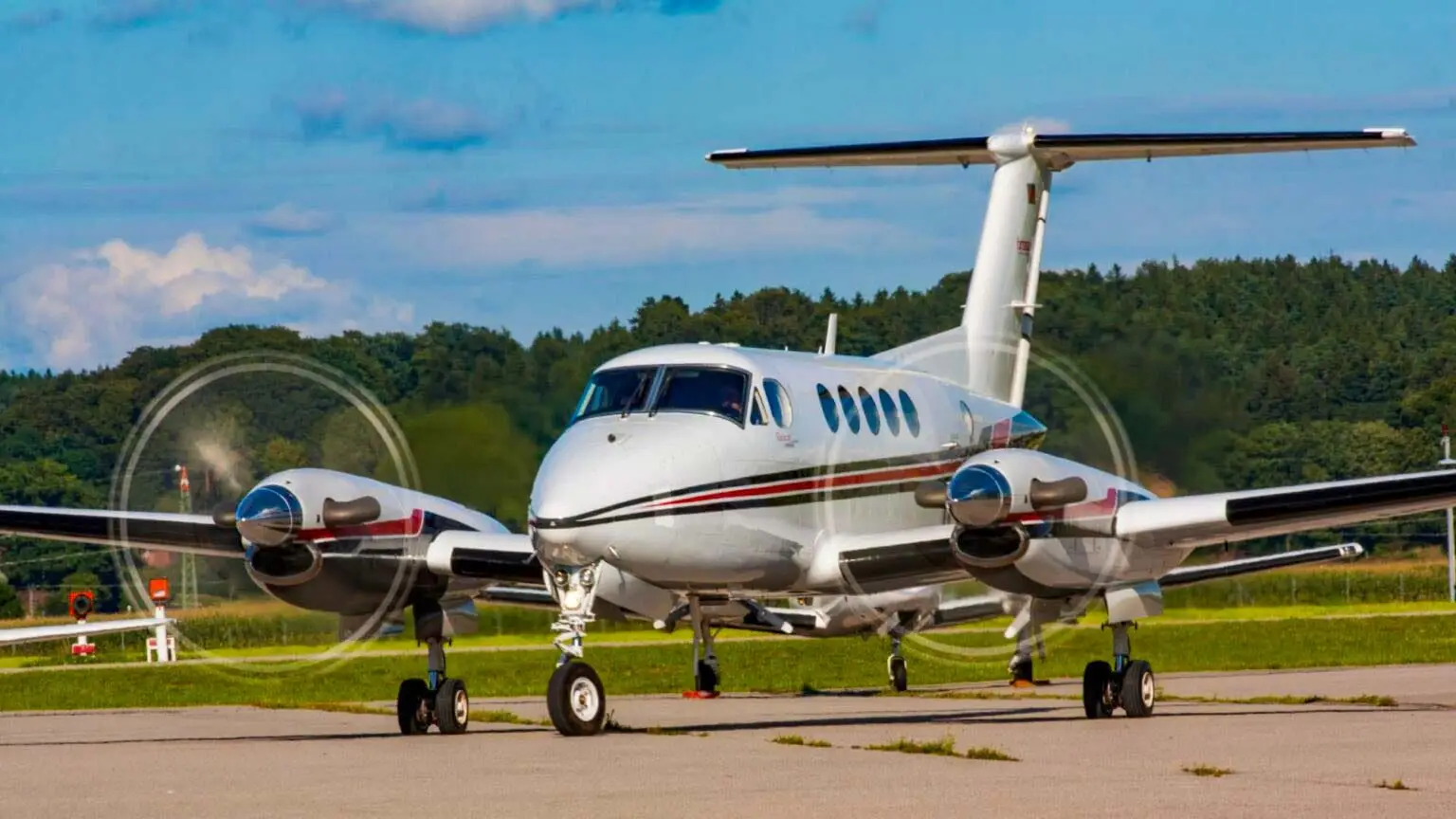
Turboprops such as the Pilatus PC-12 and the Beechcraft King Air family are efficient on short and medium legs and can use shorter runways, including many unpaved strips in Brazil's interior. They are popular for farm, mining and regional business trips.
Very light and light jets
Very light and light jets carry four to eight passengers on trips of roughly one to three hours. In Brazil, the Embraer Phenom 300E is a reference in the light jet class and covers routes such as São Paulo to Rio de Janeiro, Florianópolis, Belo Horizonte or Punta del Este.
Midsize and super-midsize jets
Midsize jets offer a stand-up or near stand-up cabin and longer range. Super-midsize jets such as the Bombardier Challenger 3500 and the Embraer Praetor 600 add a flat floor, more baggage and enough range for most continental trips, such as São Paulo to Buenos Aires, Santiago or Bogotá.
Large-cabin and ultra-long-range jets
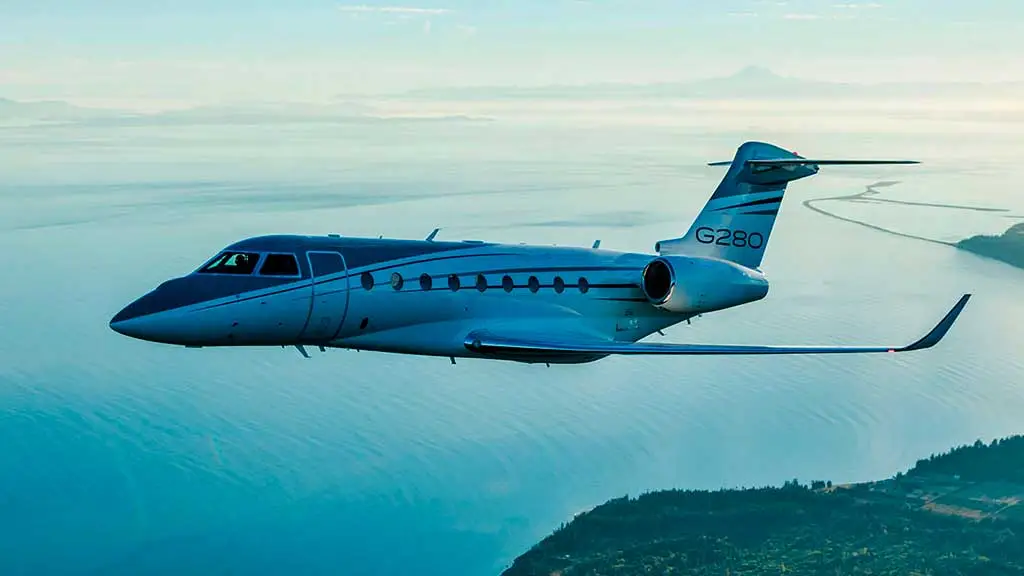
Large-cabin and long-range jets cross oceans. Gulfstream publishes a maximum range of 7,750 nautical miles for the Gulfstream G700, with up to 19 passengers depending on configuration, which places a city pair such as Dubai to São Paulo, about 6,580 nautical miles great-circle, within reach of this class under the manufacturer's conditions. Real-world range depends on winds, payload, temperature and reserves.
Helicopters
Helicopters complete the picture for short urban and coastal hops, airport transfers and access to places without a runway. The next section is dedicated to them.
| Category | Typical passengers | Typical mission | Example |
|---|---|---|---|
| Turboprop | 6 to 9 | Short regional legs, short runways | Pilatus PC-12, King Air B200 |
| Light jet | 5 to 8 | 1 to 3 hours, domestic | Phenom 300E, Citation CJ3 |
| Midsize and super-midsize | 7 to 10 | Continental trips | Praetor 500, Challenger 3500 |
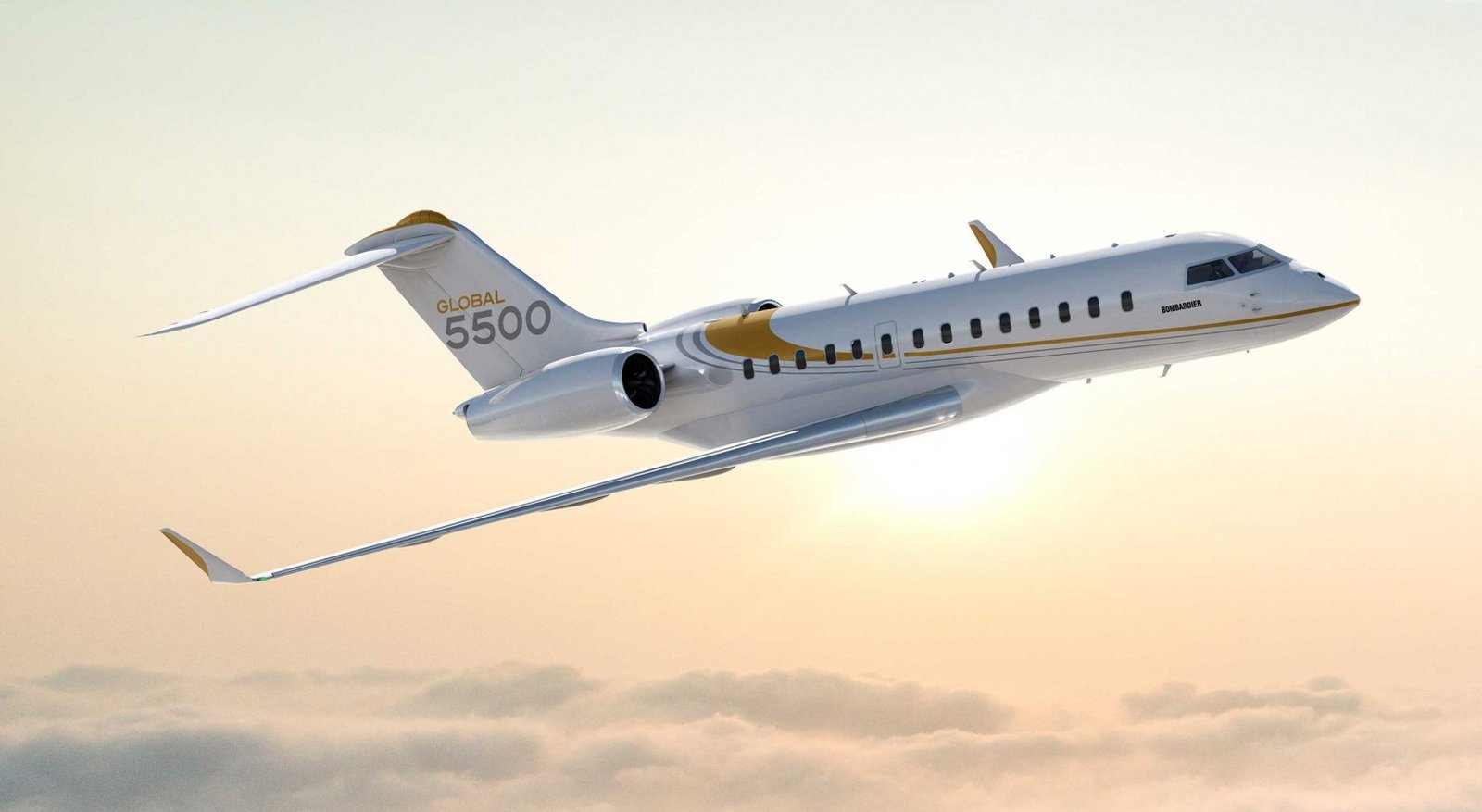
| Large cabin and long range | 10 to 16 | Transatlantic, Americas | Challenger 650, Global 6500 |
| Ultra long range | Up to 19 | Intercontinental nonstop | Gulfstream G700, Global 7500 |
Passenger counts vary with each aircraft's configuration and the operator's certification. To compare cabins, range and performance in detail, see the Private Jets Guide.
Aircraft across the private aviation spectrum
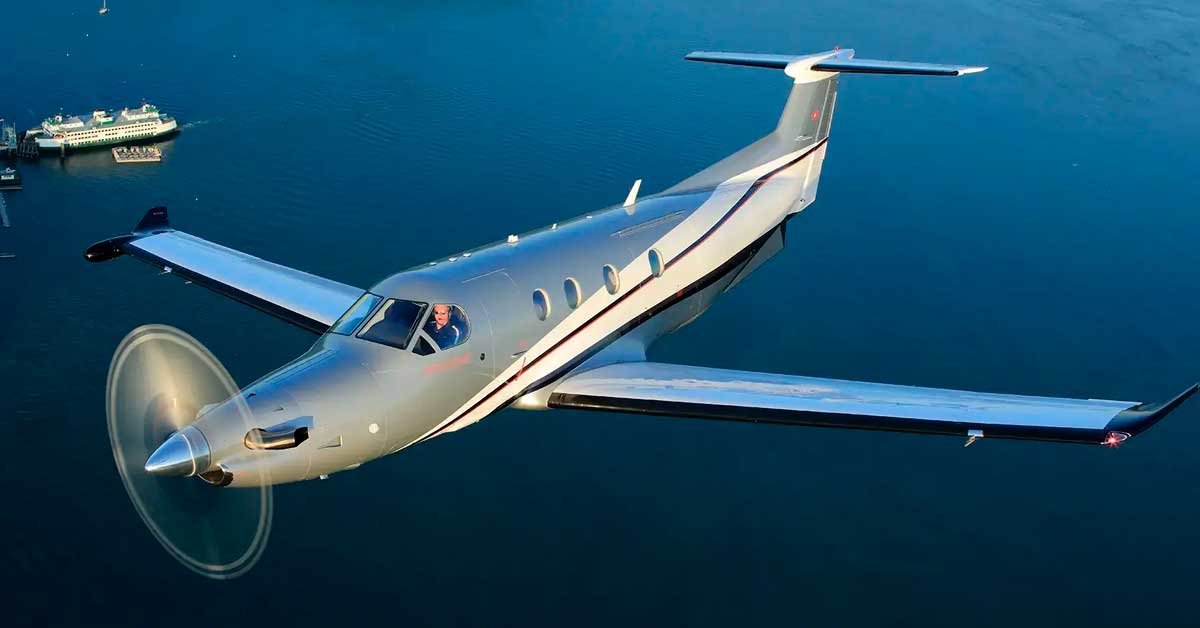 Turboélice monomotorPilatus PC-12Specifications, cabin, performance and charter options.Read more
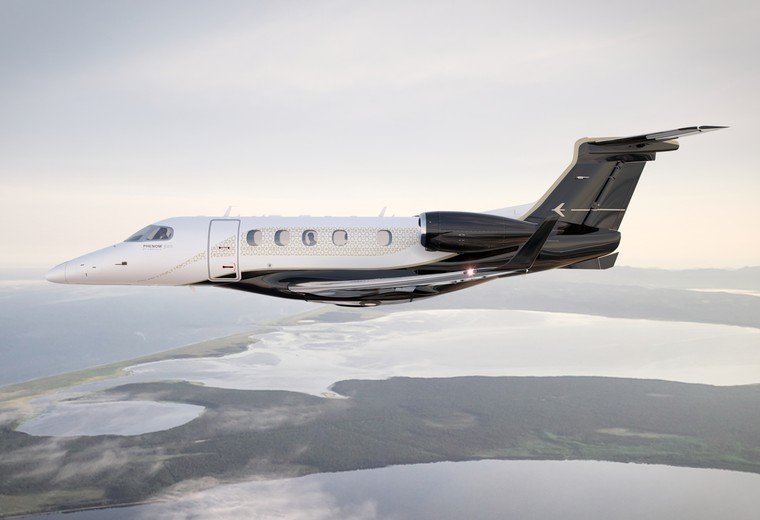 Jato · LightEmbraer Phenom 300ESpecifications, cabin, performance and charter options.Read more
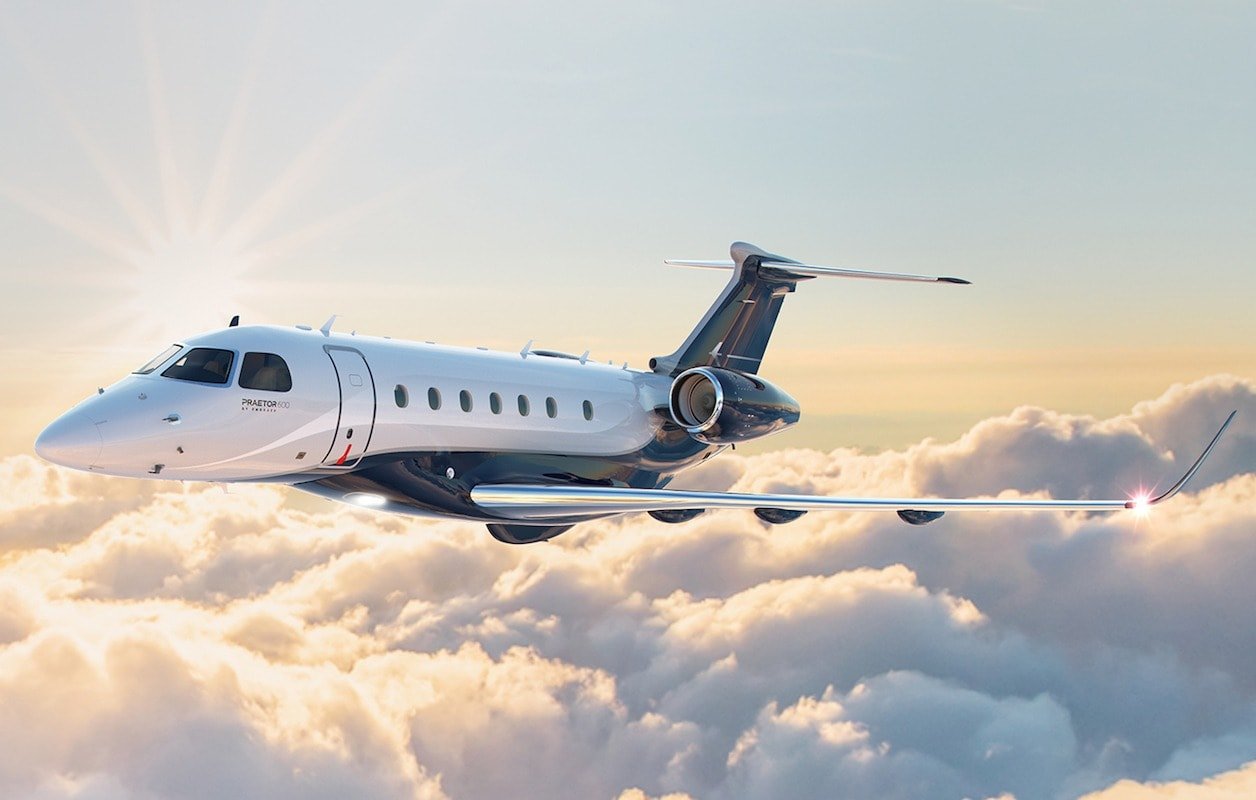 Jato · MidsizeEmbraer Praetor 500Specifications, cabin, performance and charter options.Read moreJato · Super-midsizeBombardier Challenger 3500Specifications, cabin, performance and charter options.Read more
 Jato · Long RangeBombardier Global 6500Specifications, cabin, performance and charter options.Read more
 Jato · Ultra Long RangeGulfstream G700Specifications, cabin, performance and charter options.Read more
How do helicopters fit into private aviation, from Monaco to São Paulo?
Helicopters are the part of private aviation that solves the last mile. A jet can bring you across an ocean in a night, but the airport is rarely where you need to be. A helicopter connects the airport to a city-center helipad, a hotel with a helipad, a yacht, a mountain lodge or a beach house in minutes, avoiding traffic that can take hours by road.
The Côte d'Azur: Nice to Monaco
The Riviera is the classic example. According to Visit Monaco, the official tourism office, the helicopter trip from Nice Côte d'Azur airport to the Monaco Heliport, in the Fontvieille district, takes around seven minutes, and the regular shuttle runs about fifty return flights a day, with private flights also available to destinations in France, Switzerland and Italy. A private jet arriving at Nice and a helicopter waiting on the apron is one of the most common combinations in European private aviation.
São Paulo and Rio de Janeiro
Brazil has one of the world's most active urban helicopter scenes. In São Paulo, executives use helicopters to move between the business districts, the airports and weekend destinations on the coast and in the countryside. In Rio de Janeiro, helicopters link the city to Angra dos Reis, Búzios and the offshore oil industry. For travelers arriving on an international jet, an executive helicopter transfer is often the fastest way from the airport to the hotel or the meeting.
Single-engine or twin-engine?
Single-engine turbine helicopters are efficient for short daytime trips with few passengers. Twin-engine helicopters such as the Airbus H145 add engine redundancy, more cabin space and, depending on equipment and certification, the ability to fly under instrument rules, which is why corporate and VIP clients often prefer them over cities and water. Many hotel and offshore helipads also set their own requirements on aircraft size and type.
What to check before a helicopter flight
- The operator's certificate for paid passenger transport in the country where you fly.
- Whether the landing site is a registered helipad and who authorizes the landing.
- Baggage limits: helicopter holds are much smaller than jet holds.
- Weather minimums for visual flights, especially on the coast and in mountains.
The Executive Helicopters Guide explains models, helipads and urban mobility in depth.
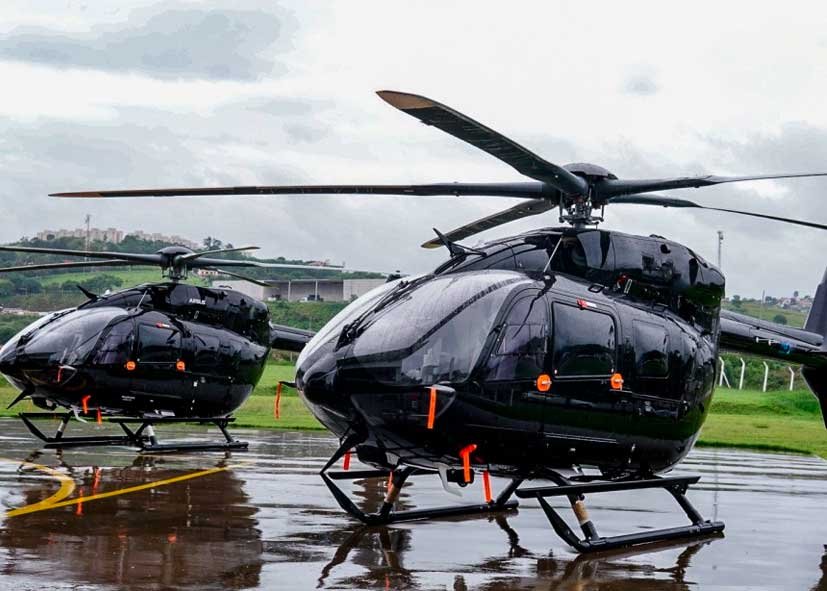
- Airport-to-helipad transfers in minutes
- Access to yachts, hotels with helipads and resorts
- Twin-engine options for city and over-water flights
- Small baggage holds: travel light
Who regulates private aviation worldwide? FAA, EASA, ANAC and GCAA compared
Private aviation is regulated country by country, on a common foundation: Annex 6 of the Chicago Convention, managed by ICAO, separates private operations from commercial air transport and requires commercial operators to hold a certificate. Each authority translates that logic into its own rules. Knowing the four references below lets you ask the right question anywhere in the world: who is the certified operator of this flight, and under which rules?
United States: FAA Part 91 and Part 135
In the United States, the FAA (Federal Aviation Administration) regulates private flights under 14 CFR Part 91 and on-demand charter under Part 135. According to the federal definitions in 14 CFR 110.2, on-demand operations cover airplanes with up to 30 passenger seats and a payload capacity of up to 7,500 pounds, plus helicopters; larger charters are supplemental operations under Part 121. Fractional ownership programs run under Part 91 Subpart K. In May 2026, according to AVweb, the FAA added a searchable list of certified Part 135 operators to its Safe Air Charter website, to help travelers avoid illegal charter, the so-called gray charter in which an aircraft carries paying passengers under private Part 91 rules.
European Union: EASA Air OPS
In Europe, Regulation (EU) No 965/2012, known as Air OPS and overseen by EASA (European Union Aviation Safety Agency), classifies operations as commercial air transport (CAT), non-commercial operations with complex aircraft (NCC), non-commercial operations with other aircraft (NCO) and specialized operations (SPO). A charter operator needs an AOC issued by its national authority, such as France's DGAC, under common European rules. Operators from outside the bloc need an EASA third-country operator (TCO) authorization for commercial flights into the EU.
Brazil: ANAC, RBAC 91 and RBAC 135
In Brazil, ANAC (Agência Nacional de Aviação Civil), Brazil's civil aviation authority, certifies air taxi companies under RBAC 135, while private flights follow RBAC 91. Airspace and air traffic are managed by DECEA, under the Brazilian Air Force. Paid transport by an uncertified operator is illegal air taxi, known in Brazil as TACA, and ANAC fights it with fines and public tools. Foreign operators follow ANAC Resolution No. 692/2022, covered in the next section. The Air Taxi Guide explains the Brazilian rules in detail.
United Arab Emirates: GCAA
In the United Arab Emirates, the GCAA (General Civil Aviation Authority) is the federal regulator and issues the air operator certificates of UAE-based commercial operators; Aviation Week reported, for example, the GCAA's AOC for DC Aviation Al-Futtaim at Dubai World Central. Dubai's business aviation activity is concentrated at Al Maktoum International (DWC), covered in the routes section.
| Item | United States | European Union | Brazil | UAE |
|---|---|---|---|---|
| Authority | FAA | EASA and national authorities | ANAC (and DECEA for airspace) | GCAA |
| Private flights | Part 91 | NCC or NCO | RBAC 91 | National private rules |
| Charter | Part 135 | CAT with AOC | RBAC 135 | AOC issued by GCAA |
| Fractional | Part 91 Subpart K | Depends on structure | RBAC 91 shared ownership | Depends on structure |
| Foreign operators | DOT authorization | EASA TCO | ANAC Res. 692/2022 | GCAA permits |
How do you fly private to Brazil? Permits, entry airports, customs and visas
Flying private to Brazil is routine for experienced operators, but it involves more paperwork than a domestic trip. The rules depend on two questions: is the flight private (non-revenue) or charter (paid), and how many stops will the aircraft make inside Brazil?
Permits from ANAC
According to the Brazilian government's service page, foreign operators flying non-revenue trips in Brazil, whether individuals, private companies or air taxi operators with aircraft of up to 19 passenger seats, deal with ANAC as follows:
- Single landing or overflight: a notification through ANAC's online system is enough; it generates an automatic e-mail.
- Two or more flights in Brazil: the operator needs an AVANAC, an authorization issued by ANAC, with processing of up to two calendar days.
- Documents: certificate of registration, certificate of airworthiness, insurance covering third-party damage on the surface, pilot licenses or validation and medical certificates; air taxi operators add their operating authorization and operations specifications.
- Cost: the service is free of charge. The legal basis cited is ANAC Resolution No. 178/2010.
Foreign companies selling non-scheduled international transport, such as charter, follow ANAC Resolution No. 692/2022; operations with aircraft of up to 19 seats and 3,400 kg of payload, and with helicopters, are exempt from the general prior authorization but remain subject to the other rules.
Airports of entry and customs
International private flights must clear customs, immigration and health checks (CIQ) at an airport with those services. Universal Aviation's 2025 operating guide lists São Paulo Guarulhos (SBGR) and Campinas Viracopos (SBKP) as 24-hour airports of entry and notes that São Paulo Congonhas (SBSP) is domestic-only, so an international arrival heading to Congonhas needs a separate customs stop first. The same guide recommends requesting prior permission (PPR) for parking at Guarulhos and Viracopos about a week in advance, and notes that clearance takes about 30 minutes on average in the main terminal, longer at airline peak times.
Visas and passports
Since April 10, 2025, according to EY, citizens of the United States, Canada and Australia again need a visa, obtained online as an e-visa, to visit Brazil for business or tourism. Many European and South American nationalities remain visa-exempt for short stays, but the rule depends on each passport, so check before you fly. Operators recommend passports valid for at least six months.
Lead time
Plan permits, slots and handling at least several days ahead, and longer for peak periods such as Carnival, New Year in Rio and major events. Embarque Oficial coordinates intercontinental flights to and from Brazil with certified operators, local handlers and ground transport, as part of complete executive travel planning.

- Confirm whether your flight is private or charter
- Single landing: online notification to ANAC
- Two or more Brazilian stops: AVANAC from ANAC
- Clear customs at an international airport first
- Check e-visa rules for US, Canadian and Australian passports
- Request parking PPR early at Guarulhos and Viracopos
Flying private within Brazil: cabotage rules and the main executive airports
Once in Brazil, many travelers want to continue to Rio de Janeiro, Trancoso, Florianópolis, Angra dos Reis or a farm in the interior. This is where the cabotage restriction matters. Under the Brazilian Aeronautical Code, paid domestic air transport is reserved for Brazilian companies, and ANAC Resolution No. 692/2022 only admits domestic operation by a foreign company on an exceptional basis. In practice, a foreign charter operator can fly you into and out of Brazil, but domestic legs sold for hire inside Brazil are normally operated by a Brazilian air taxi company certified under RBAC 135.
Private aircraft are treated differently
A foreign-registered aircraft flying non-revenue trips, for example an owner flying their own jet with family and guests, can make several stops in Brazil once it holds an AVANAC, as explained above. Customs sets how long a foreign aircraft may remain in the country, and longer stays require additional procedures, so owners planning a season in Brazil should talk to a local handler early.
The practical solution: combine international and domestic
The most common pattern is simple: the long-range jet brings the group to São Paulo or Rio, and a Brazilian operator takes over domestic legs with a light jet, a turboprop or a helicopter better suited to short runways and island or beach destinations. Embarque Oficial arranges air taxi across Brazil with ANAC-certified operators, in every region of the country.
| Airport | ICAO | Profile for private flyers |
|---|---|---|
| São Paulo Guarulhos | SBGR | 24-hour international airport of entry; parking PPR required |
| Campinas Viracopos | SBKP | 24-hour international airport of entry for the São Paulo region |
| São Paulo Congonhas | SBSP | Central city airport, domestic only, scarce slots |
| São Paulo Catarina | SBJH | Private executive airport in São Roque, west of São Paulo |
| Rio de Janeiro Galeão | SBGL | International gateway to Rio |
| Rio de Janeiro Santos Dumont | SBRJ | Downtown airport for domestic flights |
| Florianópolis | SBFL | Gateway to Santa Catarina's coast |
Slot and parking rules change often, and each airport has its own procedures, so the right airport is chosen trip by trip. A light jet such as the Embraer Phenom 300E is a frequent choice for São Paulo to Rio, a flight of well under an hour.
- Paid domestic legs: Brazilian RBAC 135 operator
- Private foreign aircraft: AVANAC for multiple stops
- Congonhas is domestic only, with scarce slots
- Combine a long-range jet with domestic aircraft
What are the most popular private aviation routes to, from and within South America?
Private aviation routes to Brazil and South America follow business, family and leisure flows: the United States, especially Florida and New York; Europe, especially Paris, London, Lisbon and the Riviera; the Gulf; and short international hops to Argentina, Uruguay and Chile. The distances below are great-circle figures calculated between the airports listed; actual flight times depend on winds, routing, aircraft and technical stops, so treat them as estimates.

| Route | Great-circle distance | Typical aircraft | Notes |
|---|---|---|---|
| Fort Lauderdale or Miami to São Paulo | About 3,550 nm | Large or long range; super-midsize with a stop | The busiest US to Brazil private corridor |
| New York (Teterboro) to Rio de Janeiro | About 4,190 nm | Large cabin, long range | Overnight flights are common |
| Lisbon to São Paulo | About 4,280 nm | Long range | Shortest Europe to São Paulo link |
| Nice or Paris Le Bourget to São Paulo | About 5,000 to 5,070 nm | Long range, ultra long range | Riviera season and Paris business trips |
| Dubai (DWC) to São Paulo | About 6,580 nm | Ultra long range | Nonstop only with the longest-range jets |
| São Paulo to Buenos Aires | About 930 nm | Light to super-midsize | Frequent business shuttle |
| São Paulo to Punta del Este | About 820 nm | Light to midsize | Peak in the southern summer |
| São Paulo to Santiago | About 1,410 nm | Midsize, super-midsize | Crosses the Andes; ski season |
Miami and Fort Lauderdale to São Paulo
South Florida is the main US gateway for private flights to Brazil, with a large Brazilian community, many Brazilian owners and a dense FBO network. At about 3,550 nautical miles, the route is flown nonstop by large-cabin and long-range jets; aircraft with less range make a technical stop in the Caribbean or northern South America.
New York to Rio and São Paulo
Teterboro, the business aviation airport closest to Manhattan, is the usual departure point. Long-range jets such as the Bombardier Global 6500 fly the route nonstop, often overnight, landing ready for a morning meeting.
Europe and the Riviera to Brazil
Paris Le Bourget, London's business airports, Lisbon and Nice concentrate European departures. In summer, the flow reverses: Brazilian families fly to the Riviera, Capri, the Greek islands and Ibiza, often combining a long-range jet with helicopter transfers to Monaco or a yacht.
Dubai and the Gulf
Dubai's private aviation is concentrated at the Mohammed Bin Rashid Aerospace Hub at Al Maktoum International (DWC). According to Aviation Week, the hub logged 9,753 private jet movements in the first half of 2025, up 15%, and is served by five FBOs: Falcon Aviation, Jet Aviation and Jetex in the VIP Terminal, plus DC Aviation Al-Futtaim and ExecuJet.
Within South America, Embarque Oficial organizes flights across South America; for the bigger picture of how jets, helicopters and new aircraft connect cities and continents, see our page on global air mobility.
How much does private aviation cost? Hourly ranges, jet cards and fractional
Private aviation has no fixed price list. Every quote is built from the aircraft's hourly rate, positioning, airport and handling fees, crew expenses, catering, permits and taxes. The ranges below are market estimates from published sources, mostly based on the US market; they show orders of magnitude, not offers, and they change with demand, fuel prices, exchange rates and season.
On-demand charter: estimated hourly ranges
| Category | Estimated charter rate per flight hour |
|---|---|
| Turboprop | US$ 1,800 to 3,500 |
| Light jet | US$ 3,500 to 5,500 |
| Midsize jet | US$ 5,500 to 8,500 |
| Super-midsize jet | US$ 8,500 to 12,000 |
| Large-cabin jet | US$ 12,000 to 18,000 |
| Ultra-long-range jet | US$ 18,000 to 28,000 |
Source: Blade's cost guide, based on 2024 and 2025 charter market pricing. Hourly rates usually exclude part of the fees, positioning legs and crew overnight costs, so the total trip price is higher than hours multiplied by rate.
Jet cards: average published rates
According to Private Jet Card Comparisons, average published jet card rates in North America at the end of 2025 were US$ 8,320 per hour for light jets, US$ 9,577 for midsize, US$ 12,317 for super-midsize and US$ 15,264 for large-cabin jets. Those averages include fuel surcharges and the 7.5% US federal excise tax and reflect guaranteed availability, which explains why they sit above many ad hoc charter quotes.
Fractional ownership: estimates
Fractional providers rarely publish prices. Broker estimates published by Luxe Digital for the largest US program put a 1/16 share of a light jet at roughly US$ 500,000 to 850,000, with a monthly management fee of about US$ 12,000 to 15,000 and an occupied hourly fee of around US$ 8,500, under contracts that typically last five years and end with a buyback at fair market value minus a remarketing fee. Large-cabin shares cost several times more.
Taxes and fees worth knowing
- In the United States, the FAA lists a 7.5% transportation tax on domestic commercial flights, including charter, plus a segment fee of US$ 5.30 per passenger in 2026, and an international arrival and departure tax of US$ 23.40 per passenger.
- In Brazil, charter is quoted by each certified operator, usually in reais, and includes airport, navigation and handling fees according to the route.
- International trips add permits, handling at each stop and, in some countries, local taxes.
Owners and buyers comparing aircraft or programs can rely on aircraft brokerage support. Travelers who fly often can join the Clube Infinity to hear about empty legs and opportunities first.
How safe is private aviation and how do you check an operator?
Safety in private aviation depends far more on the operator than on the brand of the aircraft. A well-run certified operator with trained crews, a maintenance program and a safety management system is the foundation; the passenger's job is to confirm that the company actually operating the flight has those credentials.
Certification comes first
The minimum standard is the operating certificate: Part 135 in the United States, an AOC in Europe and the Gulf, RBAC 135 in Brazil. A broker, agent or travel company may sell the flight, but the contract should name the certified operator, the aircraft registration and the crew. In Brazil, ANAC's Voe Seguro (Fly Safe) app lets passengers check whether an air taxi company and its aircraft meet the agency's requirements; in the United States, the FAA's Safe Air Charter website now lists certified Part 135 operators.
Independent audits
Beyond the legal minimum, many operators submit to independent audits that clients and brokers use as signals of quality:
- ARGUS: ratings that range from Gold, validated remotely, to Platinum levels based on on-site audits of training, maintenance, procedures and a working safety management system.
- Wyvern: Wingman and Wingman PRO designations, based on detailed reviews that often include on-site audits; Wyvern also produces trip-specific reports.
- IS-BAO: the International Standard for Business Aircraft Operations, administered by IBAC (International Business Aviation Council), with registration in stages 1 to 3 according to the maturity of the safety management system.
These ratings apply to operators, not individual aircraft, and are signals, not guarantees.
Safety management systems
Safety management systems (SMS) organize hazard identification, risk assessment, safety assurance and safety promotion. In the United States, the FAA's Part 5 SMS rule now covers Part 135 operators, with existing operators generally required to comply by May 28, 2027.
Red flags
- A price far below the market for the same aircraft and route.
- No written contract or no named operator.
- Requests to pay a pilot or an individual directly.
- An aircraft registered for private use offered for paid flights.
Owners who keep their aircraft compliant year-round will find the operational side in the Aircraft Management Guide.
- Name and certificate of the operating company
- Aircraft registration and airworthiness
- Crew qualifications and duty time
- Insurance coverage in writing
- Independent audits such as ARGUS, Wyvern or IS-BAO
- A contract with cancellation and liability terms
Private aviation and sustainability: SAF mandates in Europe and Brazil
Sustainability has become a real question for private flyers, companies with climate targets and the operators who serve them. The most important short-term lever is SAF (sustainable aviation fuel), a drop-in fuel made from waste oils, residues and other feedstocks, or synthetically, that can be blended with conventional jet fuel and used in today's aircraft.
ReFuelEU Aviation in Europe
The European Union's ReFuelEU Aviation regulation sets a minimum share of SAF in the fuel supplied at Union airports: 2% from 2025, 6% in 2030, 20% in 2035, 34% in 2040, 42% in 2045 and 70% in 2050, with a separate synthetic fuel sub-target that starts at 1.2% in 2030. According to EBAA (European Business Aviation Association), the mandate covers airports above 800,000 passengers a year, while many business aircraft use smaller airports where SAF supply is limited or non-existent, and the final text did not include the book-and-claim system the association had requested.
Brazil's Fuel of the Future law
In Brazil, Law No. 14,993/2024, the Lei do Combustível do Futuro, created ProBioQAV, a program with an emissions reduction target that starts at 1% in 2027 and reaches 10% in 2037. According to Mayer Brown, ANAC's draft rule in 2026 focuses on certified operators with domestic emissions of at least 10,000 tonnes of CO₂ a year, so most business aviation operators fall below the threshold, but the growth of SAF supply in Brazil benefits all users.
What private flyers can do today
- Choose the right-sized aircraft: a light jet on a short leg burns far less than a large-cabin jet.
- Reduce empty positioning by flying empty legs or planning round trips.
- Prefer newer, more efficient aircraft and engines when options are equivalent.
- Ask the operator about SAF availability at the departure airport and about documented SAF purchases.
- Treat carbon offsets as a complement, choosing certified projects, not as a replacement for efficiency.
Modern designs such as the Embraer Praetor 500 illustrate how wings, engines and avionics have improved efficiency compared with older aircraft of similar size.
How does Embarque Oficial organize private aviation worldwide?
Embarque Oficial is a global executive aviation company, in the air since 2011 and headquartered in Florianópolis, Brazil, with offices in Monaco, Dubai, London, Paris, Liverpool, Fort Lauderdale, New York, Las Vegas, Shanghai and Brazil. The company serves clients worldwide, from Monaco, Dubai, Capri and Rome to every region of Brazil.
How we serve you
Our offices do not provide walk-in service to the public. Clients are served online, through WhatsApp at +55 48 98877-0541 and in person at embarkation, at heliports, airports and FBOs in many places around the world. Embarque Oficial arranges flights with operators certified by ANAC in Brazil and by each country's aviation authority abroad, such as the FAA and EASA, so every flight is operated under the right certificate for its route.
What we organize
- Private jet, turboprop and helicopter charter, from single trips to multi-city itineraries.
- Intercontinental flights, empty legs and helicopter transfers.
- Jet Card, Clube Infinity and corporate programs, including roadshows.
- Aircraft management, purchase and sale, and aircraft financing.
- Concierge services on the ground: cars, hotels, restaurants and events.
Special operations for more than 10 years
For more than ten years, Embarque Oficial has organized special operations, always with authorized operators: air ambulance and aeromedical transport, urgent and high-value cargo, aerial filming and photography, and the transport of authorities with security.
How to request a quote
- Send the route, dates, number of passengers and baggage.
- Tell us about special needs: pets, medical equipment, catering, ground transport.
- Receive the options with the aircraft, the certified operator and what is included.
- Confirm, sign the contract and receive the trip details and the embarkation contact.
Start through our contact page or on WhatsApp. Whether it is a Riviera helicopter hop or a nonstop flight from Dubai to São Paulo, the quote is calculated for your mission.

- Worldwide service, all regions of Brazil
- Certified operators in every country
- Online, WhatsApp and in-person at embarkation
- Special operations for more than 10 years
Glossary: key private aviation terms
- Private aviation
- Travel on a whole aircraft controlled by the client, the family or the company, rather than on a scheduled airline. It includes private flights by owners and paid charter flights by certified operators.
- On-demand charter
- The rental of a whole aircraft with crew for a specific trip, operated by a certified company that keeps operational control of the flight.
- Part 91
- The FAA's general operating rules in the United States, which cover private, non-revenue flights, including owner-flown aircraft and, under Subpart K, fractional programs.
- Part 135
- The FAA rules for on-demand and commuter commercial operations in the United States, the certificate a US charter operator must hold.
- RBAC 135
- The Brazilian regulation, issued by ANAC, that sets the requirements for air taxi companies carrying passengers for pay in Brazil.
- AOC (Air Operator Certificate)
- The certificate that authorizes a company to perform commercial air transport, issued by the national authority, such as a European authority under EASA rules or the GCAA in the UAE.
- Jet card
- A program of prepaid or committed flight hours or funds with set hourly rates and guaranteed availability under agreed conditions, without buying an aircraft.
- Fractional ownership
- Ownership of a share of a specific aircraft, such as 1/16, with a management company operating it and the owner paying monthly and hourly fees.
- Empty leg
- A repositioning flight that would fly without passengers, sold at a reduced price with fixed route and timing.
- Positioning
- The flight an aircraft makes to reach the departure point or return to base, often included in the charter price.
- Technical stop
- A landing for fuel or crew needs only, without passengers boarding or leaving, common on long routes for aircraft with less range.
- FBO (Fixed Base Operator)
- A private terminal at an airport that serves business aircraft, passengers and crews with lounge, ramp, fuel and border-clearance support.
- AVANAC
- The authorization ANAC issues to foreign operators making two or more non-revenue flights within Brazil; a single landing or overflight only needs an online notification.
- Cabotage
- Paid transport between two points within the same country. In Brazil, paid domestic air transport is reserved for Brazilian companies.
- Third Country Operator (TCO)
- The EASA authorization that operators from outside the European Union need to perform commercial flights into the EU.
- SAF (Sustainable Aviation Fuel)
- A lower-emission aviation fuel produced from waste, residues or synthetic processes that can be blended with conventional jet fuel and used in current aircraft.
Frequently asked questions about private aviation
What is private aviation?
Private aviation is travel on a whole aircraft, such as a business jet, turboprop or helicopter, where the client controls the schedule, route and passengers. It includes on-demand charter, empty legs, jet cards, fractional ownership, whole ownership and managed aircraft. When passengers pay for the flight, private aviation must be operated by a certified company, such as a Part 135 operator in the US or an RBAC 135 air taxi company in Brazil.
Is private aviation the same as business aviation?
In everyday use, private aviation and business aviation describe the same experience: a whole aircraft working for one client. Strictly, business aviation is the part of general aviation that uses aircraft as a business tool, while private aviation also covers leisure and family travel. Both rely on the same aircraft, airports, FBOs and certified charter operators.
What is the cheapest way to fly private?
The cheapest way to fly private is usually an empty leg, a repositioning flight sold at a reduced price, followed by charter of the smallest aircraft that fits the mission. Turboprops and light jets cost far less per hour than large-cabin jets. Flexible dates, round trips that avoid empty positioning and shared costs among passengers also lower the price of private aviation.
How much does it cost to charter a private jet per hour?
Market estimates based on 2024 and 2025 US pricing put private jet charter at roughly US$ 3,500 to 5,500 per hour for light jets, US$ 8,500 to 12,000 for super-midsize jets and US$ 18,000 to 28,000 for ultra-long-range jets. Positioning, fees, crew expenses and taxes come on top, so every private jet trip needs its own quote.
Is a jet card better than charter?
A jet card is better than on-demand charter for people who fly regularly and value fixed hourly rates and guaranteed availability. Charter is better for occasional travelers or those who want to choose a different aircraft for each trip. Compare peak-day rules, daily minimums and cancellation terms. Embarque Oficial offers a Jet Card with certified operators.
How does fractional ownership work?
In fractional ownership you buy a share of a specific aircraft, such as 1/16 of a jet, corresponding in large programs to about 50 occupied hours a year. You pay a monthly management fee and an hourly fee, and the program manager handles crew, maintenance and scheduling. Contracts usually last several years and end with the share being sold back at market value.
Can a foreign private jet fly to Brazil?
Yes. A foreign private jet can fly to Brazil after clearing customs at an international airport such as São Paulo Guarulhos or Campinas Viracopos. For a single landing or overflight, the operator sends an online notification to ANAC; for two or more flights within Brazil on non-revenue trips, it needs an AVANAC, an authorization issued by ANAC free of charge.
Can a foreign charter operator fly passengers between Brazilian cities?
Normally no. Paid domestic air transport in Brazil, known as cabotage, is reserved for Brazilian companies under the Brazilian Aeronautical Code, and ANAC Resolution No. 692/2022 only admits domestic operation by foreign companies exceptionally. A foreign charter operator can fly passengers into and out of Brazil, while domestic legs are flown by a Brazilian RBAC 135 air taxi company.
Do I need a visa to fly private to Brazil?
It depends on your passport. Since April 10, 2025, citizens of the United States, Canada and Australia need an e-visa to visit Brazil for tourism or business, whether they fly on an airline or a private jet. Many European and South American nationals remain visa-exempt for short stays. Passengers flying private to Brazil go through the same immigration checks as airline passengers.
How long is a private flight from Miami to São Paulo?
Miami or Fort Lauderdale to São Paulo is about 3,550 nautical miles great-circle. Large-cabin and long-range private jets fly it nonstop in roughly eight hours, depending on winds and routing, while aircraft with less range make a technical stop. Exact private flight times are confirmed in the operator's quote for each aircraft and date.
Which airports do private jets use in São Paulo?
Private jets in São Paulo use Guarulhos (SBGR) and Campinas Viracopos (SBKP) for international arrivals, Congonhas (SBSP) for central domestic flights with scarce slots, and private executive airports such as Catarina (SBJH) in São Roque. Helicopters then connect the airports to helipads across the city, which is how many private aviation travelers reach their meetings.
How do I check that a private flight is legal and safe?
Ask for the name and certificate of the company operating the flight, the aircraft registration and a written contract. In Brazil, check the operator and aircraft in ANAC's Voe Seguro app; in the US, use the FAA's Safe Air Charter list of Part 135 operators. Independent audits such as ARGUS, Wyvern and IS-BAO are additional signals of a safe private aviation operator.
Does private aviation use sustainable aviation fuel?
Yes, increasingly. Sustainable aviation fuel can be blended with conventional jet fuel and used in today's private jets. The EU's ReFuelEU Aviation requires a 2% SAF share from 2025, rising to 70% by 2050, and Brazil's ProBioQAV sets emissions reduction targets from 2027. SAF availability at smaller private aviation airports is still limited, so ask the operator.
Can I fly by helicopter from Nice to Monaco?
Yes. The helicopter flight from Nice Côte d'Azur airport to the Monaco Heliport in Fontvieille takes around seven minutes, according to Visit Monaco, with a regular shuttle and private flights available. Private aviation travelers often combine a jet to Nice with a helicopter transfer to Monaco, a hotel or a yacht on the Riviera.
Does Embarque Oficial have offices open to the public?
No. Embarque Oficial has offices in Monaco, Dubai, London, Paris, Liverpool, Fort Lauderdale, New York, Las Vegas, Shanghai and Brazil, but they do not provide walk-in service. Clients are served online, through WhatsApp at +55 48 98877-0541 and in person at embarkation, at heliports, airports and FBOs in many places worldwide, with flights operated by certified operators.
Sources and references
- Gov.br / ANAC: Authorization for flights of foreign private aircraft in Brazil (AVANAC)
- ANAC: Resolution No. 692 of September 21, 2022 (market access for foreign companies)
- eCFR: 14 CFR 110.2, definitions of on-demand and supplemental operations
- EASA: Regulation (EU) 965/2012, classification of operations and rules applicability
- AVweb: FAA adds certified Part 135 operators to Safe Air Charter website (May 2026)
- FAA: Current Aviation Excise Tax Structure and Rates 2026
- Aviation Week: UAE's General Civil Aviation Authority issues DC Aviation Al-Futtaim AOC
- Aviation Week: Bizav traffic grows at Dubai aerospace hub (October 2025)
- EY: Brazil reinstates visa requirement for nationals of Australia, Canada and the United States (April 2025)
- Universal Weather and Aviation: Operating to LABACE 2025, business aviation guide to Brazil
- Blade: How much is private jet cost per hour
- Private Jet Card Comparisons: Jet card rates end 2025 up 1.7% YOY
- Luxe Digital: NetJets cost, what fractional jet ownership really adds up to
- Stratos Jets: ARGUS, Wyvern, IS-BAO and SMS explained
- EBAA: ReFuelEU Aviation and business aviation (September 2023)
- Mayer Brown: SAF, ANAC launches public consultation following the regulatory decree (September 2026)
- Forbes Brasil: Brasil chega a 11 mil aeronaves executivas (ANAC/ABAG data, May 2026)
- Visit Monaco: Arriving in Monaco by helicopter
- Gulfstream: G700 specifications
- Agência Gov: Voe Seguro, ANAC's app for safe air taxi travel
Written by Régis Hahns, CEO of Embarque Oficial, with the company's editorial team, based on the sources above. Rules, prices and lead times change: always confirm with ANAC, the manufacturer or a specialist before deciding. Embarque Oficial serves clients worldwide, from Monaco, Dubai, Capri and Rome to every region of Brazil, and arranges each flight with operators certified by ANAC, Brazil's civil aviation authority, in Brazil and by the local aviation authority abroad.
Keep exploring the Knowledge Hub
Complete guideExecutive Air Taxi GuideHow charter works in Brazil, what it costs, ANAC rules and how to book safely.Read moreComplete guidePrivate Jets GuideCategories, range, cabin, costs and how to choose the right jet for each mission.Read moreComplete guideExecutive Helicopters GuideModels, single vs. twin engine, helipads and urban mobility by helicopter.Read more Complete guideAircraft Acquisition GuideEvaluation, pre-purchase inspection, contracts, ANAC registration and pitfalls.Read more
 Complete guideAircraft Management GuideCosts, maintenance, crew, compliance and how to lower the cost per flight hour.Read moreEmbarque Oficial servicePrivate Jet and Helicopter CharterJets, turboprops and helicopters with certified operators, in Brazil and worldwide.Read more
Ready to fly
Tell us where, we take care of the rest
Confidential quotes and 24/7 support, every day of the year.
WhatsApp +55 48 98877-0541 · sales@embarqueoficial.com